





 0
No Athletes' Village. Now Asian Games Delegates Face Leaking Huts
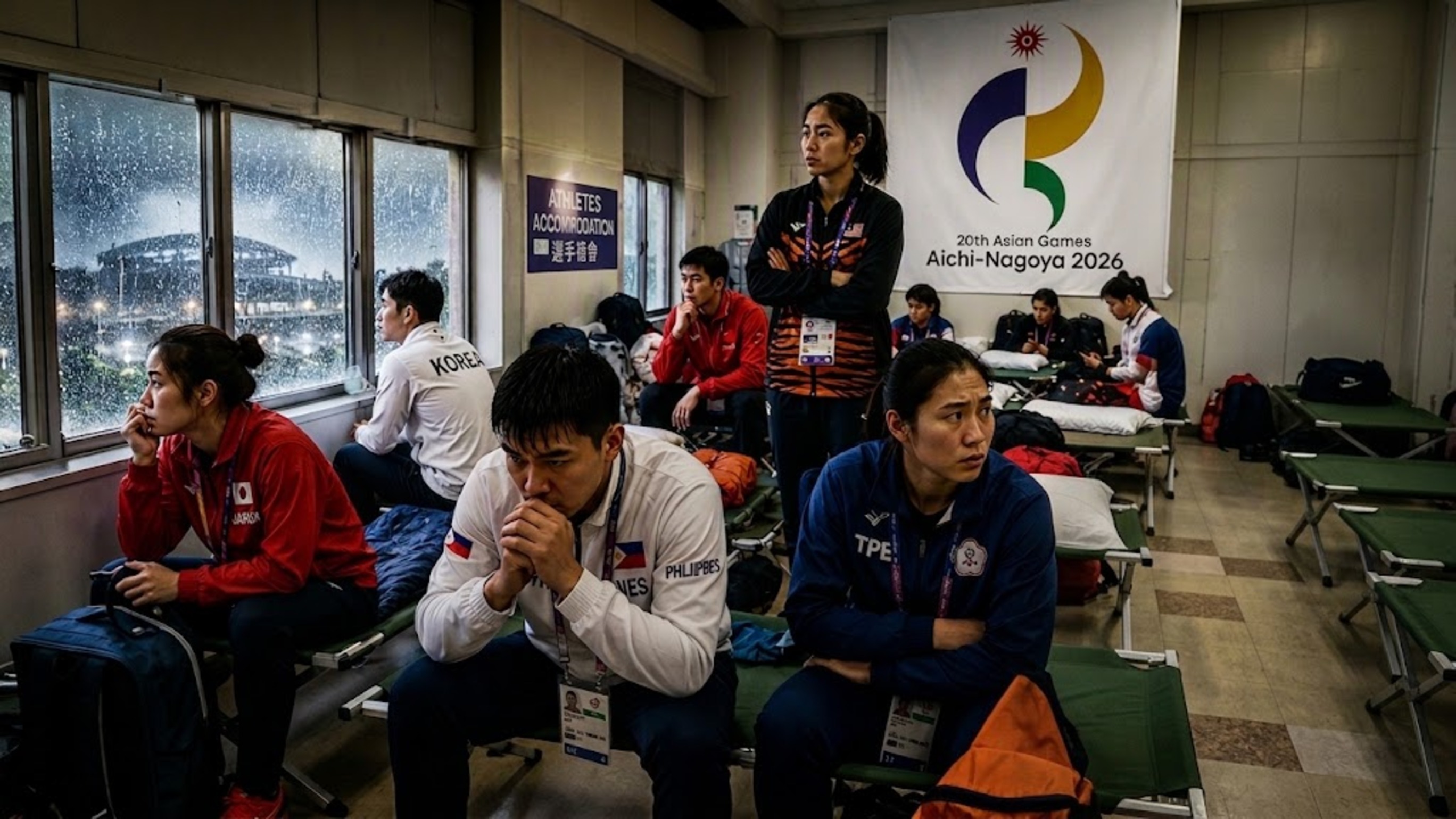
Around 15,000 athletes and officials from 45 nations are housed across a cruise ship, wooden shipping-container units, and hotel rooms for the 2026 Asian Games in Aichi-Nagoya. There is no dedicated athletes' village. Organizers chose that structure deliberately, to cut costs and avoid the long-term burden of a facility that usually sits unused once a Games ends.
Four days before the opening ceremony, that decision had already produced what South Korean officials called the worst accommodation situation they'd ever experienced at a major Games.
What the alternative actually looks like
Roughly 9,000 athletes and officials are staying in hotels scattered across the region. About 4,000 are housed on the Costa Serena, a 114,000-ton Italian cruise ship chartered and docked at Kinjo Pier specifically for the Games, covering athletes across 18 sports including archery, table tennis, judo and gymnastics. Another 2,000, from five sports including men's basketball, are in temporary wooden container units at the Port of Nagoya, each unit built to house up to six people and designed for reuse afterward as disaster-response shelters and tourist lodging.
South Korea's basketball delegation reported athletes taller than two meters unable to stretch out on the beds provided. Another player posted video of a leaking sink flooding his container's floor. Officials from 45 nations have raised formal concerns, and organizers have been scrambling to secure additional hotel rooms just days before competition begins.
The economics behind the decision
Nagoya's original Games budget estimate ballooned from roughly $560 million to more than $900 million even before construction began on a planned dedicated village. Organizers eventually scrapped that plan entirely rather than absorb the cost, choosing instead to spread accommodation across existing infrastructure that wouldn't leave the host city with a white-elephant facility once the Games left town.
That's a real problem in mega-event hosting, one host cities from Rio to Beijing have grappled with for decades: purpose-built Olympic and Asian Games villages routinely sit empty or half-repurposed for years after the closing ceremony. Japan's approach was a genuine attempt to solve that, not simply corner-cutting for its own sake.
Where the tradeoff actually landed
A chief organiser told AFP this week that the accommodation is "functional" and that complaints are being addressed as they arise. That's a fair description of the underlying logic. It's a much harder sell to athletes currently dealing with undersized beds and flooded floors days before they compete for medals.
The tension here isn't really about whether cost-saving accommodation models are a bad idea in principle. It's about execution: whether "functional" accommodation was actually tested and refined enough before 15,000 people arrived expecting somewhere to sleep.
Does this crisis prove that skipping a dedicated athletes' village is fundamentally the wrong call for a mega-event, or does it just prove Japan's specific execution needed far more stress-testing before opening week arrived?

Sarajevo Back at the Heart of Regional MMA: SFC Returns with Explosive Matchups

How Buzzer Karma Works: Levels, Penalties, and What They Mean

Inside Buzzer's Latest Update (and Why It Changes How You Use the App)

Buzzer Introduces Ads Console: A New Era of Advertising Across the Entire Buzzer Ecosystem

Buzzer Is Evolving: From Quantity to Quality

Buzzer Now Has a Games Hub, and Tournaments Are Coming

Polo Al Taco Expands Its Global Reach Through Weekly Livestreams on Buzzer Arena TV

Al Ittihad SC's Matches Are Now Live on Buzzer

Palm City vs Gulf United Ends in 1–1 Draw in UAE Second Division League Clash

"We Don't Take the Guy With the Camera." He Built His Own Club Anyway. Now He's Coming to Find You.


 1


