

 0
0
A Bowling Alley Owner Did Basic Division and Saved Professional Basketball
In 1950, the Fort Wayne Pistons beat the Minneapolis Lakers 19-18 in an NBA game, still the lowest-scoring game in league history. It wasn’t an aberration.
By the early 1950s, teams that took an early lead had learned to simply hold the ball indefinitely, forcing opponents to either foul repeatedly or watch the clock run out on a game with almost no actual basketball being played. Fans were losing interest fast, and the league genuinely worried about its own survival.
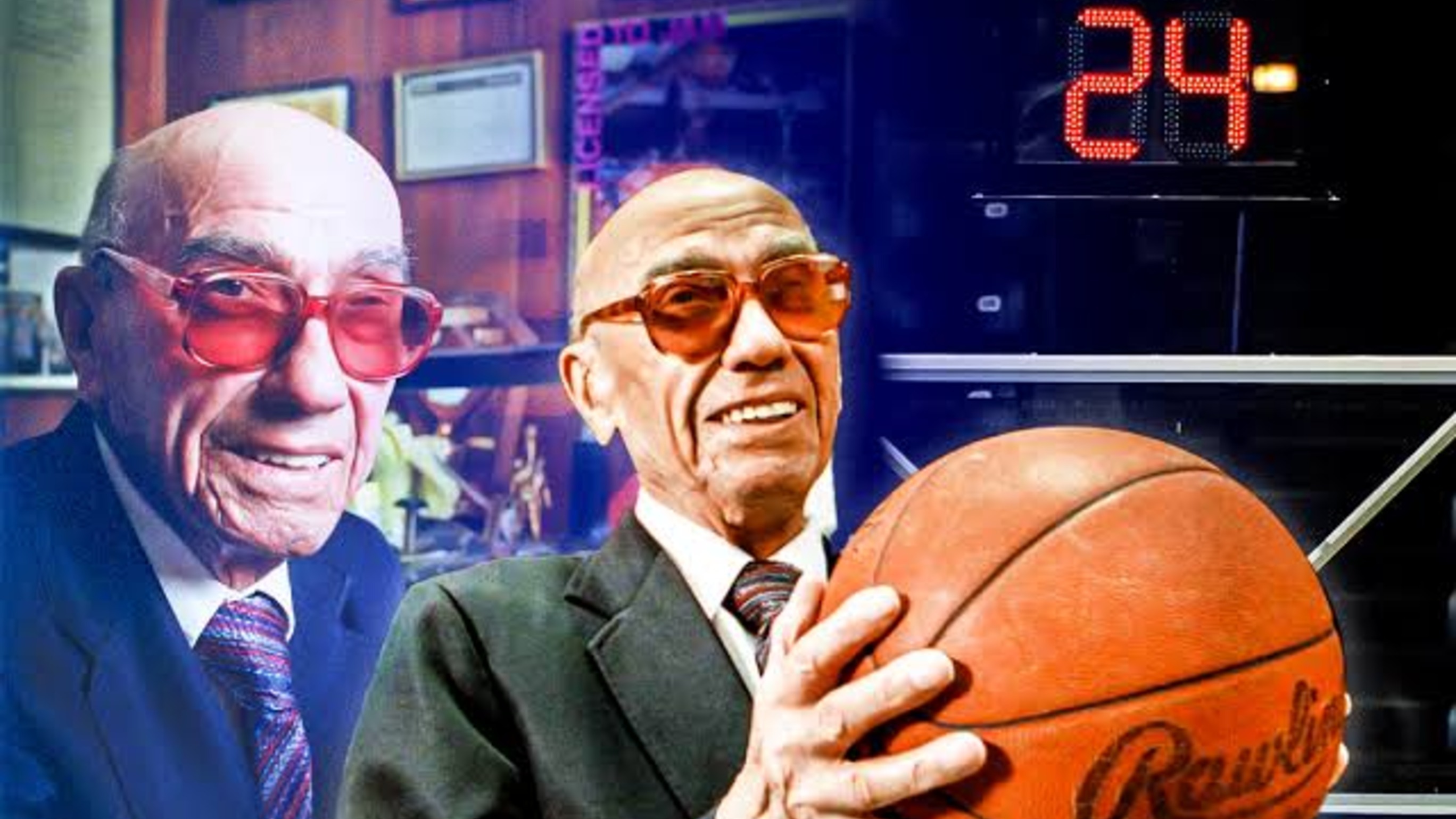
The fix came not from a coach, a commissioner, or a rules committee, but from Danny Biasone, an Italian immigrant who owned both the Syracuse Nationals and a local bowling alley.
The math behind the number 24
Biasone believed the games he personally enjoyed watching all shared a common pattern: both teams combined for roughly 120 total shot attempts across a 48-minute game. Working with his general manager, Leo Ferris, he did the simple division. A 48-minute game contains 2,880 seconds. Divide that by 120 shots, and you land on 24 seconds per shot, a number that, if enforced as a hard limit on how long a team could hold the ball before attempting a shot, would force the exact pace Biasone wanted to see restored.
NBA owners tested the concept at a scrimmage in a Syracuse high school gym on August 10, 1954, before formally adopting the 24-second shot clock for that season.
The effect was almost immediate. League-wide scoring jumped from an average of 79.5 points per game the previous year to nearly 94 points per game in the shot clock’s very first season, an increase of roughly 14 points per team overnight, all from one rule based on arithmetic a high schooler could check.
Why such a simple idea took so long to arrive
Nothing about the shot clock concept required advanced technology or complex rule engineering. It required someone willing to look directly at the problem, low-scoring, stalling basketball, and propose a blunt, enforceable limit rather than a softer behavioral fix.
Biasone’s specific contribution wasn’t genius insight so much as stubborn persistence. He was a longtime member of the NBA’s rules committee, and getting the other owners to actually adopt a fundamental change to how the game was played took real convincing, not just a good idea sitting on paper.
A fix that outlived everyone involved in creating it
The 24-second shot clock has remained essentially untouched since 1954, still the standard across the NBA and WNBA today, with FIBA using the same number internationally. College basketball took decades longer to catch up, not adopting any shot clock until the mid-1980s, initially at 45 seconds before eventually shortening it to the current 30.
Biasone’s original clock, roughly 25 percent smaller than the modern version, is preserved today at LeMoyne College in Syracuse. It’s a fitting home for an artifact that solved one of professional sport’s most existential problems using nothing more sophisticated than a division problem worked out by a bowling alley owner who happened to also run a basketball team.
Given how effective a genuinely simple fix like the shot clock turned out to be, are there other sports today facing pace or stalling problems that might benefit from an equally blunt, low-tech solution rather than a complicated rule overhaul?