





 1
Ferrari's Biggest Problem Isn't Speed. It's Trust Between Its Drivers
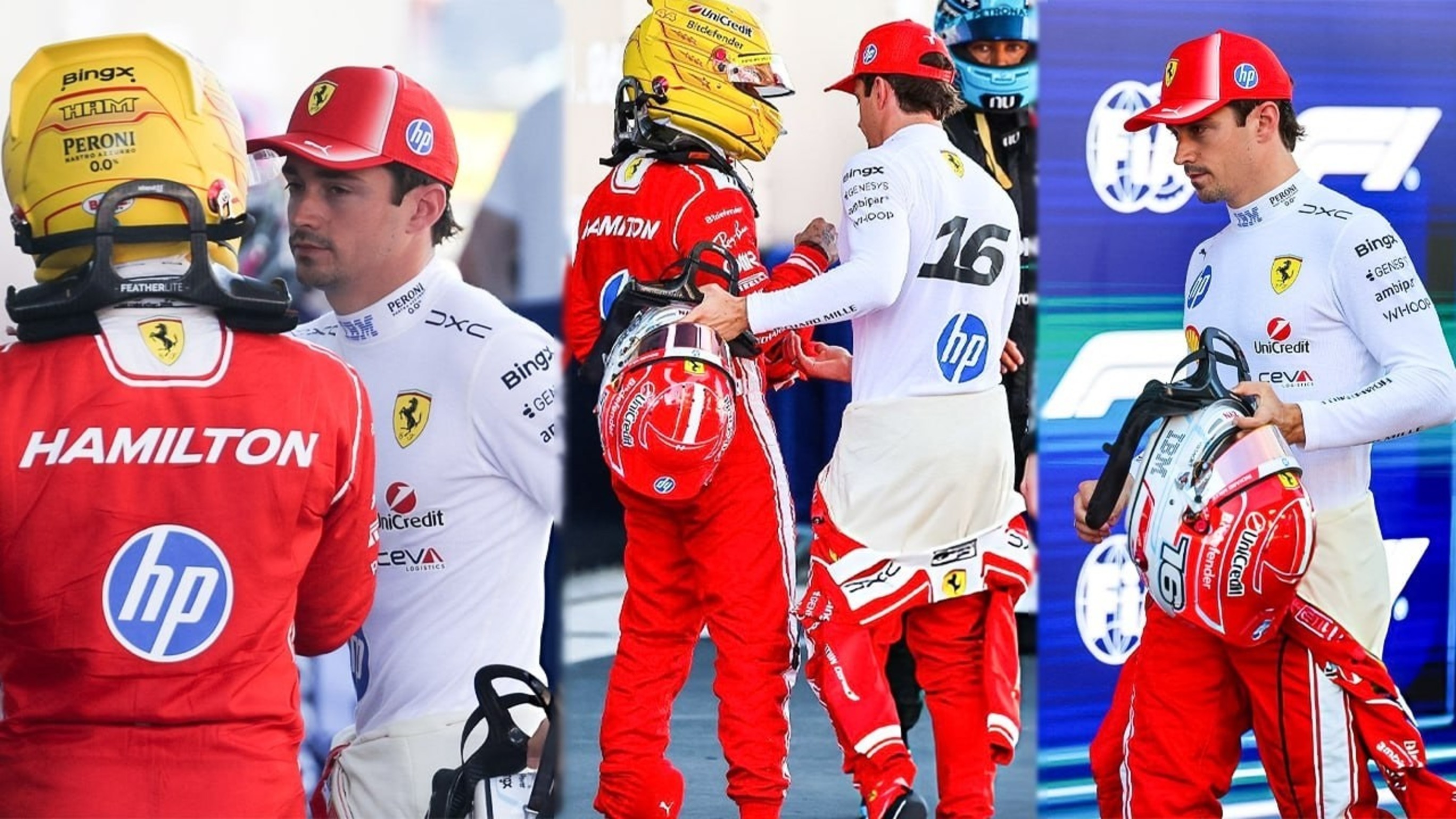
Lap one at Monza, Ferrari's home race. Lewis Hamilton and teammate Charles Leclerc collide at Turn 1, Hamilton forced onto the gravel and out of position. Two laps later, Leclerc spins into the Parabolica barrier at high speed, red flag, race basically over for Ferrari before it started. Hamilton recovers to finish sixth. Ferrari slips 122 points behind Mercedes in the constructors' standings.
Afterward, Hamilton didn't talk about the car. He talked about rules that don't exist.
"At Mercedes, We Had It Written"
Hamilton's comment cuts right to it: "It comes down to rules of engagement. When I was at Mercedes, we had written rules of engagement. So we never really had major problems, maybe a couple of times with Nico, but most of the time everything went well." At Ferrari, he says, there's no equivalent framework. No agreed protocol for who gets priority, who yields, how strategy calls get made when both cars are in play.
That's not a small complaint from a seven-time champion. That's identifying a structural gap at the team he moved to specifically hoping to end his career with a title.
Leclerc Sees It Differently, and That's the Real Tension
Leclerc admitted the Monza clash "went too far" but pushed back hard on the idea that there's a brewing rivalry, blaming media coverage for inflating tension that started at the Dutch Grand Prix, where he'd delayed a pit stop against team instructions while Hamilton was running faster behind him.
Two drivers, two different explanations for the same pattern of incidents. One thinks it's a media narrative. The other thinks it's a systemic team failure. That gap in perception, more than any single crash, is what should worry Ferrari.
Why This Is Bigger Than One Bad Weekend
Teams don't build written rules of engagement because drivers ask nicely. They build them after getting burned, the way Mercedes did during the Hamilton-Rosberg years when a handful of collisions forced Toto Wolff's hand. Ferrari appears to be relearning that lesson in real time, at its own home race, with a title fight already slipping away.
Hamilton is currently chasing Mercedes' Kimi Antonelli and George Russell in the standings. Every point lost to internal chaos rather than pure pace is a point that can't be clawed back later in the season.
The danger is that internal friction rarely stays confined to the drivers. It can influence pit-wall decisions, radio communication and the willingness of each driver to accept a team call when the stakes are highest. Once confidence between teammates starts to disappear, every overtake becomes a negotiation and every strategy call can look like favoritism. Ferrari cannot afford that kind of hesitation if it still believes a championship fight is possible, because the points lost through mistrust can become impossible to recover when the season reaches its decisive stretch.
Ferrari has the car to compete. It might not have the internal clarity to actually use it. Which is worse for a title challenge: a car that's a tenth slow, or a garage where the two drivers can't agree on whether there's even a problem?

Sarajevo Back at the Heart of Regional MMA: SFC Returns with Explosive Matchups

How Buzzer Karma Works: Levels, Penalties, and What They Mean

Inside Buzzer's Latest Update (and Why It Changes How You Use the App)

Buzzer Introduces Ads Console: A New Era of Advertising Across the Entire Buzzer Ecosystem

Buzzer Is Evolving: From Quantity to Quality

Buzzer Now Has a Games Hub, and Tournaments Are Coming

Al Ittihad SC's Matches Are Now Live on Buzzer

Palm City vs Gulf United Ends in 1–1 Draw in UAE Second Division League Clash

"We Don't Take the Guy With the Camera." He Built His Own Club Anyway. Now He's Coming to Find You.

Building the Infrastructure Sports Tech Forgot


 3


