





 0

Gymnastics Rewards Spectacular Routines. Why Can One Mistake Decide a Team Championship?
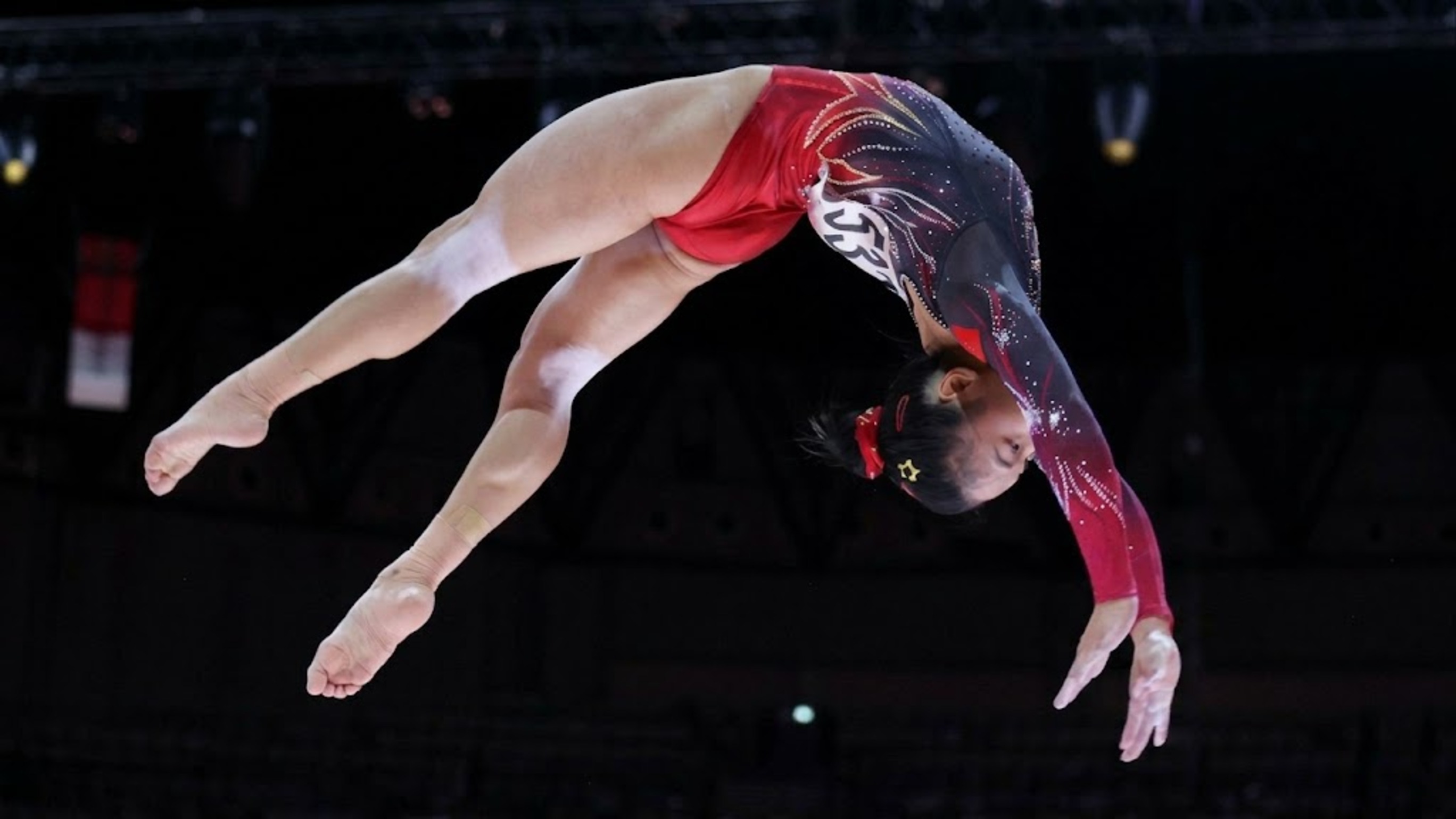
China topped women’s qualifying at the World Championships in Rotterdam with 164.996. The USA was second on 164.529. The gap between them was 0.467 of a point, and a single fall in gymnastics costs a full point.
Read that again. One wobble off a beam is worth more than twice the margin between the two best teams in qualifying.
The table in miniature
Eight teams reached the final: China, the USA, the neutral-athlete team listed as WG2, Italy, Japan, France, Canada and Brazil. Brazil took last place on 159.131, and Great Britain wasn’t among the eight.
Algeria had a good week too, even without a medal. It was the country’s first appearance at a Worlds as a team, and it won its subdivision with 151.495 but didn’t finish close enough to reach the final.
Qualifying is a rehearsal. At the Paris Olympics, qualifying scores didn’t carry over into the final, and that’s the model recent major championships have followed. A team can lead the field in qualifying and begin the final at zero with everybody else.
Why the safe routine is a weapon
Each routine has two scores, one for difficulty and one for execution. Difficulty is counted in tenths of a point. A fall is a full point deducted from the execution score.
That’s the whole risk calculation. Adding two tenths of difficulty to a routine costs a gymnast nothing if she hits it. If she falls, she’s lost five times what she hoped to gain. On the beam, which is 10 centimetres wide, that maths decides which skills a coach will put in a final.
At the Paris Olympics, each team chose three gymnasts per apparatus and all three scores counted. If the team final in Rotterdam works the same way, there’s no discarded score to hide behind. Every routine is a bet the whole team has placed.
What Tokyo taught everyone
The cleanest example of how fragile the format is came at the Tokyo Olympics. Simone Biles withdrew from the team final after her first routine, the vault, and the American team had only three gymnasts left on the floor. With a three-up, three-count format, that meant every routine had to count.
The Russian Olympic Committee won gold, the USA took silver and Britain took bronze. Nobody argued the US was a weak team. The format simply leaves no room to absorb a single missing score.
That’s the thing casual viewers rarely appreciate. A team doesn’t win a final by assembling the most spectacular routines. It wins by assembling the most reliable ones, and by choosing which spectacular skills it can afford to leave in the training hall.
Playing safe is a strategy
The bigger the stage, the more the right choice drifts from the exciting one. A coach who drops a risky release move for a simpler one isn’t being timid. She’s looking at a 0.467-point gap and doing the sums.
Gymnasts hate hearing it, but a dependable 14.0 on beam is often worth more to a team than a 14.8 that arrives one time in three. Nobody remembers the routine that didn’t happen, and nobody remembers the fall that didn’t happen either. They remember the medal.
The women’s team final is scheduled for Wednesday night in Rotterdam, so the argument will get its test quickly. China’s lead over the USA in qualifying was real, but it’s smaller than a single mistake.
When does playing safe become the most competitive strategy in a sport built to reward the spectacular?

Sarajevo Back at the Heart of Regional MMA: SFC Returns with Explosive Matchups

How Buzzer Karma Works: Levels, Penalties, and What They Mean

Inside Buzzer's Latest Update (and Why It Changes How You Use the App)

Buzzer Introduces Ads Console: A New Era of Advertising Across the Entire Buzzer Ecosystem

Buzzer Is Evolving: From Quantity to Quality

Polo Al Taco Expands Its Global Reach Through Weekly Livestreams on Buzzer Arena TV

Buzzer Now Has a Games Hub, and Tournaments Are Coming

Al Ittihad SC's Matches Are Now Live on Buzzer

Palm City vs Gulf United Ends in 1–1 Draw in UAE Second Division League Clash

"We Don't Take the Guy With the Camera." He Built His Own Club Anyway. Now He's Coming to Find You.


 1


