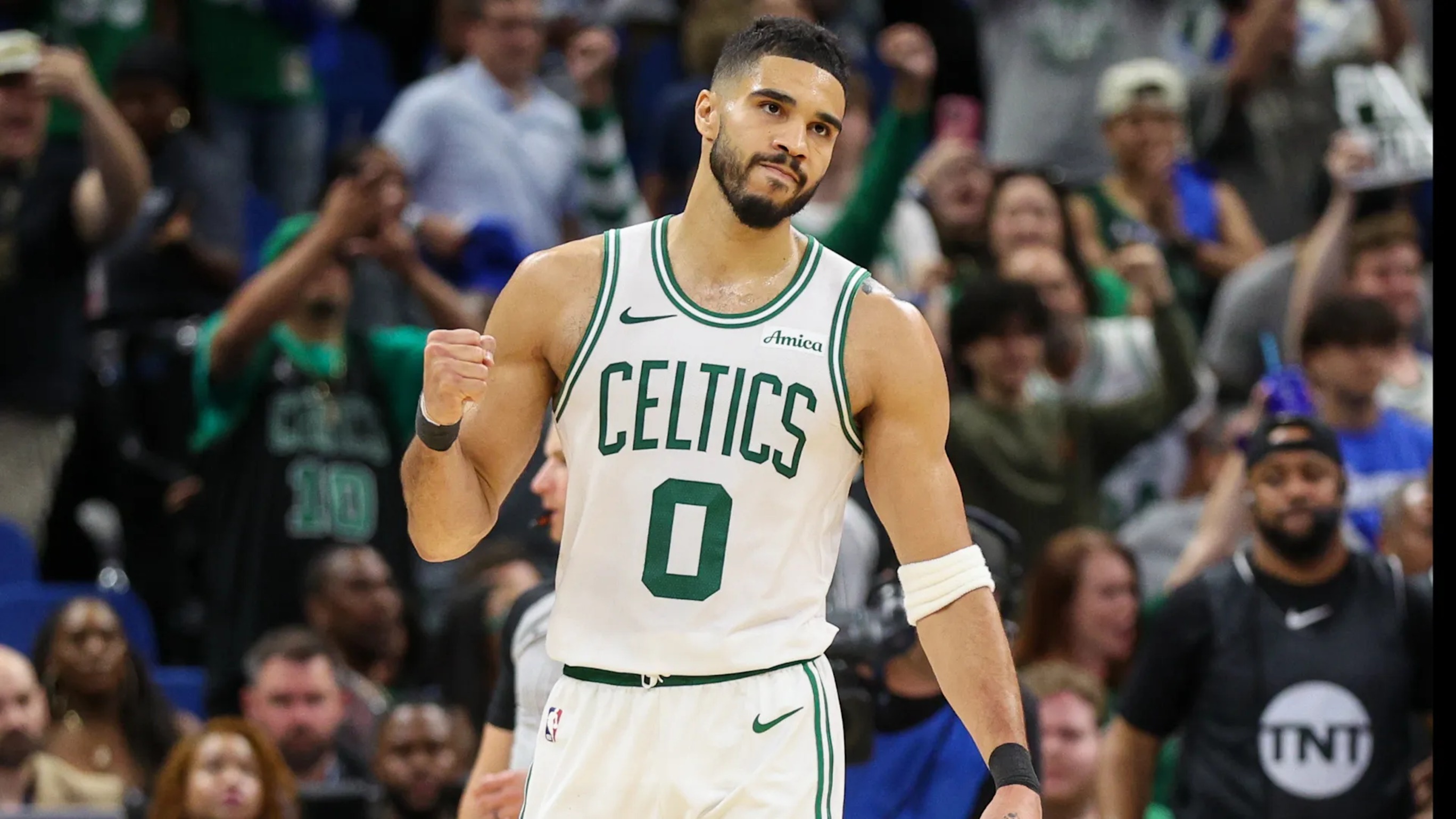
Jayson Tatum finished Tuesday night 10 of 20 from the field. Somehow that was the second-most interesting number on his stat line.
The most interesting one was 18 of 22 from the free-throw line, part of a 40-point night that ended with Tatum taking an inbounds pass from Derrick White with 2.3 seconds left in overtime, pulling up from the free-throw line and burying a 17-footer at the buzzer. Boston beat Brooklyn 125-124.
It was his first 40-point game since coming back from a torn Achilles, which is the sort of detail that gives a jumper its own soundtrack.
The night around the shot
The jumper will live in highlight packages for years. It also had no business being necessary. Brooklyn led 109-104 with 2:57 left in regulation, and after Mitchell Robinson missed two free throws in the closing seconds, Nets rookie Mikel Brown Jr. hit a tying shot with 0.2 seconds left to force overtime.
Tatum had his hand in the setup, too. His pass produced White’s go-ahead dunk with 33.7 seconds left in regulation, and he finished the night with eight assists and five rebounds in 42 minutes. Highlights make a night look like one moment, while the box score shows who kept touching the ball when it counted.
The shot itself was a 17-foot pull-up, not a heave from deep. In an age that rewards the long three, it was the kind of old-school jumper a 1990s highlight reel would have loved.
The NBA has a scoring system for this
The league even has a name for the genre. The Horry Scale grades a buzzer-beater on difficulty, game situation, importance and celebration. Tuesday’s shot would lose a few points for coming in October and win a few back for the Achilles story.
Which is a decent segue to the real question, because Tatum is a useful test case. His most famous recent buzzer-beater before this one followed a miss.
Clutch has a short memory
In November 2024, Tatum lost his dribble at the end of regulation against Toronto and missed an open 15-footer. Five minutes later, in overtime, he hit a 29-foot three at the buzzer for a 126-123 Celtics win. The NBA’s own Last Two Minute Report later said he’d traveled on the play.
Afterward he said, “I play too much basketball to doubt the next shot.” That’s the best argument for clutch being real, and it doesn’t mention accuracy at all. Tatum shot 10 of 20 on Tuesday, which is a coin flip. What separates him in these moments is appetite. He keeps wanting the ball after the last one rattled out.
Memory still does plenty of the work. Fans keep the make and forget the details around it: the free throws missed in the closing seconds, the rookie who tied it with two-tenths left. The game turned on Brown’s shot before it turned on Tatum’s.
So the honest answer is a bit of both. Players don’t hit crunch-time shots at some magical rate, but they do differ in whether they’ll take them, and taking them is the prerequisite for the highlight. Brooklyn can fairly point out that its rookie hit a tying shot with two-tenths of a second left and got no soundtrack at all.
For Boston, the bigger news is the record. The Celtics haven’t lost since they blew a 22-point lead in the season opener at Detroit, and Paul George (20 points), Derrick White (16) and Jordan Walsh (15) all contributed on the way to a third straight win.
Is wanting the shot a skill, or just the thing we call it when the shot goes in?





 0