




 0
0England Have a New Undisputed Leader as Tuchel’s Euro 2028 Plan Comes to Life
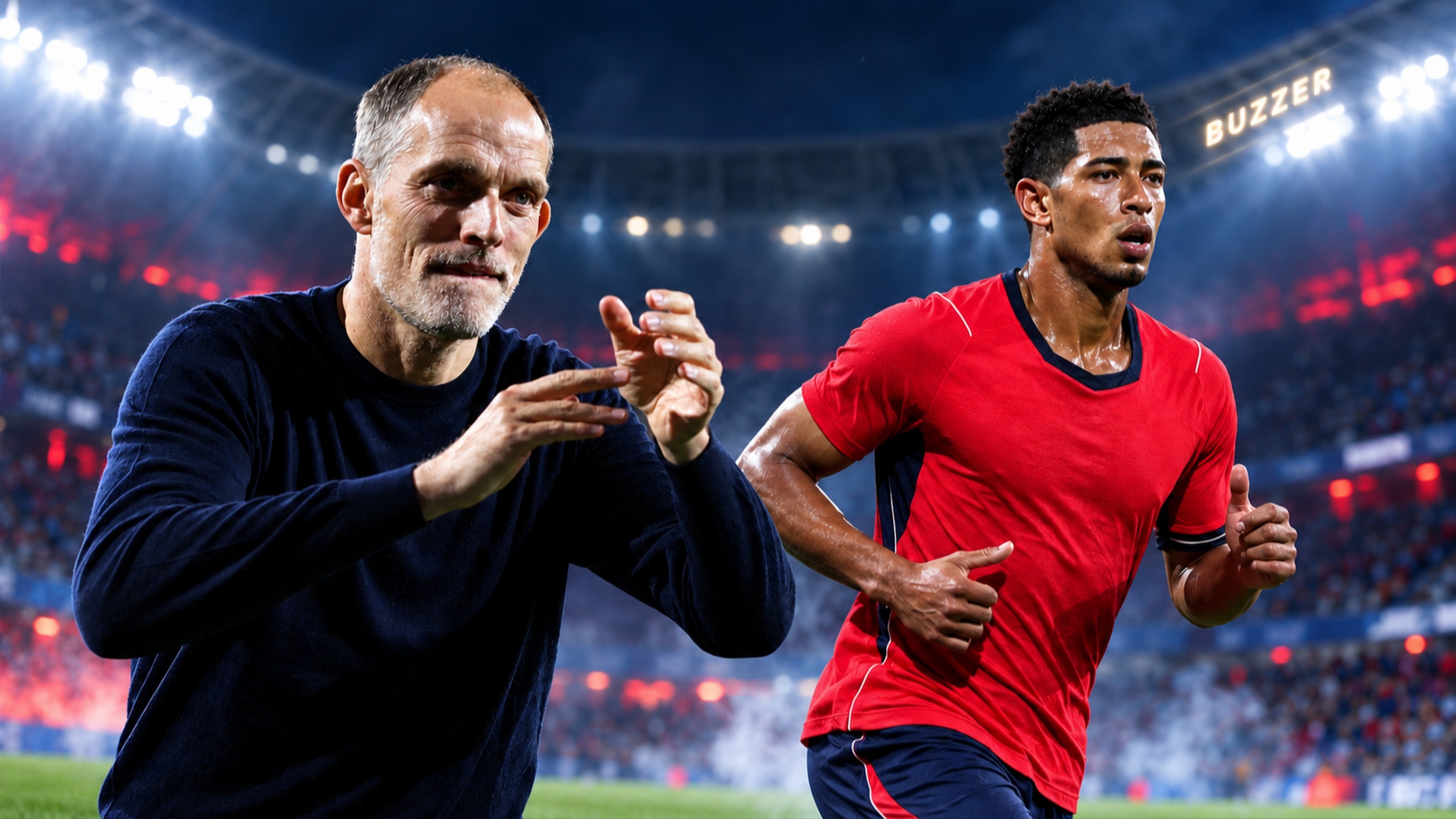
Tuchel’s England Taking Shape With Bellingham at the Centre Ahead of Euro 2028
Thomas Tuchel has good reason to look ahead to the next 20 months with optimism. England finished third at the World Cup, a result that cannot be described as a failure, before producing a statement performance in Croatia with a 7-0 Nations League win.
More important than the scale of the scoreline was the overall impression left by the England team. Tuchel appears to have found the direction he wanted, building an intense, physically powerful side capable of controlling the tempo and tailored to Jude Bellingham’s qualities. Euro 2028, which England will host, is becoming the main target of this project.
A Job That Demands More Than Results
The England manager’s job comes with a unique kind of pressure. Selecting the right line-up, making inspired substitutions and winning matches are not enough. The coach must give supporters an identity, a story and the feeling that the national team represents something greater than a group of highly rated players.
Recent English football history offers plenty of examples of how demanding this role can become. Roy Hodgson looked exhausted after his spell as England manager, while every coach to take charge of the team has had to manage football matters, public emotion and the huge expectations surrounding the squad at the same time.
Tuchel was once again deeply involved in Rijeka. He followed every phase closely, constantly issued instructions and projected the image of a coach focused on every detail. After some exaggerated debate about his future, the emphatic win in Croatia reduced the noise around the team.
Croatia Quickly Crumbled Under England’s Pressure
The 7-goal margin should be viewed in perspective. Croatia looked well below the standards that made them one of the standout teams at major tournaments over the past decade. The hosts appeared relaxed before kick-off, with the atmosphere in the stadium at times resembling a celebratory event.
On the pitch, however, England began with far greater energy. Croatia encountered serious problems from the opening minutes and had no answer to the rhythm imposed by the visitors. Luka Modrić received the applause of the crowd, but England’s midfield overwhelmed him through aggression and mobility.
Jude Bellingham was among the best players on the pitch. His display confirmed the excellent form he had already shown at the World Cup, where he became one of the key figures in Tuchel’s squad.
2 Important Questions for Tuchel’s Project
The result in Croatia matters, but the bigger questions concern England’s development before Euro 2028. Is there a clear playing idea and is the team making progress from one camp to the next?
The answer appears to be positive on both counts. England in Rijeka showed maturity and balance. They were able to dominate physically, retain possession, recover the ball quickly and stay in control in the decisive areas of the pitch.
In some respects, England’s current development recalls the team’s strong spell under Gareth Southgate in 2019 and 2020. At that point, the emergence of several important players created the impression that the national team could reach another level. The pandemic interrupted that momentum, but the current generation has the opportunity to build for a longer period.
Tuchel’s Contested Decisions Look Easier to Understand
Tuchel has faced criticism over some of his squad choices. The absences of Cole Palmer and Phil Foden generated plenty of debate, as did his decision not to rely on a back-up striker now playing in Saudi Arabia.
Those decisions can naturally be analysed, but recent results suggest that the manager has followed a precise logic. He does not appear to be interested only in the individual quality of players, but also in how they fit into the system he is trying to develop.
Tuchel needed time to get to know his players and understand how the group reacts in high-stakes matches. He did not arrive in the role with international tournament experience as a manager. His career has largely been defined by his attention to building teams, developing on-field relationships and creating competitive structures over time.
Jude Bellingham Is the Piece That Changes Everything
Placing Bellingham at the centre of the project is Tuchel’s most inspired idea. The midfielder has technical quality, personality and the ability to influence a match in both phases of play. He can also become the player around whom the entire squad comes together.
Bellingham gives the team a dominant presence, a sporting leader and a player who commands the attention of opponents. When used in advanced areas, he can press aggressively, regain possession, attack space and create chances through risky but decisive passes.
His role is not limited to statistics. His presence represents what Tuchel wants England to become, a brave, athletic team capable of striking quickly. In many situations, the answer to England’s attacking problems appears straightforward. It is Jude Bellingham.
Intensity Is Becoming England’s Signature
There is frequent talk about a distinctive Premier League style, even though English football includes many tactical approaches. Still, the current England squad is perfectly suited to football based on pace, pressing, duels and relentless work.
This was not evident against Croatia alone. England also showed it in a match against the world champions, when they fell 1-0 behind after just 1 minute, missed a late penalty and lost by the narrowest of margins. The team had the ability to stay in the contest through energy and pressure.
The win in Rijeka also brought back memories of periods when England managed to suffocate opponents through intensity. The difference is that Tuchel is attempting to turn this quality into a sustainable weapon, rather than a short-lived reaction.
Hall, Quansah and Scott Offer New Options
England have also benefited from a better balance within the squad. Lewis Hall provides a natural left-back option, with his left-footed ability and attacking profile. Jarell Quansah brings recovery pace and mobility, important qualities for a defence expected to play high up the pitch.
Alex Scott impressed in Rijeka with his composure, intelligence and willingness to work. The midfielder showed that he can provide a useful option in an area where England have struggled in many important matches.
Tuchel has stressed that he cannot go to a tournament with only 2 first-choice midfielders. Scott could become a different solution, particularly in the matches where England need to battle for control in midfield.
Bellingham can even offer an option as a central striker. His versatility allows the manager to change the system during a match and introduce an additional midfielder without losing attacking power.
There Are Still Issues to Address
England are not yet a complete team. The right-wing role needs genuine competition. Bukayo Saka is an excellent footballer, but the squad would become much more dangerous if Michael Olise could produce the same impact for the national team as he has at club level.
Max Dowman remains, for the time being, a promising talent rather than an immediate solution. Even so, time is working in the manager’s favour. Before Euro 2028, England can identify and develop alternatives in positions where competition is not yet strong enough.
The team used in Rijeka appears more capable of managing difficult moments than previous versions. Bringing Scott into a 3-man midfield or moving Bellingham into attack could completely change the course of a match.
Euro 2028 Is Getting Closer
A 7-0 victory on the Adriatic coast does not guarantee trophies. Croatia did not offer the expected resistance, and the road to a major tournament is always full of tougher tests.
England still have genuine reasons to look ahead with confidence. Tuchel appears to have a plan, the players are beginning to understand his demands and Bellingham has become the reference point of a team with an increasingly clear identity.
The next 20 months leading up to Euro 2028 could pass quickly. For England, they could become the decisive period in which a highly talented generation turns its potential into a genuine bid for the trophy.
Who Is Thomas Tuchel?
Thomas Tuchel is a German football manager and former professional player, born on 29 August 1973 in Krumbach, Germany. As a player, he operated as a defender for Stuttgarter Kickers between 1992 and 1994 and SSV Ulm from 1995 to 1998. He was forced to retire at the age of 25 because of a serious knee injury.
After moving quickly into coaching, Tuchel first made his name at FC Augsburg II from 2007 to 2008 and 1. FSV Mainz 05 between 2009 and 2014. He later took charge of major clubs including Borussia Dortmund from 2015 to 2017, Paris Saint-Germain from 2018 to 2020, Chelsea from 2021 to 2022 and Bayern Munich from 2023 to 2024.
In 2025, Tuchel became England manager. He went on to achieve a historic result with the national team at the 2026 World Cup, guiding England to 3rd place.

Lionel Messi and Cristiano Ronaldo compared over their last 100 matches
From Hero to Enemy in Just One Year: Alexander Isak Faces a Hostile Newcastle Return

David Beckham Builds His Fortune Through Business Ahead of the World Cup

The 15 Most Unusual Spanish Transfers in Premier League History

They Won the Champions League, but Are Now Free Agents Looking for a New Club
“My grandmother would have run more than you” - The harsh Mourinho remark that brought the best out

The World Cup Transformed His Career Djed Spence Completes One of Serie A’s Biggest Summer Moves

Bundesliga pedigree at FC Voluntari! Romanian club sign 1.92m Serbia international

Juventus’ New Diamond Comes From Bosnia: Barbarez Believes He Can Become a Champion

Pio Esposito impresses Cristian Chivu and threatens Marcus Thuram’s place at Inter


