





 0

Why Do Baseball Teams Keep Changing Pitchers When a Starter Is Still Getting Outs?
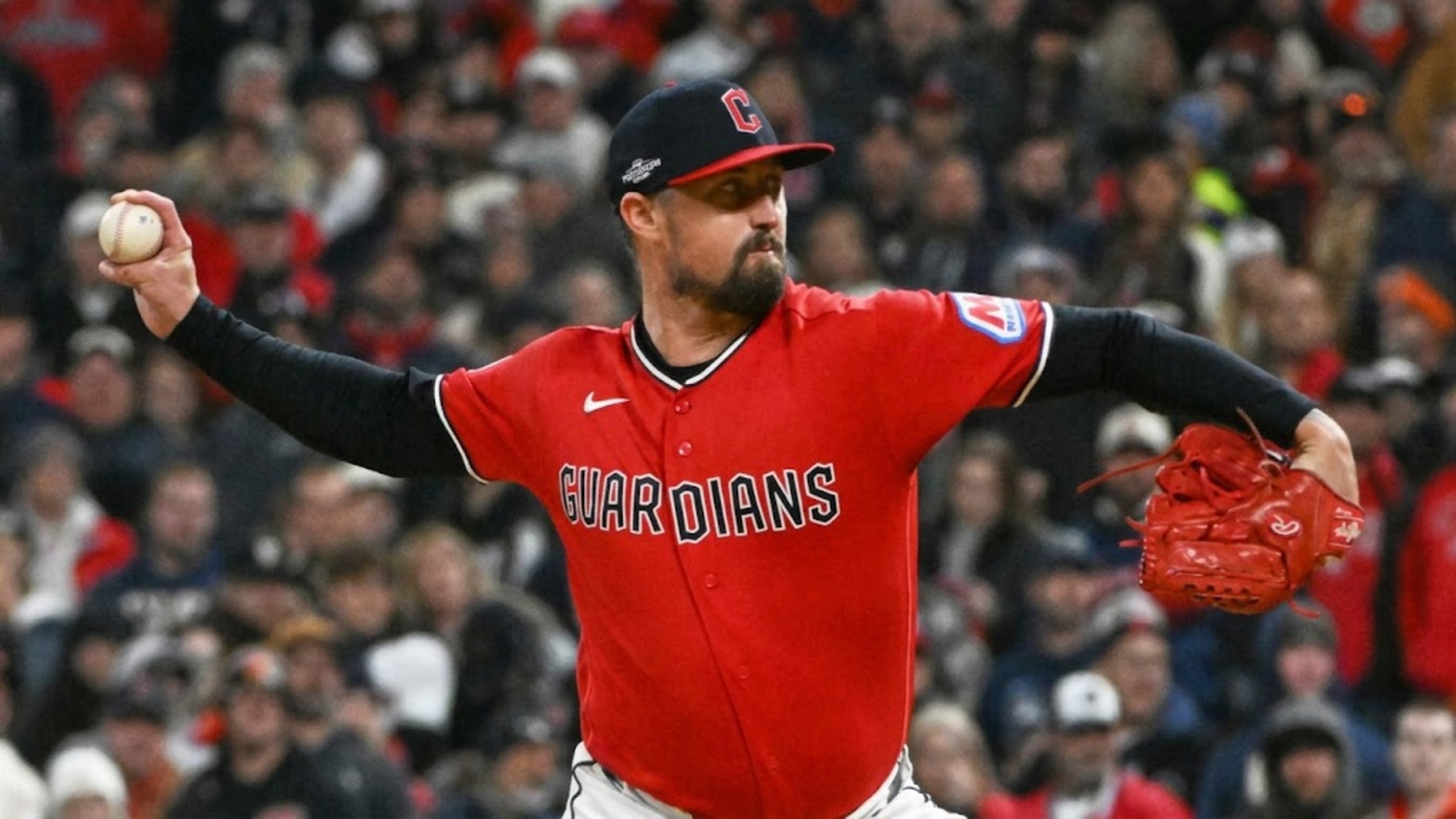
In Game 4 of the ALCS, the Guardians used seven pitchers. Shawn Armstrong opened and threw a scoreless inning, then six relievers followed him. Cleveland lost 7-3.
The next night, starter Parker Messick lasted two innings before the bullpen took over for the final seven, and the Guardians lost again, 3-1. The Rays, meanwhile, got through Game 5 with a starter and three relievers: Cam Booser, Tyler Wells and closer Bryan Baker, who had finished all six of Tampa Bay’s postseason wins.
Anyone watching at home was entitled to ask the question baseball fans have been asking for a decade. Why pull a pitcher who’s retiring hitters?
The third time through is a real problem
The usual answer is that the hitter’s second and third look at a starter are different from the first. By the third time a lineup sees the same pitcher in a game, batters know his release point, his pitch shapes and his habits. Analysts have documented for years that hitters do better the third time through, and front offices build their game plans around it.
That’s why managers now treat the start of the fifth or sixth inning as a decision point, not a formality. A pitcher might look fine on the scoreboard and still be about to face the top of the order for the third time.
The old instinct was to let a starter finish what he started. The modern instinct is to ask what happens to the next ten hitters.
What the rules changed, and what they didn’t
Since 2020, a reliever has to face at least three batters or finish the inning, which limits the pure one-hitter matchup moves that used to clutter late innings. That makes the choice of who comes in more important, because the reliever is going to stay for a while.
It also explains why teams now plan bullpen days deliberately. The Guardians identified Saturday as a bullpen day before Game 4 was played. For much of 2026 they were also the only team to use just five starting pitchers, and MLB.com described the rotation as a cloud hanging over their elimination game. Cleveland had built a pitching staff where the bullpen carried a heavy share of the work, and October simply made it visible.
The bill arrives the next day
Here’s where the strategy gets complicated. MLB.com called Cleveland’s bullpen performance in Game 5 incredible. It kept the Guardians in a game they then lost, which meant manager Stephen Vogt had spent his best relievers on a defeat. Facing elimination, he then needed 27 outs in each of two games on consecutive days, after traveling from Ohio to Florida.
Relievers are a finite resource, and a heavy workload one night shows up the next. Tampa Bay’s approach was different. Their starters gave them enough length that Baker could finish each of their six playoff wins, which means they weren’t burning through their bullpen to keep a game close.
The lesson isn’t that pulling a starter early is wrong. It’s correct more often than fans like to admit. The lesson is that it works like a loan. A team with depth can borrow innings from tomorrow and pay them back. A team without it pays interest, and in a short series interest comes due quickly.
What fans lose when starters leave early
There’s an emotional cost too. A starter going deep into a game was one of the sport’s great pleasures, a duel that unfolded over two hours between one pitcher and a lineup. Constant changes break that narrative into smaller pieces, and fans notice.
The counter-argument is that fans also notice when the strategy fails. When a starter who was cruising gets hit hard in the seventh, the manager looks stubborn. When a reliever replaces a good starter and gives up the lead, the manager looks foolish. Managers can’t win either argument, which is probably why they trust the numbers more than the crowd.
What they can control is how deep the staff is. Cleveland’s season was built on a low-cost, contact-and-defense approach that has plenty of admirers, but it asked a lot of its relievers when the games stopped being ordinary.
If the data say a starter shouldn’t see a lineup three times, is a pitcher going deep into a game still a skill worth celebrating, or is it just nostalgia?

Sarajevo Back at the Heart of Regional MMA: SFC Returns with Explosive Matchups

How Buzzer Karma Works: Levels, Penalties, and What They Mean

Inside Buzzer's Latest Update (and Why It Changes How You Use the App)

Buzzer Introduces Ads Console: A New Era of Advertising Across the Entire Buzzer Ecosystem

Buzzer Is Evolving: From Quantity to Quality

Polo Al Taco Expands Its Global Reach Through Weekly Livestreams on Buzzer Arena TV

Buzzer Now Has a Games Hub, and Tournaments Are Coming

Al Ittihad SC's Matches Are Now Live on Buzzer

Palm City vs Gulf United Ends in 1–1 Draw in UAE Second Division League Clash

"We Don't Take the Guy With the Camera." He Built His Own Club Anyway. Now He's Coming to Find You.


