





 1

Netflix Is Moving Into Football. Will Streaming Change How Fans Watch the World Cup?
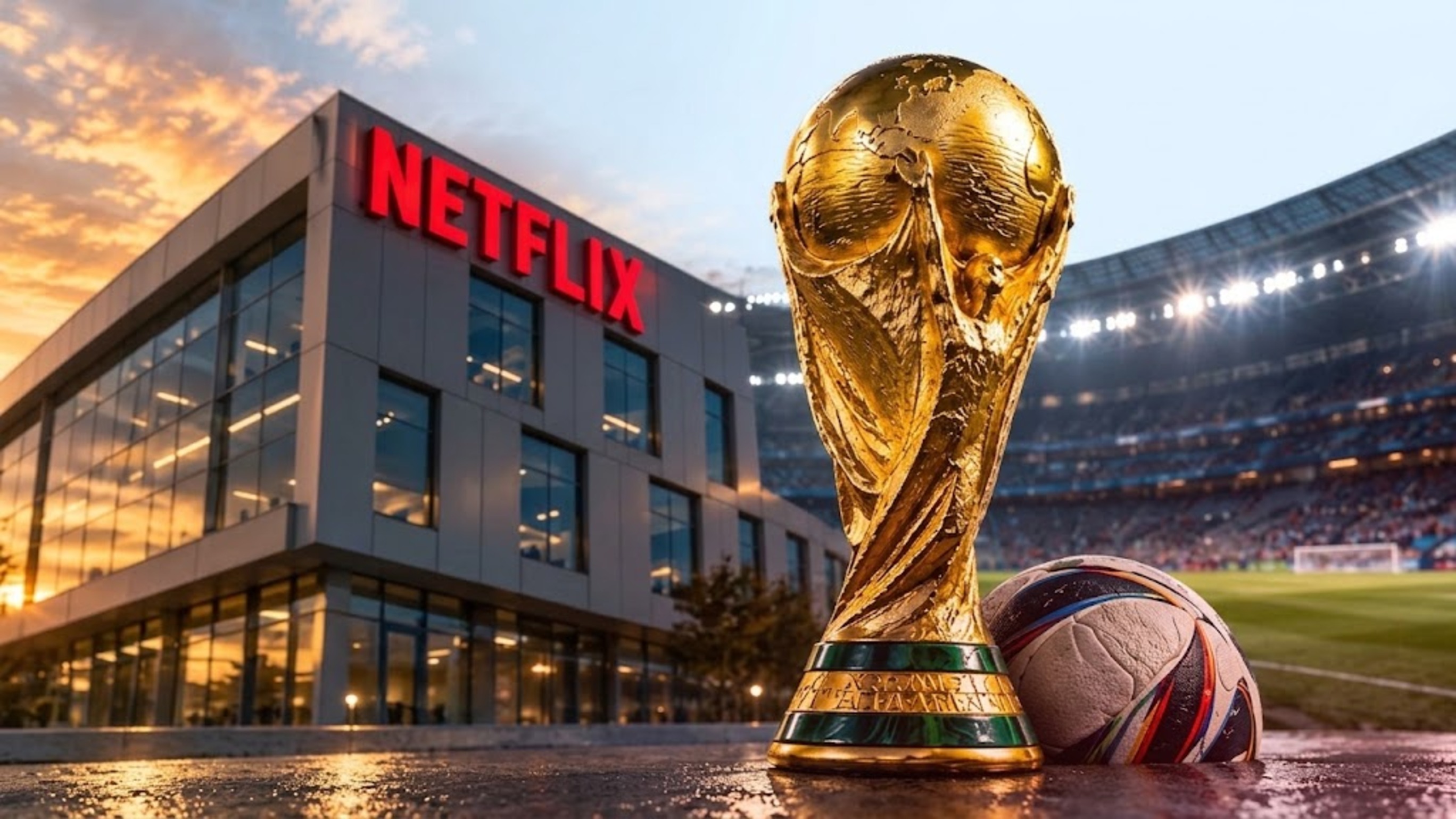
The 2030 World Cup will have 104 matches, with three host countries on one continent and three more matches in South America. In Spain, all 104 are going to Netflix.
The streamer announced on October 13 that it had secured the Spanish and Andorran rights to the tournament. It’s Netflix’s first men’s World Cup deal. The price wasn’t disclosed. The headline is easy to write. The detail underneath is more interesting.
The free-to-air clause
FIFA has historically sold World Cup rights to public broadcasters where it can, because free-to-air coverage maximizes the audience. Netflix’s deal keeps a version of that. One match per matchday will be free in Spain, and a package that includes every Spain match, both semifinals and the final will go to a national free-to-air broadcaster.
That matters because Spain are the defending champions and co-hosts, alongside Portugal and Morocco. The matches most people will care about most, the ones involving Spain and the knockout rounds at the top, will be available without a subscription.
For context, the 2026 edition’s Spanish rights went to public broadcaster RTVE, reportedly for 55 million euros. The Netflix price hasn’t been reported, so there’s no way to compare yet.
What Netflix brings that a broadcaster doesn’t
The pitch for streaming is straightforward. Netflix can show every game live, on demand, on any device, with a reach and a user interface that traditional channels struggle to match. For 104 matches across a tournament that’s now 48 teams, that’s a real advantage.
It has also been building a sports portfolio quickly. The company has NFL and MLB games, WWE, boxing and mixed martial arts, and it holds the 2027 and 2031 Women’s World Cups in specific territories, Brazil for the first and the United States and Canada for the second. A heavyweight fight between Tyson Fury and Anthony Joshua is also on its December schedule in the UK. So the World Cup deal isn’t a one-off experiment. It’s the next piece of a plan.
What fans could lose
The risk in a deal like this is fragmentation. When coverage splits across a streamer, a free channel and perhaps a third platform, fans need to know where to look. In Spain’s case, the free package is defined clearly enough to avoid confusion on the matches that matter most.
What’s less clear is how the free matches get chosen on each matchday. With one free game per day and multiple matches on busy days, some fans will end up behind a paywall for matches they’d love to watch, especially in the group stage.
There’s also the question of whether this is a template. FIFA sells rights territory by territory, so the Spanish agreement says nothing about what will happen in Africa, Indonesia, the UAE or the United States. Anyone predicting how the 2030 World Cup will be broadcast worldwide from one deal is guessing.
The trade-off nobody wants to price
Cost is the other piece. A subscription to a streamer isn’t free, and plenty of fans watch the World Cup precisely because they don’t pay for anything else all year. The free-to-air clause protects them in Spain. It would be useful to know if the same protection exists elsewhere.
On the plus side, streaming brings flexibility. Matches that start at inconvenient times can be watched later, and fans who miss a game can catch up. For a tournament spread across Europe, Africa and South America at the start, that’s a real benefit.
So the honest summary is that the deal looks like a sensible compromise with some open questions, and the open questions are mostly about which matches end up free.
Is one free match per matchday plus a free package of the biggest games a fair floor for a World Cup, or should the tournament always be fully free to watch?

Sarajevo Back at the Heart of Regional MMA: SFC Returns with Explosive Matchups

How Buzzer Karma Works: Levels, Penalties, and What They Mean

Inside Buzzer's Latest Update (and Why It Changes How You Use the App)

Buzzer Introduces Ads Console: A New Era of Advertising Across the Entire Buzzer Ecosystem

Buzzer Is Evolving: From Quantity to Quality

Polo Al Taco Expands Its Global Reach Through Weekly Livestreams on Buzzer Arena TV

Buzzer Now Has a Games Hub, and Tournaments Are Coming

Al Ittihad SC's Matches Are Now Live on Buzzer

Palm City vs Gulf United Ends in 1–1 Draw in UAE Second Division League Clash

"We Don't Take the Guy With the Camera." He Built His Own Club Anyway. Now He's Coming to Find You.


