





 1

The Vuelta's Time Trial Is Where a Three -Week Race Can Suddenly Change
Enric Mas had spent more than two weeks building a lead in the Vuelta a España. It took one afternoon, a 32.1-kilometer individual time trial from El Puerto de Santa María to Jerez de la Frontera, to threaten all of it.
This is the part of Grand Tour racing that mountain stages can't replicate. Climbing rewards who's strongest on a given day, but a long time trial is a pure test of sustained power with nowhere to hide, and it's exactly the kind of stage that can undo weeks of careful racing in a single afternoon.
The gap going in was thinner than it looked
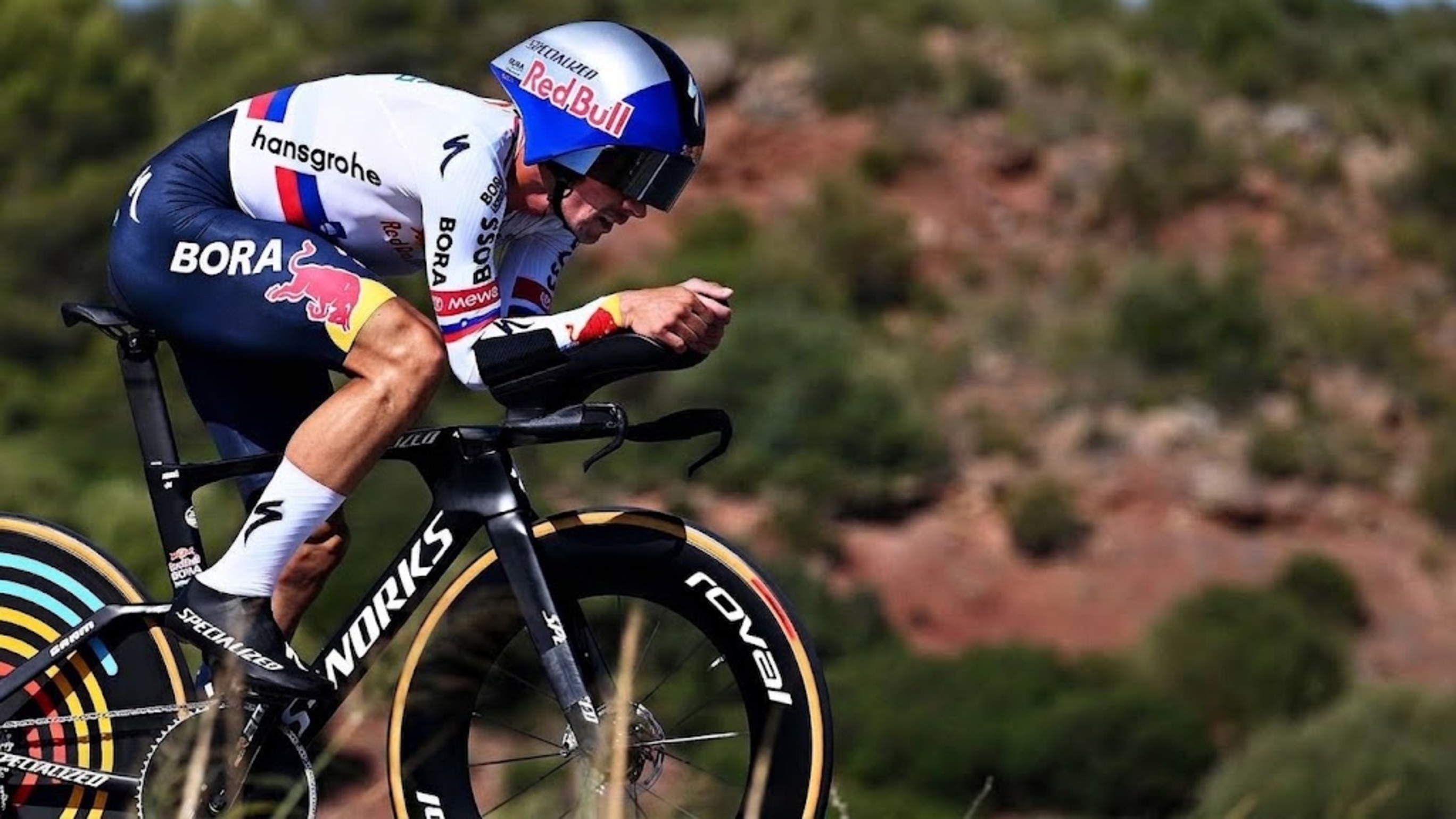
Mas carried a 2-minute, 6-second lead over Felix Gall and 2 minutes, 10 seconds over Primož Roglič heading into the stage. On a flat, aerodynamics-driven course with intermediate checks at 11.7 and 22.1 kilometers, that cushion was not remotely safe. Roglič, a five-time Vuelta contender with a specific reputation for producing his best rides against the clock, was the obvious threat.
Stage starts were staggered in reverse GC order, meaning the leading contenders rolled out during a concentrated closing window, each aware of the time gaps forming in real time through the intermediate splits.
What actually happened
Roglič mounted the onslaught everyone expected. He finished fourth on the stage, just 19 seconds off the winning time set by Stefan Küng. But Mas responded with what was described as the ride of his career, limiting his losses enough to keep the red jersey intact heading into the race's final stages.
Every second mattered because there was no teammate to shield him or tactical move to make. It was simply Mas against the clock, with his entire race position on the line.
That's the version of this story where the favorite holds. It could easily have gone the other way. A time trial specialist like Roglič gaining even 90 seconds on a leader with a two-minute cushion turns a comfortable lead into a genuine dogfight with barely any racing left to recover.
Why this stage type carries outsized weight
Mountain stages in Grand Tours tend to produce gaps measured in seconds unless someone cracks completely. Time trials can move minutes in a single effort, purely on sustained power output with no tactical racing, no drafting, no team support to hide behind. That's precisely why GC riders spend entire off-seasons on time trial positioning and equipment, treating what looks like one unglamorous stage as potentially the most decisive day of a three-week race.
What's left to decide
With Mas's lead intact but the margins tighter than they've looked in over a week, the Vuelta's closing mountain stages now carry weight they might not have if the time trial had gone even slightly differently. Roglič, still just over two minutes back, has shown he can find time. The question is whether there's enough race left for him to find enough of it.
When a single stage can threaten three weeks of accumulated racing in one afternoon, does that make time trials the fairest test in cycling, or just the most brutally unforgiving one?

Sarajevo Back at the Heart of Regional MMA: SFC Returns with Explosive Matchups

How Buzzer Karma Works: Levels, Penalties, and What They Mean

Inside Buzzer's Latest Update (and Why It Changes How You Use the App)

Buzzer Introduces Ads Console: A New Era of Advertising Across the Entire Buzzer Ecosystem

Buzzer Is Evolving: From Quantity to Quality

Polo Al Taco Expands Its Global Reach Through Weekly Livestreams on Buzzer Arena TV

Al Ittihad SC's Matches Are Now Live on Buzzer

Buzzer Now Has a Games Hub, and Tournaments Are Coming

Palm City vs Gulf United Ends in 1–1 Draw in UAE Second Division League Clash

"We Don't Take the Guy With the Camera." He Built His Own Club Anyway. Now He's Coming to Find You.


