




 0
0Football Enters a New Era: What the World’s Biggest Stories Mean After the 2026 FIFA World Cup?
The curtain has finally fallen on another unforgettable FIFA World Cup, but football never truly sleeps. As the celebrations fade and the confetti settles, attention is already shifting toward the future. National teams are assessing their performances, clubs are welcoming players back from international duty, and supporters around the globe are debating what comes next.
The 2026 tournament will be remembered for its drama, surprises, and the emergence of a new football landscape. It delivered unforgettable matches, emotional farewells, tactical masterclasses, and performances that reminded everyone why football remains the world’s most beloved sport.
For many fans, the biggest talking point is Spain’s remarkable triumph. Their journey to lifting the trophy was built on tactical discipline, technical excellence, and an unwavering belief in their football philosophy. Throughout the tournament, Spain demonstrated that success is not achieved through individual brilliance alone but through collective teamwork, intelligent movement, and consistency.
The final itself was a showcase of two footballing giants. Argentina entered the match carrying enormous expectations after another impressive campaign. Their route to the final highlighted resilience, determination, and quality in every area of the pitch. Although they ultimately fell short, their performances throughout the competition reinforced their status as one of international football’s elite nations.
Spain’s victory also signals something much bigger than simply winning another trophy. It reflects the success of years of investment in youth development, coaching education, and technical football. The nation’s commitment to developing players capable of adapting to modern tactical demands has once again paid dividends on football’s biggest stage.
Another defining feature of this World Cup was the remarkable rise of younger players. Every tournament introduces fresh faces to the global audience, but this edition seemed to accelerate the transition from one generation to another. Young stars embraced the pressure of representing their countries with confidence beyond their years.
The tournament also reminded us that football is becoming increasingly unpredictable. Traditional powerhouses can no longer assume victory simply because of their reputation. Emerging nations continue to close the gap through improved coaching, better infrastructure, and increased opportunities for talented players to compete in Europe’s strongest leagues.
Supporters witnessed tactical evolution throughout the competition. Coaches demonstrated greater flexibility than ever before, frequently changing formations during matches to exploit weaknesses or respond to different situations. Defensive organization remained essential, but attacking creativity continued to separate the best teams from the rest.
One of the most fascinating aspects of the World Cup was the importance of squad depth. The expanded competition placed enormous physical demands on players, making rotation and intelligent squad management critical. Teams with quality options on the bench consistently performed better as the tournament progressed.
Away from the pitch, football’s global appeal reached even greater heights. Stadiums were packed with passionate supporters representing every corner of the world. Social media buzzed with tactical debates, emotional reactions, and celebrations that united millions of fans despite geographical and cultural differences.
For clubs across Europe, however, there is little time to reflect. Preparations for the new domestic season are already underway. Managers are evaluating returning players, fitness coaches are monitoring workloads after the tournament, and sporting directors are working tirelessly in the transfer market to strengthen their squads.
The transfer window has quickly become football’s next major attraction. Clubs understand that success next season could depend on decisions made over the coming weeks. Every signing has the potential to transform a team’s ambitions, while every departure forces managers to rethink their tactical plans.
Some of the biggest clubs are searching for attacking reinforcements, while others are prioritizing defensive stability after analyzing last season’s weaknesses. Financial regulations continue to influence negotiations, making recruitment more strategic than ever before.
Meanwhile, several coaching situations remain under intense scrutiny. The modern game places enormous pressure on managers to deliver immediate success. Every decision, tactical adjustment, and substitution is analysed by supporters and the media, creating one of the most demanding environments in professional sport.
Football never stands still. Just days after one chapter closes, another begins. The excitement generated by the World Cup now fuels anticipation for another thrilling club season, where familiar rivalries will resume and new stories will emerge.
If the tournament proved anything, it is that the future of football has never looked brighter. The game’s balance of power continues to evolve, young talents are ready to become household names, and tactical innovation is pushing the sport into an exciting new era.
💬 Over to you: Which team impressed you the most at the 2026 FIFA World Cup, and which player do you think is destined to become football’s next global superstar? Share your thoughts in the comments!
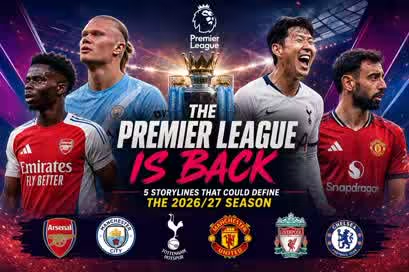
The Premier League Is Back: Five Storylines That Could Define the 2026/27 Season

Brian Madjo: The 17-Year-Old Who Announced Himself on Europe’s Biggest Stage

From Dreams to Glory: How the 2026 FIFA World Cup Reaffirmed Football’s Place as the World’s Greatest Sport
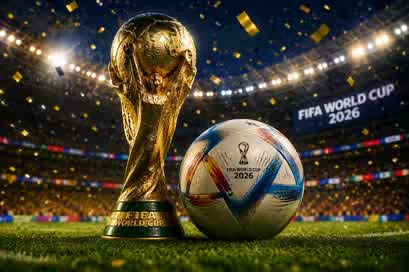
The FIFA World Cup: Where Football Dreams Become Reality


