Buzzer Coin$0.00$BUZZER
Search
sports_hub01
sports_hub01
95
Uploads
459
Followers
14
Following
Newbie
Newbie0 minutes41,80 Karma
Arrow Right
sports_hub01

9 days ago

After months of waiting, the Premier League is finally back—and if the opening weekend is anything to go by, football fans are in for another season packed with drama, surprises and unforgettable moments.

The 2026/27 campaign arrives with Arsenal beginning their title defence after ending their long wait for the Premier League trophy last season. But keeping the crown could prove even harder than winning it.

Manchester City are entering a new era, Liverpool are looking to remain among England’s elite, Manchester United are hoping for a major revival, while Tottenham Hotspur have completely transformed their squad after a difficult previous campaign.

And with the transfer window still open, the story is far from complete.

## **Arsenal: From Champions to Defenders**

Arsenal enter the season with something every club wants—the pressure that comes with being champions.

Mikel Arteta’s side finally ended their two-decade wait for the Premier League title last season, and their biggest challenge now is consistency.

The Gunners have already strengthened their squad, including the £51 million arrival of Aston Villa defender Ezri Konsa.

But winning one title and defending it are two completely different challenges.

Every opponent will want to beat Arsenal. Every mistake will receive greater attention. Every dropped point will be viewed through the lens of the title race.

Arsenal therefore need more than talent. They need mentality, depth and the ability to handle pressure throughout a long campaign.

If they can maintain the hunger that took them to the trophy last season, they could once again be the team everyone is chasing.

## **Manchester City: The Beginning of a New Era**

Manchester City have dominated English football for much of the modern era, but the club now faces an important period of transition.

The departure of key figures and the changing balance of the squad mean Pep Guardiola’s team could look very different from the City supporters have become accustomed to seeing.

The biggest question is simple: can City rebuild without losing their winning identity?

Their rivals have strengthened, and the margin for error could be smaller than ever.

City are still City, however. Writing them off would be a huge mistake.

With Guardiola on the touchline and world-class players throughout the squad, they remain one of the biggest threats to Arsenal’s title defence.

## **Tottenham’s Billion-Dollar Statement**

Few clubs have generated as much transfer-market attention as Tottenham this summer.

Under Roberto De Zerbi, Spurs have embarked on an extraordinary rebuilding project after narrowly avoiding relegation last season. Their spending has already exceeded £200 million, with major arrivals including Sandro Tonali and Mateus Fernandes.

The club are also pursuing further major additions.

Tottenham’s transformation is therefore one of the most fascinating stories of the new season.

The question isn’t whether they have spent enough.

The question is whether all that investment can quickly become a successful team.

De Zerbi has inherited a squad undergoing a major identity change. If the new players adapt quickly, Tottenham could climb dramatically up the table.

But if the pieces fail to fit together, the pressure will become enormous.

## **Manchester United: Time for a Statement**

Manchester United begin another campaign with expectations that remain enormous.

The club’s supporters have endured several disappointing seasons, and the arrival of new players and tactical changes has created renewed optimism.

Their opening fixture against Hull City on Saturday provides an immediate opportunity to establish momentum.

United don’t necessarily need to win the league this season to prove that progress is being made.

But they do need to look like a team heading in the right direction.

Better performances, greater consistency and a return to European football contention would represent significant progress.

The pressure at Old Trafford, however, is never small.

## **The Transfer Window Could Still Change Everything**

One of the most exciting aspects of this season is that the transfer story isn’t finished.

Clubs are still working on deals, with Tottenham reportedly pursuing Manchester City attackers Savinho and Omar Marmoush, while Liverpool continue to explore attacking reinforcements.

Chelsea are also dealing with uncertainty around Enzo Fernández amid reports of interest from Manchester City.

That means the teams we see in August may not be the same teams we see when the transfer window closes.

One major signing can completely change a club’s ambitions.

A striker can turn a top-four challenger into a title contender. A defensive signing can transform a vulnerable back line. Losing a key player can have the opposite effect.

With the deadline approaching, expect more twists.

## **The Race Is Wide Open**

The beauty of the Premier League is that predictions rarely survive contact with reality.

Arsenal may be the defending champions, but Manchester City remain dangerous. Liverpool cannot be ignored. Manchester United are desperate to return to the top. Chelsea are beginning another rebuilding project, while Tottenham have spent heavily in an attempt to transform their fortunes.

And beyond the traditional giants, there are always clubs capable of producing unexpected results.

That is what makes this season so difficult to predict.

There is no guarantee that last season’s hierarchy will remain unchanged.

## **Final Verdict**

The 2026/27 Premier League season has all the ingredients of another classic.

Arsenal have a title to defend.

Manchester City are entering a new chapter.

Manchester United are searching for a revival.

Tottenham are betting heavily on a dramatic transformation.

Liverpool, Chelsea and the rest of the league will have their own ambitions.

And with the transfer window still open, the final shape of the competition is yet to be decided.

One thing is certain: the road to the Premier League trophy will not be easy.

The champions have been crowned once.

Now comes the much harder question:

**Can Arsenal do it again?**
GENERAL

The Premier League Is Back: Five Storylines That Could Define the 2026/27 Season

Like icon
3
Comments icon
Shares icon
sports_hub01

18 days ago

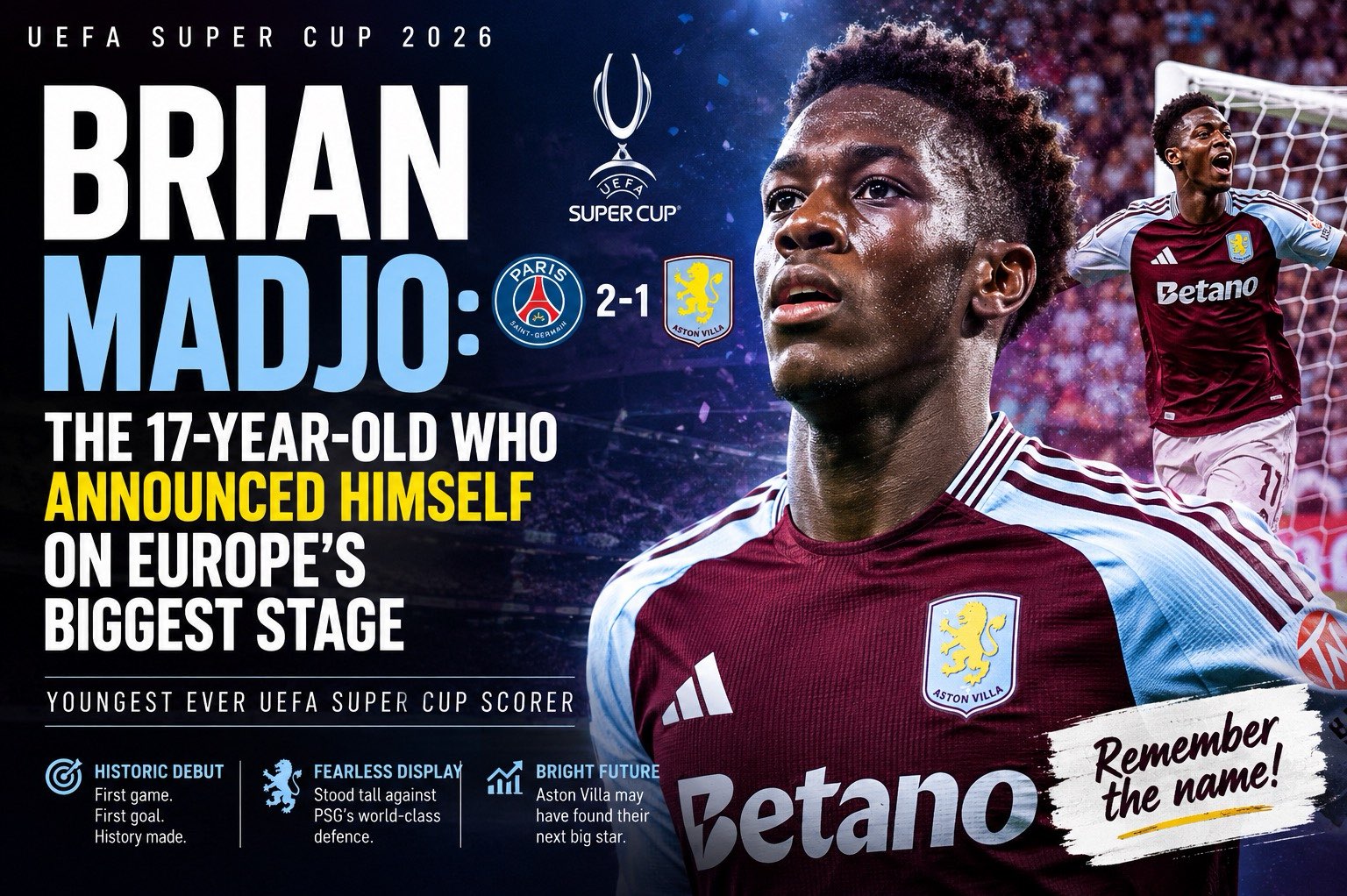
Paris Saint-Germain may have lifted the UEFA Super Cup trophy, but one of the biggest talking points from the night was a teenager wearing an Aston Villa shirt.

His name is **Brian Madjo**.

At just 17 years old, Madjo walked onto the European stage for his competitive Aston Villa debut against the reigning Champions League winners. By the end of the night, he had scored a historic goal, created problems for one of Europe’s strongest defences and given Villa supporters plenty of reasons to be excited about the future.

Aston Villa ultimately lost 2–1 to PSG in Salzburg, with Khvicha Kvaratskhelia opening the scoring before Madjo equalised just before half-time. Désiré Doué then scored the winning goal in the second half.

But the scoreline tells only part of the story.

## **A Debut He Will Never Forget**

Imagine making your first competitive appearance for a major European club and finding yourself facing Paris Saint-Germain.

Now imagine scoring.

That was Madjo’s reality.

PSG took control early, with Kvaratskhelia giving the French side the lead in the 20th minute. Villa needed a response, and it came from the teenager who had never previously played a competitive match for the club.

Madjo struck just before half-time to bring Villa level.

And it wasn’t simply another debut goal.

The strike made him the **youngest-ever goalscorer in UEFA Super Cup history**.

For a player who had been waiting months for his opportunity, the moment could hardly have been more dramatic.

## **The Wait Was Almost as Remarkable as the Goal**

Madjo’s journey to that pitch had not been straightforward.

The youngster joined Aston Villa from Metz in January 2026, but his competitive debut was delayed because of a registration dispute involving FIFA regulations. That meant he had to wait while the situation surrounding his registration was resolved.

After months of uncertainty, the green light finally arrived.

And when Madjo finally got his opportunity, he didn’t look like a player overwhelmed by the occasion.

He looked ready.

Reports from the match highlighted his physical strength, hold-up play and ability to trouble experienced defenders.

That is perhaps what makes his performance so intriguing.

Scoring on your debut can sometimes be a moment of luck.

But Madjo’s overall performance suggested there could be much more to come.

## **Standing Up Against Europe’s Best**

PSG are not an ordinary opponent.

They entered the Super Cup as Champions League winners and were looking to begin another season with more silverware. Their squad contained some of the best players in European football.

Yet Madjo repeatedly showed that he was willing to compete.

He used his physical presence to challenge defenders, competed for difficult balls and continued to make himself available in dangerous areas.

For a 17-year-old, that mentality may have been just as impressive as the goal itself.

Villa manager Unai Emery has already shown a willingness to trust young players, and Madjo’s performance gives him another intriguing option to work with. Emery praised Madjo and fellow youngster George Hemmings after the defeat, highlighting the positive signs from Villa’s young players. 

## **PSG Still Had the Final Word**

Despite Madjo’s historic equaliser, PSG eventually regained control.

Désiré Doué scored in the 61st minute after initially being flagged offside. A VAR review overturned the decision and confirmed the goal, putting PSG back in front. 

Villa pushed for another equaliser, but PSG held on.

The French champions therefore began the new campaign by retaining the UEFA Super Cup, continuing their remarkable run of success under Luis Enrique. 

For PSG, it was another trophy.

For Villa, it was a defeat.

But for Madjo, it could be the beginning of something much bigger.

## **Could This Be the Start of a Breakout Season?**

Football history is filled with teenagers who produced spectacular debuts and then struggled to maintain that momentum.

That is why expectations around Madjo need to be handled carefully.

One great performance does not guarantee a superstar career.

However, there are reasons to believe Villa have found a player with significant potential.

Madjo reportedly impressed during pre-season before his Super Cup debut, and his performance against PSG only increased the excitement surrounding him. 

At 17, he has enormous room to develop.

He will still need to improve his decision-making, consistency and understanding of senior-level football. He will also have to deal with the pressure that inevitably comes after a historic debut.

But those are challenges every young player with serious ambitions must eventually face.

The important thing is that Madjo has already shown he isn’t afraid of the stage.

## **Aston Villa Fans Have a New Reason to Be Excited**

For Villa supporters, the result in Salzburg will obviously be disappointing.

They came close to an important piece of European silverware but ultimately fell short.

Yet there is a positive story hiding inside that defeat.

Villa may have lost the trophy, but they could have gained something more valuable for the future.

A teenage striker who has already demonstrated that he can compete against elite opposition.

A player who waited months for his opportunity.

A player who made his competitive debut against PSG.

A player who scored.

And a player who now holds a place in UEFA Super Cup history.

That’s quite an introduction.

## **The Road Ahead**

The real test begins now.

Madjo will no longer be an unknown teenager waiting for his opportunity.

People will be watching.

Defenders will know his name.

Supporters will expect more.

And every appearance will bring greater pressure.

How he responds could determine whether this Super Cup performance becomes a memorable one-off or the first chapter of a remarkable career.

For Aston Villa, the challenge will be to develop him carefully while giving him enough opportunities to continue growing.

For Madjo, the message is simple:

The door has opened.

Now he has to walk through it.

## **Final Thoughts**

PSG deserved their 2–1 victory and another UEFA Super Cup trophy.

But football is not always about the team holding the silverware at the end.

Sometimes, a match can introduce the world to a player who may become important for years to come.

Brian Madjo certainly gave us something to talk about.

At 17 years old, on his competitive Aston Villa debut, against the Champions League holders, he scored a historic goal and announced himself on one of European football’s biggest stages. 

Maybe this was simply a brilliant debut.

Or maybe, years from now, we’ll look back at the night in Salzburg and say:

**That was the night Brian Madjo announced himself.**

### **What do you think?**

**Can Brian Madjo become one of the breakout stars of the 2026/27 season? Or is it still too early to put that much pressure on a 17-year-old?**

Let me know your thoughts. ⚽️🔥

#Football #AstonVilla #BrianMadjo #PSG #UEFASuperCup #PremierLeague #Buzzer
GENERAL

Brian Madjo: The 17-Year-Old Who Announced Himself on Europe’s Biggest Stage

Like icon
7
Comments icon
Shares icon
sports_hub01

about a month ago

The curtain has finally fallen on another unforgettable FIFA World Cup, but football never truly sleeps. As the celebrations fade and the confetti settles, attention is already shifting toward the future. National teams are assessing their performances, clubs are welcoming players back from international duty, and supporters around the globe are debating what comes next.


The 2026 tournament will be remembered for its drama, surprises, and the emergence of a new football landscape. It delivered unforgettable matches, emotional farewells, tactical masterclasses, and performances that reminded everyone why football remains the world’s most beloved sport.


For many fans, the biggest talking point is Spain’s remarkable triumph. Their journey to lifting the trophy was built on tactical discipline, technical excellence, and an unwavering belief in their football philosophy. Throughout the tournament, Spain demonstrated that success is not achieved through individual brilliance alone but through collective teamwork, intelligent movement, and consistency.


The final itself was a showcase of two footballing giants. Argentina entered the match carrying enormous expectations after another impressive campaign. Their route to the final highlighted resilience, determination, and quality in every area of the pitch. Although they ultimately fell short, their performances throughout the competition reinforced their status as one of international football’s elite nations.


Spain’s victory also signals something much bigger than simply winning another trophy. It reflects the success of years of investment in youth development, coaching education, and technical football. The nation’s commitment to developing players capable of adapting to modern tactical demands has once again paid dividends on football’s biggest stage.


Another defining feature of this World Cup was the remarkable rise of younger players. Every tournament introduces fresh faces to the global audience, but this edition seemed to accelerate the transition from one generation to another. Young stars embraced the pressure of representing their countries with confidence beyond their years.


The tournament also reminded us that football is becoming increasingly unpredictable. Traditional powerhouses can no longer assume victory simply because of their reputation. Emerging nations continue to close the gap through improved coaching, better infrastructure, and increased opportunities for talented players to compete in Europe’s strongest leagues.


Supporters witnessed tactical evolution throughout the competition. Coaches demonstrated greater flexibility than ever before, frequently changing formations during matches to exploit weaknesses or respond to different situations. Defensive organization remained essential, but attacking creativity continued to separate the best teams from the rest.


One of the most fascinating aspects of the World Cup was the importance of squad depth. The expanded competition placed enormous physical demands on players, making rotation and intelligent squad management critical. Teams with quality options on the bench consistently performed better as the tournament progressed.


Away from the pitch, football’s global appeal reached even greater heights. Stadiums were packed with passionate supporters representing every corner of the world. Social media buzzed with tactical debates, emotional reactions, and celebrations that united millions of fans despite geographical and cultural differences.


For clubs across Europe, however, there is little time to reflect. Preparations for the new domestic season are already underway. Managers are evaluating returning players, fitness coaches are monitoring workloads after the tournament, and sporting directors are working tirelessly in the transfer market to strengthen their squads.


The transfer window has quickly become football’s next major attraction. Clubs understand that success next season could depend on decisions made over the coming weeks. Every signing has the potential to transform a team’s ambitions, while every departure forces managers to rethink their tactical plans.


Some of the biggest clubs are searching for attacking reinforcements, while others are prioritizing defensive stability after analyzing last season’s weaknesses. Financial regulations continue to influence negotiations, making recruitment more strategic than ever before.


Meanwhile, several coaching situations remain under intense scrutiny. The modern game places enormous pressure on managers to deliver immediate success. Every decision, tactical adjustment, and substitution is analysed by supporters and the media, creating one of the most demanding environments in professional sport.


Football never stands still. Just days after one chapter closes, another begins. The excitement generated by the World Cup now fuels anticipation for another thrilling club season, where familiar rivalries will resume and new stories will emerge.


If the tournament proved anything, it is that the future of football has never looked brighter. The game’s balance of power continues to evolve, young talents are ready to become household names, and tactical innovation is pushing the sport into an exciting new era.


💬 Over to you: Which team impressed you the most at the 2026 FIFA World Cup, and which player do you think is destined to become football’s next global superstar? Share your thoughts in the comments!
GENERAL

Football Enters a New Era: What the World’s Biggest Stories Mean After the 2026 FIFA World Cup?

Like icon
4
Comments icon
Shares icon
sports_hub01

about a month ago

Every four years, the FIFA World Cup pauses the rhythm of everyday life and reminds us why football is unlike any other sport. It is more than ninety minutes on a pitch. It is hope carried by millions, dreams nurtured over generations, and emotions shared by entire nations. The 2026 FIFA World Cup was no exception. If anything, it surpassed expectations, delivering a tournament filled with unforgettable moments, tactical brilliance, rising stars, and stories that will be told for decades.


When FIFA announced that the tournament would expand to 48 teams and be jointly hosted by the United States, Canada, and Mexico, opinions were divided. Some feared that a larger competition would reduce the quality of football. Others questioned whether three host nations could successfully organize an event of such magnitude. By the time the final whistle blew, those doubts had largely disappeared. The tournament became a celebration of football’s remarkable global growth and proved that the Beautiful Game continues to evolve without losing its soul.


From the opening match to the championship celebration, the 2026 World Cup showcased football at its finest. Every day produced new heroes, unexpected twists, emotional farewells, and unforgettable memories. It was a tournament that united billions of supporters across continents and reaffirmed why the World Cup remains the pinnacle of international sport.


A New Era Begins


The most significant change in this edition of the World Cup was the expansion from 32 to 48 participating nations. For decades, many talented teams narrowly missed qualification because of limited places. The new format opened the door for more countries to experience football’s grandest stage.


Critics predicted an increase in one-sided matches. Instead, they witnessed the opposite.


Smaller nations arrived fearless and well prepared. Football development across Africa, Asia, North America, and Oceania has accelerated dramatically over the past decade, and this tournament reflected that progress. Teams that once entered the World Cup hoping simply to compete now arrived believing they could win.


That belief transformed the competition.


Every match demanded concentration. Every point became precious. Every nation, regardless of its ranking, played with ambition. The expanded format did not weaken the tournament—it strengthened it by making football’s greatest celebration more inclusive while maintaining an exceptional standard of competition.


Three Nations, One Extraordinary Festival


For the first time in history, three countries shared hosting responsibilities. The United States, Canada, and Mexico embraced the challenge with remarkable success.


The tournament became much more than a football competition. It evolved into a celebration of cultures, languages, and traditions. Stadiums were filled with supporters wearing every imaginable colour, while fan zones became gathering places where strangers celebrated together despite supporting different teams.


Every host city contributed its own unique atmosphere. Historic venues mixed with state-of-the-art stadiums, creating an unforgettable backdrop for the world’s biggest sporting event. The organization demonstrated that football truly belongs to the world.


Spain’s Return to the Summit


Every World Cup eventually crowns a champion worthy of history, and Spain earned that honour through consistency, intelligence, and outstanding football.


From the opening stages of the tournament, Spain displayed qualities that separated them from the competition. Their passing was precise, their movement relentless, and their understanding of space almost effortless. They controlled matches without becoming predictable and defended with discipline whenever possession was lost.


Their midfield dictated the tempo of games, while their defence combined composure with resilience under pressure. Rather than relying on moments of individual brilliance alone, Spain succeeded because every player understood their role within a collective system.


Championships are rarely won through talent alone. They require patience, adaptability, and mental strength.


Spain possessed all three.


Throughout the knockout rounds, they faced opponents determined to disrupt their rhythm, yet they consistently found solutions. Their ability to remain calm in difficult moments reflected the experience and confidence of a team fully committed to its football philosophy.


When they finally lifted the FIFA World Cup trophy, it represented the reward for years of careful planning, outstanding player development, and tactical excellence.


Argentina’s Courageous Defence


As defending champions, Argentina entered the tournament carrying enormous expectations.


Every opponent viewed defeating them as a statement. Every match became a final.


Despite the pressure, Argentina displayed remarkable determination throughout the competition. Their balance between experienced leaders and emerging talent allowed them to navigate difficult situations with composure.


Their journey to another World Cup final reminded everyone why champions deserve respect. Tournament football often rewards resilience more than spectacular performances, and Argentina repeatedly demonstrated an ability to survive difficult moments.


Although they ultimately fell short in the final, their campaign reinforced their status among international football’s greatest nations.


The Rise of Tactical Football


One of the defining features of the 2026 World Cup was the tactical sophistication displayed by competing teams.


Modern football has become a fascinating contest of ideas.


Managers no longer rely on fixed formations. Systems changed constantly depending on possession, opposition, and match situations. Full-backs drifted into midfield. Centre-backs initiated attacks. Goalkeepers acted as playmakers. Forwards became the first line of defence.


The best teams succeeded because every player understood not only their own responsibilities but also how those responsibilities changed throughout the match.


Football has become faster, smarter, and more demanding than ever before.


Goalkeepers: The Unsung Heroes


While forwards naturally receive headlines for scoring goals, the tournament repeatedly highlighted the importance of elite goalkeeping.


Throughout the competition, goalkeepers produced extraordinary performances that kept their nations alive.


Spectacular reflex saves.


Commanding aerial presence.


Outstanding distribution.


Leadership under pressure.


Several knockout matches were decided not by goals alone but by remarkable saves that changed momentum entirely.


The modern goalkeeper has evolved into one of football’s most complete athletes, expected to contribute both defensively and offensively.


The Emergence of New Stars


Every World Cup introduces players who leave the tournament transformed into global names.


The 2026 edition continued that tradition.


Young footballers embraced responsibility without fear. Established stars produced moments of brilliance expected from players performing on the sport’s biggest stage, while previously unknown talents seized opportunities to announce themselves before a worldwide audience.


These breakthrough performances reminded supporters that football’s future remains incredibly bright.


Across every continent, academies continue producing technically gifted, tactically intelligent players capable of competing at the highest level.


The next generation has arrived.


Africa’s Growing Influence


One of the tournament’s most encouraging stories was the continued progress of African football.


The continent has never lacked talent, but recent years have witnessed significant improvements in coaching, youth development, tactical organization, and professional experience.


African nations competed confidently against football’s traditional powers, refusing to be intimidated by reputation.


Morocco once again inspired supporters through disciplined defending and fearless attacking football, while other African representatives demonstrated that the gap separating the continent from the world’s elite continues to narrow.


Millions of young footballers across Africa watched these performances with renewed belief.


The message was clear.


The future belongs to those prepared to dream boldly.


Fans: The Heartbeat of the World Cup


No discussion of the World Cup would be complete without recognising the supporters.


Football without fans loses its heartbeat.


Throughout the tournament, stadiums overflowed with passion. Chants echoed from kickoff until the final whistle. Entire families travelled across continents to support their nations. Friendships formed between rival supporters who discovered that football often creates unity far stronger than division.


Some celebrated unforgettable victories.


Others experienced heartbreaking eliminations.


Yet every supporter contributed to the extraordinary atmosphere that makes the World Cup unique.


Long after tactical systems and scorelines are forgotten, memories of shared celebrations and emotional moments remain.


Lessons Beyond Football


The World Cup has always represented more than competition.


It teaches resilience.


It rewards teamwork.


It celebrates diversity.


It reminds us that preparation matters, but belief matters just as much.


Underdogs repeatedly challenged favourites because confidence often outweighs reputation. Champions succeeded because they remained composed during moments of immense pressure.


Football mirrors life.


Success is rarely achieved without setbacks.


Progress requires patience.


Greatness demands consistency.


These lessons extend far beyond sport.


Technology’s Expanding Role


Technology continued shaping modern football throughout the tournament.


Video review and goal-line technology helped improve decision-making while generating healthy debate among supporters.


Although opinions differ regarding certain interventions, technology has undeniably become part of football’s future.


The challenge moving forward is maintaining the game’s natural rhythm while ensuring fairness whenever possible.


Finding that balance will remain one of football’s most important conversations.


The Legacy of 2026


Years from now, supporters will remember different moments from this World Cup.


Some will remember spectacular goals.


Others will remember emotional celebrations.


Many will remember unexpected victories, heartbreaking defeats, and unforgettable individual performances.


Yet perhaps the tournament’s greatest achievement was demonstrating football’s continued ability to inspire.


In an increasingly divided world, billions of people spent weeks sharing the same emotions, celebrating the same moments, and speaking the same universal language.


Football.


The 2026 FIFA World Cup proved that while tactics evolve, technology advances, and formats change, the essence of the game remains untouched.


Hope before kickoff.


Belief during the match.


Joy in victory.


Dignity in defeat.


Anticipation for the next chapter.


That is why the World Cup continues to capture hearts unlike any other sporting event.


Looking Ahead


As supporters begin looking toward the next international cycle, one truth remains undeniable.


Football never stands still.


New stars will emerge.


New rivalries will develop.


New records will be broken.


Young dreamers kicking balls through neighbourhood streets today may become tomorrow’s World Cup heroes.


The journey toward the next tournament has already begun.


Until then, the memories of 2026 will continue to inspire millions around the globe. The images of passionate supporters, unforgettable matches, and football played at the highest level will live on as a reminder of why this sport is called the beautiful game.


The World Cup may last only a few weeks, but its stories last forever.


What was your defining moment of the 2026 FIFA World Cup? Was it Spain’s triumph, Argentina’s resilience, the rise of new stars, or the unforgettable passion of fans around the world? Share your thoughts in the comments and join the conversation—because football’s greatest stories are always best told together. ⚽🌍🏆
GENERAL

From Dreams to Glory: How the 2026 FIFA World Cup Reaffirmed Football’s Place as the World’s Greatest Sport
Like icon
4
Comments icon
Shares icon
sports_hub01

about a month ago

There is no tournament in football that captures the imagination of the world quite like the FIFA World Cup. Every four years, billions of fans unite behind their nations, celebrating victories, enduring heartbreak, and witnessing moments that become part of football history. It is more than a competition—it is a global festival where passion, culture, and national pride come together on the biggest stage in sport.


What makes the World Cup so special isn’t just the quality of football—it’s the emotion that surrounds every match. Players don’t compete only for medals or trophies; they play for their country, their families, and generations of supporters who dream of seeing their flag raised on football’s grandest stage. Every goal is celebrated by millions, every defeat is deeply felt, and every victory becomes a memory that lasts a lifetime.


The tournament has produced countless unforgettable moments. From dramatic last-minute goals and spectacular comebacks to incredible underdog stories, the World Cup constantly reminds us why football is known as the beautiful game. Fans have witnessed legendary performances, unforgettable saves, and moments of brilliance that continue to inspire future generations of footballers.


One of the greatest strengths of the World Cup is its ability to unite people. Regardless of language, culture, religion, or background, football creates a shared experience unlike any other sport. For ninety minutes, the world watches the same match, celebrates the same moments, debates the same decisions, and experiences the same emotions. Even rival supporters often find themselves appreciating moments of true sporting excellence.


The World Cup is also where new heroes are born. While established stars often take center stage, every tournament introduces young talents who seize their opportunity and announce themselves to the world. Many players have transformed their careers through outstanding World Cup performances, proving that determination, confidence, and preparation can change a life forever.


Another reason fans cherish the World Cup is its unpredictability. History has shown that favorites do not always lift the trophy. Smaller nations have shocked football giants with disciplined defending, fearless attacking, and unwavering belief. These unexpected results remind everyone that football is decided on the pitch—not by reputation, rankings, or history.


Beyond the action on the field, the tournament creates unforgettable memories among families, friends, and communities. Homes are filled with excitement before kickoff, streets come alive with celebrations after victories, and conversations about football dominate workplaces, schools, and social media. The World Cup has a unique way of bringing people together, creating bonds that extend far beyond the final whistle.


As football continues to evolve through better coaching, sports science, technology, and tactical innovation, the essence of the World Cup remains unchanged. It is still about courage, teamwork, resilience, sacrifice, and the relentless pursuit of greatness. Every edition writes a new chapter, proving that the tournament never loses its magic.


Whether you’re supporting one of the traditional football powerhouses or cheering for an underdog chasing history, the FIFA World Cup reminds us why we fell in love with football. It is where dreams become reality, where ordinary moments become legendary, and where every generation witnesses stories that will be told for decades.


What has been your favorite World Cup moment of all time? Share your thoughts in the comments. The next unforgettable chapter of football history is always just one match away.
FOOTBALL (SOCCER)

The FIFA World Cup: Where Football Dreams Become Reality

Like icon
3
Comments icon
Shares icon