Stan Wawrinka’s last point as a professional came on his own serve, at 2-6 in a second-set tiebreak, with the Basel crowd still urging him on. Jiri Lehecka won it, 7-5 7-6(2), and a 24-year career ended in front of a home crowd that didn’t want to leave.
He walked off high-fiving ball kids. Not a bad way to finish for a man who entered the tournament ranked 140th on a wild card. And yet the numbers say he never was the best player in the world. He peaked at No. 3.
The argument for weeks at No. 1
Tennis loves a ranking. Novak Djokovic has spent more than 400 weeks at the top, Roger Federer 310 and Rafael Nadal 209, and those totals are the standard everyone gets measured against. They are a fair standard. Consistency across a season is hard, and the ranking system rewards it. But it tells you very little about who you’d want across the net in a final.
Three finals, three titles
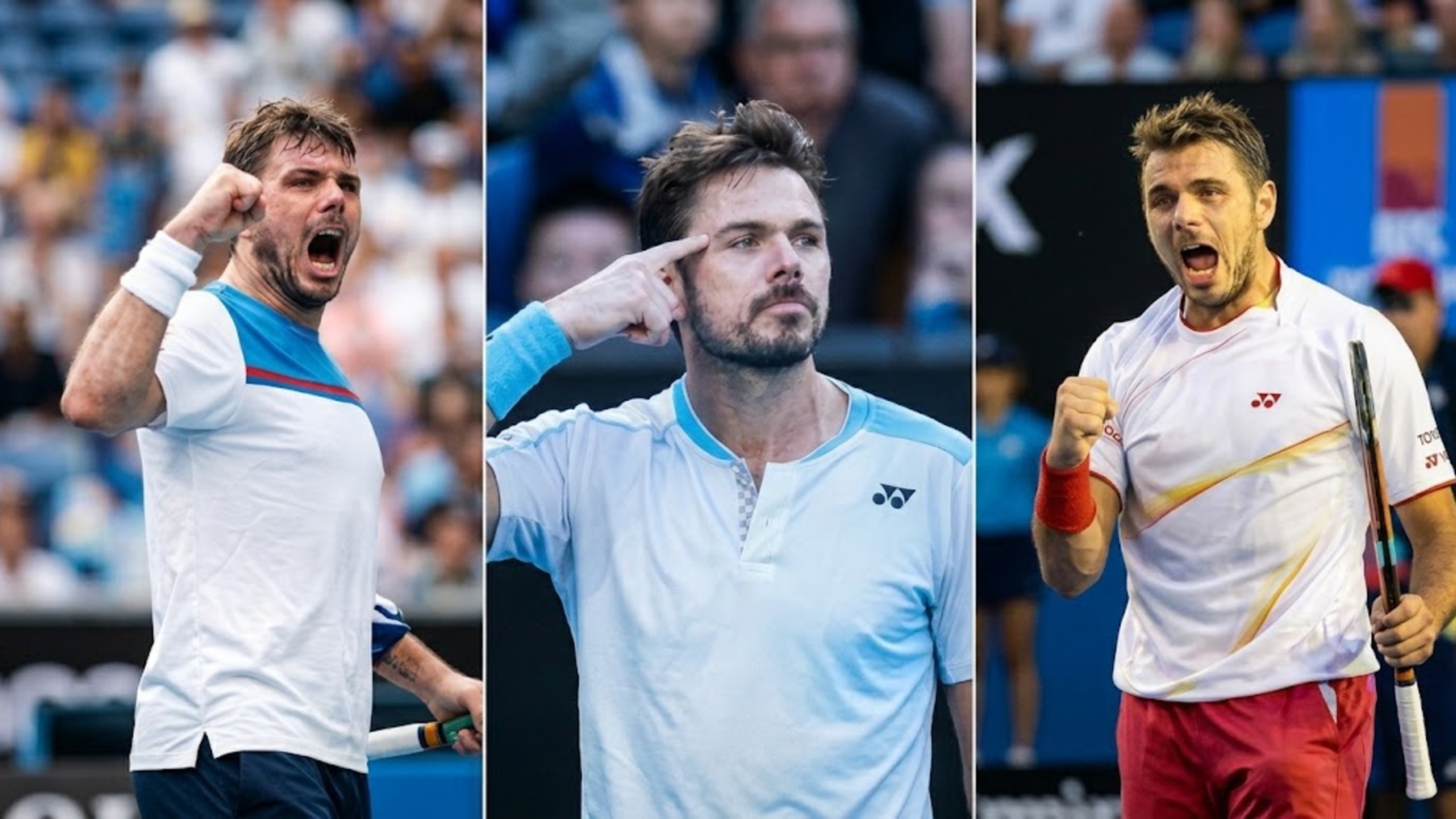
Wawrinka reached three Grand Slam finals in his career and won all three. He beat Rafael Nadal at the 2014 Australian Open, Djokovic at the 2015 French Open, and Djokovic again at the 2016 US Open.
Look at how those wins were built. In Melbourne in 2014 he had already beaten Djokovic in a five-set quarterfinal, 9-7 in the fifth, a year after losing a similar match to him 12-10 in the fifth.
That is the pattern with Wawrinka. He wasn’t the most reliable player on tour in October, but when a second week of a major arrived, his heavy one-handed backhand turned into the best weapon in the draw.
The Murray comparison
Andy Murray also has three major titles, and he spent 41 weeks at No. 1. On the usual way of ranking careers, Murray’s looks bigger.
Yet Wawrinka’s three came with a perfect record in finals, against the two best players of his era in two of them. A stat like that doesn’t fit neatly onto a rankings table, which is part of why he has always been undersold.
Add the other trophies. He won the Monte Carlo Masters in 2014, a Davis Cup with Switzerland that same year, and Olympic doubles gold with Federer in 2008. Sixteen tour-level singles titles in all.
Longevity as its own kind of peak
There is one record the ATP itself points to. Wawrinka holds the most tour-level wins since turning 40, with 12 of them in under two years. That says something about how he treated his later career. Other great players retired when the results dried up. He kept coming back to practice courts and qualifying draws until the body wouldn’t answer.
Asked about his career afterward, he said all he ever wanted was to leave without any regrets. In Basel, with tears and a standing crowd, it looked like he did.
What the debate should be
Greatness is usually measured in accumulation. More weeks, more titles, more records, and the logic is hard to argue with. But there’s a second way to judge an athlete, and it asks who delivered when the stage was biggest. By that test, Wawrinka sits much higher than a career-high ranking of No. 3 suggests.
So the question for tennis fans is a fair one. If you had to pick one player to win a final, would you take the one who spent years at No. 1, or the one who never lost a major final he reached?





 0