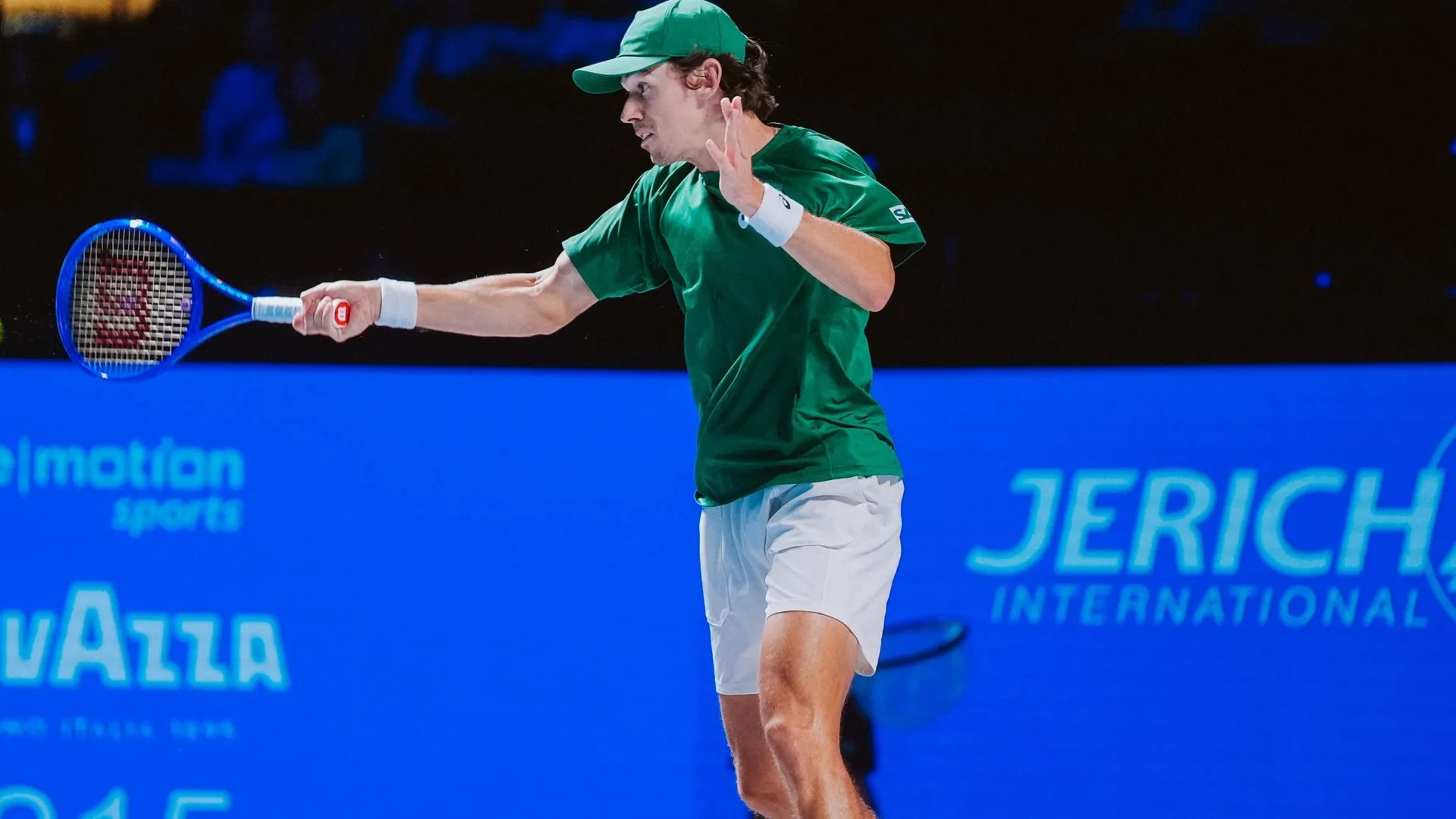
Alex de Minaur lost the first set 6-1 on Monday in Vienna. He was a break down in the second. He finished the match with fewer winners than errors, and he still won.
The final score was 1-6, 6-4, 6-3 against Tomas Machac, a player ranked 71st in the world, in just over two hours. It was not pretty, and it might be the most useful result of de Minaur’s week. The question is whether a player who wins like that can seriously compete for titles. The evidence says yes.
The numbers behind the mess
De Minaur hit 16 winners and 21 unforced errors. Machac hit 33 winners and 43 unforced errors, so his game was more explosive and also more chaotic.
Machac even won more points, 81 to 79. De Minaur was broken five times and still won, because he converted five of 11 break points.That detail is the heart of it. Tennis does not reward the player with the most points. It rewards the one who wins the right ones.
The turn came late
Machac was within two games of victory, hitting through the court under the Vienna roof. De Minaur finally got his break on his seventh break point of the match, to get to 3-4 in the second set.
Even after dropping serve in the opening game of the decider, he reeled off five straight games. He closed with an ace down the T. Those are the small moments that separate a first-round exit from a title run. Winning when the game is going wrong is a skill, and some excellent players never learn it.
What the record says
De Minaur has 18 ATP 500 wins this season, the most on tour, and he won the title in Rotterdam in February. Ranked tenth in the world, he is known more for consistency and grit than for raw power.
That profile can be underrated. In a sport that celebrates big serves and sweeping forehands, a player who solves problems matters. Opponents know it, which is why Machac’s early dominance did not feel safe at any point. His next opponent is Learner Tien, who won his opener 6-3, 6-1 over Luca Van Assche.
Winning ugly as a real skill
Elite players need tactical flexibility, emotional control and the ability to win when their best tennis is missing. Fans tend to love the first one and forget the other two.
Think about how the best players in history handled bad days. They did not play perfectly all the time. They found a way to lose fewer points that mattered, and they rarely panicked. De Minaur’s win was a smaller version of that. He did not suddenly become a better player at 1-6. He stayed calm and let the match turn.
Does it translate to titles?
Contenders in tennis are usually judged by their peak, but championships tend to be decided by their floor. A player who can win while playing at 70 percent has a better chance across a two-week tournament than one who needs to hit 100.
Vienna is an ATP 500 event, not a Grand Slam, so the stakes are lower. Still, the pattern is the same, and the best players collect wins like this all year. That does not make de Minaur a favorite for the biggest titles. It does suggest he will be an uncomfortable draw for anyone.
Would you rather watch a player who dazzles when he is on, or one who finds a way when he is off, and which one wins more trophies?





 0