





 0

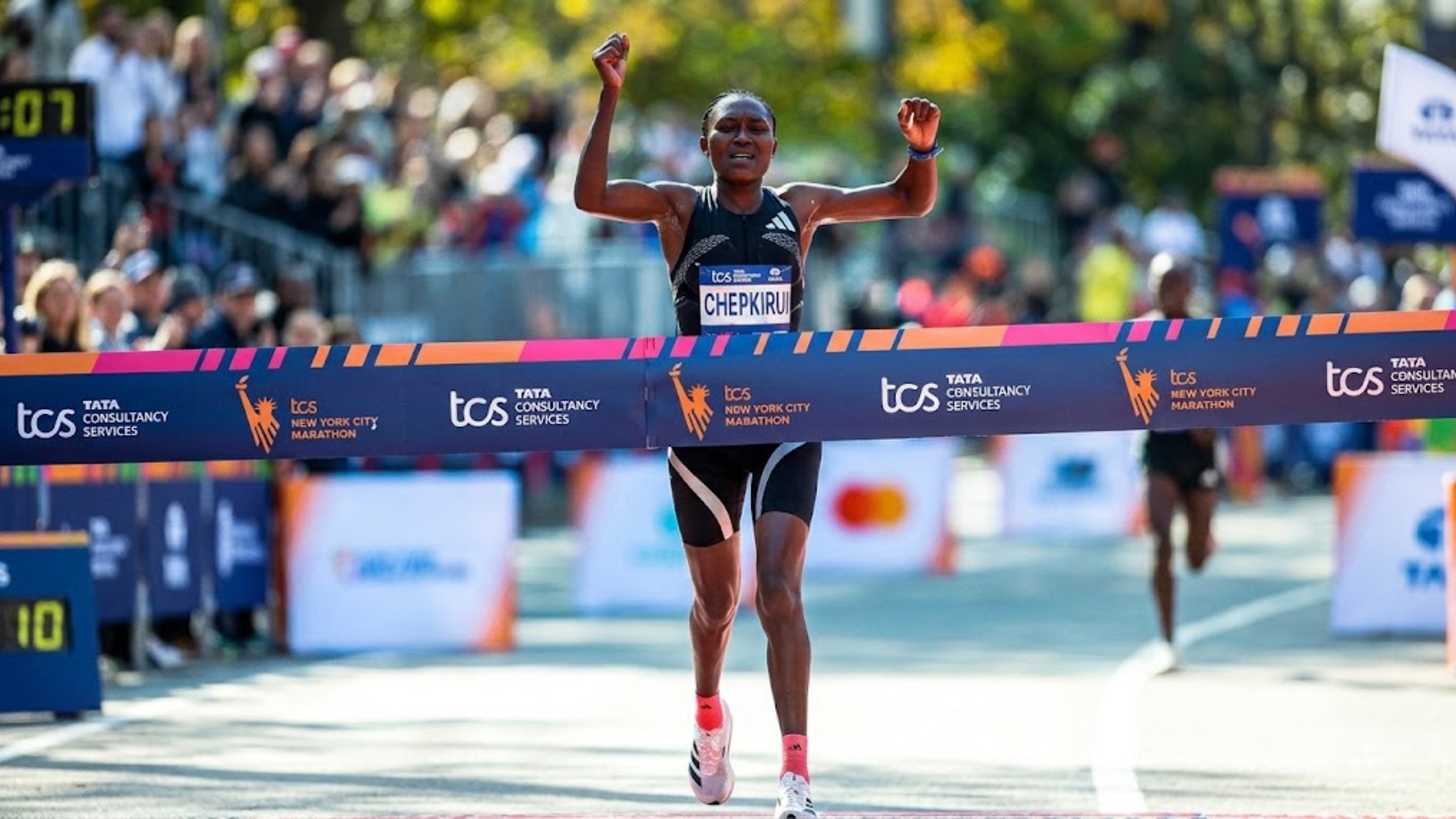
Sheila Chepkirui Has Won New York Twice in Three Years. Why the Marathon Rewards Patience Over Pace
Last year Hellen Obiri ran 2:19:51 in New York and set a course record. This year’s winner needed nearly five minutes longer, and nobody felt cheated.
Sheila Chepkirui won the 2026 New York City Marathon in 2:24:36, her second title in three years, and the finish was so tight that second and third were separated by four-tenths of a second. It was a reminder that fast clocks and good races aren’t the same thing.
A half marathon in no hurry
The race opened with a modest half-marathon split of 1:13:52. That pace left a big group together for a very long time. Chepkirui led at 20K in 1:10:01, and with just over seven kilometres to go, six women were still within one second of the lead.
That matters because pace changes what the race tests. A record-chasing pace tests how fit you are. A slow pace tests everything else: positioning, nerve, and when you decide to hurt people.
Five kilometres that decided it
Chepkirui led at 20K, 25K and 30K, then Obiri moved ahead at 35K. It looked like the defending champion was taking control. Chepkirui responded by running 35K to 40K in 16:24, about 5:17 per mile and the fastest five kilometres of the race. Only Obiri could go with her, and the pair reached 40K together in 2:17:39.
Then Chepkirui pulled away over the last 2.2 kilometres and outkicked Obiri over the final quarter mile. Obiri had been chasing a third New York title and a hat-trick of crowns was off the table. Chepkirui has now finished in the top three in New York in each of the last three years: a win in 2024, third in 2025, and a win this time.
The woman who sneaked up
Jessica McClain had been 3.4 seconds behind Obiri at 40K. She caught her on the short rise in the final 200 metres and finished second in 2:24:42, with Obiri third in 2:24:43. McClain became the first American woman on the New York podium since Shalane Flanagan finished third in 2018.
It’s a good illustration of how a patient race behaves. The lead pair spent their energy on each other, and the runner behind them had been saving hers. Marathon podiums rarely go to the runner who goes hardest earliest. They go to whoever has legs left.
The course as a co-author
New York is not a course that rewards a perfect pacing plan. Five bridges, long climbs and a drag up Fifth Avenue ask runners to survive before they race. The finish through Central Park is full of small rises that make a late surge more expensive than it looks.
That might be why records are an awkward fit here. Obiri’s 2:19:51 last year was spectacular, but it was also a very specific kind of race. This year’s version was a different sport, built on reading opponents rather than running at a pace.
Honestly, the tactical version might be the better spectacle. The clock watches a runner; the field watches each other. Nobody at Central Park was checking splits when McClain went past Obiri.
Why Chepkirui keeps winning
Experience helps. She has run New York enough to know where the race really starts, and she has the temperament to wait for it. In a field of marathoners with similar fitness, that’s often the thing separating the winner from the next five.
It also explains why her times aren’t the headline. She won in 2:24:36, one second slower than her winning time in 2024, and it’s still the right result. In this sport, the person who wins is usually the one who stopped worrying about the clock first.
Would you rather watch a pace-lit 2:19 time trial or a 2:24 duel decided by half a second, and should the majors care which one they get?

Sarajevo Back at the Heart of Regional MMA: SFC Returns with Explosive Matchups

How Buzzer Karma Works: Levels, Penalties, and What They Mean

Inside Buzzer's Latest Update (and Why It Changes How You Use the App)

Buzzer Introduces Ads Console: A New Era of Advertising Across the Entire Buzzer Ecosystem

Buzzer Is Evolving: From Quantity to Quality

Al Ittihad SC's Matches Are Now Live on Buzzer

Polo Al Taco Expands Its Global Reach Through Weekly Livestreams on Buzzer Arena TV

Buzzer Now Has a Games Hub, and Tournaments Are Coming

Palm City vs Gulf United Ends in 1–1 Draw in UAE Second Division League Clash

"We Don't Take the Guy With the Camera." He Built His Own Club Anyway. Now He's Coming to Find You.


