





 0
Kabaddi Is Still One of Asia's Most Fiercely Contested Sports. This Asian Games Just Proved It Again
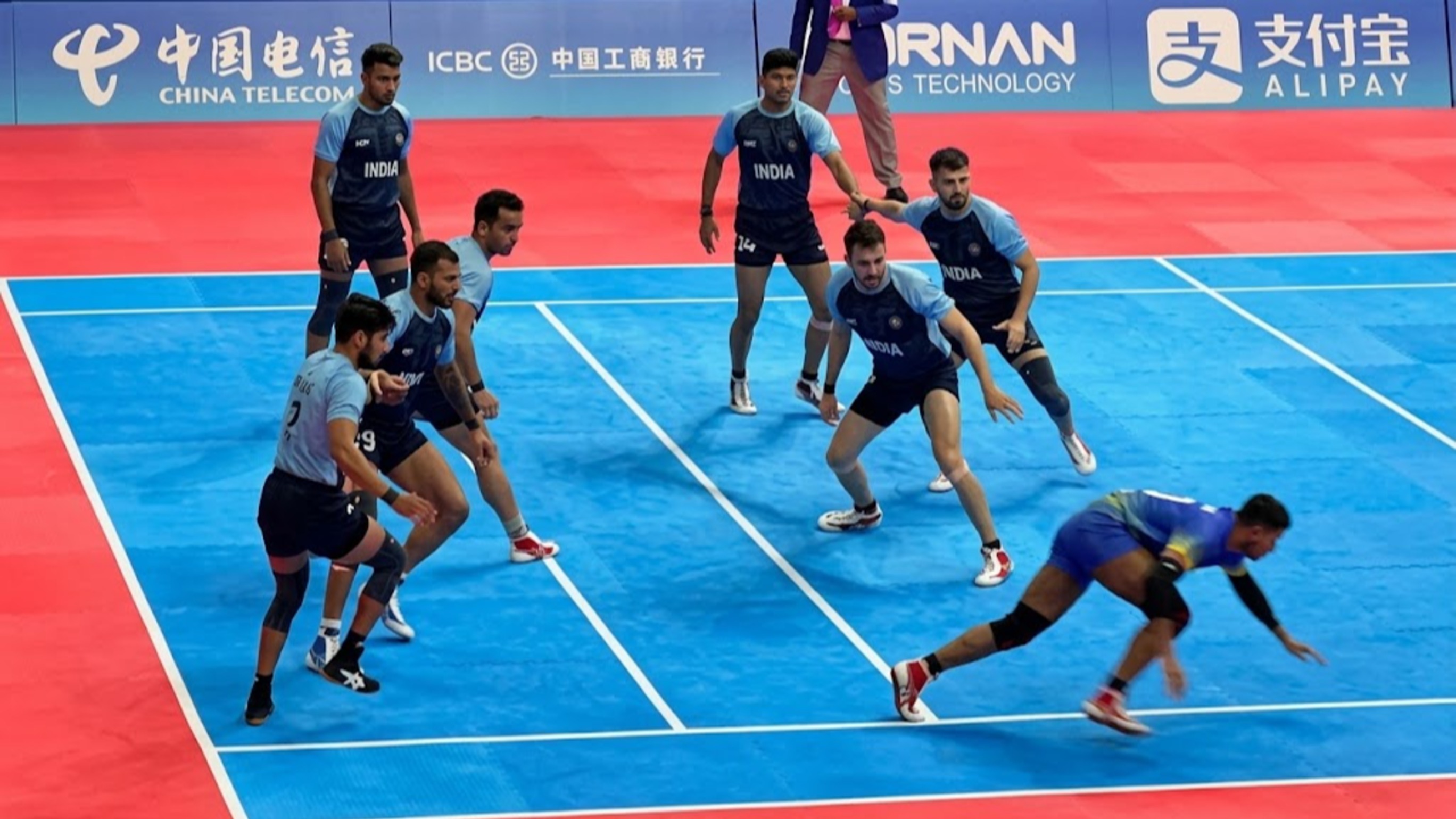
India's women reportedly beat Iran 37-34 in the kabaddi final at the Asian Games in Aichi-Nagoya, a scoreline that on its own tells you this wasn't a coronation. It was a fight, and that's been the story of Asian Games kabaddi for close to a decade now.
Kabaddi has been on the Asian Games program since Beijing 1990, when it launched as a men-only event with India winning every edition through 2014 without dropping a single match along the way. The women's competition joined in 2010, and India's women were similarly untouchable early on, taking gold in 2010 and 2014 without a loss.
The rivalry that changed everything
Then came 2018 in Jakarta, and Iran ended it. India's men lost in the semifinals to a team they'd never lost to at the Games before. A day later, Iran's women beat India's two-time defending champions 27-24 in a final that swung on a second-half surge, denying India what would have been a third straight title.
That result reshaped the sport's competitive picture more than any single match in Asian Games kabaddi history. India came back in 2023 and reclaimed the women's title with a margin of a single point over Chinese Taipei, a reminder that even a return to gold now comes with none of the cushion India's teams used to have. This year's group draw kept the sport's two traditional powers apart until the medal rounds, and India's women opened their title defense with a 42-21 win over Bangladesh, a comfortable result that gave no real hint of how close the final with Iran would turn out to be.
Why kabaddi produces this level of competition
Part of the answer is structural. Kabaddi rewards a raider's split-second decision-making and a defense's coordinated tackling just as much as raw athleticism, which means smaller training investments can still produce elite teams if the tactical execution is sharp enough. Iran's rise since 2018 has proven that a program doesn't need decades of history to compete with India at the very top.
The other part is cultural. Kabaddi carries genuine weight across South and West Asia in a way that rarely gets reflected in global sports coverage. A gold medal match between India and Iran draws the kind of intensity, and the kind of tactical depth, that most sports only produce once a rivalry has had generations to develop. Kabaddi built that rivalry in less than one.
What a 37-34 final actually says
A three-point margin in kabaddi, a sport built around tackles and raids worth one or two points at a time, is about as close as these finals get without going to a tiebreak. If today's result holds as reported, India will have reclaimed its fourth Asian Games women's title since the event's introduction, but the margin says the gap between the sport's traditional power and its most persistent challenger keeps shrinking, not widening.
If a sport with as limited a global footprint as kabaddi can produce rivalries this tight and this consistent, what does that say about how much competitive depth is out there in sports that never get the same spotlight?

Sarajevo Back at the Heart of Regional MMA: SFC Returns with Explosive Matchups

How Buzzer Karma Works: Levels, Penalties, and What They Mean

Inside Buzzer's Latest Update (and Why It Changes How You Use the App)

Buzzer Introduces Ads Console: A New Era of Advertising Across the Entire Buzzer Ecosystem

Buzzer Is Evolving: From Quantity to Quality

Polo Al Taco Expands Its Global Reach Through Weekly Livestreams on Buzzer Arena TV

Al Ittihad SC's Matches Are Now Live on Buzzer

Buzzer Now Has a Games Hub, and Tournaments Are Coming

Palm City vs Gulf United Ends in 1–1 Draw in UAE Second Division League Clash

"We Don't Take the Guy With the Camera." He Built His Own Club Anyway. Now He's Coming to Find You.


