





 0
Abhishek Sharma Broke India's Fastest T20I Century Record. He'd Already Broken It Once Before.
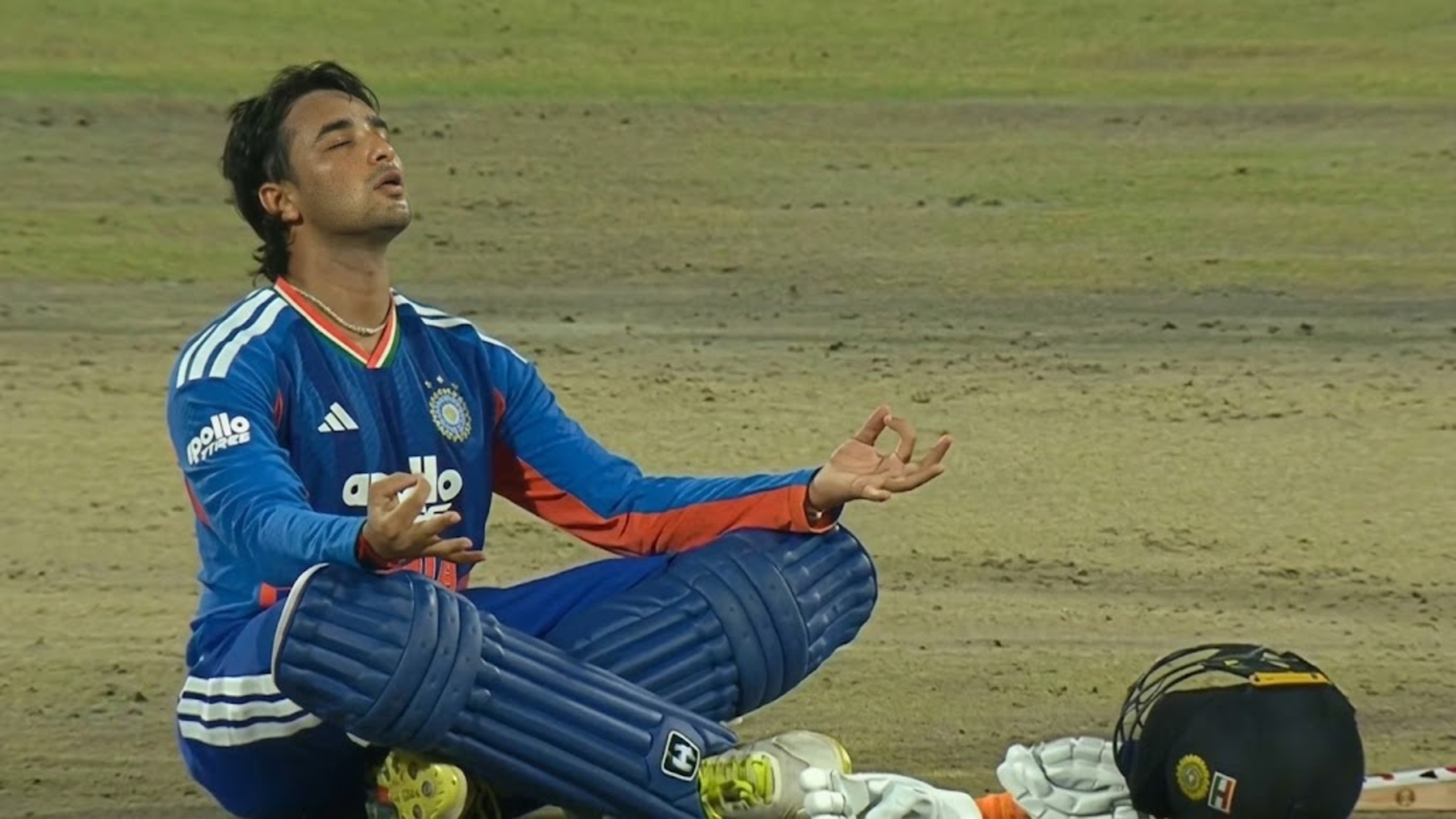
Abhishek Sharma reached a century off 30 balls against Afghanistan on Thursday, finishing on 108 from 34 deliveries with nine fours and eleven sixes. It broke Rohit Sharma's 35-ball Indian record, set against Sri Lanka back in 2017, a mark that had stood for nine years.
What makes this genuinely remarkable isn't just the record itself. It's that Abhishek has now produced three of India's four fastest T20I centuries, at 30, 34 and 37 balls, essentially competing against his own previous best more than anyone else's.
A production line, not a single outlier
India's list of the fastest T20I centuries by an Indian batter now reads almost entirely as an Abhishek Sharma highlight reel, interrupted only by Rohit Sharma's now-superseded mark and Suryakumar Yadav's 45-ball effort from 2023. That's not the profile of one freakish innings. It's a batter who has rewritten the same record multiple times within roughly two years.
His powerplay numbers back up the pattern. Abhishek scored 76 runs off 22 balls inside the first six overs against Afghanistan, the highest individual score in that phase in men's T20I history. He's now hit 37 sixes in the powerplay across 2026 alone, breaking his own 2025 record of 34, with the next closest player, Pakistan's Mohammad Waseem, sitting at 29 sixes for an entire season.
Why this specific skill keeps compounding
Reaching a fifty in 16 balls, as Abhishek did en route to Thursday's century, requires a specific kind of controlled aggression from ball one, not simply swinging hard and hoping. His strike rate on the day topped 317, built by targeting spin and pace with equal confidence rather than waiting to see the ball settle.
That's a genuinely different batting approach from the generation before him, one built around calculated risk from the very first delivery rather than accelerating gradually through an innings. Rohit Sharma's own 2017 record, remarkable at the time, now looks almost conservative by comparison to what India's current opening order treats as routine.
What this says about India's broader depth
India isn't producing one generational hitter. It's producing several. Suryakumar Yadav's 45-ball century, Rohit's now-broken 35-ball mark, and Abhishek's repeated record-breaking all point to a domestic structure, built through the IPL and India's aggressive white-ball philosophy more broadly, that keeps generating batters capable of this kind of explosive output.
That depth is arguably a bigger story than any single innings. A country producing multiple batters capable of threatening the fastest-century record in the same sport, within the same handful of years, isn't relying on individual brilliance. It's running a genuine system. And with India's T20 calendar constantly producing new batting opportunities, that record may not stay his for long.
How many more times will Abhishek Sharma break his own record before someone else in India's batting order does it instead, and does that pace of production suggest India's white-ball depth still has room to get even faster?

Sarajevo Back at the Heart of Regional MMA: SFC Returns with Explosive Matchups

How Buzzer Karma Works: Levels, Penalties, and What They Mean

Inside Buzzer's Latest Update (and Why It Changes How You Use the App)

Buzzer Introduces Ads Console: A New Era of Advertising Across the Entire Buzzer Ecosystem

Buzzer Is Evolving: From Quantity to Quality

Buzzer Now Has a Games Hub, and Tournaments Are Coming

Polo Al Taco Expands Its Global Reach Through Weekly Livestreams on Buzzer Arena TV

Al Ittihad SC's Matches Are Now Live on Buzzer

Palm City vs Gulf United Ends in 1–1 Draw in UAE Second Division League Clash

"We Don't Take the Guy With the Camera." He Built His Own Club Anyway. Now He's Coming to Find You.


 1


