





 1
Tigst Assefa Nearly Broke the Marathon Record. Then The Final 2km Changed Everything
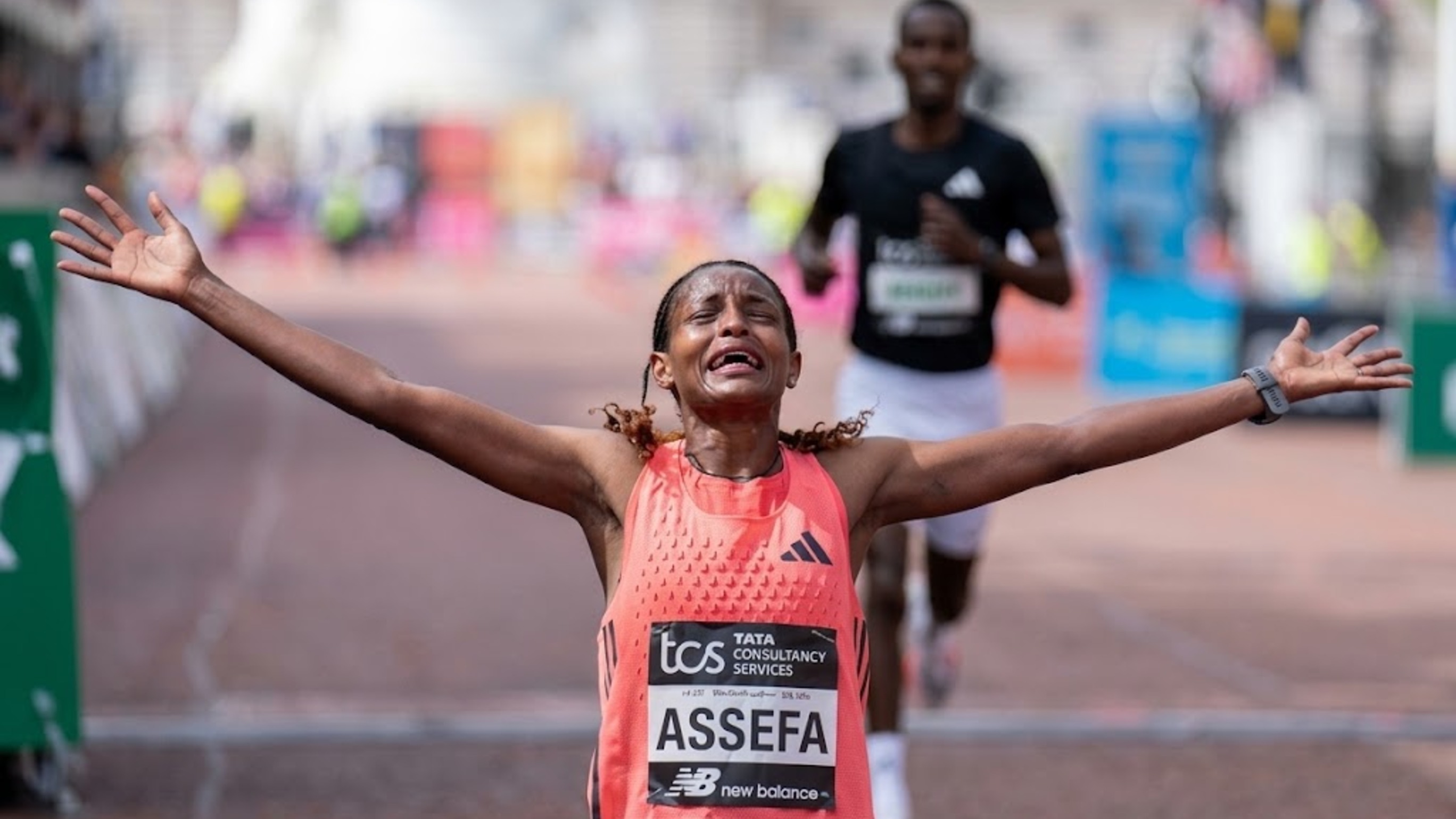
For 40 kilometers, Tigst Assefa was running a time that would have rewritten marathon history. Then the last two kilometers happened, and the story turned into something else entirely: proof of how thin the line actually is between glory and just holding on.
Assefa finished in 2:11:04, the third-fastest women's marathon ever run. On paper, that's a career-defining result. In the context of where she was at 40km, it's almost a disappointment, and that gap is the whole story.
What "on record pace" actually means at 40km
Marathon pace doesn't fail gradually. It holds, and holds, and then it doesn't. Runners who go out at record pace are making a bet that their body will keep cashing checks it wrote three hours earlier, deep into oxygen debt, with glycogen stores running on fumes. Assefa's body kept that bet through 40 kilometers. Then it didn't.
That's not a criticism of her training or her pacing strategy. It's what elite marathon running actually looks like from the inside, as opposed to how it looks on a results sheet the next morning.
The numbers make the scale of the attempt even clearer. Assefa reached halfway in 1:04:57, then hit 30km in 1:32:15 while still projected inside world-record pace. At 35km, her 1:47:32 split suggested a finish around 2:09:38. Even at 40km, she was still projected to finish in 2:09:44, just inside Ruth Chepngetich's 2:09:56 world record. Then her stride changed dramatically.
The final 2km is where marathons are actually decided
Casual fans watch the leaderboard. People who've run marathons watch the last two kilometers, because that's where the real race happens. Everything before that is positioning. The final stretch is where lactate, dehydration and sheer accumulated damage start overruling whatever pace band the runner planned to hold.
Assefa's slowdown in that window turned a potential record run into "merely" the third-fastest time in the event's history. Which tells you something uncomfortable: even the third-best marathon performance by a woman ever run still came with a visible crack in it, right at the end, where everyone could see it happen live.
Why this result still matters more than a "failed" record attempt
There's a temptation to file this under near-misses and move on. That undersells it. Running through 40km at record pace, even without finishing it off, is a statement about current fitness and ambition that a cautious, conservative run never makes.
Marathoners who never attempt the pace never find out what breaks. Assefa found out, on the biggest stage available to her, and still walked away with the third-fastest time in history. That's not a consolation prize. That's a runner operating at the absolute edge of what her body can currently do, in public, with no way to hide the moment it gave out.
The next attempt will know exactly where the wall was this time. Does a runner who's already touched record pace once get closer on the next try, or does the body just remember exactly how much that costs and refuse to go there again?

Sarajevo Back at the Heart of Regional MMA: SFC Returns with Explosive Matchups

How Buzzer Karma Works: Levels, Penalties, and What They Mean

Inside Buzzer's Latest Update (and Why It Changes How You Use the App)

Buzzer Introduces Ads Console: A New Era of Advertising Across the Entire Buzzer Ecosystem

Buzzer Is Evolving: From Quantity to Quality

Buzzer Now Has a Games Hub, and Tournaments Are Coming

Polo Al Taco Expands Its Global Reach Through Weekly Livestreams on Buzzer Arena TV

Al Ittihad SC's Matches Are Now Live on Buzzer

Palm City vs Gulf United Ends in 1–1 Draw in UAE Second Division League Clash

"We Don't Take the Guy With the Camera." He Built His Own Club Anyway. Now He's Coming to Find You.


