Jannik Sinner won the last two ATP Finals and will not defend the title in Turin from 15 to 22 November. Eight players are split into two round-robin groups of four, the top two in each group reach the semi-finals, and the two semi-final winners play the final, according to Wikipedia's page on the tournament.
The season Sinner ended early
On Tuesday 6 October, Sinner said his 2026 season was over. He told fans he would take a course of treatment on his knee and "do everything possible" to get back to full strength, according to the ATP Tour. Tennis Majors reports that the exact problem was never formally confirmed, and that he also missed the Shanghai Masters.
The ATP Tour adds that he had not played since winning Wimbledon in July, where he beat Zverev in the final for his fifth Grand Slam title. Before that came five Masters 1000 titles in a row, at Indian Wells, Miami, Monte-Carlo, Madrid and Rome. In Turin he is the two-time reigning champion with a 15-2 record at the event.
He was second in the race to Turin when he stopped, 800 points behind Alexander Zverev, according to the ATP Tour. Tennis Majors puts the totals at 8,750 for Zverev and 7,950 for Sinner.
Two groups of four
Eight players qualify for singles and eight teams for doubles. Seeds come from the rankings on the Monday after the last tour event of the year, according to Wikipedia. The 2026 edition is the 57th for singles and the sixth in a row at the Inalpi Arena in Turin. Doubles use the same shape, with eight teams in two groups of four.
As of 18 October, three singles places were confirmed: Zverev, who qualified on 6 August, Carlos Alcaraz on 16 September and Ben Shelton on 18 October. In doubles, defending champions Harri Heliövaara and Henry Patten, Marcel Granollers and Horacio Zeballos, and Christian Harrison and Neal Skupski had qualified.
Zverev, who leads the race, was also the first of the three to qualify. Each player meets the other three in his group once. Nobody is knocked out after one defeat, so a group can still be undecided on its last day.
How a group is settled
When players finish on the same number of wins, Wikipedia lists the order of tie-breakers. The first is the most wins, then the most matches played, then the head-to-head result. If three players are level, sets won percentage, then games won percentage, then ATP ranking decide it.
The semi-finals cross the groups. The winner of one group plays the runner-up of the other, so finishing first earns a different opponent, not a bye.
Singles matches, including the final, are best of three sets with a tie-break in every set, even the third. Doubles are two sets with no advantage points, followed by a match tie-break if the sets are shared.
Who fills the gap
Wikipedia's page, updated on 18 October, lists Flavio Cobolli, Daniil Medvedev, Frances Tiafoe, Arthur Fils and Rafael Jódar in the singles race below the confirmed names, with Jódar in the eighth place. It lists Alex de Minaur and Novak Djokovic as alternates, and says it does not confirm any of those players as qualified. Another tracker, last updated in September, lists no alternates at all, so the order was still moving when Sinner stopped.
An alternate is the next player in line if a qualifier withdraws.
Turin keeps its format. It will have to find a champion without the man who won it twice.
Where a young player gets seen
For a young athlete who is not yet ranked, getting seen comes first. Buzzer's Athlete Badge gives an athlete a verified profile with footage and stats, visible to more than 500 connected clubs and scouts. Buzzer also follows tennis in its news hub.
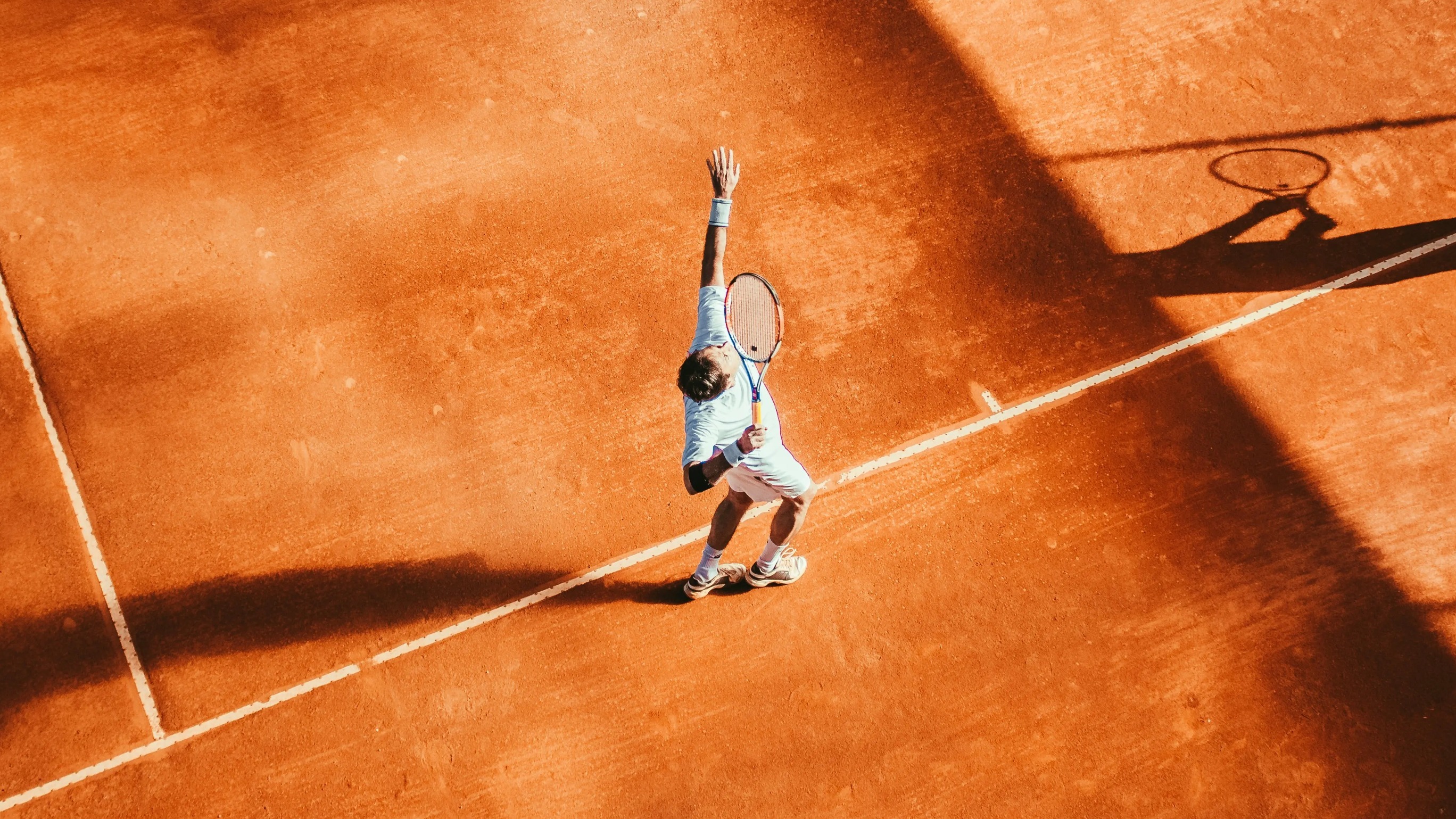
Cover photo by Moises Alex.





 0