





 0
The UAE Is Winning Big In Jiu-Jitsu. How Did A Young Sport Become A National Strength?
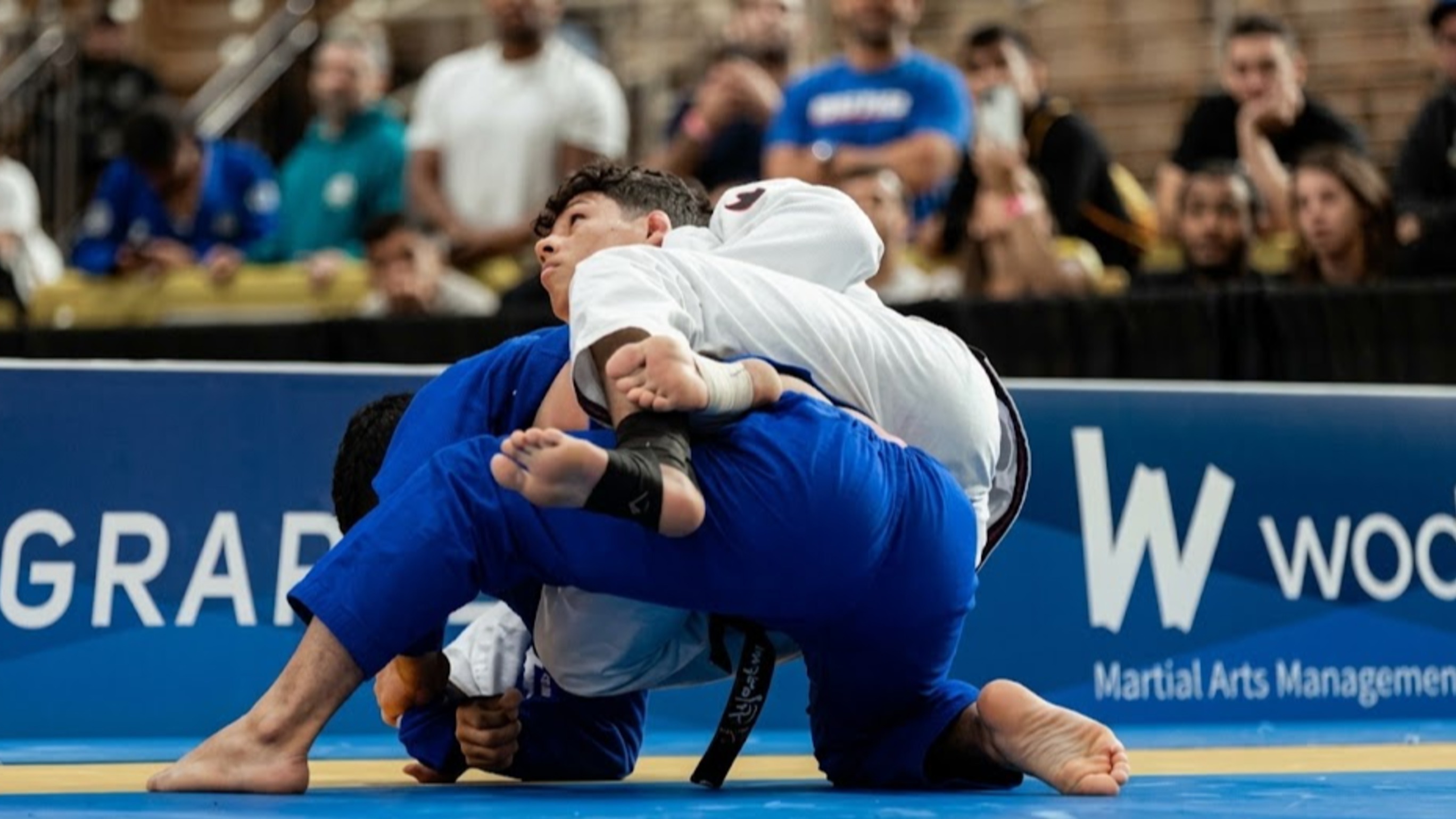
Khaled Al Shehhi beat Omar Al Suwaidi in the men's 62kg final at the Asian Games on Thursday. Both are Emirati. A few hours later, Balqees Abdulla beat Al Anoud Al Harbi in the women's 48kg final. Also both Emirati. When two of your three gold-medal fights are against teammates, the sport has stopped being a hobby.
The UAE won three golds and two silvers in jiu-jitsu on a single day in Aichi-Nagoya, with Ahmed Andeez adding gold in the men's 69kg division. The country's news agency described it as the UAE's most successful day in Asian Games history in terms of medals.
Depth is the tell
Winning one gold can be luck. Winning three in a day, with two all-Emirati finals, is a sign of something deeper. A sport only produces back-to-back national finals when many athletes are good enough to reach them.
Al Shehhi is also a two-time Asian Games champion in the same weight class, having won in Hangzhou. He added a second title this week, then talked about reaching the final alongside his teammate as proof of how far Emirati jiu-jitsu has come.
The pattern is consistent. In Hangzhou, the UAE led jiu-jitsu with 10 medals, including four golds. At Jakarta 2018, they won nine. And in April, Emirati fighters won six medals in ju-jitsu at the Asian Beach Games in Sanya, including two golds.
A system, not a miracle
The UAE didn't invent jiu-jitsu, but it has made itself one of the places where the sport grows fastest. Abu Dhabi hosted the first ADCC grappling championship back in 1998, and the capital has continued to host major international and continental events since.
The federation's chairman, Abdulmunem Alsayed Mohamed Alhashmi, who also leads the Asian federation and serves as senior vice president of the Ju-Jitsu International Federation, credited a clear plan and the continued backing of national leadership. That's the official explanation, and it fits what the results look like.
What stands out is how much attention women's jiu-jitsu gets. Abdulla's gold came in a final against a compatriot, and the federation has emphasised its work to develop women's athletes. That matters, because many sports produce a strong men's team and a thin women's pipeline.
The team that went to Japan had 16 athletes, ten men and six women, covering every weight on the programme. That's a squad built for volume. When you send an athlete to every division and most of them can win, you get days like Thursday.
The question of organic growth
There's a fair debate about how to read the achievement. Supporters say the UAE did what every successful sporting nation does: invest early, build competitions at home, give athletes a clear pathway, and keep going.
Sceptics point out that sport powered by state support can look different from sport that grows through clubs, schools and local enthusiasm. If funding or priorities change, they ask, how deep does the culture really go?
The evidence so far favours the optimists. Success that spans multiple Games, men and women, and many weight classes is difficult to fake. And an all-Emirati final in an Asian Games isn't just a funding line. It's a gym full of people who push each other.
Competition continues Friday and wraps up on Saturday, with more UAE fighters still to come. Whatever the final count, the team has already passed its own standard from Hangzhou in one single day of medal chances.
So does a sport built on state backing deserve the same credit as one that grew from the grassroots, or does it have more to prove once the funding stops?

Sarajevo Back at the Heart of Regional MMA: SFC Returns with Explosive Matchups

How Buzzer Karma Works: Levels, Penalties, and What They Mean

Inside Buzzer's Latest Update (and Why It Changes How You Use the App)

Buzzer Introduces Ads Console: A New Era of Advertising Across the Entire Buzzer Ecosystem

Buzzer Is Evolving: From Quantity to Quality

Al Ittihad SC's Matches Are Now Live on Buzzer

Polo Al Taco Expands Its Global Reach Through Weekly Livestreams on Buzzer Arena TV

Buzzer Now Has a Games Hub, and Tournaments Are Coming

Palm City vs Gulf United Ends in 1–1 Draw in UAE Second Division League Clash

"We Don't Take the Guy With the Camera." He Built His Own Club Anyway. Now He's Coming to Find You.


