





 0
Jakob Ingebrigtsen Couldn't Wear Socks a Year Ago. Now He Just Won a World Title.
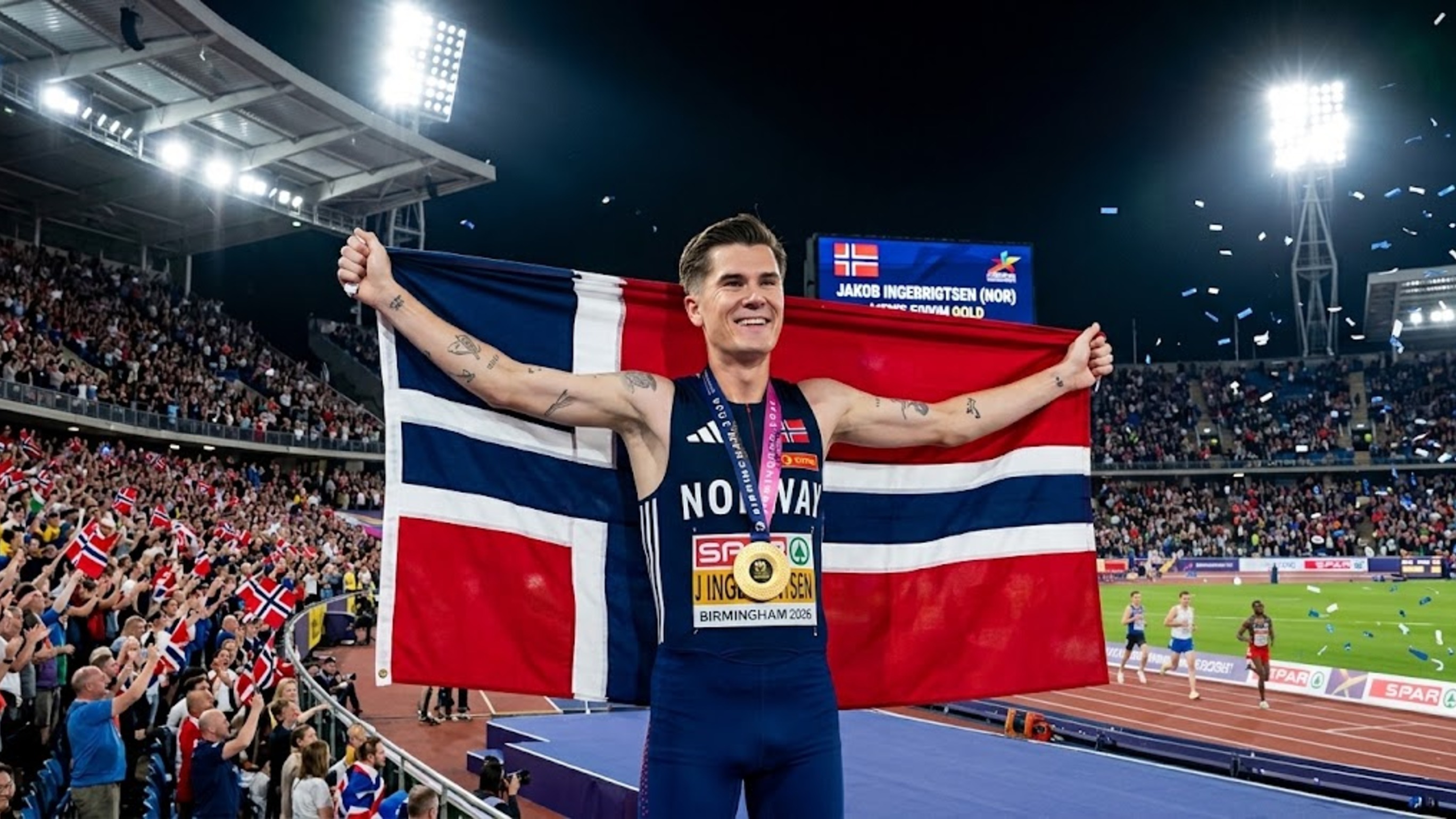
A year ago, Jakob Ingebrigtsen's Achilles pain was so bad he couldn't tolerate wearing socks day to day. On Friday, he won 5,000m gold at the inaugural World Athletics Ultimate Championship in Budapest, running a season-best 12:59.24.
What "recovery" actually looked like
Ingebrigtsen had surgery on the Achilles in February, going in to remove scar tissue that had built up around the paratenon, the protective sheath around the tendon itself. His brother and coach Henrik later admitted he genuinely didn't think Jakob would race at all in 2026. That's not a throwaway quote. That's the person closest to his training saying the season looked finished before it even began.
He's still doing rehab exercises to manage the Achilles, seven months after surgery and a world title later. Recovery in distance running isn't a switch that flips from injured to fine, it's a maintenance program that can run for years alongside a competitive career.
The gap between fit and competition-ready
There's a meaningful difference between being able to run and being able to win a global final, and Ingebrigtsen's season shows exactly where that line sits. He wasn't at his best for most of 2026. He'd already rescued the year somewhat with a European 5,000m title before Budapest. But Friday's win required something specific, the closing speed that's always been his signature.
He ran his final lap in 54.39 seconds, covering the last 100 meters in 12.6. That kind of finishing kick doesn't just require healed tissue, it requires the neuromuscular trust to actually unleash full speed on a joint that spent months in a walking boot. Plenty of athletes return from surgery physically capable of finishing a race. Fewer trust the injured area enough to sprint on it in a global final with a title on the line.
Why this race matters beyond one gold medal
Reigning world champion Cole Hocker finished second in 13:00.05, with American Parker Wolfe third. This wasn't a soft field Ingebrigtsen picked off in a down year for everyone else, it was a legitimate global final against the best 5,000m runners alive, and he still had the last lap to beat them.
The win also came with the largest single payday of his career, $150,000, part of the new championship's $10 million prize pool. But money aside, this is the kind of result that quietly resets how sports scientists and fans alike think about return-to-competition timelines after major tendon surgery.
And there is an important distinction here: Ingebrigtsen's comeback should not automatically become a template for other athletes. His recovery was shaped by his specific injury, surgery, training history and exceptional ability. What makes the story remarkable is precisely how far outside the expected path it appears to be.
If an athlete can go from a wheelchair and a protective boot to a world title in seven months, what does that actually say about how conservative most recovery timelines really are, and is Ingebrigtsen the exception or a sign the standard playbook is too cautious?

Sarajevo Back at the Heart of Regional MMA: SFC Returns with Explosive Matchups

How Buzzer Karma Works: Levels, Penalties, and What They Mean

Inside Buzzer's Latest Update (and Why It Changes How You Use the App)

Buzzer Introduces Ads Console: A New Era of Advertising Across the Entire Buzzer Ecosystem

Buzzer Is Evolving: From Quantity to Quality

Buzzer Now Has a Games Hub, and Tournaments Are Coming

Al Ittihad SC's Matches Are Now Live on Buzzer

Palm City vs Gulf United Ends in 1–1 Draw in UAE Second Division League Clash

"We Don't Take the Guy With the Camera." He Built His Own Club Anyway. Now He's Coming to Find You.

Building the Infrastructure Sports Tech Forgot


 1


