Nedžad Husić lost the Olympic semi-final in Tokyo to Ulugbek Rashitov, who went on to win gold, and finished fifth overall. Taekwondo's repechage is the rule that gives a fighter beaten by a finalist a second route to a bronze medal.
Beaten by the eventual champion
Wikipedia's page on Rashitov lists a Tokyo semi-final win over Husić by 28 points to five, and a gold medal in the men's 68 kg at those Games. Rashitov, who is from Uzbekistan, won the same title again at Paris 2024, according to the same page.
Husić was born in Sarajevo and comes from a family of martial artists, according to Buzzer's interview with him, published on 29 October 2025. He started training at three, following his father, who founded a taekwondo club and now coaches the national team. Husić has won three European senior medals and, with Larisa Cerić, is the only Bosnian athlete to win a medal at the European Games. He says Rashitov is his role model.
What a repechage is
The word comes from the French for "to fish out" or rescue, according to Olympics.com. It means a second chance for competitors who narrowly miss out.
Taekwondo uses a single-elimination bracket in each weight category. According to Team GB's explainer, anyone who lost to a finalist enters the repechage. Losing semi-finalists are seeded in it, and the other losers go in unseeded.
Two bronze medals
The two repechage finalists each win bronze, which is why Olympic taekwondo gives out two. Team GB gives the reasoning: any fighter who lost might have been the third best in the weight class had they met one of the top two on a different day.
So the rule gives that fighter a way to prove it. The man who beat Husić by 28 points to five went on to win gold, which is the situation Team GB describes: a fighter beaten by a finalist.
Husić's semi-final loss fits that rule, because Team GB says losing semi-finalists are seeded into the repechage. Buzzer's interview says he finished fifth, so he did not win a bronze medal, and the sources do not describe the bouts after the semi-final.
What a match looks like
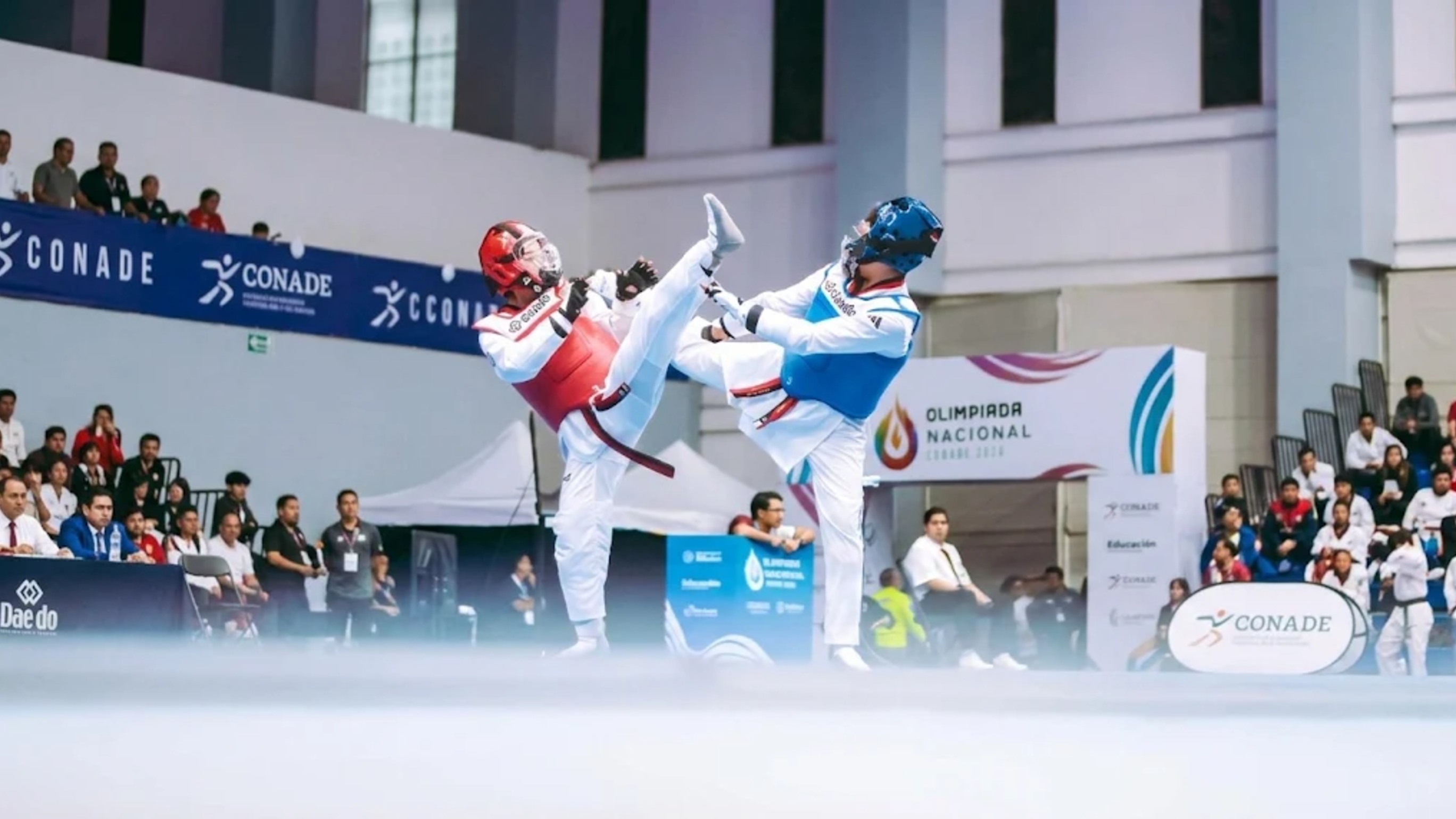
Matches are three rounds of two minutes with a minute's break between rounds, according to Team GB. Scoring is by kicks and punches to the trunk protector and by kicks to the head: a valid punch to the trunk scores one point, a kick to the trunk two, and a turning kick to the trunk four. A kick to the head scores three, and a turning kick to the head five. Each penalty against an opponent adds a point, and ten penalties in a match can lose it.
Beyond taekwondo
Repechage is also used in wrestling, where it decides the two bronze medals, in judo, in rowing, in track cycling and, since Paris 2024, in track events from 200 metres to 1,500 metres, according to Olympics.com. In wrestling, only weight classes with more than 16 wrestlers use it.
A small country, a big bracket
Husić told Buzzer that athletes in Bosnia often pay for their own tournaments, with no support from the federation or sponsors, and that many young talents give up as a result. He trains twice a day with one or two rest days a week, a system inspired by his time with the British national team: conditioning, then technical drills, then sparring. He says short, high-quality sessions beat long ones.
Where a fighter gets seen
You can read the full interview in Buzzer's post on Nedžad Husić. Buzzer follows the sport in its taekwondo news hub, and its Athlete Badge gives an athlete a verified profile with footage and stats, visible to more than 500 connected clubs and scouts.
Semi-final loss to the champion. One bout from a medal.





 0