



 0
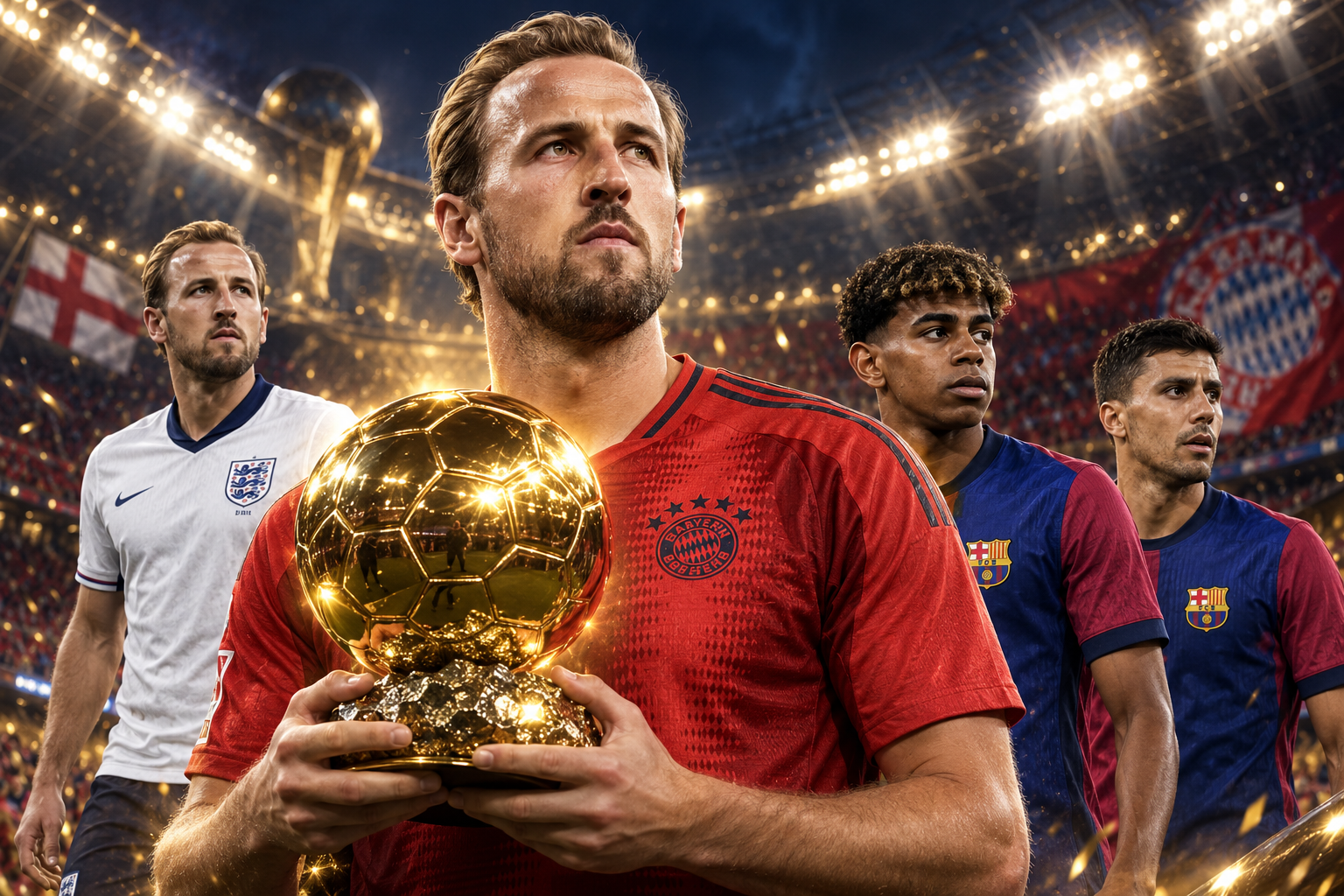
0Harry Kane unstoppable as stunning 61-goal season takes him closer to the Ballon d’Or
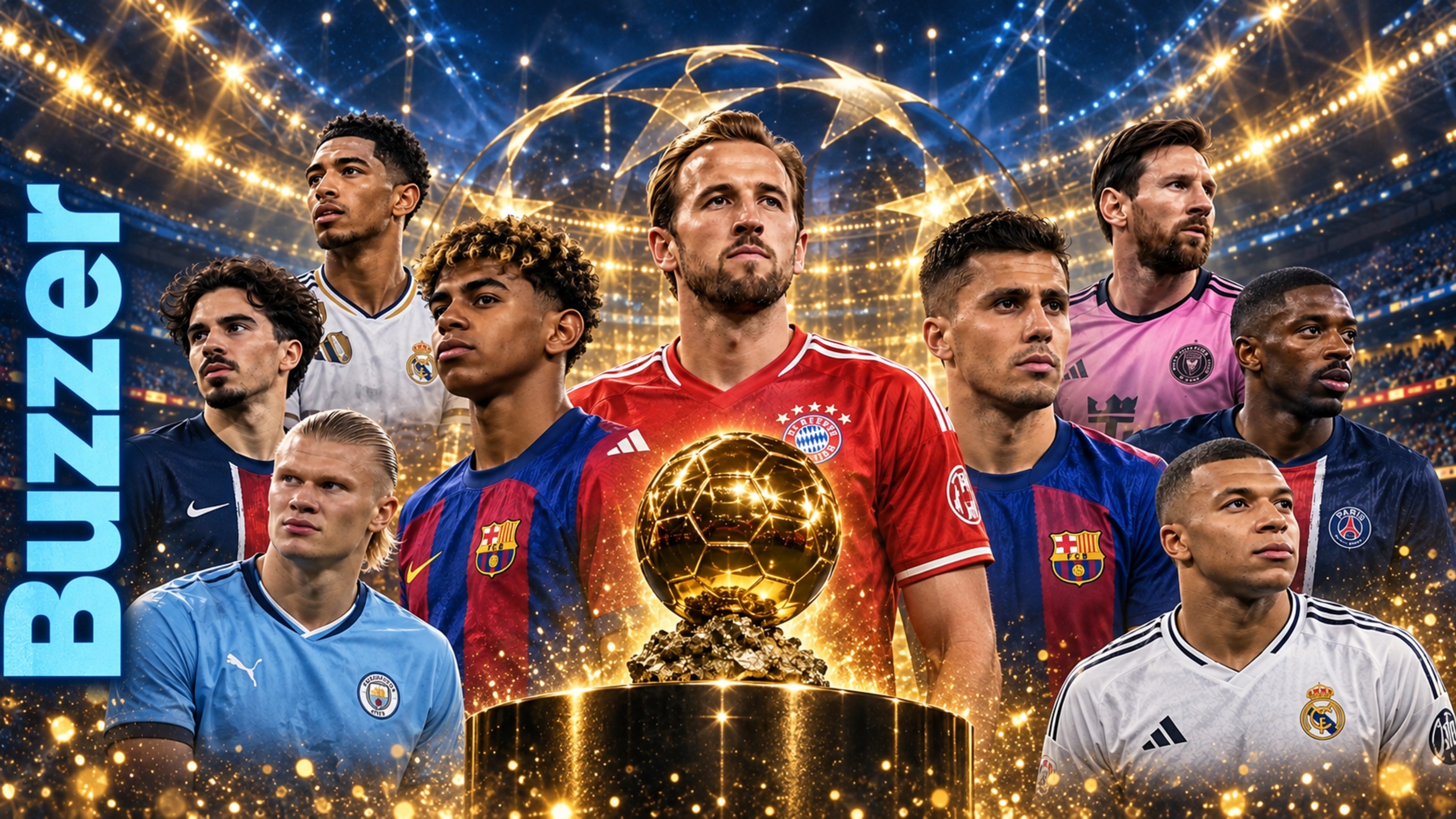
Ballon d’Or 2026 race intensifies after 30-man shortlist is announced
France Football has announced the 30 nominees for the 2026 Ballon d’Or, the most prestigious individual award in world football. With the 2025-26 season and the World Cup now over, the game’s biggest stars can be assessed on their performances across the past 12 months.
Real Madrid, Barcelona, Manchester City, Bayern Munich and Paris Saint-Germain all have several representatives in contention. Trophies, goals, influence and World Cup performances are expected to play decisive roles in determining the winner.
Harry Kane tops these rankings following an outstanding season with Bayern Munich. Lamine Yamal and Rodri complete the top three, while Kylian Mbappé, Ousmane Dembélé and Lionel Messi remain serious contenders ahead of October’s ceremony.
Jude Bellingham takes tenth place
Jude Bellingham experienced two contrasting sides to his season. The England international often appeared frustrated and short of rhythm at Real Madrid, as the team struggled to perform at the expected level.
The World Cup changed the way his campaign was viewed. Bellingham delivered several excellent displays and reminded everyone how influential he can be when deployed in a system suited to his qualities.
His uneven club season prevents him from climbing higher, but his performances at the World Cup confirmed that he remains one of the 10 best footballers in the world.
Vitinha remains one of the game’s midfield masters
Vitinha would probably have had a better chance of winning the award had this not been a World Cup year. Portugal’s campaign and Roberto Martínez’s decisions did little to help the PSG midfielder.
At club level, the Portuguese international dominated the Champions League’s biggest games for a second consecutive season. His ability to control the tempo and make matches unfold on PSG’s terms was instrumental in the French side’s success.
Arsenal recorded the lowest possession share ever seen in a Champions League final, with Vitinha’s passing and positional intelligence helping PSG take complete control. Portugal’s disappointing World Cup campaign may count against him in the voting, but leaving him outside the top 10 would be a major injustice.
Erling Haaland inspired Norway to a historic achievement
Erling Haaland began the season as one of the leading contenders for the Ballon d’Or. During the opening months, the Norwegian striker appeared capable of challenging some of Lionel Messi’s most remarkable goalscoring records.
Manchester City’s fading title challenge damaged his prospects. Even during a disappointing campaign for his club, Haaland still finished as the Premier League’s leading scorer for the third time in four seasons.
The Norwegian then produced a spectacular World Cup campaign, scoring seven goals. Two came in Norway’s victory over Brazil, one of the greatest results in the history of Norwegian football.
Haaland was the driving force behind his country’s run to the quarter-finals. If voters attach considerable importance to the World Cup, the Manchester City striker could even challenge for a place in the top five.
Michael Olise finished the season with extraordinary numbers
Seventh place appears modest for a player who performed at a Ballon d’Or level during the spring. Michael Olise was sensational as Bayern Munich reached the Champions League semi-finals.
His outstanding displays against Real Madrid briefly propelled him to the top of these rankings. The France international won the domestic double in Germany and enjoyed a better season than his international teammate Kylian Mbappé.
Olise registered 22 goals and an astonishing 31 assists across 52 appearances. He also performed exceptionally well at the World Cup, although France ultimately failed to lift the trophy.
His failure to make a decisive impact in Bayern’s semi-final defeat by PSG and France’s loss to Spain could prove costly. His individual ability makes him a potential podium candidate, but major awards are often decided by the defining moments of a season.
Lionel Messi continues to make history at 39
Lionel Messi remained among the leading candidates throughout the past 12 months. Another World Cup triumph with Argentina would have given him a compelling case to win a ninth Ballon d’Or.
His spectacular performances for Inter Miami do not carry the same weight as achievements in Europe’s leading leagues. They nevertheless demonstrated that Messi still had enough left in the tank to produce another memorable international tournament.
At 39, the Argentina captain scored eight goals and provided four assists at the World Cup. His influence was enormous, carrying a team that might otherwise have struggled to reach the final.
Argentina needed to win the final for Messi to become the overwhelming Ballon d’Or favourite. Even without the world title, his campaign deserved to be recognised with the tournament’s Golden Ball.
Messi is the first player based outside Europe to mount a genuine challenge for the Ballon d’Or. He has also become the first nominee from outside Europe’s major leagues since Neymar, who was playing for Santos in 2011.
Ousmane Dembélé could not repeat last season’s dominance
Since Marco van Basten, only Lionel Messi and Cristiano Ronaldo have won the Ballon d’Or in consecutive years. Ousmane Dembélé produced another impressive campaign, but he did not reach the level established by those two legends.
The Frenchman scored important goals and helped PSG retain their Champions League crown. In a year dominated by the World Cup, however, the Parisians’ European success risks being pushed into the background.
Dembélé scored six goals at the World Cup, but he was not France’s best player. His overall influence was also less significant than it had been during the previous season.
The forward started only 11 league matches. That record makes him appear more like a luxury player used selectively than an indispensable figure capable of dominating an entire campaign.
Kylian Mbappé delivers the goals but remains without a major trophy
Kylian Mbappé endured one of the strangest seasons of his career. He was booed by the crowd at the Santiago Bernabéu, while an online petition demanding his sale attracted millions of signatures.
The Frenchman completed a second consecutive season without winning a major trophy. Critics believe his presence has turned Real Madrid into an unbalanced side, with his limited defensive contribution affecting the entire team.
PSG’s back-to-back Champions League triumphs since Mbappé’s departure have strengthened that perception. Under normal circumstances, the absence of major silverware would almost completely remove him from Ballon d’Or contention.
His numbers tell a different story. Mbappé scored 58 goals for Real Madrid and France, became the World Cup’s all-time leading scorer and the first player to win the tournament’s Golden Boot more than once.
His displays on the biggest international stage provide compelling evidence for those who consider him the best footballer on the planet. Mbappé could secure the second Ballon d’Or podium finish of his career, with his candidacy boosted by Florentino Pérez’s powerful PR machine.
The Frenchman will be at least 28 when he eventually wins his first Champions League title. His first Ballon d’Or may also arrive after that age, a scenario few would have predicted a decade ago.
Rodri returned to contention after Spain’s triumph
Six months ago, Rodri did not appear capable of challenging for a second Ballon d’Or. During the 2025-26 season, the midfielder produced several good and very good performances but rarely reached an extraordinary level.
The Spaniard gradually returned to full fitness after suffering an anterior cruciate ligament injury in 2024. His absence was noticeable during the decisive stages of the Champions League, while the FA Cup and League Cup were not enough to support a serious Ballon d’Or bid.
The World Cup transformed Rodri’s position in the race. The Spain international re-established himself as the world’s leading midfielder and performed at least as well as he had at Euro 2024.
Questions remain over whether he truly deserved to be named the tournament’s best player. Spain possessed an exceptional team and did not depend on one individual. Rodri perfectly represented La Roja’s possession-based style and produced remarkable passing statistics.
His situation recalls that of Xavi Hernández in 2010. The former Barcelona midfielder finished third, although he would have been a worthy winner had Lionel Messi not been at his peak. Ferran Torres, scorer of the decisive goal in the final, does not possess the same status Andrés Iniesta enjoyed.
Ronaldo in 2002, Lothar Matthäus in 1990, Fabio Cannavaro in 2006 and Lionel Messi in 2023 demonstrated that an outstanding World Cup can outweigh an entire club season. Rodri must therefore be regarded as one of the leading contenders.
Lamine Yamal could become the youngest winner
Lamine Yamal finished second in the previous edition despite recording considerably fewer goals and assists than Mohamed Salah. In 2026, Barcelona’s teenage phenomenon could go one step further.
Yamal produced the most prolific season of his young career and helped Barcelona retain their La Liga title. He also won the World Cup with Spain. On paper, those achievements should be enough to secure the Ballon d’Or.
His performances at the tournament did not reach the anticipated level. A hamstring injury disrupted his preparation, forcing Spain’s coaching staff to manage his playing time carefully.
The Barcelona winger improved as the competition progressed and contributed to Spain’s success without displaying the same devastating form he had shown at Euro 2024. He finished the World Cup with one goal and one assist, numbers that were not enough to put him at the forefront of the individual awards race.
Yamal was not among the leading candidates for the tournament’s Golden Ball or even the Best Young Player award. His excellent club season, world title and rapidly growing superstar status could still carry him to the trophy.
Winning it this year may come too soon. At only 19, Yamal has plenty of time to claim the Ballon d’Or in future editions.
Harry Kane leads the Ballon d’Or race
Harry Kane remained among the leading contenders throughout the past 12 months. His position fluctuated whenever Michael Olise, Rodri, Lamine Yamal or Kylian Mbappé appeared ready to move ahead, but the England captain ended the eligibility period at the top of the rankings.
Kane won the European Golden Shoe for a second time after producing one of the most prolific seasons in football history. He surpassed Cristiano Ronaldo’s best single-season goalscoring total and fired Bayern Munich to the domestic double.
The striker scored 61 goals during the 2025-26 club campaign, a total that does not include his goals for England. His numbers are even more impressive given that he also provided assists, contributed to Bayern’s build-up play and consistently created opportunities for his teammates.
Kane did not win the Champions League or the World Cup, the two trophies that would probably have guaranteed him the Ballon d’Or. He nevertheless reached the semi-finals of both competitions while maintaining an outstanding scoring record.
PSG’s Champions League victory and Spain’s World Cup triumph could work in his favour. Both teams were defined by their collective strength and their coaches’ tactical organisation, with no single superstar claiming all the credit.
From an individual perspective, Harry Kane was the standout footballer of the past 12 months. Every match in the eligibility period has now been played, but the outcome of the vote is far from certain.
There will be numerous PR campaigns and attempts to influence voters before the ceremony in October. Kane may lose the battle away from the pitch, but his performances make him the most deserving winner of the 2026 Ballon d’Or.
Lionel Messi and Cristiano Ronaldo compared over their last 100 matches
From Hero to Enemy in Just One Year: Alexander Isak Faces a Hostile Newcastle Return
They Won the Champions League, but Are Now Free Agents Looking for a New Club
“My grandmother would have run more than you” - The harsh Mourinho remark that brought the best out
The World Cup Transformed His Career Djed Spence Completes One of Serie A’s Biggest Summer Moves

Bundesliga pedigree at FC Voluntari! Romanian club sign 1.92m Serbia international
Juventus’ New Diamond Comes From Bosnia: Barbarez Believes He Can Become a Champion

Pio Esposito impresses Cristian Chivu and threatens Marcus Thuram’s place at Inter

No one saw this coming! Raphinha takes aim at Messi’s records
Deadline Day Madness! 12 Transfers That Almost Went Unnoticed


