





 0

Michael Matthews Thought His Career Was Over. Eight Months Later, He Won World Silver
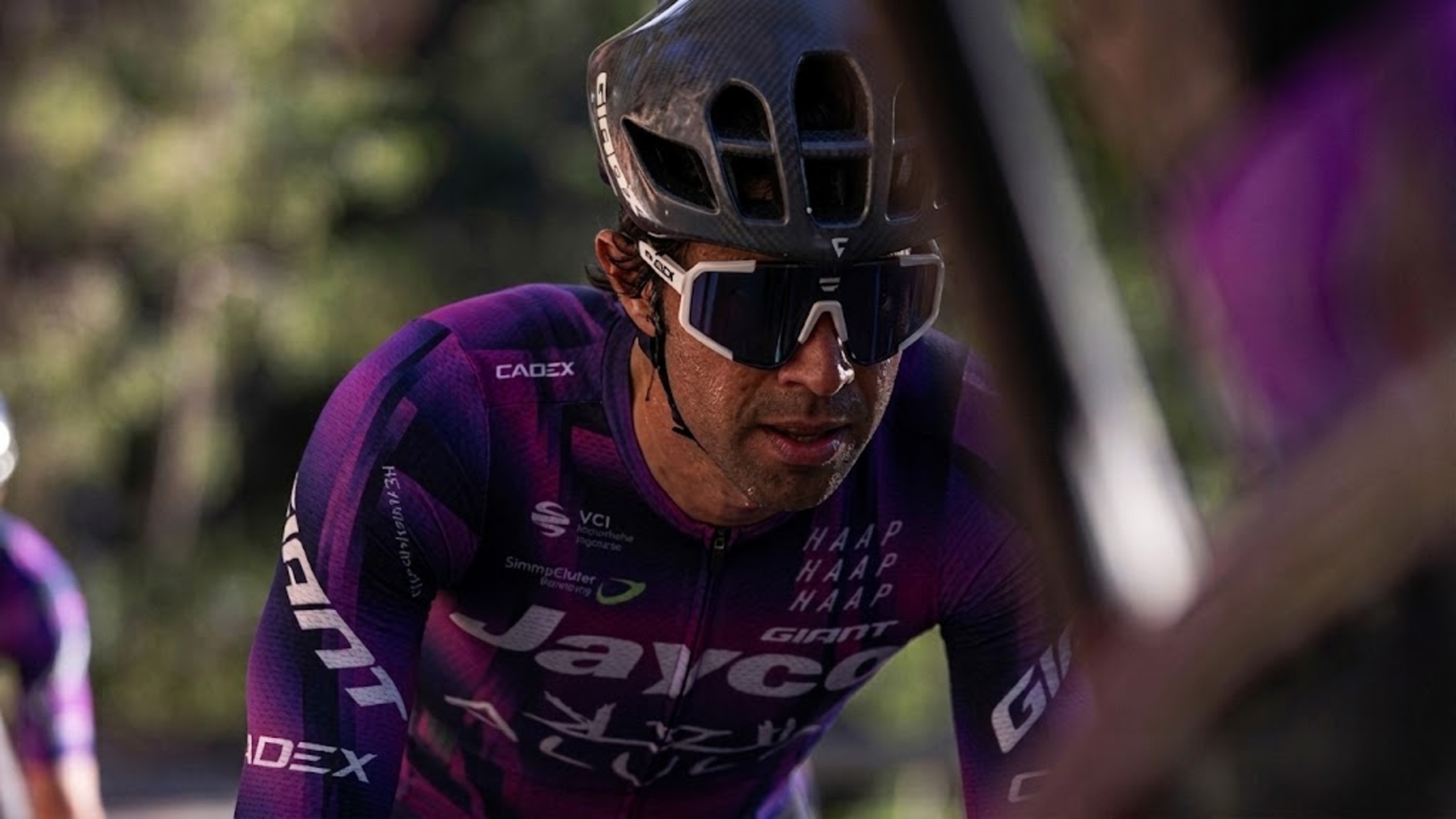
Michael Matthews turned 36 the day before the 2026 road race world championships in Montreal. He raced anyway, held on through a brutal, attritional 6-hour-and-17-minute grind, then out-sprinted Mathieu van der Poel and Quinn Simmons in a long-range finish for silver.
"I thought my career was done two times in the last two years," Matthews said afterwards, and he wasn't exaggerating for effect.
Two separate disasters
The first came during an altitude training camp before the 2025 Tour de France, when doctors discovered a pulmonary embolism, blood clots that had travelled to his lungs and were blocking oxygen from reaching the rest of his body. He described feeling short of breath and noticing an erratic heart rate before he was hospitalised. It's a serious, sometimes fatal condition, and it ended his 2025 season on the spot.
The second arrived early in 2026, when a training crash broke both of his wrists. For a professional cyclist, two broken wrists is a specific kind of disaster. It threatens the basic mechanics of the job: braking, steering, sprinting out of the saddle. Recovering from a pulmonary embolism is one battle. Coming back from that and then breaking both arms within months of each other is a different kind of test entirely.
Matthews has said plainly that each setback made him wonder if he'd raced his last professional race.
What made Montreal possible
By the start of 2026, Matthews had rebuilt his form well enough to win a stage at the Tour de France, evidence that the physical recovery had actually worked and wasn't just a hopeful return to the peloton. Montreal, six months later, was the real test, a demanding, hilly course that wore riders down over more than six hours.
Brandon McNulty rode away solo for the win, becoming the first American world champion since 1993 and only the third American man ever to take the rainbow jersey, after Greg LeMond and Lance Armstrong. Behind him, the race came down to a chase group sprint, and Matthews launched his effort from roughly 600 metres out on a course that finished on a slight uphill drag. He held off van der Poel, a former world champion himself, and Simmons to claim second.
A career built on returning, not just arriving
This was Matthews' fourth elite road race world championship medal, adding to silver in Richmond in 2015 and bronze medals in Bergen in 2017 and Wollongong in 2022. He'd also won the under-23 world title all the way back in 2010, in Geelong, and has two golds and a silver from the mixed relay team time trial.
That's an unusually long championship résumé for a rider who's spent much of the past two years fighting to stay on a bike at all. Longevity in professional cycling is normally measured in gradual decline curves, a rider slowly losing top-end power as the years pass. Matthews' story doesn't follow that shape. It's two acute medical emergencies, either of which could plausibly have ended things, followed by a return to a world championship podium.
He credited his wife for getting him through it, calling the medal as much hers as his. It's the kind of line athletes say after wins all the time, but coming from someone who was hospitalised with blood clots in his lungs 15 months earlier, it carries a bit more weight than the usual post-race quote.
Matthews called it probably his last realistic shot at the rainbow jersey itself. Whether or not that's true, the more interesting question isn't whether he'll win gold next year. It's how a rider survives two genuine career-threatening events in close succession and still has the legs for a 600-metre sprint against the best in the world. What does that kind of recovery actually require: exceptional physical conditioning, sheer stubbornness, or something else entirely?

Sarajevo Back at the Heart of Regional MMA: SFC Returns with Explosive Matchups

How Buzzer Karma Works: Levels, Penalties, and What They Mean

Inside Buzzer's Latest Update (and Why It Changes How You Use the App)

Buzzer Introduces Ads Console: A New Era of Advertising Across the Entire Buzzer Ecosystem

Buzzer Is Evolving: From Quantity to Quality

Polo Al Taco Expands Its Global Reach Through Weekly Livestreams on Buzzer Arena TV

Al Ittihad SC's Matches Are Now Live on Buzzer

Buzzer Now Has a Games Hub, and Tournaments Are Coming

Palm City vs Gulf United Ends in 1–1 Draw in UAE Second Division League Clash

"We Don't Take the Guy With the Camera." He Built His Own Club Anyway. Now He's Coming to Find You.


