





 2
Muhammad Ali Won the Rumble in the Jungle by Not Fighting Like Muhammad Ali
Muhammad Ali built his entire career on speed, movement, and never letting an opponent hit him clean. In Kinshasa in 1974, against a younger, harder-hitting George Foreman, he did almost the exact opposite of everything that had made him great.
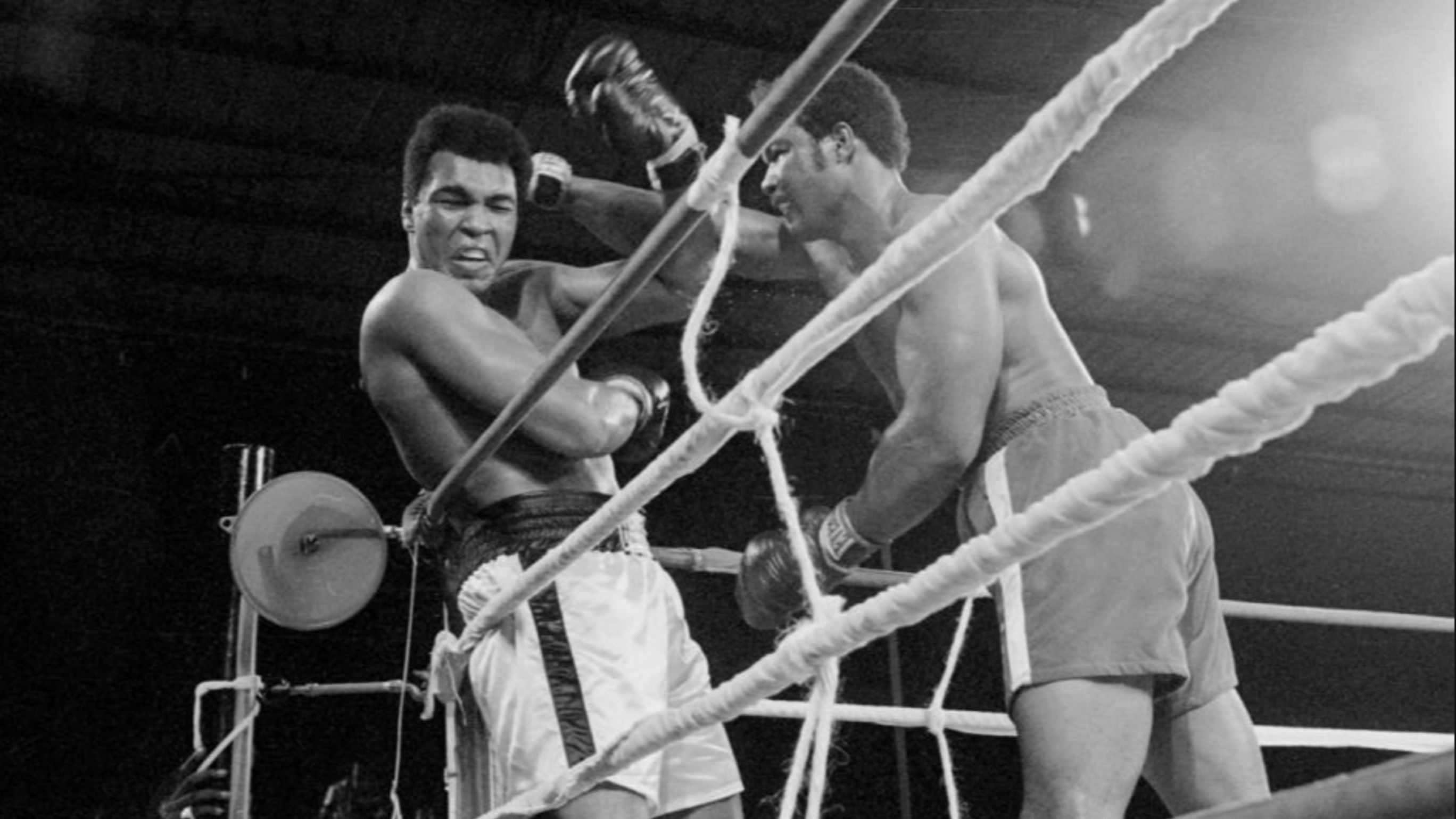
He leaned back against the ropes and let Foreman hit him. Over and over, for round after round, in a fight most observers expected him to lose badly and possibly get seriously hurt in.
A strategy nobody expected from him
The tactic, which came to be known as rope-a-dope, involved Ali covering up along the ropes and absorbing Foreman's punches on his arms and shoulders rather than his head, letting the ropes' natural give absorb some of the impact of each shot. Foreman, the younger and heavier puncher, kept swinging and kept connecting without doing the kind of damage he expected or needed to end the fight.
By the middle rounds, Foreman was visibly exhausted, his punches slowing and his footwork getting heavier by the minute. He'd spent an enormous amount of energy trying to finish a fight that Ali had never actually let him get close to finishing, throwing punches into a defense built specifically to soak them up round after round.
Why it worked on Foreman specifically
Foreman had built his reputation on devastating power and quick knockouts, and his fights up to that point rarely went long enough for anyone to test his endurance. Ali's plan wasn't built to beat Foreman's power directly, since nobody could really do that. It was built to exploit the fact that Foreman had almost never needed a plan for a fight that lasted this long against a determined opponent.
In the eighth round, with Foreman worn down and his punches losing their sting, Ali came off the ropes and knocked him out in front of a stadium that had waited all night for exactly that moment.
Ali won the mental battle first
The strategy required more than physical toughness. Ali had to convince Foreman that the fight was going exactly as the younger champion wanted, even while quietly draining his energy. Every punch Foreman threw seemed to confirm that Ali was in trouble, which made him keep attacking instead of changing tactics. Ali was essentially turning Foreman's greatest strength. His willingness to throw with enormous power into the very thing that would eventually leave him exhausted.
The setting that made it bigger than a boxing match
The fight took place in Kinshasa, Zaire, now the Democratic Republic of Congo, as part of a heavily promoted event that also included a major concert lineup featuring some of the era's biggest musical acts performing over several nights. It remains one of the most significant sporting events ever staged on the African continent, and it's still referenced in conversations about boxing strategy fifty years later.
Rope-a-dope has since become shorthand across multiple sports for any strategy built around absorbing early punishment to win late, a phrase that's outlived the fight itself by decades.
If a fighter wins by deliberately taking more punishment than his opponent, does that make the win less impressive than a clean knockout, or does it make the underlying strategy the more interesting story?

Sarajevo Back at the Heart of Regional MMA: SFC Returns with Explosive Matchups

How Buzzer Karma Works: Levels, Penalties, and What They Mean

Inside Buzzer's Latest Update (and Why It Changes How You Use the App)

Buzzer Introduces Ads Console: A New Era of Advertising Across the Entire Buzzer Ecosystem

Buzzer Is Evolving: From Quantity to Quality

Buzzer Now Has a Games Hub, and Tournaments Are Coming

Polo Al Taco Expands Its Global Reach Through Weekly Livestreams on Buzzer Arena TV

Al Ittihad SC's Matches Are Now Live on Buzzer

Palm City vs Gulf United Ends in 1–1 Draw in UAE Second Division League Clash

"We Don't Take the Guy With the Camera." He Built His Own Club Anyway. Now He's Coming to Find You.


 1


