Newbie•0 minutes•1,20 Karma

**PAKISTAN—RAW PACE AND UNPREDICTABILITY**
If there is one country that has consistently produced naturally gifted fast bowlers, it is Pakistan. From Wasim and Waqar to Shaheen, Naseem and Rauf, Pakistan continues to produce bowlers capable of changing matches with pace and movement. But their major weakness is fitness and consistency. Pakistan has often struggled to keep its best fast bowlers fit and perform consistently. If the next generation can develop consistency and fitness required at the international level, Pakistan could have pace attack that no batting lineup wants to face.
**England and New Zealand — Skill Over Speed**
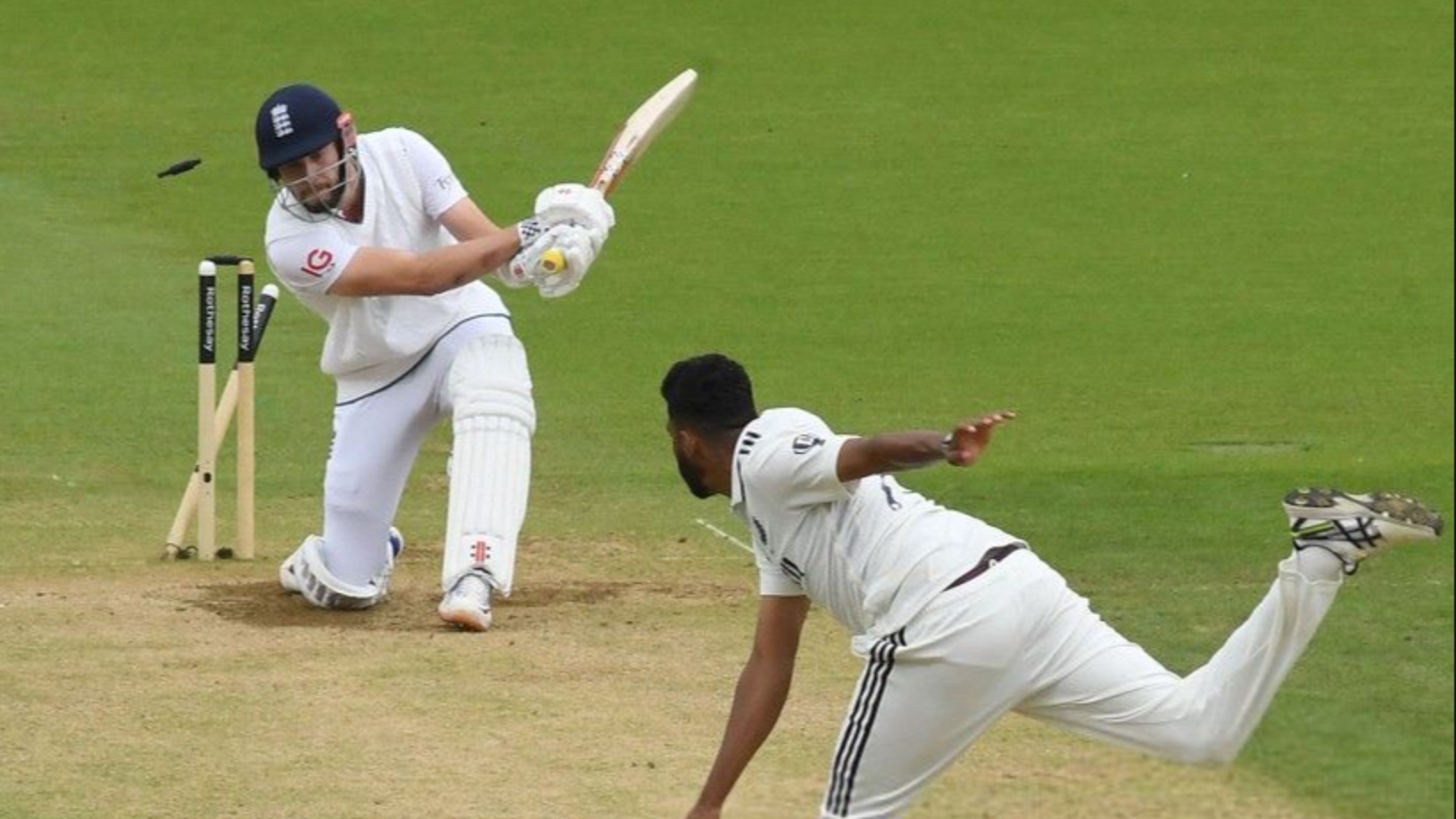
England and New Zealand may not always have the reputation for producing the fastest bowlers in world cricket, but both countries have developed highly effective pace attacks through movement, accuracy, discipline and intelligent bowling. England's biggest advantage is their ability to exploit **seam movement and swing**, particularly in Test cricket. New Zealand's approach is slightly different. Rather than relying heavily on extreme pace, they have traditionally built their attacks around **accuracy, swing, seam movement and tactical intelligence**.
While Australia, South Africa and Pakistan may have the reputation for raw pace, England and New Zealand demonstrate that a bowler doesn't need to be the fastest on the field to be dangerous. Movement, accuracy and intelligent bowling can be just as difficult for a batter to handle.

The fast-bowling revolution is already underway. The real question is not who will produce the next great fast bowler, but which nation will produce the next great generation of them. Ultimately, the next fast-bowling powerhouse may not be the team with the single fastest bowler. It will be the team capable of producing **multiple bowlers who can stay fit, adapt to different conditions and perform under pressure**.](https://d32kj04sxj85qr.cloudfront.net/private/users/94a824c8-4001-7061-cfc6-6691656ac4ac/clips/3b2b3e38-89e2-43d4-a146-ab8dbc00ec32.jpeg)
CRICKET 
The Fast-Bowling Revolution: Which Nation Will Build Cricket's Most Feared Pace Attack?
4 minutes read Continue read

**RACHIN RAVINDRA—NEW ZEALAND’S NEXT GLOBAL SUPERSTAR**
He is a 26-year-old all-rounder of New Zealand, who has emerged as one of New Zealnd's most exciting young talents in big tournaments for Black Caps. One of his biggest advantages is that he is young enough to have long career ahead of him while having significant international experience already. If he continues performing constantly, he could become a long-term match-winning all-rounder for New Zealand in future years.
**SAIM AYUB—PAKISTAN’S NEXT ALL-FORMAT SUPERSTAR**
When it comes to Pakistan’s future cricket superstars—Saim Ayub stands out as one of the promising names. He is a 24-years-old all-rounder who has not only performed as an exceptional batter but also have ability to contribute with both bat and ball. He has emerged as an off-break bowler, which will give Pakistan much flexibility. He can also continue to follow the footsteps of Shahid Afridi or Abdul Razzaq, if he contributes in multiple disciplines.

**JACOB BETHELL—ENGLAND’S FUTURE MATCH WINNER**
For England’s cricket future, they could rely on Jacob Bethell—who has become a spectacular all-rounder for England. He has proved himself by performing in all three formats at the age of only 22 years by scoring a century in his maiden test at Sydney and has also smashed 105 off 48 balls against India in T20 world cup semi-final. If he can turn his flashing brilliance into consistent performances, he could become a future Ben Stokes for England.
**DEWALD BREVIS—THE EXPLOSIVE STAR WHO COULD RULE WORLD CRICKET**
Among South Africa’s emerging talent, few players have igenerated as much excitement as Dewald Brevis. He is one of South Africa's young batters, who has potential to become global cricket superstar in coming era. He has produced a spectacular performance in T20 format by scoring 207 runs in world cup 2026 and many other impressive performances. If he combines his T20 ability with other longer formats, he could become world-class batter for Proteas in next era of cricket.
](https://d32kj04sxj85qr.cloudfront.net/private/users/94a824c8-4001-7061-cfc6-6691656ac4ac/clips/5d376f75-7044-4dc2-96b2-5c9f8f45e0cb.jpeg)
CRICKET 
The Next Generation: 5 Young Cricketers Who Could Rule World Cricket
3 minutes read Continue read


# OVER 1–THE OPENING STATEMENT
The first over sets the pressure. There are two conditions, either openers can put presuure on a baller or a wicket can change the batting team’s approach. The first over also gives both teams an early look at the conditions. Batters can judge the pace and bounce of the pitch, while bowlers learn how much movement or grip they can get.The first over may only contain six balls, but it can set the mood for the next 119.
# OVER 6 — THE END OF POWERPLAY
The sixth over is one of the most important moments in a T20 innings because it marks the end of the powerplay. With fielding restrictions in place during the first six overs, batting teams have a valuable opportunity to score quickly and attack the bowling. For the bowling team, the sixth over is a chance to finish the powerplay strongly. A wicket or an economical over can stop the momentum that the batters have built.Six overs are complete, the fielding restrictions change, and the match enters a completely different phase.
# OVER 10 — THE MIDDLE-OVERS BATTLE
The 10th over sits right in the middle of a T20 innings, making it an important point for both teams to reassess their strategy. The powerplay is long gone, and the focus shifts from simply attacking to building the innings while keeping the run rate moving.The 10th over can therefore act as a turning point. A strong batting over can set up a big finish, while a successful bowling over can put the brakes on the innings.

# OVER 17 — THE LAUNCH POINT
The 17th over is where the final assault often begins. With only four overs remaining, batters know there is little time left to build an innings, so the focus shifts towards finding boundaries and maximizing every delivery.The 17th over is also where tactical decisions become especially important. Captains must carefully choose which bowler to trust at this stage, while batters have to decide when to take risks.Four overs remain, the pressure is rising, and the final assault has begun.
# OVER 20 — THE FINAL OVER
The 20th over is where everything comes down to the final six balls. After 19 overs of batting, bowling and tactical battles, this over can dramatically change the final score or decide a close run chase.
For the bowling team, the pressure is enormous. The bowler has to remain calm, execute their variations and avoid giving the batters easy opportunities. In a close chase, even a single extra run can make the difference between victory and defeat.
The final over also produces some of T20 cricket's most memorable moments—last-ball boundaries, dramatic wickets and matches decided by just a few runs.Six balls remain, the pressure is at its highest, and there is nowhere left to hide.
What do you think ... which overs are most important for both teams??](https://d32kj04sxj85qr.cloudfront.net/public/users/94a824c8-4001-7061-cfc6-6691656ac4ac/blogs/3cfd52e0-3c44-4466-8d62-3aeb9f9a35c1.jpg)

To answer that, we have to look at the current rankings, the team’s young talent who will help the team to dominate in future, the experienced players already inn team, the squad depth and the ability to dominate in all three formats of cricket – T20Is, ODIs and Test Cricket.
# India: The Team to Beat
India has one of the strongest positions for **long-term dominance** in world cricket. One of their biggest advantages is not just the quality of their current cricket team, but they also have enormous amount of young talent waiting to dominate in this field. They have many advantages such as **squad** **depth** — they have large pool of new talent that can replace their injured players as their domestic and franchise cricket system help them to gain the required talent.
However, India's biggest challenge may be the **transition**. The real test will be whether their young players can fulfill the expectations that their predecessors have fulfilled.
# Australia: Can They Stay on Top?
Australia's biggest advantage is their **strong cricket infrastructure**. Australia has high- quality facilities, coaching system, pitches and professional support.
One of the other advantages is their ability to perform **overseas**. They don't only rely in their home conditions, they also perform effectively in overseas conditions. The main challenge Australia will face in future is also **Transition** — either their emerging players could continue their already built legacy or they have **to rebuild from scratch**. The real question is whether Australia can still remain dominant for next 5 years and could remain India's biggest rival for world cricket throne.

# South Africa: The Dark Horse
South Africa could be team that surprises everyone over the next 5 years. Their biggest advantage is their **Test Cricket**. They have developed the strong red-ball team but the serious challenge they will face regarding this is whether their emerging talent will be able to continue this legacy.
Other big advantage is their **fast-bowling** **talent**. South Africa has a long history of producing world-class fast bowlers and their strong pace attack can be their huge advantage in both Test and white-ball cricket. Their biggest challenge is to turn their potential into results. Having talented players is one thing, but performing consistently in big tournaments and pressure matches is another thing.
The **Proteas** may not be the favourite right now, but that is exactly the reason which makes them an interesting candidate for winning cricket throne in coming years.
# England and New Zealand: The Challengers
Both of these teams can not be ignored when discussing the next five years of international cricket.
The biggest advantage for England is their **consistency** across all three formats of cricket. A team cannot truly dominate the world cricket by only performing good in T20Is and ODIs while struggling in Test Matches. They have to improve their Test team to get the world cricket throne in future.
New Zealand is the most **underrated** **team** on this list. Their biggest advantage is **competency and team balance**. Their biggest challenge is competing with financially stronger teams. Their players have few resources and smaller talent pool. They could challenge for top spot if they continue producing talented players.
**Who is your pick to dominate world cricket by 2031 — India, Australia, South Africa England or New Zealand?**](https://d32kj04sxj85qr.cloudfront.net/public/users/94a824c8-4001-7061-cfc6-6691656ac4ac/blogs/43c66380-e1b4-488f-869e-c68951df6b03.jpg)