$0.00
$BUZZER
Get App
Log in
Stacey Beyond The Game
staceybeyondthegame
⚽ More than just 90 minutes. 📝 Stories • Opinions • Motivation 🧠 The human side of football 🔴 Beyond the Game
5
Uploads
44
Followers
7
Following
Newbie
•
0 minutes
•
2,19 Karma
Posts
Comments
Reels
Blogs
Threads
Tags
staceybeyondthegame
12 days ago
GENERAL
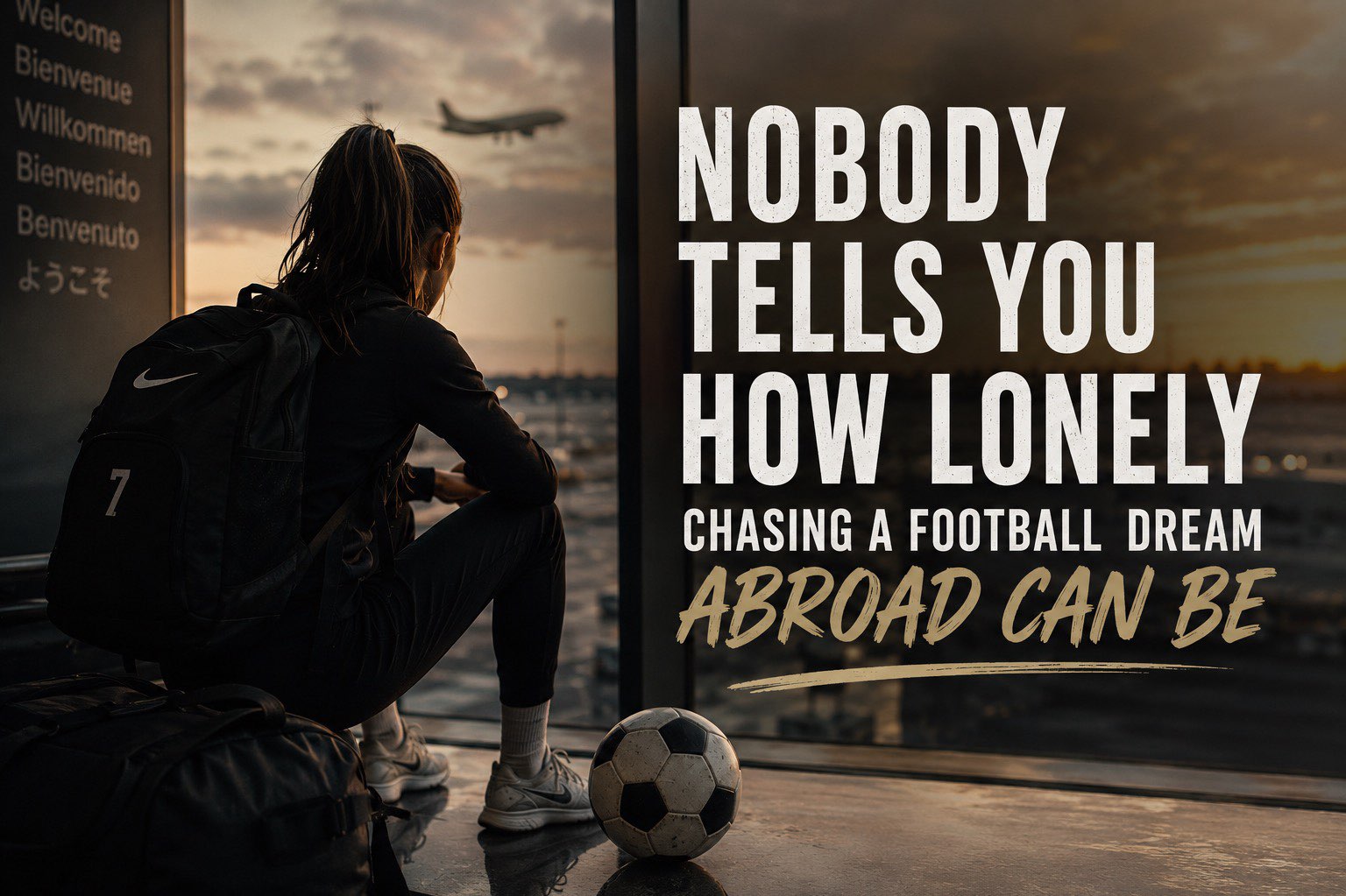
Nobody Tells You How Lonely Chasing a Football Dream Abroad Can Be
5
1
staceybeyondthegame
12 days ago
FOOTBALL (SOCCER)
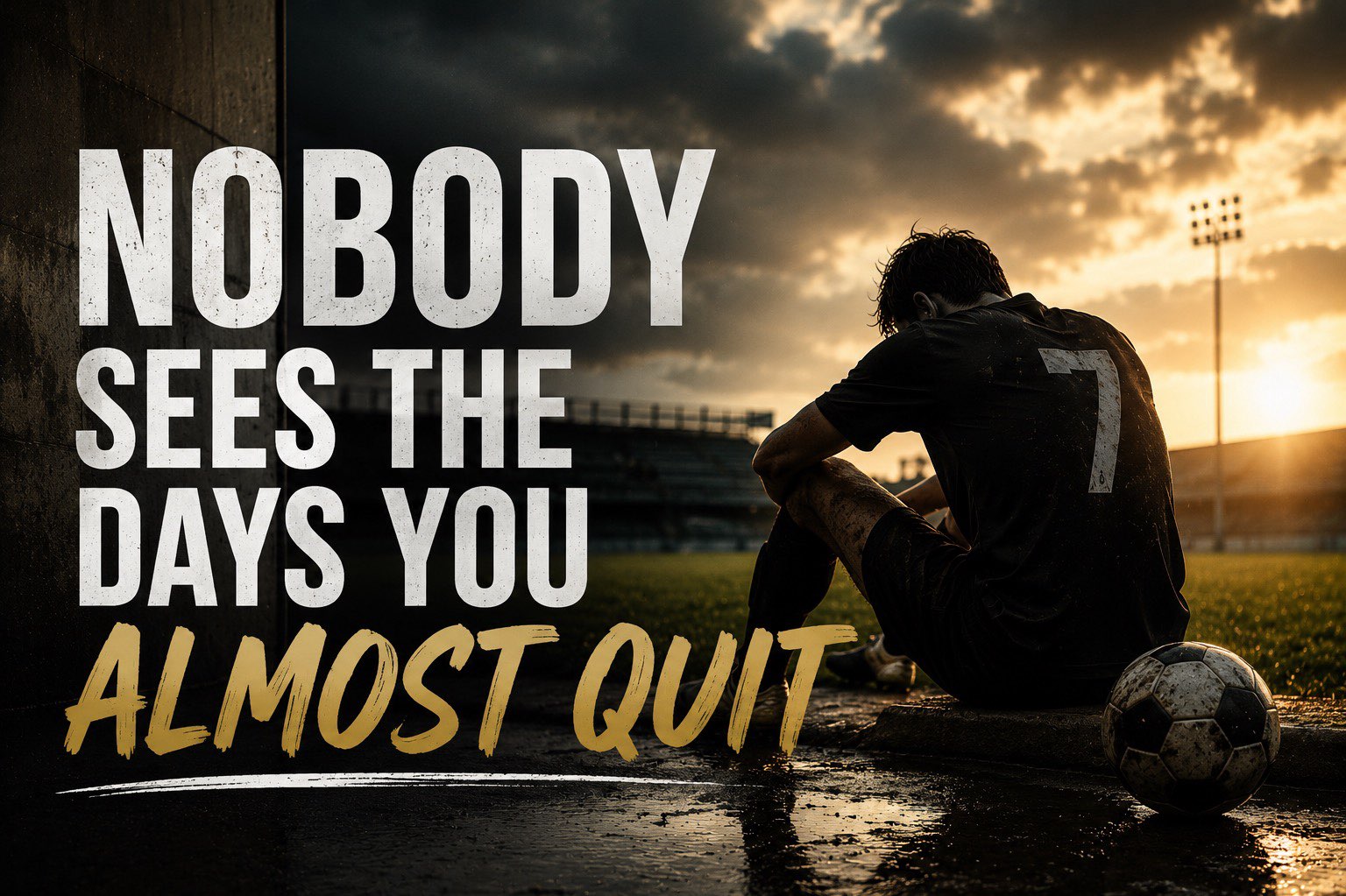
Nobody Sees the Days You Almost Quit
3
staceybeyondthegame
12 days ago
FOOTBALL (SOCCER)
90 Minutes on the Pitch, 24/7 Online: The New Reality of Being a Footballer
6
2
staceybeyondthegame
· Edited
13 days ago
FOOTBALL (SOCCER)
It’s Not About Equal Pay: What Women’s Football Is Really Asking For
2

 $0.00$BUZZER



 $0.00$BUZZER




## **Does Every Footballer Have to Become a Content Creator?**
This is where things become complicated. Today, having a strong social-media presence can create opportunities far beyond the pitch. Sponsors look at followers, engagement and audience demographics. Players can build businesses, attract partnerships and create a personal brand that continues long after their playing career ends.
Research into athlete branding suggests that successful footballers often combine sporting performance with authentic communication and carefully chosen commercial partnerships. For some players, this is a huge opportunity.
But what about the player who simply wants to play football? Should every footballer need an Instagram strategy? Should staying private make someone less commercially valuable? And should players be expected to share their lives simply because supporters now have the technology to follow them?
There is a strange contradiction in modern football. We ask players to be authentic — but analyse everything they post. We want them to have personality — but criticise them when we disagree with it. We want access to their lives — and then sometimes forget where the boundary between the player and the person should be.
## **One Mistake Can Follow You Home**
Perhaps the darkest side of this new reality appears after things go wrong. A missed penalty once happened inside a stadium. Now it can follow a player home.
FIFA and FIFPRO’s Social Media Protection Service scanned more than **20 million posts and comments during the 2022 FIFA World Cup**. After AI detection and human review, **19,636 posts and comments were confirmed as abusive, discriminatory or threatening**.
And the problem is not limited to men’s football. During the 2023 Women’s World Cup, more than **150 monitored players — roughly one in five — received discriminatory, abusive or threatening messages**, according to FIFA and FIFPRO.
Think about what that means. A player can finish one of the biggest matches of their career, pick up their phone and immediately find strangers attacking not only their performance, but potentially their race, gender, nationality, sexuality, religion or family.
Criticism is part of professional sport. **Abuse should never be.**
## **The Pressure Doesn’t End at the Final Whistle**
Social media also makes switching off increasingly difficult. After a bad match, a player once had some possibility of leaving the stadium and separating themselves from public opinion. Now that opinion is sitting in their pocket.
Open Instagram. Open X. Read the comments. See the ratings. Watch the clip of your mistake again. And again.
This can be particularly difficult for young players. Footballers can become internationally recognised while they are still teenagers. They are expected to deal with pressure, criticism and millions of opinions at an age when most people are still discovering who they are.
We often talk about whether young players are physically ready for professional football. Maybe we should also ask whether football is doing enough to prepare them for everything that comes with being publicly visible 24 hours a day.
## **Social Media Isn’t the Enemy**
None of this means social media is bad for football. Far from it. It has brought players and supporters closer together. It has given athletes control over their own stories rather than forcing them to communicate only through journalists and clubs.
It has helped women’s football, smaller leagues and less-known players reach audiences they may never have reached through traditional media. It has created businesses, careers, communities and opportunities. It allows players to speak about racism, mental health, charity and issues that matter to them.
The problem isn’t that footballers have social media. The challenge is learning where football ends and the person begins.
## **A New Definition of Being a Footballer**
Being a professional footballer has always meant dealing with pressure. But the pressure has changed. Today, players have to manage performance, public communication, sponsorships, privacy and constant online judgement — all while representing a club and, for some, an entire country.
The modern footballer can build a global audience from a phone. That is an extraordinary opportunity. But the same phone can also deliver thousands of opinions directly into their private life.
Perhaps that is the contradiction at the heart of modern football. Players have never been closer to the fans, but they have also never had fewer places to hide from them.
Football used to demand 90 minutes under the spotlight. **Today, that spotlight rarely switches off.** The match may end at the final whistle. **For the modern footballer, the judgement doesn’t.**
### **Research & Sources**
The research and statistics referenced in this article are based on studies and reports from **FIFA, FIFPRO and the European Sport Management Quarterly**, including FIFA and FIFPRO’s Social Media Protection Service reports from the **2022 FIFA World Cup and the 2023 FIFA Women’s World Cup**, as well as academic research examining athlete branding, social-media engagement and the relationship between professional athletes and their online audiences.
**— Stacey | Beyond the Game**](https://d32kj04sxj85qr.cloudfront.net/public/users/a4380428-d091-70f7-d93d-c3744ee8a566/blogs/f0f8ef9b-0303-4fcf-a7d1-e72b7b173775.jpg)

And yet, the reality surrounding the game is often very different.
Women’s football has taken enormous steps forward in recent years. We see packed stadiums, growing audiences, more clubs developing women’s teams, and more young girls believing that football can be part of their future.
But progress doesn’t mean equality has already been achieved.
And I’m not talking about equal pay. Men’s and women’s football currently don’t generate the same revenue from broadcasting rights, sponsorships, advertising and audiences. That difference exists, and there is no point pretending otherwise.
But there are things that shouldn’t depend so heavily on whether a team is male or female.
## **Equality Starts Off the Pitch**
Quality training facilities. Good pitches. Medical care. Recovery. Proper nutrition. Physiotherapy. Suitable travel and rest conditions.
These are not privileges. They are part of the environment every athlete needs when they are expected to perform at a high level.
Imagine a club with both men’s and women’s teams. One has access to a well-maintained pitch, a gym, medical facilities, enough specialists and everything needed for proper recovery. The other wears the same badge but trains at a secondary facility and has much more limited access to those same resources.
Of course, budgets are different. No one expects everything to be identical.
But there should be a standard below which high-level sport should not fall.
## **Health Has No Gender**
The quality of a pitch isn’t simply a matter of comfort. It affects the training process, the stress placed on the body and the risk of injury.
The same applies to recovery.
Football doesn’t end with the final whistle or when training finishes. The body needs to be prepared for the next physical demand, and when an injury occurs, proper diagnosis and rehabilitation can determine not only when a player returns to the pitch, but sometimes how their career continues.
That’s why access to doctors, physiotherapists and other specialists shouldn’t be treated as a bonus.
An injury doesn’t choose whether the player is a man or a woman.
Neither should the quality of care.
## **The 90 Minutes Start Long Before Kick-Off**
Travel is another part of football that is easily invisible to the people watching from the stands or at home.
One team arrives the day before a match, checks into a suitable hotel, eats properly and has enough time to rest. Another spends long hours travelling, arrives late and soon afterwards is expected to step onto the pitch and perform at its best.
Both are expected to deliver a result.
But the preparation behind that result is completely different.
Performance doesn’t begin with the referee’s first whistle. It begins with everything that happens before it.
## **This Isn’t About Special Treatment**
Women’s football doesn’t need privileges in order to grow.
It needs the foundation that makes growth possible.
We cannot expect the quality of the game to improve if we don’t first create an environment that allows it to happen.
Better facilities allow for better preparation. Quality medical care protects players’ health and careers. Proper recovery makes higher physical demands possible. Strong youth development creates a stronger next generation.
And when the quality improves, interest in the game grows with it.
More spectators. More attention. More sponsors. More opportunities.
Investment should not always be the reward that comes after growth. Sometimes, investment is the reason growth happens in the first place.

**The Same Game**
Women’s football has never been as visible as it is today.
More people are watching. More clubs are investing. More girls are starting to play. And every generation of female players makes the path a little easier for the generation that follows.
I don’t know when we will be able to talk about true equality in football. And perhaps equality will never mean completely identical budgets or salaries.
But there is a much more realistic goal.
Good pitches. Medical care. Proper recovery. Suitable nutrition. Reasonable travel conditions. Access to the specialists players need.
Because a female footballer isn’t asking for the game to be easier for her. She isn’t asking for different rules, and she isn’t asking for victory to be handed to her.
She simply wants the opportunity to arrive on the pitch prepared to show the best of what she can do.
If we expect the same high standards on the pitch, perhaps it’s time to pay more attention to what happens off it too.
**Same game. Different reality. But a reality we can change.**](https://d32kj04sxj85qr.cloudfront.net/public/users/a4380428-d091-70f7-d93d-c3744ee8a566/blogs/a07d48cd-ed9a-4619-86d6-f4956a8a9a82.jpg)