Buzzer Coin$0.00$BUZZER
Search
11
Uploads
50
Followers
5
Following
Newbie
Newbie0 minutes4,29 Karma
Arrow Right
sya05

3 days ago

Getting invited to football trials is an exciting opportunity for any young player. But what actually happens during a trial, and what are coaches looking for?

While every club runs its trials differently, coaches assess more than goals and flashy skills. They look at technical ability, decision-making, attitude, teamwork and how players respond to instructions and mistakes.

## How Do Football Trials Work?

So, how do football trials work? There is no single format. A player might be invited after being spotted by a scout, recommended by a coach or selected through a club's recruitment process.

Some clubs assess players during one session, while others invite them back for several training sessions or a match.

A typical trial can include technical exercises, small-sided games and match play. Coaches use these activities to see how players use the ball, find space, make decisions and work with unfamiliar teammates.

In other words, football academy trials are not simply about finding the player who scores the most goals.

## What to Expect at a Football Trial

Wondering what to expect at a football trial? The session usually starts with a warm-up before moving into technical exercises, small-sided games or match play.

You may be playing alongside footballers you've never met, so don't worry if the first few minutes feel awkward.

This is not the time to prove you're the next Messi by dribbling past everyone. Play your normal game, communicate with teammates and make sensible decisions.

Coaches will also notice how you react when things go wrong. A misplaced pass is not the end of the world. Recover quickly and focus on the next play.

## What Are Coaches Looking For?

Scouts assess qualities such as first touch, passing, movement and position-specific skills. They also want to see decision-making and an understanding of the game.

Can you spot the right pass? Do you know where to move when you don't have the ball? Can you recognise when to keep things simple?

Attitude matters too. Coaches notice whether players listen, communicate, keep working after mistakes and respond positively to coaching.

## How Should Young Players Prepare for a Football Trial?

Good preparation does not mean becoming a different player overnight. Stick to your normal training routine, get enough sleep and arrive early with the required equipment.

Before your football trial, make sure you know where you need to be and what the coaches expect. If you're unsure about something, ask.

Don't feel pressured to do something spectacular every few minutes. Listen, work hard and make the simple things count. If you make a mistake, recover and get involved in the next play.

## What Happens After a Football Trial?

A trial does not always end with an immediate yes or no. A club may invite you back, continue monitoring your progress or offer you a place in its development programme.

If you are not selected, don't treat the decision as a final verdict on your ability. Young players develop at different rates, and one session cannot show everything they may eventually become.

For anyone attending football trials for young players, the best approach is simple: prepare properly, play your game and treat the experience as an opportunity to learn.
FOOTBALL (SOCCER)

How Do Football Trials Work? What Young Players Should Expect

Like icon
3
Comments icon
Shares icon
sya05

3 days ago

Real Madrid. Real Sociedad. Real Betis. Real Celta.

Ever wondered why so many Spanish football clubs have “Real” in their name? It isn't a coincidence—and it certainly isn't a reward for winning trophies.

In Spanish, *real* means “royal.” The title has its roots in the early 20th century, when football was rapidly growing in popularity and Spain's monarchy began forming closer links with the sport. One king, in particular, played a major role in creating this unusual football tradition.

## A Royal History

At the centre of the story is King Alfonso XIII, who was a keen supporter of sport as football began taking Spain by storm. In 1909, Deportivo La Coruña became the first Spanish football club to receive the title “Real” from the king. Alfonso XIII also accepted the club's honorary presidency, linking the monarch directly with the newly emerging football institution.

The idea caught on. Real Sociedad received the title in 1910, Espanyol in 1912, while Betis and Celta Vigo followed in 1914. When Madrid Football Club received the royal designation in 1920, it became Real Madrid.

The title was more than a word added to a club's name. It represented royal patronage and allowed clubs to adopt royal symbolism, most famously the crown that appeared on their crests. And there was an important catch: being granted “Real” had nothing to do with how good a team was on the pitch.

## “Real” Didn’t Mean Successful

Here’s the part that might surprise football fans: “Real” was never a badge of sporting greatness. A club didn't have to win trophies, dominate its league or produce world-class players to receive the royal title.

Real Madrid is the perfect example. When Alfonso XIII granted Madrid Football Club the title in 1920, the club was nowhere near the European superpower we know today. It didn't win its first La Liga title until 1932.

Its transformation into a football giant came much later. In the 1950s, Real Madrid became the dominant force in European football, winning the first five European Cups in succession. By then, the word “Real” had become synonymous with one of the biggest clubs in the world—but that success came long after the crown was added to the name.

And Real Madrid wasn't the only club to carry the royal title without being an elite powerhouse. The tradition also reached clubs outside Spain's modern football spotlight. In other words, “Real” meant royal—not successful.

## A Royal Name With a Footballing Legacy

So, the next time you see Real Madrid, Real Sociedad or Real Betis walk onto the pitch, you'll know that “Real” isn't a ranking, a trophy or a claim to footballing greatness.

It is a piece of Spanish history.

The title began as a connection between football clubs and the monarchy, with Alfonso XIII granting royal status to several clubs during his reign. Some went on to become giants of the game; others remained far less famous.

That is what makes the name so interesting. Real Madrid didn't become “Real” because it was already Real Madrid. It became Real first—and built its legendary football history afterwards.
FOOTBALL (SOCCER)

Why Are So Many Spanish Football Clubs Called "Real"?

Like icon
2
Comments icon
Shares icon
sya05

7 days ago

These days, it sometimes feels as though everything comes in a men's and women's version. Razors, shampoo, headphones—even food products have been given the gender treatment. Polo, rather refreshingly, hasn't got the memo.
Men and women can compete against each other on the same field, under the same core rules, with no separate games required. For a sport once seen as a man's domain, that makes women in polo particularly interesting.
But the change didn't happen overnight.

## Women Are Changing Polo

For much of its modern history, polo was dominated by men. Women played, but reaching the highest levels was another matter. One pioneer was Sue Sally Hale, who reportedly disguised herself as a man to compete when women were not allowed to play against men.

Her daughter, Sunny Hale, took that challenge even further. In 2000, she became the first woman to win the U.S. Open Polo Championship, playing alongside male teammates. It wasn't simply a historic trophy; it was proof that a woman could compete—and win—at the highest level of mixed polo.

More than two decades later, Hale's breakthrough looks less like an exception and more like a blueprint.

Nina Clarkin became the first woman to receive a 10-goal ladies' handicap in 2018 and has competed in mixed high-goal polo. Hazel Jackson was named MVP of the 2026 U.S. Open Women's Polo Championship, while Milly Hine has won the tournament three consecutive times.

These aren't participation trophies. They're some of the biggest achievements available in women's polo.

And the numbers tell an even bigger story. According to the U.S. Polo Association, women now represent nearly 50% of its players, while women make up more than 60% of collegiate polo players. Women aren't simply producing a handful of exceptional polo players; they're becoming a major part of polo's player base.

## Why Does Mixed Polo Matter?

The biggest difference is that polo doesn't simply create a women's version of the sport and keep the two separate. Women can play alongside men at every level where mixed competition is offered.

That matters because polo is built around skill, teamwork and communication between rider and horse. Players need to read the game, control their mounts, strike the ball accurately and make quick decisions under pressure. Those skills don't come with a gender label.

Mixed polo also gives talented female players the chance to test themselves against some of the world's best male players. Instead of being limited to a separate competition, they can earn their place on mixed teams and compete for some of the sport's biggest prizes.

Women's polo still has an important role, too. Dedicated women's tournaments give female players more opportunities to compete, develop their skills and attract new fans to the sport. The two forms of competition can exist side by side without one taking anything away from the other.

Equestrian disciplines such as dressage, jumping and eventing also allow men and women to compete directly. But polo is one of the rare team sports where men and women can compete against each other professionally under the same core rules.

That doesn't mean polo has completely erased the barriers women have faced. Women's polo still needs its own competitions to create more opportunities for female players and help the sport continue to grow. But the ability to compete alongside men at the highest level is a powerful sign of how far the sport has come.

Polo may still be called the “sport of kings,” but it no longer belongs to men alone. The field is big enough for everyone—and the future of polo looks better because of it.
POLO

Women in Polo: How Female Players Are Changing the Sport

Like icon
3
Comments icon
Shares icon
sya05

7 days ago

Football has become increasingly competitive, with young players facing more pressure than ever to stand out. Technical ability remains essential, but talent with the ball is no longer enough on its own.

What do football scouts look for in young players? Scouts assess much more than technical skills. They look at athletic potential, coachability, tactical intelligence, psychological resilience and teamwork to determine whether a young footballer has the potential to develop at a higher level.

## 1. Athletic Potential

Physical ability can make a major difference on the football pitch, which is why scouts assess athletic potential in young players. They're not simply looking for the biggest or strongest player. Speed, acceleration, agility, balance, coordination and stamina can all indicate whether a player has the physical qualities to develop further.

Age and physical development also matter. A physically advanced 15-year-old may dominate at youth level, but scouts will consider how that player might develop as other players mature.

[FIFA's talent-development guidance](https://publications.fifa.com/en/talent-development/identification-of-talents/) also stresses that young players should not be overlooked because of their age or stage of physical maturation, highlighting the importance of looking at long-term potential rather than physical development alone.

## 2. Coachability

Talent can get a scout's attention, but coachability can determine how far a young player develops. Football scouts want to see whether players listen to instructions, accept constructive criticism and adapt when asked to change something.

Imagine a coach asks a winger to stay wider and attack the space behind the full-back. A player who immediately adjusts their positioning and makes better runs demonstrates that they can listen, learn and apply feedback.

For young footballers, coachability means showing that advice leads to improvement.

## 3. Tactical Intelligence

Technical ability means little if a player doesn't understand what to do with it. Scouts therefore pay close attention to football intelligence, sometimes referred to as football IQ.

Do players scan before receiving the ball? Can they find useful spaces, anticipate opponents' movements and make the right decision under pressure? A midfielder might have the ability to play a spectacular pass, but sometimes the best choice is a simple pass that keeps possession.

Young players can develop their tactical intelligence by watching matches closely and studying positioning, movement and decision-making—not just goals and assists.

## 4. Psychological Resilience

Football puts enormous pressure on young players, especi during trials and important matches. For scouts, however, the mistake itself may be less important than what happens next.

A striker might miss an easy chance but continue making intelligent runs and asking for the ball. A defender might make an error but immediately get back into position.

Mental resilience doesn't mean never feeling nervous or disappointed. It means being able to reset and focus on the next action. **Don't let one mistake become three.**

## 5. Teamwork

Even the most talented individual player needs to work effectively with teammates. Scouts watch how players communicate, create space, support teammates and react when the team loses possession.

Choosing a pass over a difficult individual attempt can demonstrate maturity, while tracking back to help a teammate shows commitment to the team's success.

The goal isn't always to be the player who stands out. Sometimes, the best way to stand out is to make everyone around you better.

## The Complete Player

Getting noticed by a football scout takes more than spectacular goals or impressive skills. Scouts are looking for players with the talent, mentality and potential to keep developing.

Ultimately, there is no single quality that guarantees success in football scouting. The goal isn't simply to stand out. It's to show that you have what it takes to keep improving.
FOOTBALL (SOCCER)

What Do Football Scouts Look For in Young Players?

Like icon
5
Comments icon
Shares icon
sya05

8 days ago

Polo has always been called the "Sport of kings". Now it might become the "Sport of clones".

In 2016, Adolfo Cambiaso rode six horses in the Argentine Open final that were genetic copies of one legendary mare, Cuartetera. It was a remarkable sight — and one that raised an uncomfortable question: **if you can clone a champion, should you?**

## It All Began With the Loss of a Champion

Cambiaso's champion polo horse Aiken Cura suffered a serious leg injury during the 2006 Palermo final and was put down in early 2007. Before his death, however, skin cells were collected and frozen.

That decision eventually led to one of polo's first successful horse cloning projects. Cambiaso later partnered with businessman Alan Meeker and Argentine entrepreneur Ernesto Gutiérrez, turning cloning into a business and using the technology on Cuartetera.

The results were impressive. One Cuartetera clone sold for $800,000 in 2010. More importantly, polo ponies cloning gave Cambiaso access to the genetics of a proven champion long after the original horse's competitive career ended.

## How Cloning Could Change Polo

Cloning cannot bring a horse's prime back to life. A clone is a new animal, shaped by its own environment, training and experiences. But it gives breeders another chance to work with the genetics of an exceptional horse.

That is already changing elite polo. Instead of relying on one extraordinary horse, players can build a string of horses descended from the same proven genetics.

## Is Horse Welfare at Risk?

The biggest problem is what happens behind the scenes.

A 2018 review in *Equine Veterinary Education* concluded that health and welfare concerns make equine cloning ethically problematic. Cloning can involve pregnancy and birth complications, and some cloned foals require intensive veterinary care.

But the science is not completely one-sided. Researchers have also found that some welfare problems seen in cloned livestock appear less significant in horses. More research is needed before the risks can be fully understood.

That leaves a difficult ethical question: is creating an elite athlete for human entertainment worth the potential risks of cloning?

## What Does the FEI Say About Cloned Horses?

The FEI originally banned cloned horses from international competition in 2007 because of fair-play concerns. In 2012, it reversed that decision and allowed clones and their offspring to compete.

The FEI argued that identical genetics do not guarantee identical performance. Training, nutrition, environment and the relationship between horse and rider all matter.

## Do Cloned Horses Have a Future in Competitions?

Polo has already shown that cloned horses can compete at the highest level. The next frontier could be gene editing, which would allow scientists to change genes rather than simply copy them.

Polo horse cloning has already forced polo to ask whether copying a champion is ethical. Gene editing could make that question even harder: what happens when we stop copying great horses and start trying to improve them?
POLO

The Ethics of Polo Horse Cloning: How Cloned Horses Could Change the Game

Like icon
4
Comments icon
Shares icon
sya05

8 days ago

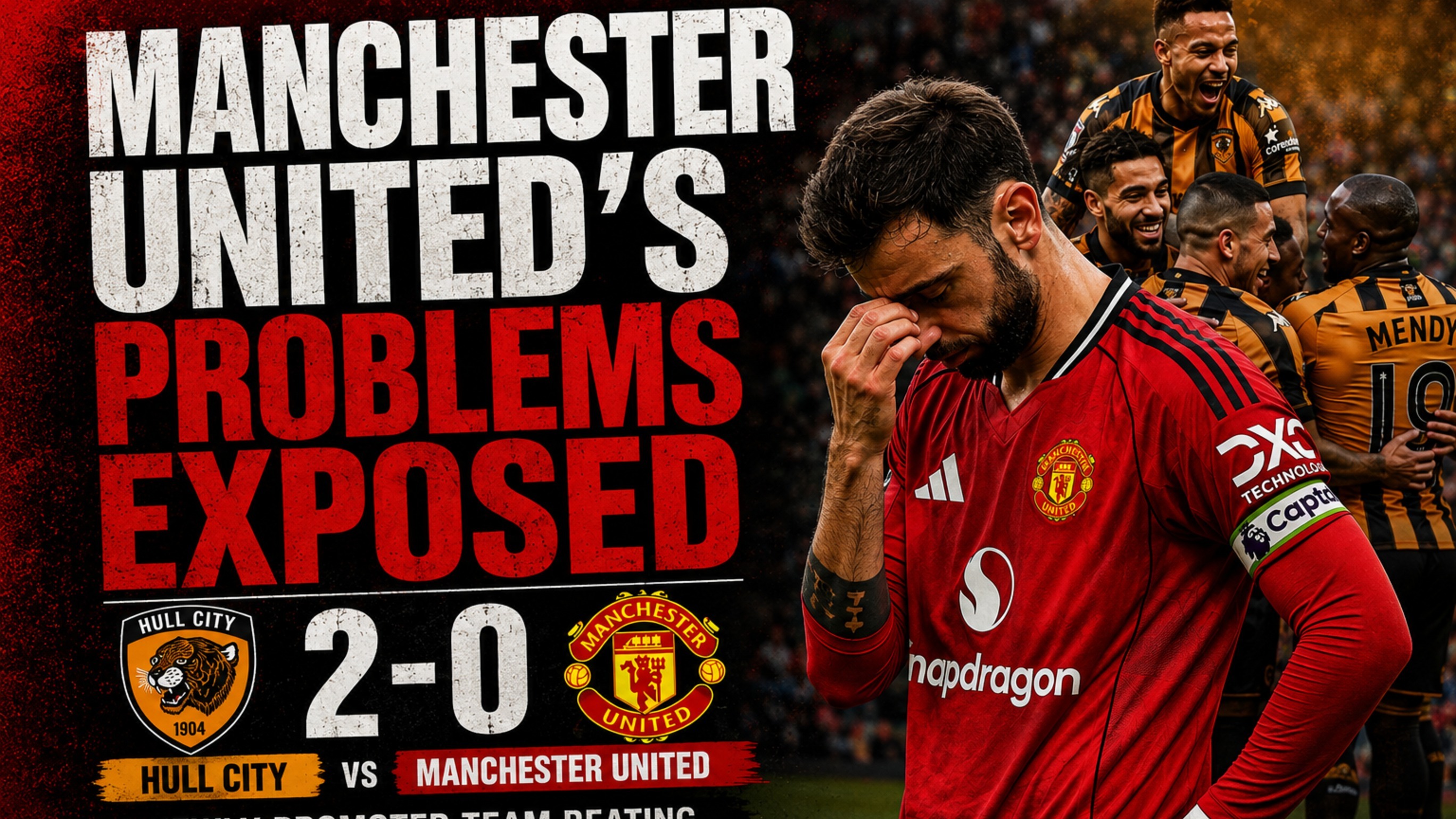
*A newly promoted team beating Manchester United 2-0 is too significant to dismiss as "just one game."*

Manchester United losing a football match is hardly unusual. Manchester United losing 2-0 to newly promoted Hull City, however, deserves closer examination.

United controlled much of the game, enjoying around 72% possession and registering 21 shots. Hull managed just eight attempts, yet scored twice. Both goals came from set pieces, exposing weaknesses that have been familiar to Manchester United supporters for some time.

## What Is the Problem With Manchester United Right Now?

Both Hull goals came from situations United should have handled better.

Semi Ajayi scored after United failed to clear a corner, while Nobel Mendy headed home from a free-kick delivered towards the back post. Hull didn't need to dominate the game. They simply needed to exploit United's defensive weaknesses twice.

That should worry Michael Carrick more than the final scoreline.

Manchester United have conceded six goals from corners since Carrick took permanent charge, with only four Premier League clubs conceding more during that period. Hull therefore didn't expose a completely new problem. They highlighted one that was already there.

## Why Is Manchester United Struggling?

The uncomfortable part is that United weren't statistically outplayed.

Their problem was what happened when Hull took away their preferred attacking spaces. Players such as Bryan Mbeumo, Matheus Cunha, Marcus Rashford, Benjamin Sesko and Bruno Fernandes are dangerous when they can attack space or exploit transitions.

Hull defended deep, stayed compact and forced United to find solutions in crowded areas.

United produced 1.81 expected goals but failed to score, illustrating the bigger problem: possession and chances mean little without an effective way to break down an organised defence.

Manchester United aren't struggling because they lack talented players. They're struggling because that talent hasn't consistently translated into a coherent team.

Against opponents who leave space, United can be dangerous. Against a disciplined low block, they still need a reliable Plan B.

## What Led to Manchester United's Downfall?

The Hull defeat didn't come completely out of nowhere.

United's preseason was inconsistent, although injuries, squad rotation and experimentation provided some explanation. At the same time, optimism around Carrick was justified after an impressive finish to last season, including victories over Manchester City and Arsenal and Champions League qualification.

That's why this defeat feels more like a reality check than a disaster.

Manchester United's post-Sir Alex Ferguson problems have rarely been about a lack of talent. Managerial turnover, inconsistent recruitment and the failure to establish a lasting identity have repeatedly prevented talented squads from becoming consistently successful teams.

Hull simply reminded everyone that some of those problems remain.

## Can Manchester United Come Back?

One result doesn't define a season, and United still have enough quality to recover. Bruno Fernandes remains a genuine difference-maker, while the squad possesses plenty of attacking talent.

But the response matters.

Set-piece defending can be improved and attacking patterns can become more effective. United cannot afford the match with Hull to become the first chapter of another familiar story.

Manchester United's comeback is not over. They've simply shown how much work is still left to do.
FOOTBALL (SOCCER)

Manchester United's Weaknesses Have Just Been Exposed By Hull

Like icon
3
Comments icon
Shares icon
sya05

13 days ago

Premier League players earn generous wages, build huge reputations, command massive transfer fees and attract millions of fans worldwide. But does every player deserve the hype? Or are there overrated Premier League players whose performances have failed to match expectations?

Here are three big names who have delivered plenty—but perhaps not enough to justify the hype and price tag.

## 3. Jack Grealish: A £100m player who never looked like one

Jack Grealish is a great footballer, but his performances for Manchester City never matched his £100 million transfer fee. Since his move from Aston Villa, he has produced 14 goals and 18 assists. His best season came in 2022/23, with five goals and seven assists; in the following two campaigns, that fell to just four goals and two assists combined.

His loan to Everton for the 2025/26 campaign started well, reminding football fans what Jack Grealish can do, but an injury ended his season earlier than expected.

There is no question that Grealish is talented; the question is whether a £100m Premier League player should have delivered more. That makes him a strong candidate for this list of the most overrated Premier League players.

## 2. Marcus Rashford: The superstar whose reputation is getting harder to justify

Marcus Rashford is a perfect example of how a player's reputation can outlive his consistency. His 17-goal Premier League campaign in 2022/23 was exceptional, but it now looks increasingly like the peak rather than the standard. He followed it with seven league goals in 2023/24 and four in 2024/25, before leaving Manchester United on loan.

The financial expectations are enormous, too. Rashford has been reported to earn around £365,000 a week, while Manchester United are now reportedly willing to accept roughly £40 million for him.

To be fair, his 2025/26 loan at Barcelona was a success: he scored eight La Liga goals and provided seven assists. But that almost makes the question more interesting. If Marcus Rashford can rediscover himself elsewhere, why has his Premier League output fallen so far below the level expected from a superstar footballer?

## 1. Phil Foden: Has the “generational talent” label become a burden?

Phil Foden's achievements are more than impressive: six Premier League titles, a Champions League and the 2023/24 Premier League Player of the Season.

But after a spectacular 2023/24 campaign, when he scored 19 Premier League goals and supplied eight assists, his output dropped to seven goals and six assists in 2024/25, followed by seven goals and five assists in 2025/26.

Once labelled a “generational” talent, expectations of Foden became enormous. Yet he has somehow failed to become the superstar English football was expecting. With his playing time now more limited, Foden's opportunities to show just how good he can be are fewer.

Every player on this list is a talented footballer and has produced plenty of moments that explain why they became such high-profile names. The real question is whether their sustained Premier League output has matched their reputation, the expectations placed on them and the financial investment behind them.

The fairest definition of “overrated” is not *“you can't play football,”* but *“we expected even more from you.”*

So, who would you put on the list of the most overrated Premier League players? And, more importantly, who would you put in the No. 1 spot?
FOOTBALL (SOCCER)

Top 3 Most Overrated Premier League Players in 2026

Like icon
3
Comments icon
Shares icon
sya05

14 days ago

Polo is a fast-paced sport that combines horsemanship, strategy and skill. For newcomers, however, understanding the action can be difficult because players move quickly and many of the rules are not obvious. In this guide to polo rules explained, you'll learn how the game works, from chukkas and scoring to the right of way and common fouls.

## How Many Players Are in a Polo Game?

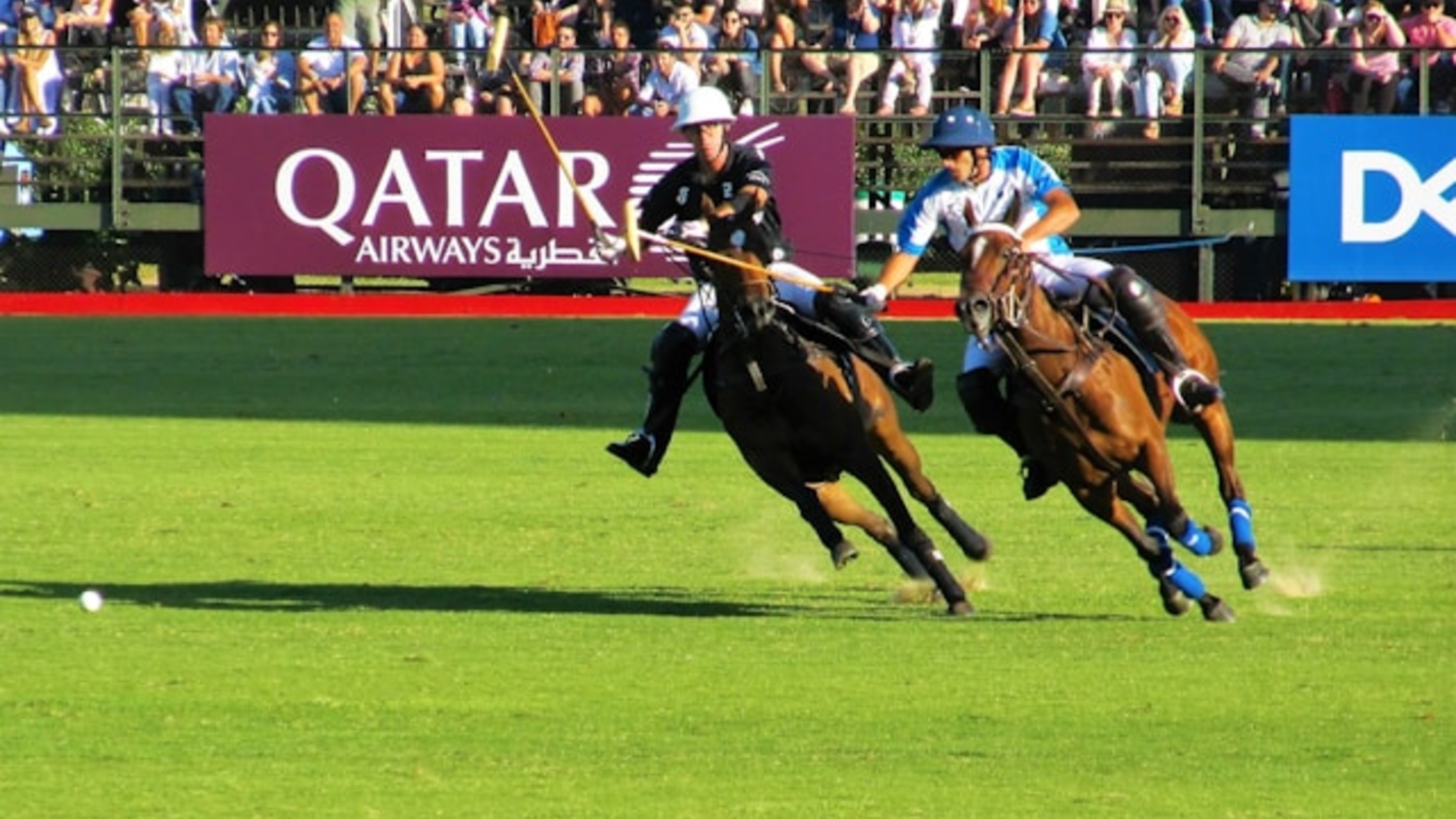
Polo is played by two teams of four riders, each player taking in a specific role. Numbers 1 and 2 are the team's attacking players. Number 3 is usually the team's key strategist and strongest hitter, while Number 4 plays primarily in defense. However, these roles can be changed during the actual game, if it helps the team.

Two mounted umpires oversee the action and make decisions during the game. If they disagree on a decision, a referee can be consulted to settle the matter.

## What Are Polo Chukkas and How They Work?

A polo match is divided into periods called chukkas, each lasting up to seven and a half minutes. Most matches have four to six chukkas, depending on the competition.

There is a short break between chukkas, giving players time to change horses and rest. Because polo is physically, players change their horses with rested ones after each chukka, to maintain their advantage. Elite riders can ride up to 8 horses in a single match.

At halftime, spectators are traditionally invited onto the field to replace the divots made by the horses' hooves.

A bell sounds after seven minutes to signal the end of a chukka. If the ball remains in play, the chukka continues until play stops or a second bell sounds 30 seconds later.

## How Does Polo Scoring Work?

Polo scoring is straightforward: a team scores a goal when the ball passes completely between the goalposts. The team with the most goals at the end of the match wins.

After every goal, the teams change ends before play restarts. This helps balance any advantage caused by the condition of the field, wind or other factors.

## What Is the Right of Way in Polo?

One of the most important polo rules is the right of way. It determines which player has priority when two or more players compete for the ball and helps prevent dangerous collisions.

When a player hits the ball, an imaginary line is drawn along its path. Known as the line of the ball, it helps establish the direction of play. A player riding along this line generally has priority, while opponents must not cross it in a way that creates danger or interferes with the player who has the right of way.

## Which Moves Are Legal in Polo?

Some actions that look aggressive to newcomers are actually legal parts of the game, such as riding off and hooking.

Riding off involves using your horse to push an opponent and their pony away from the ball. It is allowed when performed safely and at an appropriate angle.

Hooking involves using your mallet to prevent an opponent from hitting the ball. It is permitted when performed from a legal position and without endangering the horse or rider.

## What Are the Main Polo Fouls?

Riding off and hooking can become polo fouls when performed dangerously or illegally. Other common fouls include crossing the line of the ball in a dangerous way or interfering with a player who has the right of way.

When an umpire sees a foul, they blow the whistle and stop play. The opposing team is usually awarded a penalty hit. The type of penalty depends on the nature and location of the foul and can range from a free hit from a set position to a direct shot at goal.

Understanding these basic polo rules makes the game much easier to follow. Once you know what to watch for, the fast-moving action becomes less chaotic and much more enjoyable to watch.
POLO

Polo Rules Explained: How the Game Works, From Chukkas to Fouls

Like icon
5
Comments icon
Shares icon
sya05

14 days ago

When you fancy an evening watching good football, you probably think of a Premier League match featuring some of the best players in the world. But you could be missing out.

Away from the spotlight, a young footballer is giving their best on the field, watched by a scout and a handful of fans. Lower-league football isn't simply football's second tier of attention. For many players, it's where the journey to professional football really begins.

## Lower-League Football Creates Opportunities for Young Players

For young players, the biggest challenge isn't always finding a big club, but finding an opportunity. Many talented players are released before they get a chance to prove they belong at senior level football. Lower-league clubs can provide those opportunities, giving young players the chance to show what they can do and be catch the eye of a football scout. [Research on young professional players](https://pubmed.ncbi.nlm.nih.gov/34706623/) has found that gaining experience through lower-division football can support players development and help them earn further opportunities.

That is the overlooked value of lower-league football: it doesn't decide how far a player can go. It gives them somewhere to start proving how far they can go.

Jamie Vardy is the perfect example. At 16 he was released by Sheffield Wednesday. A few years later he was playing non-league football for eighth-tier Stocksbridge Park Steels while working in a factory to support himself. His journey then took him through Halifax and Fleetwood before Leicester signed him in 2012. Four years later, Vardy had become a Premier League champion, after scoring 24 goals during Leicester's remarkable title-winning season.

Vardy's story shows what can happen when an overlooked player gets the chance to play and prove their talent. In his case, lower-league football was the perfect stage to show his worth.

## Digital Scouting Is Changing Lower-League Football

Players no longer have to rely solely on a football scout being present at their games. Digital scouting platforms can now make it easier for talented lower-league players to get noticed.

Hudl Wyscout and similar football platforms provide access to match videos, performance data and player profiles from competitions around the world, allowing scouts and clubs to identify potential targets and assess their performances from their offices For lower-league football players around the world, this can mean greater visibility, as scouts can review a player's performance data and match footage online, before deciding whether to watch them play live.

Digital sport platforms can connect athletes with fans, clubs and other figures across the sports ecosystem, making it easier for talented players to be seen by the right people.

## Should you watch lower-league football more often?

The answer to the question “Should you watch more lower-league football?“ is a strong yes. But that doesn't mean you should abandon the Premier League.

Watching both the Premier League and lower-league gives you a different perspective on football. At the same time, it can give you the opportunity to watch the players who could become part of the next generation of top stars.

And there is one particularly satisfying possibility: you could end up watching the next Jamie Vardy before everyone knows his name.
FOOTBALL (SOCCER)

Why Lower-League Football Deserves More Attention Than It Gets

Like icon
4
Comments icon
Shares icon
sya05

16 days ago

As you watch a polo game, the players make it look effortless. The pony gallops, the rider turns, the mallet swings and the ball shoots away with mesmerizing fluency. Try doing it yourself and the illusion quickly disappears.

Polo is very demanding, both physically and mentally. The best players are excellent riders, completely in sync with their horses. They anticipate the game, execute shots precisely and make smart decisions at speed.

For a beginner, all of this may sound intimidating, but these skills develop gradually, through riding practice, physical training and mental preparation.

# Horsemanship comes first in polo

The horse is at the heart of polo, and players have long emphasized just how much their performance depends on their mounts. Elite players [attribute up to 80% of their success](https://pmc.ncbi.nlm.nih.gov/articles/PMC9197297/) to their horses. The connection between horse and rider is paramount - a great polo player doesn't simply control a horse, they feel it.

During a match, the horse must speed up, stop and turn, while the rider leans from saddle to strike the ball. If the rider pulls on the reins or resists the horse's movement, both will struggle to perform at their best.

Before playing polo, beginners need to work on their riding skills, developing smooth transitions and balanced turns while maintaining a stable position, allowing the horse to move freely. The goal isn't to make the horse do everything you want; it's to develop such good communication that you can move together almost instinctively.

That feel for the horse becomes the foundation for everything else a polo player does.

# Develop your game awareness

Polo is fast, but chasing the ball is not enough. Elite players understand positioning, anticipate where the ball is going and recognize what teammates and opponents are likely to do next. Knowing the line of the ball and the right of way is also essential for playing effectively and safely.

Polo is a team sport, so communication is essential too. Players need to know when to attack, pass, support a teammate or create space. 

With practice, the game begins to slow down mentally, even when it is moving faster physically. Great decision-making isn't about reacting more quickly; it's about understanding the situation early enough to know what to do next. Learning to “read” the game is what makes a player valuable to their team.

# Master coordination

Hitting a ball at a horse's gallop while leaning out of the saddle and avoiding opponents requires excellent coordination. Beginners may be tempted to hit harder, but timing and control matter more than brute force. A consistent swing and controlled hit are more likely to send the ball where you want it to go.Strength should be used in a controlled way, while the hand holding the reins remains soft enough not to hinder the horse. Properly fitted equipment, including a helmet, gloves and a mallet suited to the player, can also support control and confidence.

Ultimately, good polo technique is about making the right movement at precisely the right moment.

# Keep up your fitness level

The pony might be the one galloping, but polo still demands plenty from the rider. Staying balanced in the saddle while swinging a mallet requires cardio endurance, core strength, flexibility and balance. Research on elite polo players has found [substantial cardiovascular demands](https://www.tandfonline.com/doi/abs/10.1080/24748668.2008.11868437) during matches, reinforcing the importance of physical conditioning alongside technical training.

Regular riding, aerobic exercise and, strength training help build a strong foundation, allowing players to concentrate on the game, communicate with their horses and make good decisions, even when fatigue starts to set in.

# Keep a cool head

With horses galloping and riders competing for the ball, polo can quickly become chaotic. Staying composed requires confidence, concentration and a healthy respect for risk.

In her first-person account of the mental side of polo, player Anne Gry Reitan Ringen describes how fear and uncertainty can become part of the experience, particularly when speed and competition increase. Her experience highlights an important lesson: bravery isn't about ignoring fear; it's about learning to manage it and still make sensible decisions.

# Great players keep learning

Becoming a great polo player isn't about mastering one skill. It's about bringing everything together: horsemanship, game awareness, precise movements, smart decisions and composure under pressure.

You don't have to develop every skill at once. Focus on one weakness during each practice session, whether that's your balance, positioning, swing or decision-making.

The best players keep learning long after the basics become second nature. The goal isn't to become a ten-goaler overnight, but to finish every chukka a little better than you started.
POLO

Beyond the Horse: What Makes a Great Polo Player?

Like icon
4
Comments icon
Shares icon