





 0
0A Rule Meant for Fairness Ended Up Rewarding the Wrong Players
Sports rules often get introduced with good intentions, designed specifically to fix a real problem or protect a specific group of competitors.
Sometimes, once players and coaches actually adapt their strategies around the new rule, it ends up producing the exact opposite outcome from what was originally intended. This pattern shows up again and again across very different sports.
Rules that solve one problem and create another
Football’s away goals rule, introduced in the 1960s to encourage attacking play from visiting teams in European competitions, eventually flipped into discouraging home teams from attacking at all, since conceding a single away goal carried an outsized psychological cost by the time the rule was finally scrapped decades later. What worked exactly as intended for years eventually reversed itself entirely as the underlying conditions the rule was built for gradually changed.
Basketball’s illegal defense rules, meant to keep the sport exciting by preventing teams from packing defenders around the basket, ended up shaping an entire era of isolation-heavy, one-on-one offensive basketball, arguably making individual highlight plays more common while making genuine team offensive creativity less necessary for years.
Why good intentions don’t guarantee good outcomes
The common thread across these examples is that sports rules exist inside a living, constantly adapting system. Coaches and players don’t just accept a new rule passively. They study it carefully, looking for whatever specific strategic advantage the new rule might accidentally create, sometimes finding ways to exploit it that completely undermine what the rule was originally designed to accomplish in the first place.
That’s a genuinely difficult problem for any governing body to fully anticipate in advance. A rule that looks obviously fair and sensible on paper, tested only against the game as it’s currently played, can still eventually produce a completely different, sometimes worse outcome once players and coaches have had years to adapt their entire strategic approach specifically around it.
Why sports keep needing to revisit their own rules
This pattern helps explain why major sports so often need to revisit and adjust their own rules years or even decades after those rules were first introduced. It’s rarely because the original rule-makers were careless or foolish. It’s because no rule can be fully tested against how players will actually adapt to it over years of real competitive pressure, only guessed at reasonably in advance.
Sports that treat their own rulebook as a permanently finished, unchangeable document tend to fall behind. The ones that stay willing to revisit and adjust rules, even ones that seemed perfectly sound when first introduced, tend to stay healthier and more competitively balanced over the long run.
Can you think of a rule in a sport you follow closely that seemed like a good idea at first, but ended up producing a strategy or outcome nobody originally intended?

Sarajevo Back at the Heart of Regional MMA: SFC Returns with Explosive Matchups

How Buzzer Karma Works: Levels, Penalties, and What They Mean

Inside Buzzer's Latest Update (and Why It Changes How You Use the App)

Buzzer Introduces Ads Console: A New Era of Advertising Across the Entire Buzzer Ecosystem

Buzzer Is Evolving: From Quantity to Quality

Buzzer Now Has a Games Hub, and Tournaments Are Coming

Al Ittihad SC's Matches Are Now Live on Buzzer
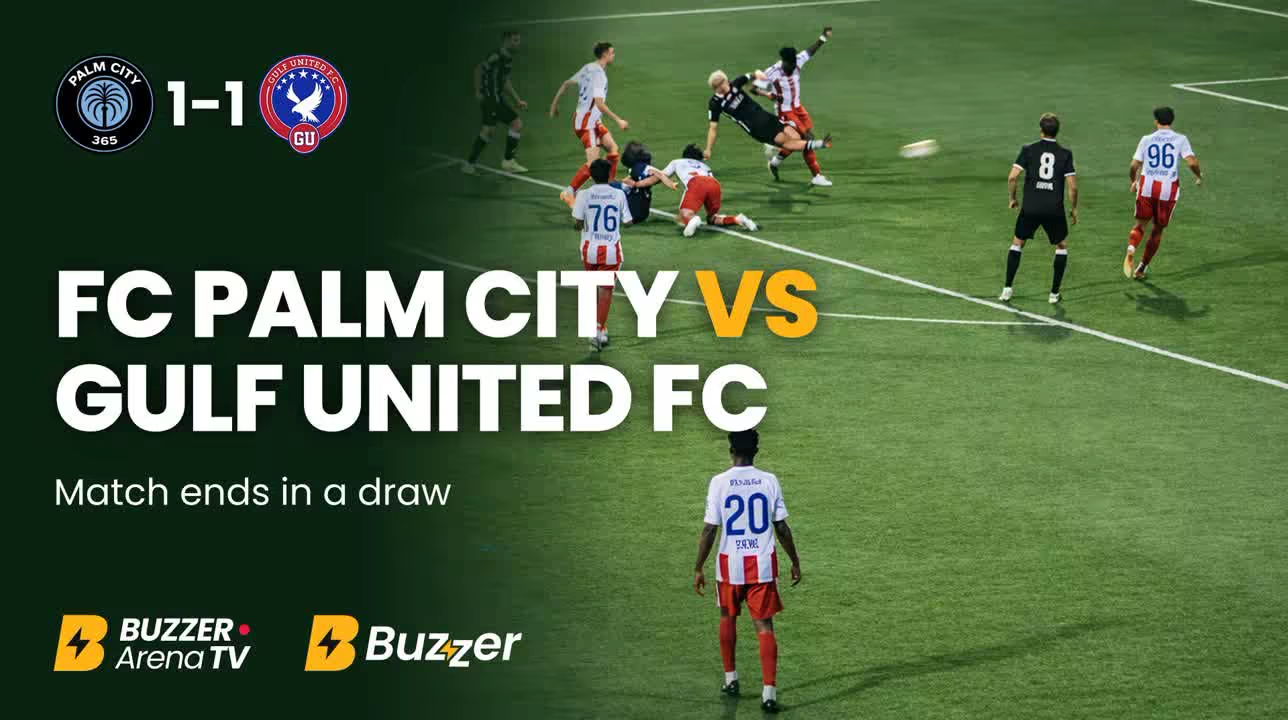
Palm City vs Gulf United Ends in 1–1 Draw in UAE Second Division League Clash

"We Don't Take the Guy With the Camera." He Built His Own Club Anyway. Now He's Coming to Find You.

Building the Infrastructure Sports Tech Forgot


