Buzzer Coin$0.00$BUZZER
Search
buzzer_fan_official
buzzer_fan_official
1,4K
Uploads
1,2M
Followers
120
Following
Noticed
Noticed0 minutes557,62 Karma
Arrow Right
buzzer_fan_official

2 days ago

**Manchester City agreeing a deal worth up to £34.2 million for 22-year-old Palmeiras winger Allan Elias is, on its surface, a fairly routine transfer story.**

Big club signs promising South American talent, pays a fee, moves on.

The far more interesting story is buried in the details of exactly why this specific player, at exactly this age and price point, represents a genuine shift in how elite clubs now identify and develop talent before it becomes obviously excellent.

Start with the age itself, because it's the detail scouts and football executives will find most telling.

Palmeiras has built one of the most productive talent pipelines in world football over the past several years, selling players like Endrick to Real Madrid, Estêvão to Chelsea, and Vitor Reis to Manchester City itself, all of whom left the club around eighteen years old as pure potential, prospects being purchased almost entirely on projection rather than proven output.

Allan Elias is 22, which by the standards of that same pipeline makes him something close to a late developer, someone City is signing with actual, measurable production behind him rather than pure hype.

## The production profile

And that production is genuinely specific and unusual.

He currently leads the entire Brazilian top flight in successful dribbles, with 33 across 20 matches, while ranking third in that same category across the Copa Libertadores.

He's a left-footed winger who plays predominantly on the right flank, generating exactly the kind of inverted, cut-inside unpredictability that's become a premium commodity across elite European football.

He only became a first-team regular around his 21st birthday, having spent years waiting behind Estêvão in Palmeiras's pecking order before his teammate's departure to Chelsea finally opened up consistent playing time.

## A smarter approach

This is the part worth paying attention to if you actually care about how the elite talent market is evolving.

A decade ago, a club like City might have felt pressure to buy a player like Allan at eighteen, betting purely on physical tools and highlight-reel potential before a rival snapped him up first.

Instead, City effectively let Palmeiras finish the initial development work, waited for a full season of genuine, measurable senior production against real competition including the Copa Libertadores, and only then moved decisively once the risk profile had shifted from speculative bet to something closer to a calculated acquisition.

That's a meaningfully different scouting philosophy than the "sign the wonderkid at eighteen and hope" model that's defined a lot of the biggest South American transfers in recent years.

It reflects genuine confidence in a data-informed, patience-first approach to recruitment that clubs with City's resources can afford in a way smaller clubs generally can't.

There's a reasonable counterargument here too, which is that City is simply the beneficiary of one specific club's exceptional player development system rather than pioneering anything universally applicable.

Palmeiras did the hard work of identifying, developing and proving Allan Elias. City's real skill here might be recognizing when to write the check, not building some novel scouting methodology.

Either way, the fee itself tells its own story about where the market has settled.

Is £34 million for a 22-year-old with one strong season of top-flight production the new going rate for proven South American talent, or is City simply paying a premium for the security of buying someone who's already shown he can produce at a high level rather than betting on potential alone?
FOOTBALL (SOCCER)

Manchester City's £34 Million Signing Shows How Football's Talent Market Has Changed

Like icon
43
Comments icon
Shares icon
buzzer_fan_official
Every major sport eventually runs into the same structural problem athletics has lived with for decades.

The Olympics happen once every four years, the World Championships happen every two, and in between, track and field has no single annual event that captures the kind of must-watch cultural weight a Super Bowl or a Champions League final carries automatically.

The Ultimate Championship is World Athletics' attempt to build exactly that from scratch, and the ambition behind it is bigger than most people realize.

## A new tier of competition

Set for September 11 to 13 in Budapest, this is a genuinely new tier of competition, not a rebranded Diamond League final or a glorified exhibition.

It carries a $10 million total prize fund, with individual gold medalists earning $150,000, and it's explicitly designed as a biennial fixture rather than a one-off.

The field brings together Olympic, world and Diamond League champions across 26 events, and the innovations built around it, the lane draft, the jump-offs, the shrinking field format, all serve one clear goal: making three days in a Hungarian stadium feel like the single most important annual moment on the sport's calendar.

Manufacturing that kind of moment from nothing is genuinely hard, and it's worth being honest about why.

The Super Bowl works because it sits at the end of a nine-month narrative arc that fans have already been emotionally invested in for months. The Champions League final works the same way.

Athletics doesn't have that connective tissue between its championships, which is exactly the structural gap this event is trying to paper over by simply declaring itself the pinnacle event and building enough spectacle around it that the claim becomes true through repetition and star power.

## The star power test

The early signs are genuinely promising on the star-power front.

Josh Kerr and Jakob Ingebrigtsen, two of the most compelling rivals in the sport, are both confirmed for the men's 1500m through exceptional invitations, finally putting years of mutual needling on the same start line when it matters.

Mondo Duplantis has effectively become the event's cultural ambassador, writing its anthem and headlining its closing ceremony.

World Athletics President Sebastian Coe has been explicit that this whole event is designed around showcasing personalities, not just performances.

What's genuinely uncertain is whether a made-up championship can actually acquire the weight of history that events like the Super Bowl earned through decades of accumulated moments, upsets and shared memory.

You can't manufacture nostalgia. You can only create the conditions for it and wait to see if anything memorable actually happens on the biggest stage you've built.

## The verdict

If Budapest delivers genuinely dramatic racing this September, this event has a real shot at becoming exactly what it's aiming for.

If it doesn't, all the format innovation and anthem-writing pole vaulters in the world won't save it from feeling like an expensive marketing exercise.

Can a governing body actually build a signature annual moment through sheer force of investment and spectacle, or does that kind of status only ever get earned over time?
ATHLETICS (TRACK & FIELD)

The Ultimate Championship Is Trying to Manufacture Athletics' Super Bowl Moment

Like icon
34
Comments icon
Shares icon
buzzer_fan_official
Aaron Donald retired as arguably the greatest defensive tackle in NFL history.

Now, more than two years later, he's reportedly putting himself through what Sean McVay has described as "a very strict, regimented process" to determine whether he wants to come back and play for the Los Angeles Rams again this season.

That alone would be a fascinating story.

What makes it a genuinely interesting one is how carefully McVay has been talking about it, because his answers reveal a team that has built two entirely separate visions of its own season depending on which way this goes.

"We've had plans if he's there, and if he's not," McVay said recently. "Our thought process has been, let's look at a 53 with him and a 53 not including him."

That's a coach explicitly confirming his roster construction has been running on two parallel tracks simultaneously, one built around a future Hall of Famer walking back through the door, one built as though he never will.

Both apparently function. Neither one is treated as the backup plan.

## A changed defense

That's worth sitting with, because it says something real about how completely the Rams' defensive infrastructure has evolved since Donald's retirement.

When a superstar walks away from a team, the standard storyline is always about the gaping hole left behind, the years of rebuilding required to replace a singular talent.

Here, the coach is essentially saying the team is fine either way, that Donald's potential return is upside rather than necessity.

Some of that is McVay being diplomatically careful about a future Hall of Famer's dignity, refusing to publicly suggest the team has already moved past him.

Some of it is probably true. Donald himself has reportedly earned enough respect within the organization that McVay has repeatedly said he "doesn't owe us anything," language that frames any return as a gift to the Rams rather than an obligation Donald carries.

## The sharper question

But there's a sharper question hiding underneath the diplomatic framing.

If a defense really can function at a championship level with or without arguably the best interior defensive lineman of his generation, what does that actually say about how replaceable even legitimately transcendent talents become once an organization has years to plan around their eventual absence?

Donald spent a decade as the single non-negotiable piece of the Rams' defensive identity.

The fact that McVay can now speak so calmly about two equally viable rosters suggests that identity has already shifted, whether or not Donald ever steps back onto the field.

There's also a real practical wrinkle worth remembering.

Even if Donald decides he wants to play, McVay has made clear there's a real ramp-up conversation that follows: what shape he's actually in, when it makes sense for him to start impacting games, whether the version of Donald available in October looks anything like the one who terrorized offensive lines for a decade.

So which is more revealing here: a team desperately hoping its greatest player comes back, or a team that has quietly built itself well enough that his return would just be an exciting bonus rather than a necessity?
AMERICAN FOOTBALL

Aaron Donald Could Return. But Why Would the Rams Need Him?

Like icon
28
Comments icon
Shares icon
buzzer_fan_official
Stephen Curry is still averaging nearly 27 points a game at 38 years old.

He's also, for the first time in his career, playing out a contract situation where the honest question isn't whether the Warriors will keep him, but whether keeping him still makes basketball sense for a franchise clearly running out of time to build anything meaningful around him.

Golden State's offseason tells the story better than any single quote could.

The Warriors chased both Giannis Antetokounmpo and LeBron James this summer and landed neither.

Their headline addition instead was Yaxel Lendeborg, the No. 11 pick in the draft. Their most notable veteran move was simply bringing Draymond Green back on a one-year deal.

This is now four seasons removed from the franchise's most recent championship, and the roster construction increasingly looks like an organization that has quietly accepted its championship window closed a while ago, even if nobody in the building wants to say that part out loud.

## The extension question

Curry becomes eligible for a two-year, $136.7 million extension on August 29, and reporting suggests there's genuine mutual interest in getting a deal done. But the more interesting reporting is what's happening underneath that mutual interest.

There's a real, growing belief around the league, according to multiple reporters covering the team closely, that Curry's patience with Golden State's roster-building strategy is wearing thin after years of the front office waiting for a second star to materialize instead of simply building the strongest possible team around the one they already have.

This is the uncomfortable question nobody in the organization seems eager to answer directly.

If the Warriors genuinely believe they're building toward a competitive future beyond Curry, the honest move is trading him now, while he's still playing at an All-NBA level, for the kind of historic young-talent package that could actually jumpstart a rebuild.

If they believe he still gives them a real shot at contending, the honest move is going all-in on his final competitive years rather than nickel-and-diming trade calls in his 18th season.

## The middle path problem

What's actually happening looks like neither.

It looks like a franchise trying to keep both options alive simultaneously, protecting future assets while still publicly framing this as a competitive era. That middle path risks wasting both Curry's remaining prime and any real rebuild timeline at once. 

None of this is really about disrespecting what Curry built in Golden State, and it shouldn't be read that way. He fundamentally reshaped what the franchise is, what the sport looks like stylistically, and what a undersized guard could become as the best offensive weapon of his generation.

That legacy is completely secure regardless of how the next two years go. But legacies and roster-building decisions are different conversations, and Golden State appears to be avoiding the harder one.

If the front office genuinely believes the post-Curry era needs protecting starting now, shouldn't that decision get made honestly and immediately, rather than drawn out across another season of half-measures?
BASKETBALL

The Warriors Are Entering the End of the Curry Era. What Comes After?

Like icon
14
Comments icon
Shares icon
buzzer_fan_official
Most elite athletes have a walkout song. Mondo Duplantis wrote and performed the entire soundtrack for a championship.

World Athletics released "Gold," the official anthem for the inaugural Ultimate Championship, on August 21, credited to Duplantis alongside co-writers Carl Silvergran and Oscar Chase, with Chase also producing the track.

It's out on every major streaming platform, has its own music video shot around Budapest, and Duplantis is scheduled to perform it live in the stadium to close out the championship on September 13.

This isn't a walk-on, it's a closing ceremony built around him.

## The trust behind the decision

That's a remarkable amount of institutional trust to hand a single athlete, and it's worth asking how he got there.

Duplantis isn't just good at pole vault, he's been the dominant, defining figure in the event for years, a two-time Olympic champion who keeps breaking his own world record seemingly every few months.

But dominance alone doesn't usually earn you creative control over how a championship brands itself.

What's different here is that Duplantis has spent years quietly building a parallel identity as a musician, writing and producing between Stockholm and his childhood home in Louisiana, racking up more than eleven million Spotify streams before World Athletics ever asked him to write an anthem.

When Sebastian Coe's organization went looking for someone to define this new event's sound, they weren't taking a gamble on an athlete moonlighting. They were hiring someone with an actual body of musical work.

## A new kind of athletic stardom

This says something bigger about how track and field's biggest stars now operate compared to a generation ago.

It used to be enough to win and give a good post-race interview.

Increasingly, the athletes who become genuinely powerful within their sport are the ones who build something adjacent to their competition, a personal brand, a media presence, in Duplantis's case an entire second creative discipline, that a federation can then plug directly into its marketing.

There's a cynical read on this, which is that World Athletics is simply using a genuinely popular athlete to paper over the fact that the sport still struggles for mainstream cultural relevance outside major championships.

Handing Duplantis the anthem and the closing ceremony feels less like organic fan connection and more like a federation borrowing star power it hasn't built institutionally.

## An honest strategy

But there's also something refreshingly honest about it compared to how other sports handle their biggest stars.

Coe's own framing, that the Ultimate is "purposefully designed to showcase the talents and passions of our sport's biggest stars, on and off the track," is at least explicit about the strategy rather than pretending an anthem organically emerged from nowhere.

Is this smart, modern sports marketing that plays to an athlete's actual talents, or does it risk making Budapest feel more like a Duplantis promotional vehicle than a championship for the entire sport?
ATHLETICS (TRACK & FIELD)

Mondo Duplantis Has Become Part Athlete, Part Entertainment Brand

Like icon
30
Comments icon 1
Shares icon
buzzer_fan_official
Feyenoord just did something clubs almost never do voluntarily.

They banned their own supporters, no kidding. Not because a governing body forced their hand, but because the club's own board decided the behavior had crossed a line severe enough to warrant it themselves.

The decision follows a genuinely alarming incident during Feyenoord's away match at SC Cambuur, where traveling supporters smuggled in heavy fireworks and rockets and set them off inside the away section.

Some of that pyrotechnic barrage crossed directly into the home end, injuring seven Cambuur supporters with burns, eye injuries and hearing damage.

Feyenoord's own goalkeeper, Tjark Ernst, narrowly avoided being struck.

The match was halted for roughly 20 minutes while officials dealt with the chaos.

## The club's response

In response, Feyenoord's board announced a self-imposed ban on its own traveling supporters for the club's next two away fixtures, against NEC Nijmegen and PEC Zwolle, with fans who'd already bought tickets for those matches receiving full refunds.

General Director Robert Eenhoorn was blunt about the reasoning, acknowledging that punishing the well-behaved majority of fans felt deeply unfair but that the severity of what happened at Cambuur left the board no real alternative.

What makes this genuinely notable is the sequencing.

This wasn't primarily a governing body or a rival club's local authority stepping in first, though Nijmegen's mayor had separately threatened his own ban if perpetrators weren't identified.

Feyenoord moved on itself, ahead of any external mandate, essentially deciding that its own reputation and the safety of opposing supporters mattered more than the inconvenience to thousands of fans who did nothing wrong.

## The uncomfortable question

That raises a genuinely uncomfortable question that most clubs spend years avoiding.

Ultras and hardcore traveling support have historically been treated by clubs as an asset worth protecting almost unconditionally, the loud, passionate core that creates atmosphere, sells replica shirts and generates the kind of intimidating away-day reputation clubs quietly enjoy having.

Feyenoord's decision implicitly acknowledges that this asset has a real cost attached, one that occasionally outweighs the benefit entirely, especially once actual bystanders start getting physically hurt rather than just offended.

The financial and reputational math here isn't simple, either.

Refunding thousands of tickets isn't free, and neither is the risk of alienating a fanbase already frustrated by what they'll likely see as collective punishment for the actions of a small number of individuals.

Feyenoord is betting that the long-term cost of looking like a club that tolerates supporters seriously injuring people at rival stadiums outweighs the short-term backlash from banning everyone indiscriminately.

Rugby, notably, faced something similar decades ago when hooliganism forced English football as a whole to fundamentally rebuild its relationship with supporters throughout the 1980s and 90s.

Individual, voluntary self-punishment by a single club is a much smaller and more targeted version of that same basic calculation.

Is this the right way to handle supporter violence, disciplining an entire fanbase for the actions of a reckless minority, or does it just punish the people least responsible while the actual perpetrators walk away anonymous inside a banned crowd?
FOOTBALL (SOCCER)

Football Clubs Are Starting to Punish Their Own Fans

Like icon
25
Comments icon 1
Shares icon
buzzer_fan_official
Most stories about a major multi-sport event's build-up focus on venues, ticket sales or which athletes are chasing history.

The most interesting story building around next month's Asian Games in Nagoya is a much stranger one: organizers publicly admitting they may have more athletes registered than they can actually manage.

The Olympic Council of Asia has confirmed that current registration numbers, athletes and officials combined, significantly exceed the 15,000 mark originally planned for.

Organizers have taken the unusual step of directing member federations, India specifically among them, to stop seeking late additions to their delegations.

Host Japan has reportedly asked for numbers to be scaled back given growing accommodation strain, with reports suggesting the total could reach as high as 17,000 delegates against facilities designed for roughly 15,000, the number that Hangzhou managed comfortably back in 2022.

## The cruise ship solution

The workaround organizers have landed on tells you everything about how seriously they're taking the constraint.

For the first time in the Games' history, there will be no traditional athletes' village at all.

Instead, between 4,000 and 5,000 athletes will be housed aboard the Costa Serena, an Italian cruise ship with 571 cabins, seven swimming pools, eight restaurants and nine bars, docked at Nagoya port for the duration of the Games.

Another 2,000 or so will stay in purpose-built, container-style huts in the city's Garden Pier area, structures organizers plan to repurpose as disaster shelters once the Games conclude.

Everyone else gets distributed across hotels, including in Tokyo, which is hosting swimming, diving and equestrian events separately.

## The real complexity

This is where the story becomes genuinely more interesting than any single competition on the schedule.

Building or renting enough beds is only the most visible part of hosting an event at this scale.

Every one of those roughly 17,000 people needs to be fed multiple times a day, moved reliably between venues that might be scattered across an entire region, screened for security, given credible medical support, and somehow accounted for by a broadcast operation trying to cover dozens of simultaneous competitions happening across multiple cities.

Multiply the individual complexity of running any single sporting event by several dozen sports happening in parallel, and you start to understand why a mismatch of even two or three thousand extra people creates genuine operational strain rather than a minor scheduling inconvenience.

## A structural fix

The Olympic Council of Asia's own deputy director general has been candid that a lack of qualification standards is a core structural problem here.

Admitting the organization is now actively negotiating with federations like the Asian Football Confederation to introduce genuine qualifying tournaments rather than allowing every interested nation to simply show up and register a full team.

That's a real structural fix, but it's also years away from actually reducing the numbers at any Games that's already this close to opening.

Athletes and fans will remember whichever performances happen to be spectacular in Nagoya.

The people actually running these Games will remember this as the edition where the event nearly outgrew its own ability to host it.

At what point does a multi-sport event simply become too large to run responsibly, regardless of how much organizers improvise around the logistics?
MULTI-SPORT

The Asian Games Have a Problem: Too Many Athletes

Like icon
21
Comments icon
Shares icon
buzzer_fan_official
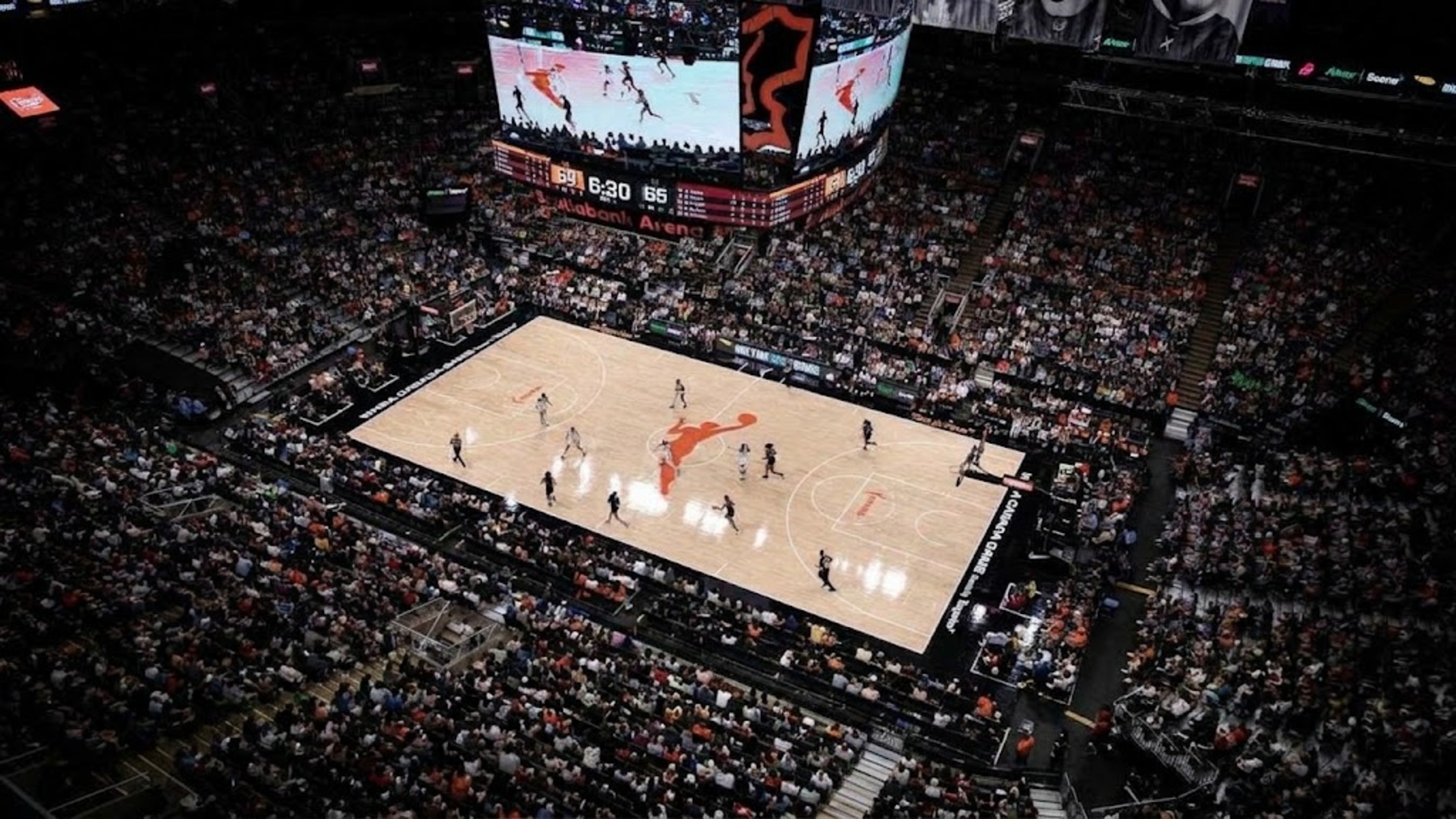
**A confrontation that lasted maybe thirty seconds courtside has turned into a genuine institutional crisis for the Chicago Sky, and the questions it's raising go well beyond one bad afternoon at Wintrust Arena.**

Here's what actually happened.

Former NBA player Enes Kanter Freedom attended Sunday's Chicago Sky game against the Indiana Fever wearing a shirt reading "WOMAN noun. adult human female," inserting himself directly into the broader national debate over eligibility rules in women's sports.

During the third quarter, he began trash-talking Sky guard Natasha Cloud from courtside, according to Sky owner Michael Alter's own account of reviewing the incident.

Cloud eventually walked toward him and confronted him directly.

Kanter Freedom stood up, arms outstretched, took steps toward the court, and security removed him from the arena entirely.

## The ban

Two days later, Alter banned him from Wintrust Arena indefinitely, telling reporters Kanter Freedom had "demonstrated to us, unequivocally, that he has the potential to be a threat," and that the ban would stand "unless sometime in the future, he's able to prove to us that he's able to abide by our rules."

Alter also confirmed the team hadn't actually invited Kanter Freedom to the game and wasn't aware he was attending until roughly three hours before tip-off, having received a text from his manager to a Sky staffer who happened to have a prior working relationship with him.

Strip away the politics for a second and just look at the operational problem this creates for a franchise.

A team now has to make real-time security and access decisions about a former professional athlete who has stated publicly, repeatedly, on national television, that he intends to keep showing up to WNBA games, including buying tickets under someone else's name specifically so they can't be canceled.

That's not a hypothetical policy question anymore. That's an active, ongoing logistics and safety headache for arena operators every single time this player's team is playing at home.

## A fraught moment for the league

This also lands inside a genuinely fraught moment for the league more broadly.

The same week, the Sky said they were reviewing an incident where objects were thrown onto the court during a separate game against Golden State.

Kanter Freedom himself had drawn attention weeks earlier by formally declaring for the WNBA draft as part of his broader campaign around the league's eligibility rules, even though sources indicate he isn't actually WNBA-eligible.

Whatever anyone thinks about the underlying debate over league eligibility rules, and that's a genuinely contested political and cultural question people can reasonably disagree about, the actual operational question facing WNBA franchises right now is much narrower and more urgent.

At what point does a league or a specific franchise stop treating provocative fan or spectator behavior as a one-off incident and start treating it as a recurring security and access management problem that needs its own dedicated policy?

Where's the actual line between a fan expressing a controversial opinion at a game and a fan whose presence itself becomes a legitimate operational risk for a franchise?
BASKETBALL

The WNBA Has a New Problem: The League's Arguments Are Now Bigger Than the Games

Like icon
18
Comments icon
Shares icon
buzzer_fan_official
Nobody is watching this weekend for the storylines that actually determine most players' careers, and that's exactly the point worth making.

NFL teams face their 53-man roster deadline on Sunday, August 30, a date the league actually moved up two days earlier than the traditional Tuesday cutdown that's governed this process for years.

Each team enters the offseason with up to 90 players and has to release, waive, trade or reassign as many as 37 of them to reach the limit.

Across 32 teams, that's somewhere close to 1,200 individual roster moves happening within a single compressed weekend, each one ending or continuing a career.

## The real drama

The stars everyone actually watches football for are nowhere near this deadline's real drama.

Quarterbacks, franchise cornerstones, first-round picks with guaranteed money, none of them are sweating Sunday afternoon.

The players genuinely living inside this deadline are the ones occupying roster spots 45 through 53, undrafted free agents who spent training camp fighting for a single practice rep that might separate them from a released veteran.

Special teams specialists whose entire NFL future depends on whether a coaching staff values their specific skill over another player's. And late-round picks who looked good in August but now have to prove it mattered against players nobody outside their own locker room has ever heard of.

The mechanics of what happens next matter enormously and get almost no attention.

Players with fewer than four accrued NFL seasons go on waivers, meaning any team can claim them and simply take over their existing contract, no negotiation required.

Players with four or more accrued seasons become straight free agents the moment they're released, able to sign with any team including the one that just let them go.

## The human economics

It's common, even routine, for a player to get cut Sunday afternoon and sign a practice squad deal with the exact same organization by Monday evening.

A strange kind of institutional limbo where you're fired and rehired within about eighteen hours, at a fraction of your old salary, with none of the guarantees.

That's the actual human economics sitting underneath a weekend most fans experience only as a scroll of unfamiliar names in a transactions column.

A player who spent an entire training camp being told he had a real shot might discover his NFL career effectively ended not because he played badly, but because a team needed that specific roster spot for a different specialization, or because a fully healthy player they'd stashed elsewhere suddenly became available.

This is worth remembering the next time a superstar's contract situation dominates NFL news cycles for weeks.

For every headline about a quarterback's extension, there are dozens of players whose entire professional future gets decided in a single afternoon, by roster math they have almost no control over, with essentially no public attention paid to any of it.

How many names from this weekend's cut lists do you think will actually matter to an NFL roster again within the next two years?
AMERICAN FOOTBALL

The NFL's Most Important Week Isn't About the Stars. It's About the 53rd Player

Like icon
15
Comments icon
Shares icon
buzzer_fan_official
New Zealand didn't just beat South Africa in Johannesburg. They found a weak point and worked it relentlessly until the world champions cracked under their own frustration.

The All Blacks won 33-16 in the opening Test of Rugby's Greatest Rivalry, a result that pushed New Zealand to the top of the World Rugby rankings, but the scoreline undersells how the match actually unfolded.

South Africa dominated possession, territory and the scrum for the first 55 minutes. They had multiple entries into New Zealand's 22 and real chances to score.

And yet they trailed 19-16 heading into the closing stages before the All Blacks pulled away with 21 unanswered points, helped along by two late Springbok yellow cards that left South Africa finishing the match with 13 men.

## The breakdown revelation

Scrum-half Cobus Reinach explained exactly what went wrong afterward, and it's a genuinely useful window into one of rugby's most misunderstood battles.

New Zealand, he said, went after the breakdown hard, throwing their legs around to slow South Africa's ball rather than targeting any individual player.

"We felt the pressure and we know we need to get the ball out somehow," Reinach admitted, describing a Springbok team that knew exactly what was happening to them and still couldn't fix it in real time.

If you've never really understood what happens at a rugby breakdown, this is as clean an example as you'll find of why it matters so much.

Every tackle in rugby creates a brief, contested pile where both teams fight for possession before the ball can be played again.

A team that wins that fight quickly gets to attack with quick, clean ball and a defense still scrambling to reset. A team that loses it, even by a second or two, ends up playing off slow, disorganized possession that gives the opposition time to line up and shut down whatever's coming.

It sounds like a small technical detail. It's actually one of the most decisive variables in the entire sport, and New Zealand exploited it so effectively that it directly produced their match-winning try, a charge-down off Springbok reserve scrum-half Grant Williams that turned pressure into points.

## A systemic problem

What makes this particularly dangerous for South Africa is that it's not really an individual failing they can fix by swapping personnel.

Reinach was explicit that the All Blacks weren't targeting the nines specifically, they were attacking the breakdown structure as a whole.

That's a systemic problem, and systemic problems in professional rugby, where every team studies the same handful of high-level tactics, tend to get solved through repetition and adjustment rather than one clever tweak.

South Africa has been here before against these exact opponents, and Reinach knows it, having referenced the Springboks' history of hitting back hard after series openers against New Zealand.

They now have training time before the second Test in Cape Town to work on exactly this, and Reinach confirmed the squad has been drilling specifically to break the pattern.

Can the reigning world champions actually fix a structural breakdown problem in a week of training, or is this the kind of tactical edge that tends to compound as a series goes on rather than disappear?
RUGBY (UNION & LEAGUE)

The All Blacks Know Exactly Where the Springboks Can Hurt Them

Like icon
21
Comments icon
Shares icon
buzzer_fan_official
Track and field has a format problem, and everyone in the sport knows it.

Anonymous lane draws. Field events that drag on for an hour while the crowd waits for one specific jump. Ties for gold that get decided by a coin flip of a rule nobody outside the sport understands. None of that is built for television, and World Athletics just admitted as much by tearing big chunks of it up for a brand new event.

The inaugural Ultimate Championship runs September 11 to 13 in Budapest, and the innovations World Athletics unveiled for it read like a wishlist from a broadcast producer who's been quietly furious for years.

The 200 metres now gets a "lane draft," where sprinters publicly choose their own semi-final heat and lane in ranking order, live, the day before competition.

High jump and pole vault ties, long a quirky footnote where two athletes could genuinely share gold, are gone entirely, replaced by mandatory jump-offs.

Field events shrink progressively, eight competitors down to six down to four across four rounds, so the crowd is never watching a qualifying round for an event that's already been decided.

## The television logic

Some of this is straightforwardly good television sense. A shrinking field event means the tension actually builds instead of dissipating over ninety minutes of also-rans taking their allotted attempts.

A guaranteed outright winner in the jumps means no shared podiums and no confusion about who actually won.

The lane draft is the one worth sitting with longer, because it changes something more fundamental than pacing.

Athletics has always treated lane assignment as an administrative afterthought, something that happens in a back room and gets posted on a start list.

Turning it into a live, televised moment where the highest-ranked sprinter picks first isn't just a scheduling tweak. It's an admission that fans want to see athletes make choices and reveal something about how they're thinking before the gun even goes off.

It's the kind of soft psychological warfare golf and darts have used for years to build storylines between rounds.

## A genuinely stacked field

There's real substance underneath the spectacle, too.

The field for Budapest is genuinely stacked, with a $10 million prize fund and a men's 1500m final that's set to finally put Josh Kerr and Jakob Ingebrigtsen in the same race at the same moment that matters, something years of mutual trash talk somehow never quite delivered.

This isn't a diluted exhibition dressed up with new rules. It's meant to be the best racing against the best, just packaged differently.

The obvious risk here is that athletics starts optimizing for made-for-TV drama at the expense of the sport's own internal logic.

Track and field's credibility has always rested partly on its rules being uniform and slightly boring, the same lane draw process whether you're at a small meet or an Olympic final.

Turning the lane draft into a performance risks making it feel more like a game show than a sporting process.

And mandatory jump-offs, while decisive, also strip away one of the sport's odder charms, the shared gold medal moment that occasionally produced genuine sportsmanship stories.

## Will it work?

Whether this is remembered as the moment athletics finally solved its made-for-television problem or as a slightly gimmicky one-off event that never gets a second edition probably depends entirely on what happens on the track in Budapest, not what happens with the format around it.

Would you actually watch a full three days of this, or does it only work as a highlight reel?
ATHLETICS (TRACK & FIELD)

World Athletics Is Turning Competition Into Entertainment

Like icon
14
Comments icon
Shares icon
buzzer_fan_official
There are still races left to run in the 2026 MotoGP season, and yet half the paddock has already moved on to planning 2027.

Luca Marini is off to Tech3 KTM. Fermin Aldeguer is locked into VR46 through 2028. Enea Bastianini is heading to Trackhouse Aprilia to partner Raúl Fernández.

None of these moves waited for a single point of this year's title fight to be settled. That's unusual even by MotoGP's normal silly-season standards, and there's a real reason for it.

## The 2027 reset

2027 isn't just another year on the calendar, but the start of a full technical reset, with the premier class dropping from 1000cc to 850cc engines, banning ride-height devices, cutting aero, and switching from Michelin to Pirelli tyres.

Every rider, every engineer and every manufacturer is essentially starting from a blank page. Nobody currently on the grid has any real experience on this machinery, because it doesn't exist yet in competitive form.

Riders who normally might wait to see how a season shakes out before committing to a team have instead been racing to lock in a seat on a bike nobody's actually ridden.

## The domino effect

That urgency explains why Bastianini jumped so early.

Tech3's new ownership under Guenther Steiner is now responsible for negotiating its own rider contracts rather than simply inheriting whoever KTM assigns, which changed the calculus for everyone involved.

Once word got out that Bastianini was heading to Trackhouse, it triggered a domino effect. Marini, whose future at Honda had grown uncertain after a serious 2025 injury slowed his momentum, moved almost immediately to fill the vacated Tech3 seat.

What's genuinely interesting is how little of this had to do with results.

Marini has never won a premier-class race and has just two career podiums. Aldeguer is a rookie who hasn't fully established himself yet.

These aren't proven title contenders being fought over. They're riders being valued for their fit within a specific new-era project, their relationships with specific manufacturers, and in Marini's case, the family connections that come with being Valentino Rossi's half brother and a VR46 Academy product.

## Musical chairs with high stakes

Contrast that with how driver markets in Formula 1 usually work, where results from the current season heavily shape who gets what seat for the next one.

MotoGP's 2027 market has been driven almost entirely by which manufacturer relationships riders already have and who happened to move first. It's less meritocracy, more musical chairs with very high stakes.

There's something almost unnerving about watching riders commit years of their careers to bikes that literally do not exist yet in raceable form. Nobody knows which manufacturer will nail the 850cc transition and which will stumble the way Ducati briefly did after the last big regulation shift years ago.

So which is it: smart, forward-thinking career management by riders and teams who saw the landscape shifting early, or a grid gambling on machinery none of them have actually tested?
MOTORSPORT

MotoGP's 2027 Grid Is Being Built Before the 2026 Championship Is Even Decided

Like icon
26
Comments icon
Shares icon
buzzer_fan_official
For a long time, the calculus for an ambitious MotoGP rider was simple. Get to a factory team. Ducati, Honda, Yamaha, whoever was winning, that's where you wanted to be, because factory machinery meant the best equipment and the best shot at a title.

Watch the moves happening around Tech3, VR46 and Trackhouse right now, and that old logic looks increasingly outdated. 

That would have sounded strange not long ago. Satellite teams were traditionally seen as stepping stones, places where young riders proved themselves before moving into the factory garage. Now some of those teams are offering something arguably more valuable: a competitive bike, greater freedom, and a realistic chance to build the project around the rider.

## Satellite teams are the new destination

Tech3 signed Luca Marini not as a fallback option but as a rider they'd actively been chasing since his agent first approached Guenther Steiner at the Italian Grand Prix.

VR46 locked up Fermin Aldeguer through 2028, a two-year commitment to a rider who hasn't yet had time to prove himself as a genuine race winner.

Trackhouse, meanwhile, an American team that didn't even exist in MotoGP a few years ago, pulled in Bastianini, a rider with actual Grand Prix wins on his résumé, and extended Raúl Fernández at the same time.

None of these are factory seats in the traditional sense. All three are satellite teams.

And yet established, race-winning riders are choosing them, sometimes over remaining with factory-adjacent squads they've ridden for years.

## Why the shift?

Part of the explanation is timing, given the wholesale 2027 regulation reset discussed elsewhere in this batch.

But part of it is something more structural. Satellite teams in MotoGP have become genuinely closer to their factory partners than they used to be, running current-spec machinery rather than hand-me-down bikes, and offering riders more input into development and more room to be the clear number one rather than fighting a factory teammate for resources and attention.

Tech3's own transformation captures this shift neatly. Under new ownership led by Steiner, the team now negotiates and signs its riders directly rather than simply hosting whoever KTM assigns to it, even though it still needs manufacturer approval.

That's a level of team autonomy satellite outfits rarely had a decade ago, and it changes what a satellite seat actually represents to a rider weighing his options.

## Two ways to see it

There's a version of this that flatters the sport. Better satellite infrastructure means better racing further down the grid, and manufacturers spreading resources more evenly instead of hoarding everything for two factory bikes.

There's also a less flattering version, where factory teams simply have less patience for developing riders through growing pains, making the well-run satellite squad a more attractive long-term home even for riders good enough to eventually deserve a factory seat.

Either way, the idea that "factory or bust" is the only path to winning in MotoGP is starting to look like something from a previous era of the sport.

Is this genuinely a more level MotoGP grid taking shape, or just a temporary side effect of an unusually chaotic transition year?
MOTORSPORT

MotoGP Has a New Power Map

Like icon
22
Comments icon
Shares icon
buzzer_fan_official
Everyone remembers the knockouts and the submissions from Contender Series.

Almost nobody talks about what the show actually is underneath all that: a weekly audition where a single bad performance can end a career before it ever properly starts, and a single great one can change everything overnight.

That tension was on full display this past week, and it's worth pulling apart properly. That's what makes the show so compelling. You're not just watching two fighters compete, but two careers potentially change direction in the space of a few minutes, with no guarantee either fighter will get another shot.

## The format's brutality

The format itself is almost cruelly simple. Fighters get one appearance, one opportunity in front of Dana White and UFC decision-makers, to prove they belong on the roster.

There's no play-off system, no second leg, no seeding based on résumé. Win impressively enough, and White hands out a contract on the spot, live, in front of everyone. Lose, or worse, win in an unconvincing way, and that opportunity might simply not come around again.

Bella Mir's stunning upset loss to Alex Apodaca this past week captures both sides of that brutality at once. Mir, a heavily favored prospect with elite wrestling pedigree, lost her one shot and walked away with nothing but a first loss on her record.

Apodaca, a 32-year-old massive underdog from Austin, walked away with the contract that Mir was supposed to be collecting.

One performance completely rewrote both of their trajectories, that same night, in the same cage.

## Stakes unlike anything else in sports

What makes this format genuinely different from a normal UFC card is the stakes attached to every single decision a fighter makes in real time.

A UFC roster veteran having an off night usually just takes a loss and gets booked again. A Contender Series fighter having an off night might never get another chance at all.

That's a level of pressure most sports simply don't ask of their prospects, certainly not this early and this publicly. It's also, in its own way, a remarkably honest system compared to how prospects get evaluated in most other sports.

There's no committee debating intangibles, no scouting department protecting its own draft grades.

White himself has talked about judging performances with zero prior knowledge of a fighter's background specifically to keep the evaluation clean. What you show on that one night is essentially the entire case.

## Fair or harsh?

Whether that's the fairest way to build a roster or an unnecessarily harsh one is genuinely debatable. Careers built on a single audition night will always produce heartbreaking outliers, fighters who simply had a bad night against an opponent who happened to have a great one, the exact story that just played out with Mir and Apodaca.

But it's also hard to argue the system doesn't work at identifying fighters with the composure to perform under real pressure, since that's precisely the skill the format is testing whether these prospects intend it to or not.

Is a one-night audition actually the fairest way to find out who deserves a UFC contract, or does it just reward whoever happens to have their best night at the right moment?
MMA

The UFC's Talent Factory Is More Brutal Than the UFC Itself

Like icon
29
Comments icon 1
Shares icon
buzzer_fan_official
Forget the name for a second, forget who her father is, and just look at the numbers.

Bella Mir walked into her Contender Series main event as high as a -6000 favorite. Alex Apodaca was priced as high as a +1500 underdog.

By the time the final horn sounded, Apodaca had won a clean unanimous decision, out-landing Mir across every round and finishing with a 48-30 edge in significant strikes.

That gap between the pre-fight price and the actual result is what makes this worth understanding, not just reporting.

## The prospect profile

Mir's profile checked every box a prospect evaluator looks for.

She's the daughter of former UFC heavyweight champion Frank Mir, which brought name recognition and a lifetime spent around elite fight training.

She'd won a 2026 NCAA wrestling title at 145 pounds, giving her exactly the kind of dominant grappling base that tends to translate well into cage success.

She came in undefeated as a professional. On paper, there was very little not to like.

And that's precisely the trap.

## The trap of reputation

Prospect evaluation in combat sports leans enormously on pedigree and physical tools, because those are the things you can actually measure and compare before two people ever get in the cage together.

What's much harder to project from a resume is how a fighter handles adversity in real time, against an opponent who simply refuses to be intimidated by reputation.

Apodaca's fight plan exposed exactly that gap.

Mir attempted six takedowns and completed just one, meaning her signature grappling advantage barely factored into the fight at all.

Once that plan A was neutralized, there was no clear plan B on display, and Apodaca made her pay for it round after round.

## A lesson for prospect evaluation

This is worth remembering the next time a can't-miss prospect gets talked about in inevitable terms, in any sport, not just MMA.

Betting markets, rankings, scouting reports, they're all built from what a fighter has already shown against the level of competition they've already faced.

None of that data can fully capture what happens when someone finally meets an opponent who genuinely doesn't care about the odds on the board.

Frank Mir's own career is worth remembering here too, given his history as one of the sport's true pioneers who went through his own share of setbacks against unheralded opponents before ultimately becoming a two-time champion.

Bella Mir is 23 years old with a single loss on her record. This fight will define exactly nothing about her long-term trajectory unless she lets it.

What it should change is how confidently anyone talks about a prospect's ceiling before that prospect has actually been tested by someone willing to ignore the hype completely.

So the real question isn't whether Bella Mir can bounce back. It's why we keep treating heavy betting favorites in prospect fights as near-certainties when the sport keeps proving, again and again, that those numbers measure reputation far more reliably than they measure what happens in the cage.
MMA

Bella Mir Wasn't Supposed to Lose. That's What Makes This Upset So Interesting

Like icon
36
Comments icon
Shares icon
buzzer_fan_official
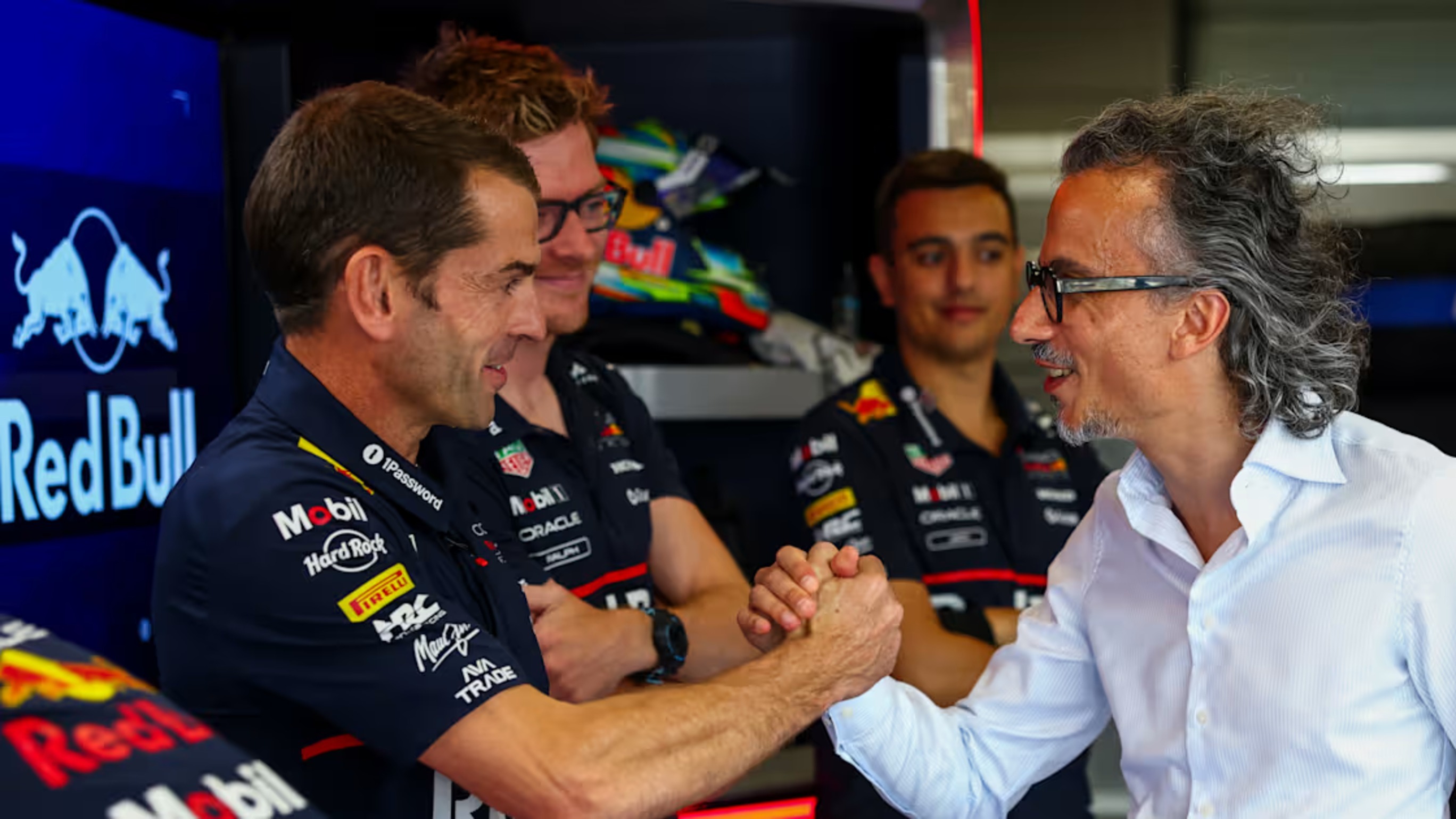
Twelve rounds into their debut Formula 1 season, Cadillac have not scored a single point. Not one.

And yet after Zandvoort, both Sergio Pérez and Valtteri Bottas walked away sounding almost upbeat.

Pérez said the pace was very strong. Bottas talked about lessons learned.

Neither of them sounded like people from a team sitting dead last in the constructors' championship with nothing to show for it.

If you only looked at the results column, you'd assume this team was having a disaster. If you listened to the drivers, you'd think they were building something.

Both things are true, and understanding why tells you more about how Formula 1 actually works than any single race result ever could.

## The reality of being a new team

Cadillac joined as the sport's eleventh team this year, the first completely new entrant in a decade, and they did it during a massive regulatory overhaul that reset the entire competitive order.

New teams in F1 almost never arrive competitive. What they arrive with is data, or rather the lack of it, and an enormous amount of catching up to do against organizations that have been refining their cars for years.

Reliability, not outright pace, tends to be the first real milestone, and Cadillac has actually cleared that bar reasonably well.

Bottas has finished more races than not, and Pérez has been the more consistent finisher of the two all season.

## So close to points

Points have proven elusive for a specific, almost cruel reason.

Pérez was actually classified tenth in Monaco, which would have been Cadillac's first ever point, before a post-race penalty for a start-procedure infringement dropped him to fifteenth.

That's the kind of margin this team is working with. Not laps off the pace, but a handful of positions and a single penalty away from history.

Zandvoort fit the same pattern. Perez called his own pace "very strong" despite finishing fifteenth, while Bottas retired with his sixth DNF in twelve races.

Progress and pointlessness, sitting right next to each other on the same weekend.

## What success really looks like

This is the part casual fans miss when they only track the standings.

A season can be a success by every internal metric a team cares about, closing the gap to the car ahead, extracting more from the tires, building race-simulation confidence, and still produce a zero in the column that actually counts for prize money and prestige.

Aston Martin, for context, has quietly opened up a real gap to Cadillac in the standings this year, and that gap is the actual yardstick Cadillac is racing against, not Red Bull or McLaren.

Whether that's a reasonable way to judge a debut season or just convenient spin from a team with nothing else to point to is a fair question.

Perez himself sounded a lot more frustrated about it back at the summer break than he did at Zandvoort, admitting the team "hasn't developed enough."

So which is the real story here: a new team building patiently toward its breakthrough, or a team quietly cushioning our expectations for a debut season that simply isn't good enough yet?
MOTORSPORT

Cadillac Still Has Zero Points. So Why Does F1 Think It's Making Progress?

Like icon
16
Comments icon
Shares icon
buzzer_fan_official
For a long time, the calculus for an ambitious MotoGP rider was simple. Get to a factory team. Ducati, Honda, Yamaha, whoever was winning, that's where you wanted to be, because factory machinery meant the best equipment and the best shot at a title.

Watch the moves happening around Tech3, VR46 and Trackhouse right now, and that old logic looks increasingly outdated.

That would have sounded strange not long ago. Satellite teams were traditionally seen as stepping stones, places where young riders proved themselves before moving into the factory garage. Now some of those teams are offering something arguably more valuable: a competitive bike, greater freedom, and a realistic chance to build the project around the rider.

## Satellite teams are the new destination

Tech3 signed Luca Marini not as a fallback option but as a rider they'd actively been chasing since his agent first approached Guenther Steiner at the Italian Grand Prix.

VR46 locked up Fermin Aldeguer through 2028, a two-year commitment to a rider who hasn't yet had time to prove himself as a genuine race winner.

Trackhouse, meanwhile, an American team that didn't even exist in MotoGP a few years ago, pulled in Bastianini, a rider with actual Grand Prix wins on his résumé, and extended Raúl Fernández at the same time.

None of these are factory seats in the traditional sense. All three are satellite teams.

And yet established, race-winning riders are choosing them, sometimes over remaining with factory-adjacent squads they've ridden for years.

## Why the shift?

Part of the explanation is timing, given the wholesale 2027 regulation reset discussed elsewhere in this batch.

But part of it is something more structural. Satellite teams in MotoGP have become genuinely closer to their factory partners than they used to be, running current-spec machinery rather than hand-me-down bikes, and offering riders more input into development and more room to be the clear number one rather than fighting a factory teammate for resources and attention.

Tech3's own transformation captures this shift neatly. Under new ownership led by Steiner, the team now negotiates and signs its riders directly rather than simply hosting whoever KTM assigns to it, even though it still needs manufacturer approval.

That's a level of team autonomy satellite outfits rarely had a decade ago, and it changes what a satellite seat actually represents to a rider weighing his options.

## Two ways to see it

There's a version of this that flatters the sport. Better satellite infrastructure means better racing further down the grid, and manufacturers spreading resources more evenly instead of hoarding everything for two factory bikes.

There's also a less flattering version, where factory teams simply have less patience for developing riders through growing pains, making the well-run satellite squad a more attractive long-term home even for riders good enough to eventually deserve a factory seat.

Either way, the idea that "factory or bust" is the only path to winning in MotoGP is starting to look like something from a previous era of the sport.

Is this genuinely a more level MotoGP grid taking shape, or just a temporary side effect of an unusually chaotic transition year?
MOTORSPORT

MotoGP Has a New Power Map

Like icon
24
Comments icon
Shares icon
buzzer_fan_official
Quick test: name three active swimmers right now, in August, with no Olympics on the horizon.

If that took you longer than it should have, you're not alone, and you're also exactly the problem swimming has been trying to solve for years without much success.

## The talent is there

This isn't a talent shortage. Swimming produces genuine global superstars with predictable regularity.

Katie Ledecky, Léon Marchand, Summer McIntosh, names that mean something even to people who couldn't tell you the difference between a medley and a relay.

For roughly two weeks every four years, these athletes are among the most recognizable people in the entire sporting world.

Then the Olympics end, and something strange happens. That recognition just falls off a cliff.

## The missing connective tissue

Compare this to basically any team sport with a real season.

Football fans follow their favorite players from August through May, watching them evolve, get injured, feud with teammates, chase trophies.

That continuous story is what keeps casual fans emotionally invested even in the months when nothing enormous is happening.

Swimming has almost none of that connective tissue.

World Championships exist, and they matter enormously within the sport, but they simply don't generate anywhere near the same mainstream cultural moment as the Olympics, in part because there's no ongoing season building anticipation toward them.

## The league model as a fix

The recently confirmed return of the International Swimming League is essentially a direct attempt to build that missing connective tissue.

Whether or not this specific relaunch succeeds, the underlying diagnosis behind it is hard to argue with.

Swimming doesn't lack star power. It lacks a structure that keeps those stars in front of people during the roughly three and a half years when the Olympics aren't happening.

## The counterargument

There's an obvious counterargument here, which is that not every sport needs a season in the traditional sense to thrive.

Track and field has survived for decades on a similar boom-and-bust attention cycle tied to major championships, and it's currently trying its own structural fix with World Athletics' new Ultimate Championship format.

Maybe some sports are simply built around peaks rather than sustained seasons, and trying to force a football-style calendar onto them just doesn't fit the sport's actual rhythm.

But swimming's problem feels a bit different and arguably more fixable than track's. The sport already has short, made-for-TV race formats, made-for-TV personalities, and a built-in narrative engine in the four-year Olympic cycle.

What's been missing is simply the connective infrastructure between those peaks, something to keep casual fans checking in rather than starting from zero every four years.

If a version of the league model does stick this time, it won't just be a business story about swimming finding new sponsors. It'll be a test of whether a sport can actually manufacture a season out of what has always been an event-driven calendar.

Would you actually watch swimming in a random week in March, or is your interest in this sport permanently tied to the rings?
SWIMMING

Swimming's Biggest Business Problem Isn't Finding Stars. It's Keeping Them Visible

Like icon
12
Comments icon
Shares icon
buzzer_fan_official
Everyone remembers the knockouts and the submissions from Contender Series.

Almost nobody talks about what the show actually is underneath all that: a weekly audition where a single bad performance can end a career before it ever properly starts, and a single great one can change everything overnight. That tension was on full display this past week, and it's worth pulling apart properly. 

That's what makes the show so compelling. You're not just watching two fighters compete, but two careers potentially change direction in the space of a few minutes, with no guarantee either fighter will get another shot.

## The format's brutality

The format itself is almost cruelly simple.

Fighters get one appearance, one opportunity in front of Dana White and UFC decision-makers, to prove they belong on the roster.

There's no play-off system, no second leg, no seeding based on résumé. Win impressively enough, and White hands out a contract on the spot, live, in front of everyone. Lose, or worse, win in an unconvincing way, and that opportunity might simply not come around again.

Bella Mir's stunning upset loss to Alex Apodaca this past week captures both sides of that brutality at once.

Mir, a heavily favored prospect with elite wrestling pedigree, lost her one shot and walked away with nothing but a first loss on her record.

Apodaca, a 32-year-old massive underdog from Austin, walked away with the contract that Mir was supposed to be collecting.

One performance completely rewrote both of their trajectories, that same night, in the same cage.

## Stakes unlike anything else in sports

What makes this format genuinely different from a normal UFC card is the stakes attached to every single decision a fighter makes in real time.

A UFC roster veteran having an off night usually just takes a loss and gets booked again. A Contender Series fighter having an off night might never get another chance at all.

That's a level of pressure most sports simply don't ask of their prospects, certainly not this early and this publicly. It's also, in its own way, a remarkably honest system compared to how prospects get evaluated in most other sports.

There's no committee debating intangibles, no scouting department protecting its own draft grades.

White himself has talked about judging performances with zero prior knowledge of a fighter's background specifically to keep the evaluation clean.

What you show on that one night is essentially the entire case.

## Fair or harsh?

Whether that's the fairest way to build a roster or an unnecessarily harsh one is genuinely debatable.

Careers built on a single audition night will always produce heartbreaking outliers, fighters who simply had a bad night against an opponent who happened to have a great one, the exact story that just played out with Mir and Apodaca.

But it's also hard to argue the system doesn't work at identifying fighters with the composure to perform under real pressure, since that's precisely the skill the format is testing whether these prospects intend it to or not.

Is a one-night audition actually the fairest way to find out who deserves a UFC contract, or does it just reward whoever happens to have their best night at the right moment?
MMA

The UFC's Talent Factory Is More Brutal Than the UFC Itself

Like icon
14
Comments icon
Shares icon
buzzer_fan_official
Kickboxing has almost everything you'd want in a combat sport on paper. Genuine international depth, strong national federations across Europe, Asia and beyond, and athletes who train as hard and hit as hard as anyone in MMA or boxing.

What it doesn't have is a single organization or moment that the average sports fan actually recognizes.

That's the strange position kickboxing finds itself in. It's not a niche sport in terms of participation or competitive quality. It's a niche sport purely in terms of visibility, and those are two very different problems with two very different solutions.

The frustrating part is that the sport already has the athletes and the competition. What it's missing is a simple way for new fans to know where to look, who to follow, and why they should care.

## The MMA comparison

Compare it to how MMA built its mainstream audience.

The UFC didn't succeed because mixed martial arts was inherently more compelling than kickboxing as a discipline. It succeeded because one organization consolidated the sport under a single, recognizable banner, built stars deliberately, and built a media machine around those stars that made casual fans care about names, not just fights.

Boxing, for all its structural mess with competing sanctioning bodies, still benefits from over a century of cultural embeddedness and a small number of superfights that occasionally transcend the sport entirely.

Kickboxing has neither of those advantages.

It has multiple strong federations rather than one dominant promotion, which means talent, media rights and fan attention are all spread thin instead of concentrated.

A brilliant kickboxer competing in one federation might be almost completely unknown to fans who follow a different one, even within the same country.

## What would it take to change?

So what would it actually take to change that?

Consolidation is the obvious answer, but it's also the hardest one, because it requires competing organizations to give up autonomy for the sake of a bigger collective pie, and that kind of cooperation is rare in combat sports generally.

A more realistic path might be a genuine breakout star, someone whose personality and results are big enough to pull casual fans in regardless of which specific promotion they compete for, the way certain fighters have occasionally transcended MMA's org structure.

## A crowded market

There's also a harder truth worth sitting with.

Kickboxing may simply be competing in an oversaturated combat sports market at exactly the wrong time.

Boxing has its history, MMA has its UFC machine, and now even fringe combat formats are fighting for the same finite slice of fan attention and streaming dollars. Carving out real space in that environment isn't just a marketing problem, it's a genuinely difficult competitive one.

None of this means kickboxing is doomed to permanent obscurity. It means the sport's path to relevance probably doesn't look like MMA's or boxing's.

It might need to find its own lane entirely, rather than trying to out-market two combat sports that already have generations of cultural head start.

What would actually get you to tune into a kickboxing card you knew nothing about beforehand?
KICKBOXING

Kickboxing's Biggest Battle May Be Building a Global Audience

Like icon
9
Comments icon
Shares icon