




 1
1Ring Lights Have Arrived at the US Open. When Does Sports Content Start Competing With the Sport?
New signage has gone up around the US Open's stadiums this week asking spectators to refrain from flash photography and ring lights during play. It's a direct, physical response to a problem that didn't exist at this scale even two years ago: credentialed content creators whose entire job is generating attention-grabbing footage, sometimes at the direct expense of the match happening in front of them.
The USTA confirmed roughly 100 creator credentials were issued this year, up from 54 in 2025, nearly doubling in a single tournament cycle.
Why this tension was probably inevitable
Traditional sports media exists to document and analyze what happens on court, structured around not interfering with the competition itself. Influencer content operates under a fundamentally different incentive: the creator's own presence, reaction, and personality are often the actual product, with the surrounding sporting event functioning as a backdrop rather than the primary subject.
Credentialing large numbers of creators without a fully developed set of behavioral expectations was always going to eventually produce a moment like this week's disruption during Osaka's match.
Why organizers chose expansion over caution
The calculation behind issuing nearly double last year's creator credentials is straightforward: measurable, significant growth in tennis-related social engagement, tied directly to increased content creator activity around marquee events. That's a real commercial incentive tournaments can't easily ignore, especially as reaching younger audiences through traditional broadcast alone becomes increasingly difficult.
The tournament's own expansion, adding extra days and a standalone mixed doubles event, has created more content opportunities and more capacity to absorb a larger creator presence than in previous years.
Why the current rules aren't keeping pace with the behavior
Reactive signage and after-the-fact reprimands from chair umpires suggest the tournament's actual enforcement mechanisms are still catching up to a phenomenon it deliberately invited in at a larger scale this year. That's a common pattern when an organization embraces a new audience strategy faster than it develops the operational rules to manage it responsibly.
Whether next year's tournament arrives with clearer, more specific guidelines for credentialed creators, rather than general reminders posted after incidents occur, will be a real test of whether organizers have actually learned from this week's friction.
What this moment actually represents for sports broadly
The US Open isn't uniquely facing this challenge. Nearly every major sporting event is navigating the same underlying question: how to benefit from content creators' reach without letting their presence meaningfully alter the actual product being consumed by ticket-holders and broadcast viewers. Tennis, with its demand for near-total silence during points, simply makes the tension more visible than louder team sports would.
The tournament wanted the reach that comes with a bigger influencer presence, and it's now managing the friction that comes with it in real time. Is this simply an adjustment period every major sporting event will eventually go through, or does tennis specifically need a fundamentally different set of rules than other sports because of how much silence the competition itself actually requires?
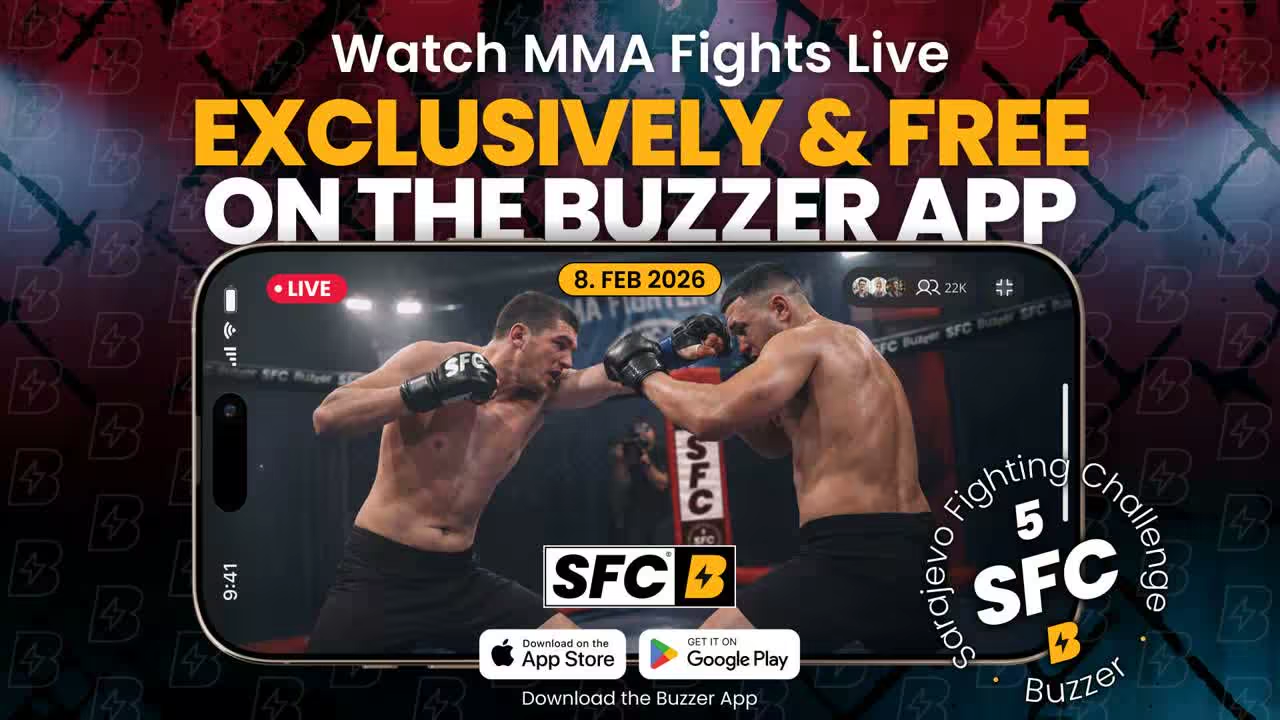
Sarajevo Back at the Heart of Regional MMA: SFC Returns with Explosive Matchups
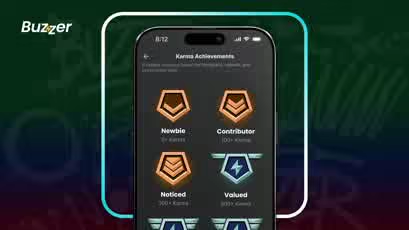
How Buzzer Karma Works: Levels, Penalties, and What They Mean
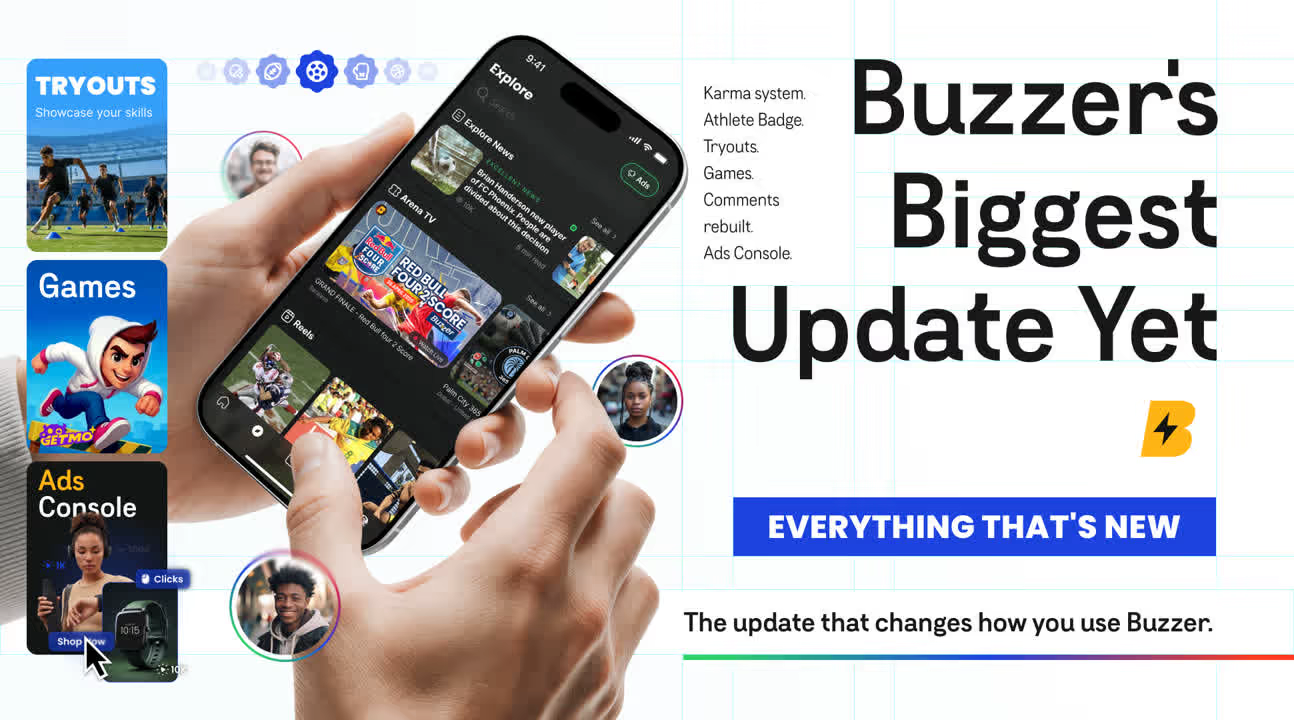
Inside Buzzer's Latest Update (and Why It Changes How You Use the App)
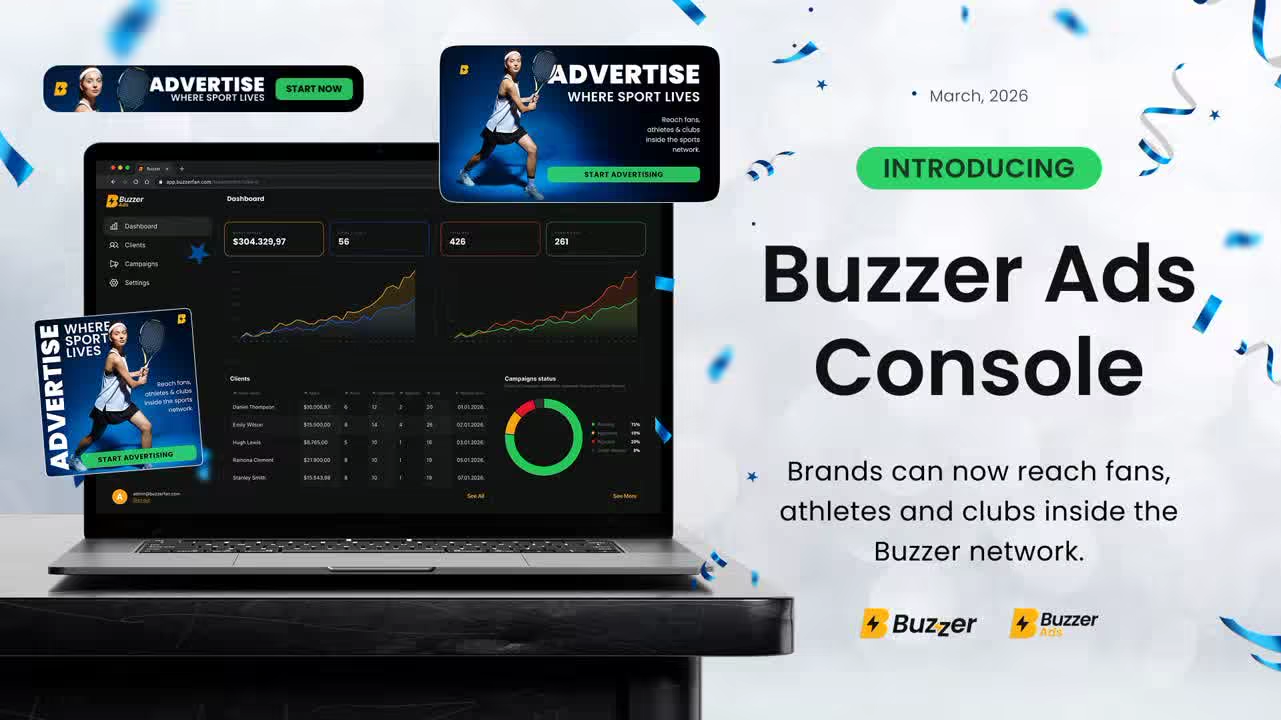
Buzzer Introduces Ads Console: A New Era of Advertising Across the Entire Buzzer Ecosystem
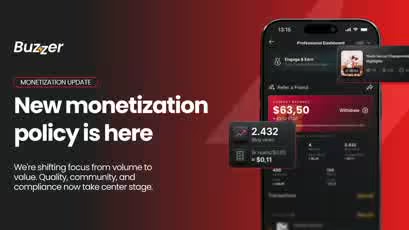
Buzzer Is Evolving: From Quantity to Quality

Buzzer Now Has a Games Hub, and Tournaments Are Coming
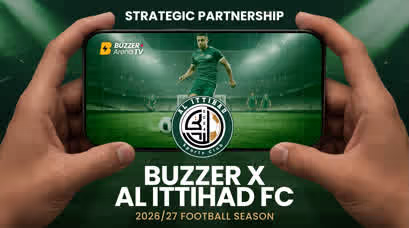
Al Ittihad SC's Matches Are Now Live on Buzzer
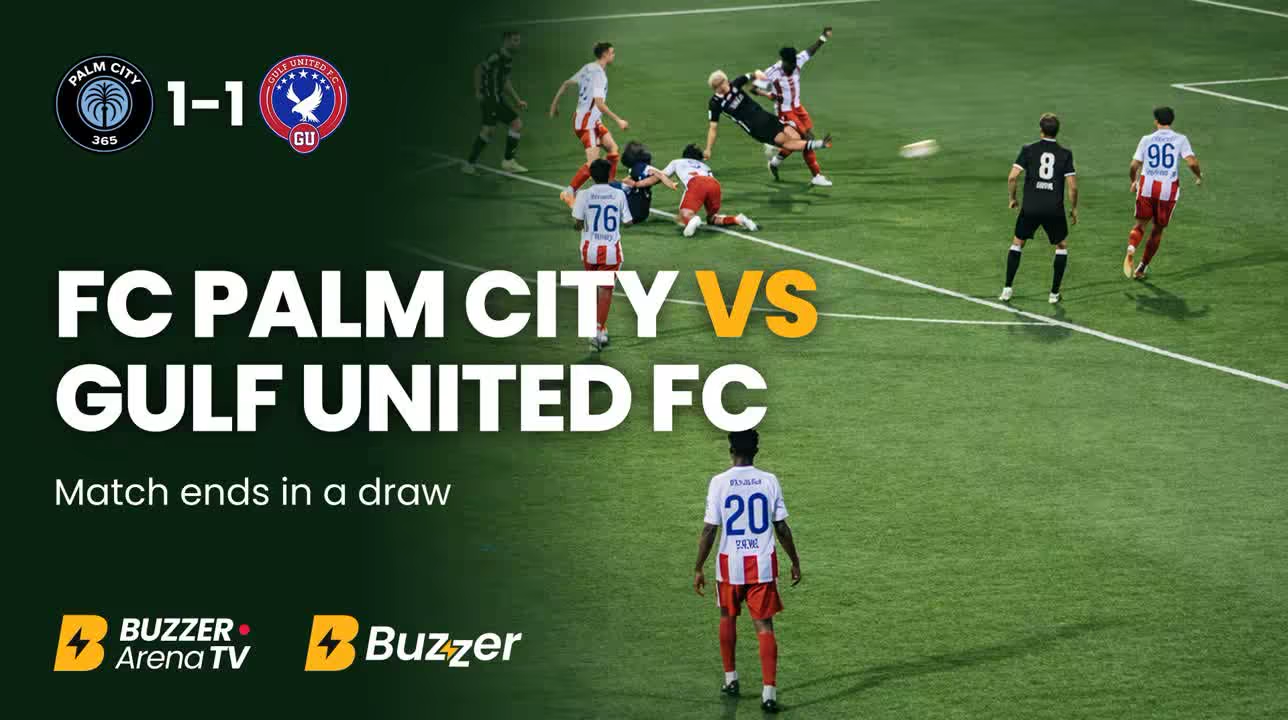
Palm City vs Gulf United Ends in 1–1 Draw in UAE Second Division League Clash
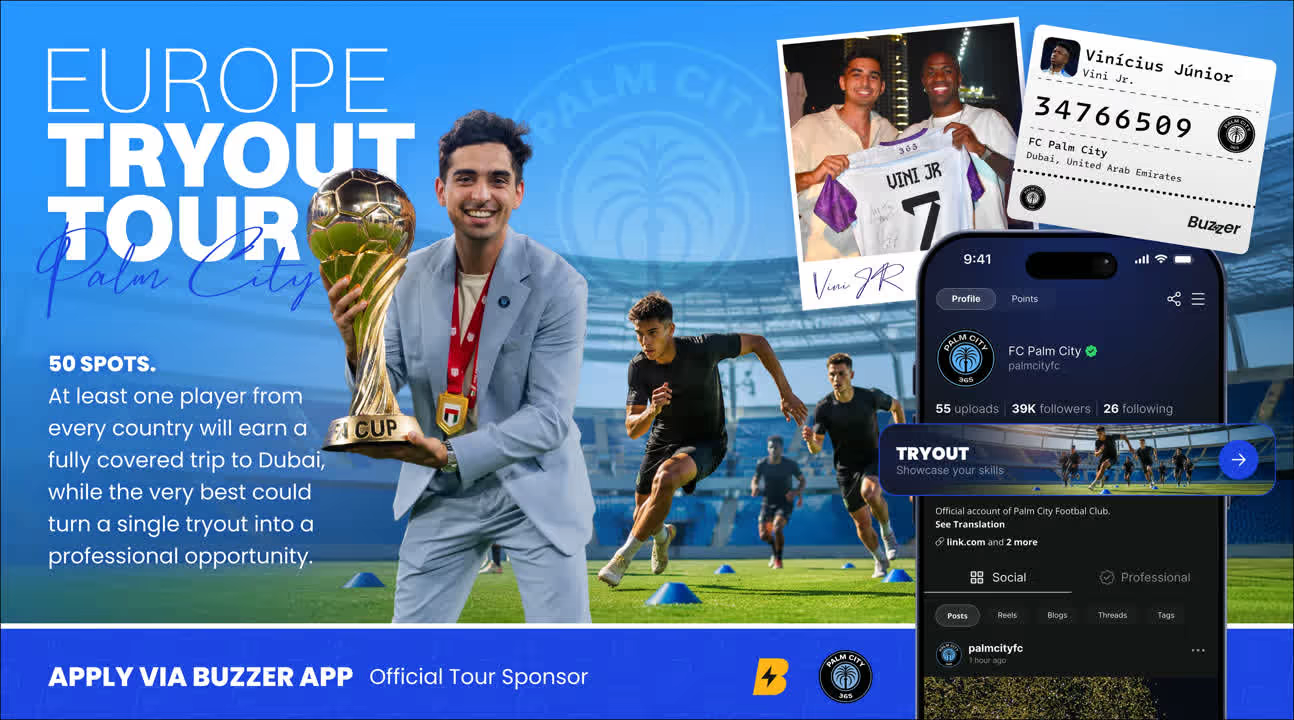
"We Don't Take the Guy With the Camera." He Built His Own Club Anyway. Now He's Coming to Find You.
Building the Infrastructure Sports Tech Forgot


 1
1 

