




 0
0Coco Gauff Is Still Standing. How Do Champions Win When Their Best Tennis Isn't There?
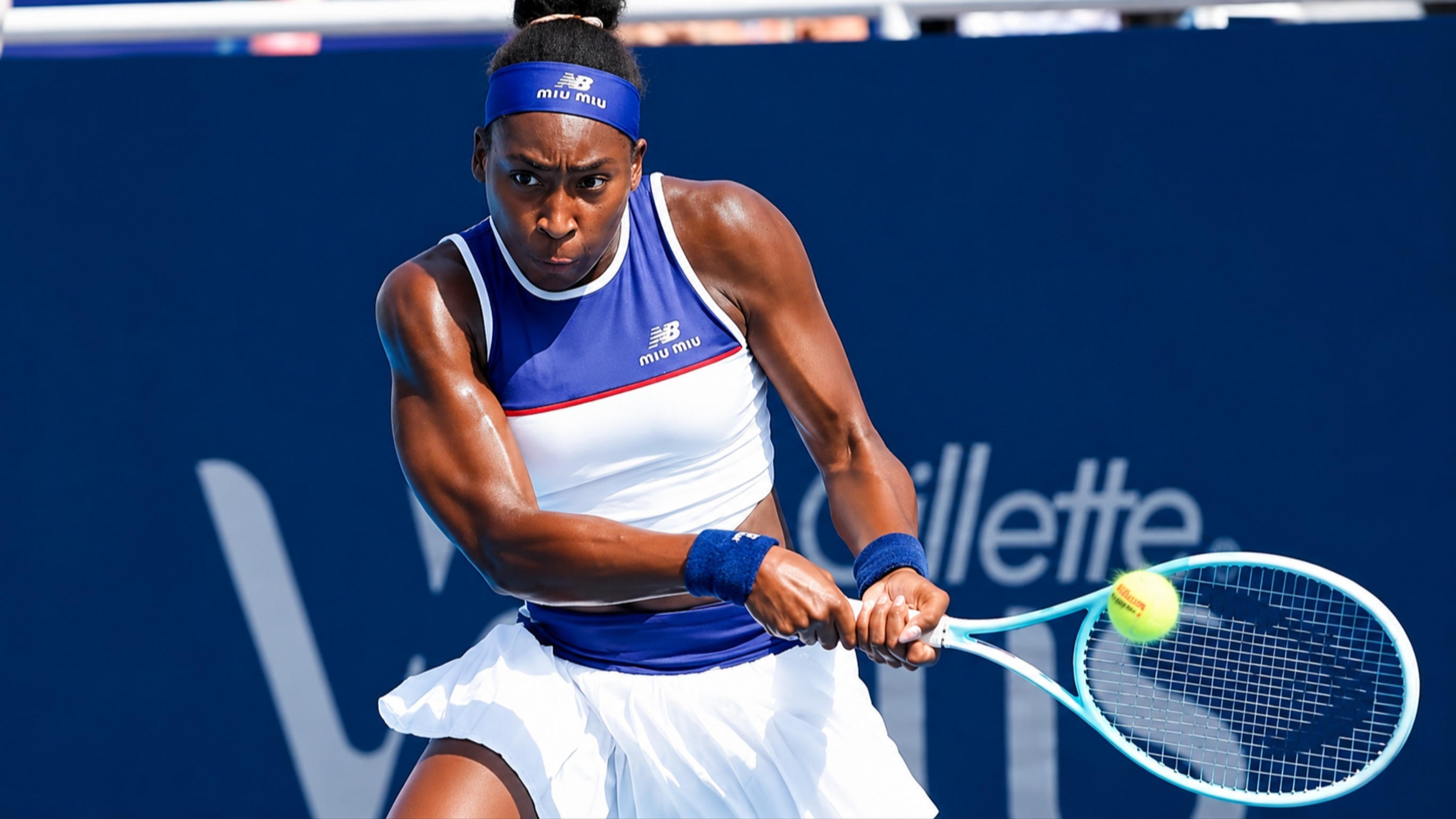
Coco Gauff didn't play her best tennis against Paula Badosa. By her own admission, there wasn't much she did wrong, and Badosa simply raised her level enough to make things genuinely difficult.
Gauff won anyway, 6-4, 7-6(5), problem-solving her way through a match that never let her fully settle.
Why "playing well" and "winning" aren't the same skill
Junior and amateur tennis often rewards pure ball-striking: the player hitting the ball best on a given day usually wins. Elite professional tennis adds a second, separate skill on top of that: the ability to win matches on days when the ball-striking simply isn't cooperating, through composure, tactical adjustment, and refusing to let a rough patch compound into a lost match.
Gauff's win over Badosa was a clear example of the second skill operating largely without the first. She wasn't dominant. She was resourceful, leaning on footwork and defensive coverage more than the aggressive, first-strike tennis that usually defines her best performances.
What that resourcefulness actually looked like
Gauff had to save break points in her very first service game, then found the decisive break in the first set only after a costly Badosa error rather than through her own sustained pressure. The second set slipped away from any clean pattern entirely, with both players trading breaks twice before a tiebreak decided it.
None of that reflects a player cruising on talent alone. It reflects a player staying mentally present through a match that kept refusing to settle into a rhythm either side could fully control, a much less visually impressive but arguably more valuable skill than dominant ball-striking.
Why this specific skill matters more at majors than anywhere else
A best-of-three or best-of-five match at a Grand Slam doesn't offer a reset the way a shorter format might. A player having an off day in a best-of-three match at a smaller tournament can sometimes just lose and move on with minimal damage. At a major, an off day against a dangerous opponent can end a title defense in the second round if the player can't find another way to win beyond raw execution.
That's precisely the scenario Gauff faced, and precisely the scenario she navigated.
What this reveals about championship-level composure
Champions aren't defined by never having a bad day on court. They're defined by what happens on the bad days specifically: whether nerves and inconsistency compound into a loss, or whether a player finds enough of a foothold to grind out a result anyway. Gauff's own comments framed this match explicitly as confidence-building precisely because it wasn't clean.
That's a genuinely useful mental framework, treating an uncomfortable win as more valuable practice than an easy one, and one that separates players who survive deep tournament runs from those who only look good when everything is already working.
Gauff got through a match where her best tennis simply wasn't available. Is the ability to win ugly actually the more important predictor of tournament success than the ability to play beautifully, or does relying on it too often eventually catch up with a player against tougher opposition?

Sarajevo Back at the Heart of Regional MMA: SFC Returns with Explosive Matchups

How Buzzer Karma Works: Levels, Penalties, and What They Mean

Inside Buzzer's Latest Update (and Why It Changes How You Use the App)

Buzzer Introduces Ads Console: A New Era of Advertising Across the Entire Buzzer Ecosystem

Buzzer Is Evolving: From Quantity to Quality

Buzzer Now Has a Games Hub, and Tournaments Are Coming

Al Ittihad SC's Matches Are Now Live on Buzzer

Palm City vs Gulf United Ends in 1–1 Draw in UAE Second Division League Clash

"We Don't Take the Guy With the Camera." He Built His Own Club Anyway. Now He's Coming to Find You.

Building the Infrastructure Sports Tech Forgot


 2
2 

