




 0
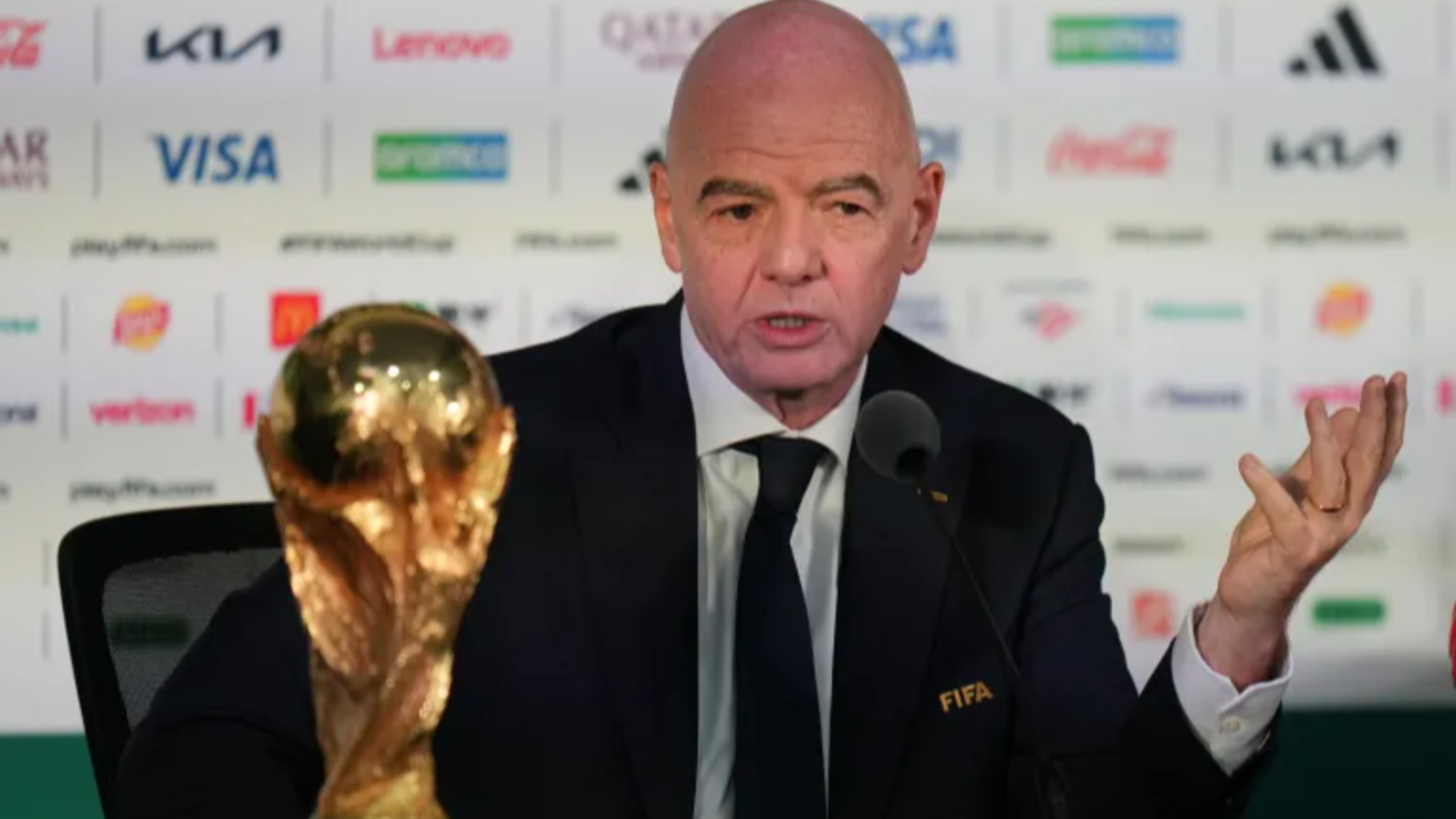
0FIFA Wanted Outside Investment in the World Cup. Why Did European Football Push Back So Hard?
FIFA wanted to sell a 20 percent stake in a new commercial subsidiary tied to World Cup revenue, a deal potentially worth $4.2 billion, with venture capital investor Joshua Kushner's Thrive Eternal reportedly positioned as lead investor. UEFA didn't just object. It threatened to boycott the World Cup entirely if the plan went ahead, and has since pursued legal action even after FIFA abandoned the proposal.
That's an unusually forceful response to a deal that, on its face, would have brought significant new revenue into the sport.
Why more investment isn't automatically welcomed by every stakeholder
Outside capital typically comes with expectations attached: return on investment, influence over how commercial decisions get made, and often a seat at the table for major future strategic choices. UEFA's objection centered specifically on the claim that FIFA developed this proposal without adequately consulting its 211 member associations, treating a decision of this financial magnitude as something FIFA's leadership could push through largely unilaterally.
That process concern, more than opposition to outside investment in principle, appears to be the core of UEFA's resistance.
Why FIFA reads the opposition differently
FIFA's own court filing argues UEFA's real motivation was economic self-interest, framing the investment as a way to strengthen football financially in developing regions, which would in turn increase global competitive depth and reduce Europe's disproportionate commercial dominance over the sport. Under that reading, UEFA's objection isn't really about governance process at all. It's about protecting Europe's existing market power.
Both explanations can be partially true simultaneously: a legitimate process concern and a genuine competing financial interest aren't mutually exclusive motivations.
Why the World Cup specifically makes this so sensitive
The World Cup remains football's single largest global commercial asset, generating revenue that funds FIFA's operations and development programs worldwide. A deal restructuring how that revenue gets managed, and who holds a financial stake in it, touches every confederation's interests simultaneously, which is exactly why a proposal affecting both the men's and women's tournaments drew opposition serious enough to threaten a boycott.
That's a fundamentally different stake than a typical sponsorship or broadcast rights negotiation, which usually affects a narrower set of interested parties.
What the collapse of this specific deal actually settled, and what it didn't
FIFA has abandoned the Forward Enterprise proposal itself, but the underlying legal fight, over documents, over Infantino's conduct, and over potential criminal liability in Switzerland, continues independently of the deal's cancellation. That means the immediate financial question has been resolved while the deeper governance question, about how much unilateral authority FIFA's leadership actually holds, remains genuinely unsettled.
FIFA's push for major outside investment in the World Cup collapsed under organized resistance from its own most powerful confederation. Was that resistance a legitimate defense of proper institutional process, or a wealthy confederation protecting its own disproportionate share of football's commercial power?

Sarajevo Back at the Heart of Regional MMA: SFC Returns with Explosive Matchups

How Buzzer Karma Works: Levels, Penalties, and What They Mean
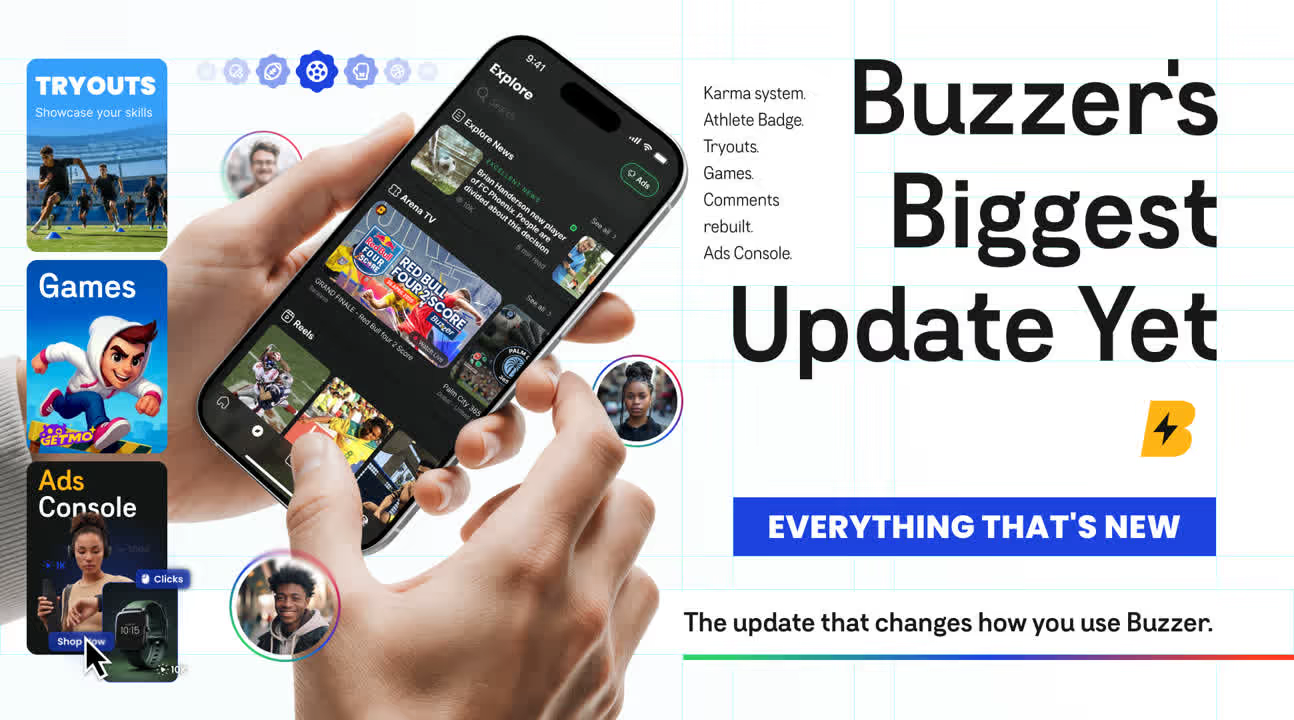
Inside Buzzer's Latest Update (and Why It Changes How You Use the App)

Buzzer Introduces Ads Console: A New Era of Advertising Across the Entire Buzzer Ecosystem

Buzzer Is Evolving: From Quantity to Quality

Buzzer Now Has a Games Hub, and Tournaments Are Coming

Al Ittihad SC's Matches Are Now Live on Buzzer
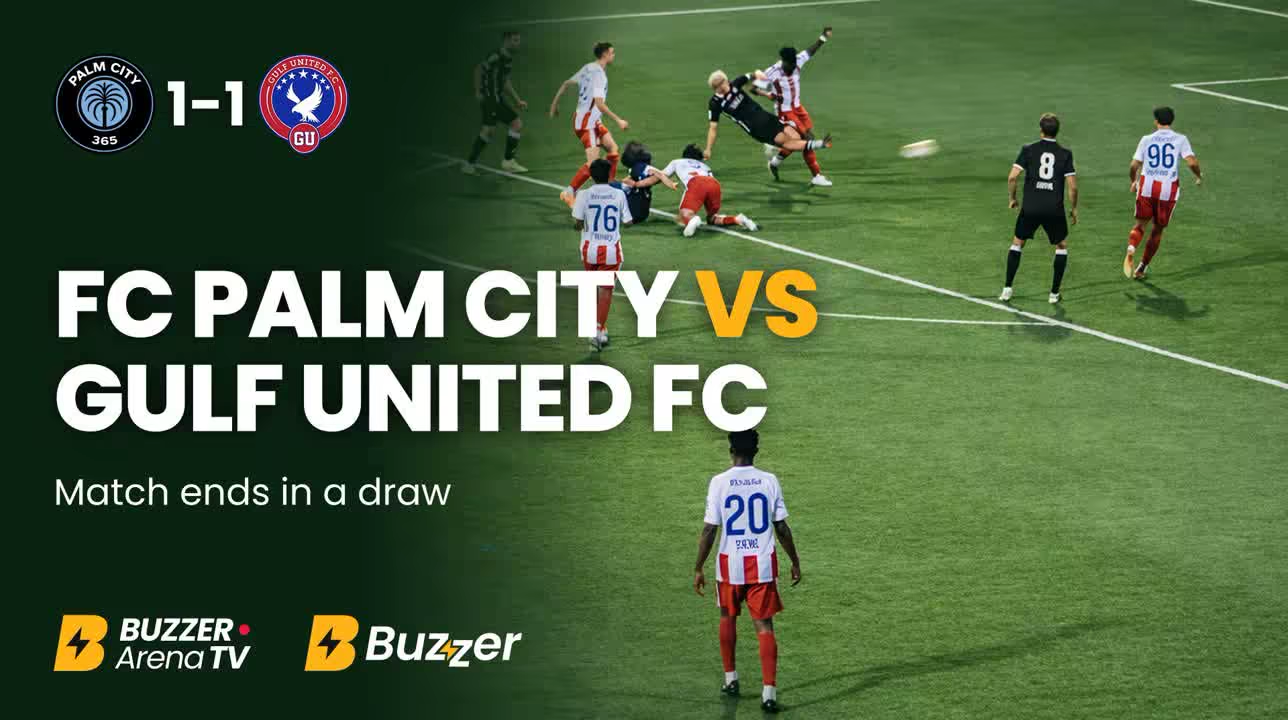
Palm City vs Gulf United Ends in 1–1 Draw in UAE Second Division League Clash
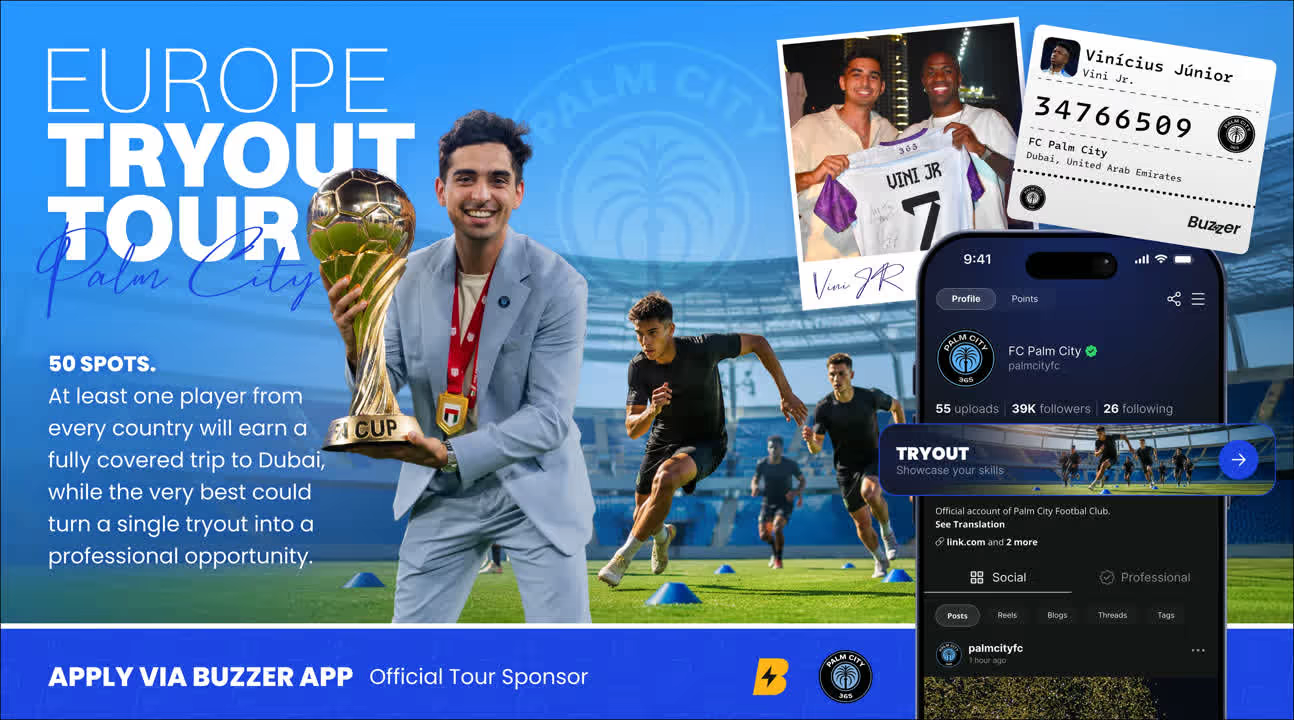
"We Don't Take the Guy With the Camera." He Built His Own Club Anyway. Now He's Coming to Find You.

Building the Infrastructure Sports Tech Forgot


 2
2  5
5 
