





 0
0Why Does a Home Grand Slam Feel Heavier for American Players Than Any Other Tournament?
American men haven't won the US Open since 2003. That's not for lack of talent in the draw. This year alone, five Americans sit inside the ATP's top 25, the deepest home contingent the country has fielded at this tournament in years.
Home advantage is supposed to help. At the US Open, for the men specifically, it hasn't translated into a trophy for over two decades.
Why "home crowd support" cuts both ways
A supportive crowd genuinely helps players in specific, measurable ways: louder encouragement on big points, a psychological lift during momentum swings, and a general sense of playing with the wind at your back rather than against it. American players at Flushing Meadows get all of that in abundance.
What that same crowd also brings is amplified expectation. Every American player advancing deep into this tournament is doing so under a spotlight that carries not just their own personal ambition, but an entire nation's accumulated frustration over a 23-year wait, whether any individual player asked for that weight or not, and whether or not they've even had a deep run at this event before.
Why this pressure differs from playing at a neutral major
A European player at the Australian Open, or an American at the French Open, competes without that added national narrative attached to every match. A loss is just a loss. At a home Slam with a multi-decade drought attached, every American loss gets processed publicly as another chapter in the drought story, regardless of how the individual player actually performed relative to expectations.
That's a genuinely heavier psychological environment than most tournaments on tour offer, even accounting for the general pressure every Grand Slam carries.
Why depth might actually help this year specifically
This year's American men's contingent is unusually deep rather than concentrated around one obvious flag-bearer. That matters because it distributes the narrative weight across five credible contenders instead of pressing it entirely onto one player's shoulders, the way past American hopes have often been framed.
A player like Frances Tiafoe, with genuine tournament pedigree at this specific event, can lean into the moment without needing to single-handedly carry an entire country's hopes the way a lone contender historically has, freeing him up to focus purely on the tennis in front of him.
What actually breaks a drought like this
Individual talent alone hasn't been the missing ingredient across 23 years of American near-misses. What's been missing is a player, or group of players, capable of performing under exactly this specific compounded pressure across seven full rounds, not just reaching the second week before the weight of the moment catches up with them.
That's a psychological test as much as a tennis one, and it's precisely the test this year's deep American group is about to face collectively.
A loaded home draw hasn't been enough to end this drought before. Is genuine depth across five credible contenders actually the ingredient that finally does it, or does home-Slam pressure find a way to weigh on whoever's left standing regardless of how many teammates started the tournament alongside them?

Sarajevo Back at the Heart of Regional MMA: SFC Returns with Explosive Matchups

How Buzzer Karma Works: Levels, Penalties, and What They Mean
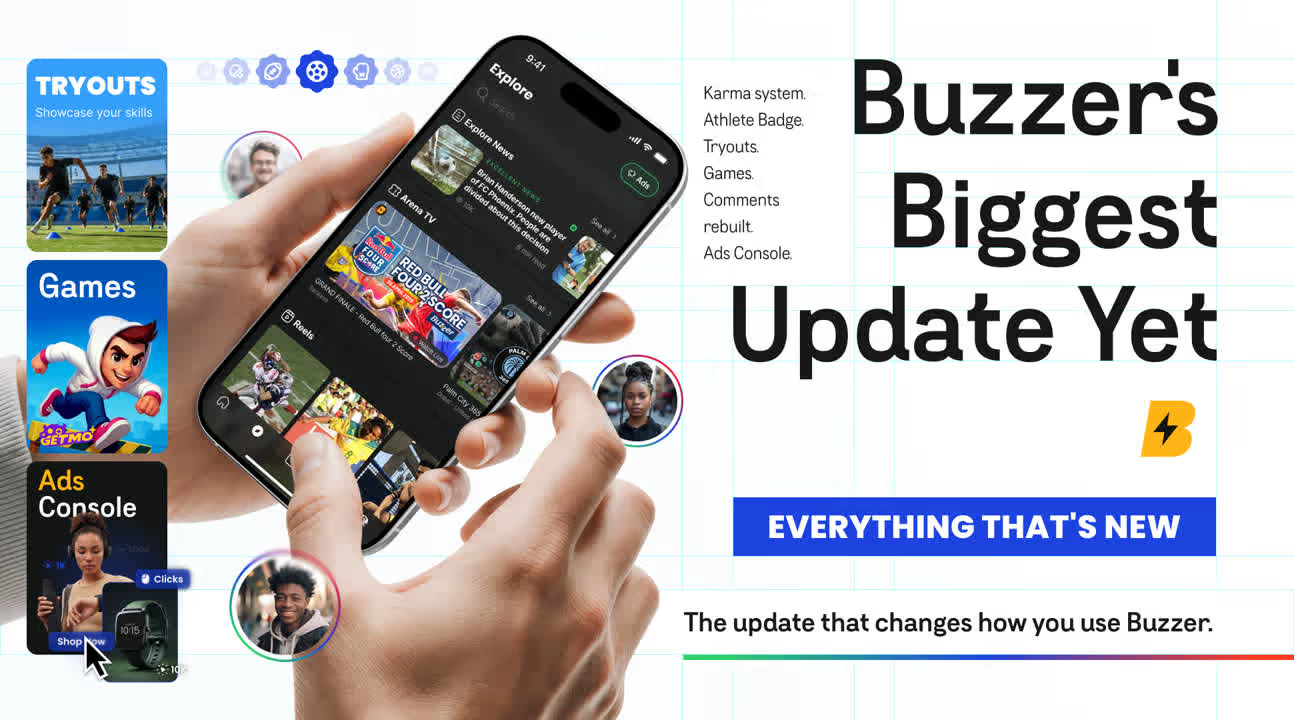
Inside Buzzer's Latest Update (and Why It Changes How You Use the App)

Buzzer Introduces Ads Console: A New Era of Advertising Across the Entire Buzzer Ecosystem

Buzzer Is Evolving: From Quantity to Quality

Buzzer Now Has a Games Hub, and Tournaments Are Coming

Al Ittihad SC's Matches Are Now Live on Buzzer

Palm City vs Gulf United Ends in 1–1 Draw in UAE Second Division League Clash

"We Don't Take the Guy With the Camera." He Built His Own Club Anyway. Now He's Coming to Find You.

Building the Infrastructure Sports Tech Forgot


