




 1
1Football Clubs Are Starting to Punish Their Own Fans
Feyenoord just did something clubs almost never do voluntarily.
They banned their own supporters, no kidding. Not because a governing body forced their hand, but because the club's own board decided the behavior had crossed a line severe enough to warrant it themselves.
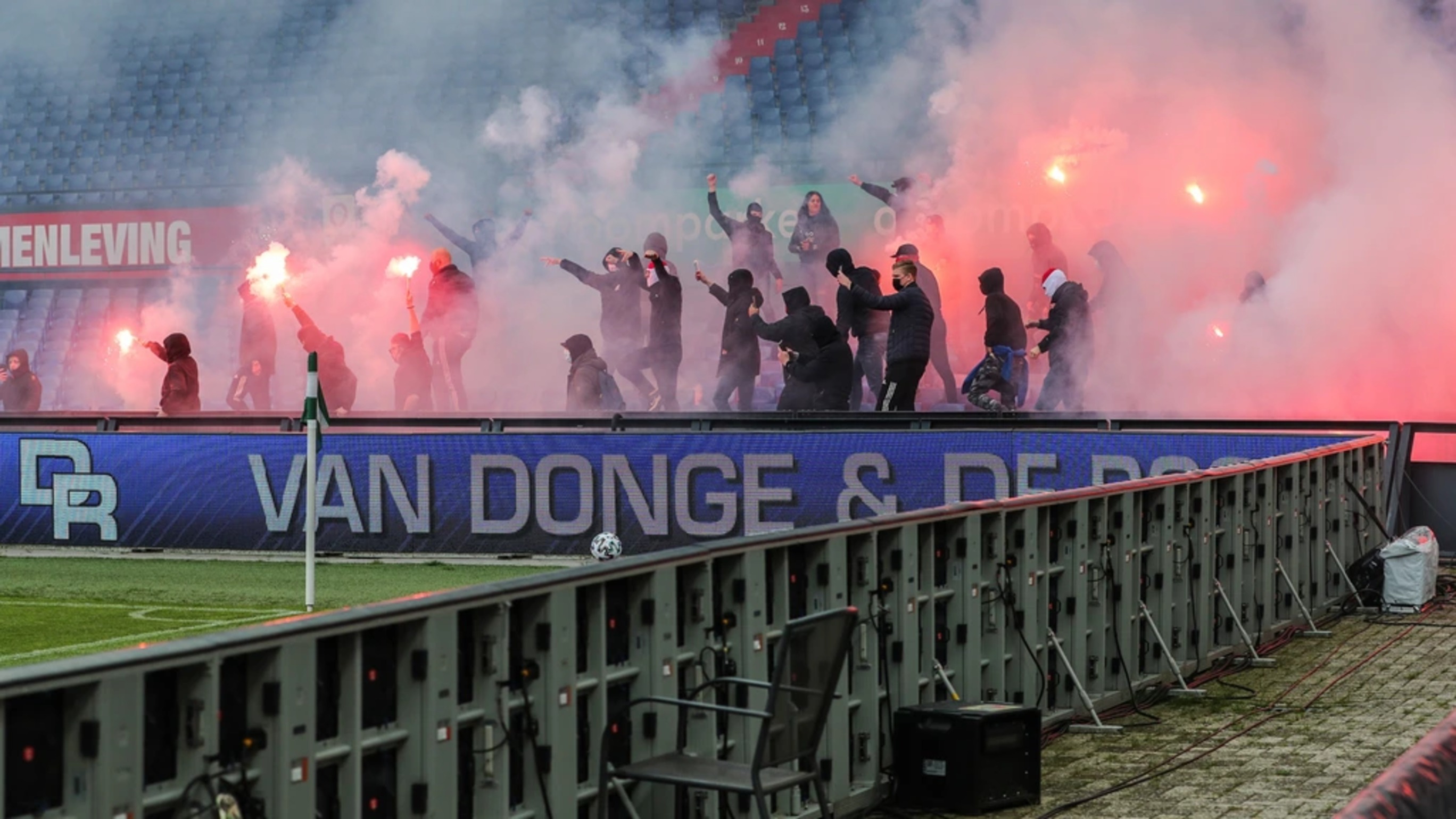
The decision follows a genuinely alarming incident during Feyenoord's away match at SC Cambuur, where traveling supporters smuggled in heavy fireworks and rockets and set them off inside the away section.
Some of that pyrotechnic barrage crossed directly into the home end, injuring seven Cambuur supporters with burns, eye injuries and hearing damage.
Feyenoord's own goalkeeper, Tjark Ernst, narrowly avoided being struck.
The match was halted for roughly 20 minutes while officials dealt with the chaos.
The club's response
In response, Feyenoord's board announced a self-imposed ban on its own traveling supporters for the club's next two away fixtures, against NEC Nijmegen and PEC Zwolle, with fans who'd already bought tickets for those matches receiving full refunds.
General Director Robert Eenhoorn was blunt about the reasoning, acknowledging that punishing the well-behaved majority of fans felt deeply unfair but that the severity of what happened at Cambuur left the board no real alternative.
What makes this genuinely notable is the sequencing.
This wasn't primarily a governing body or a rival club's local authority stepping in first, though Nijmegen's mayor had separately threatened his own ban if perpetrators weren't identified.
Feyenoord moved on itself, ahead of any external mandate, essentially deciding that its own reputation and the safety of opposing supporters mattered more than the inconvenience to thousands of fans who did nothing wrong.
The uncomfortable question
That raises a genuinely uncomfortable question that most clubs spend years avoiding.
Ultras and hardcore traveling support have historically been treated by clubs as an asset worth protecting almost unconditionally, the loud, passionate core that creates atmosphere, sells replica shirts and generates the kind of intimidating away-day reputation clubs quietly enjoy having.
Feyenoord's decision implicitly acknowledges that this asset has a real cost attached, one that occasionally outweighs the benefit entirely, especially once actual bystanders start getting physically hurt rather than just offended.
The financial and reputational math here isn't simple, either.
Refunding thousands of tickets isn't free, and neither is the risk of alienating a fanbase already frustrated by what they'll likely see as collective punishment for the actions of a small number of individuals.
Feyenoord is betting that the long-term cost of looking like a club that tolerates supporters seriously injuring people at rival stadiums outweighs the short-term backlash from banning everyone indiscriminately.
Rugby, notably, faced something similar decades ago when hooliganism forced English football as a whole to fundamentally rebuild its relationship with supporters throughout the 1980s and 90s.
Individual, voluntary self-punishment by a single club is a much smaller and more targeted version of that same basic calculation.
Is this the right way to handle supporter violence, disciplining an entire fanbase for the actions of a reckless minority, or does it just punish the people least responsible while the actual perpetrators walk away anonymous inside a banned crowd?

Sarajevo Back at the Heart of Regional MMA: SFC Returns with Explosive Matchups

How Buzzer Karma Works: Levels, Penalties, and What They Mean
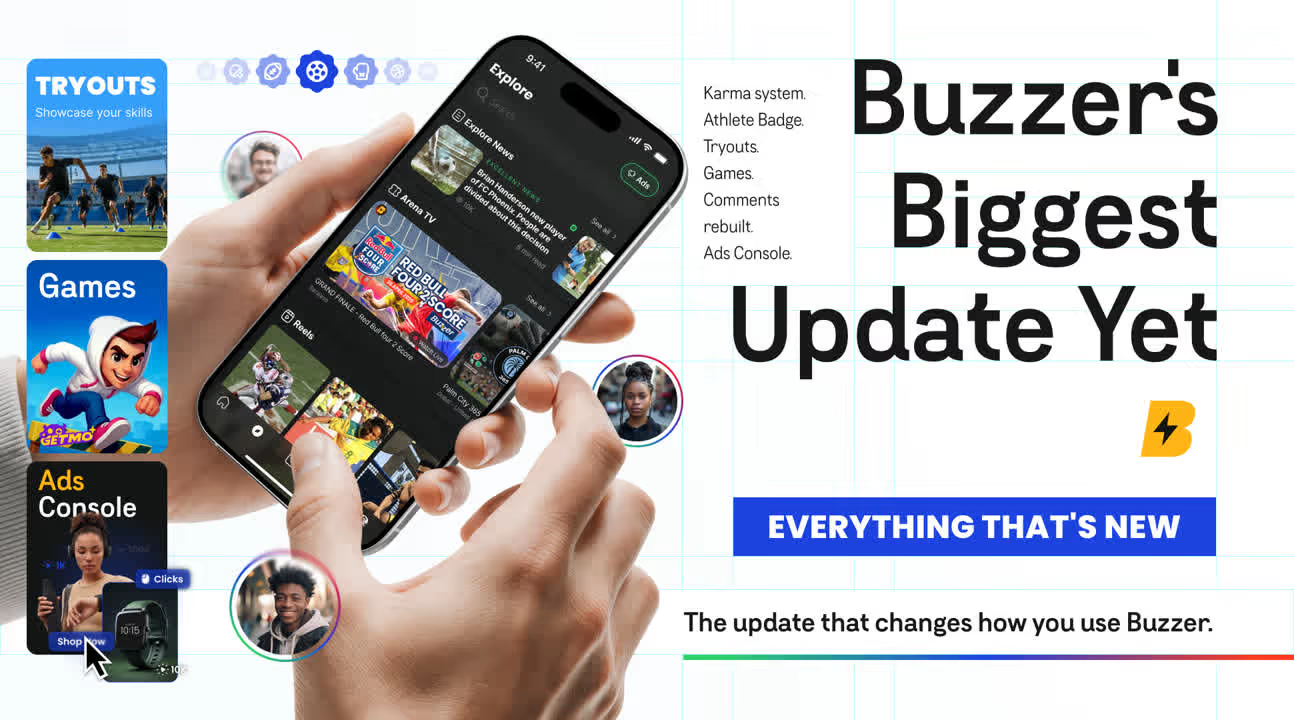
Inside Buzzer's Latest Update (and Why It Changes How You Use the App)

Buzzer Introduces Ads Console: A New Era of Advertising Across the Entire Buzzer Ecosystem

Buzzer Is Evolving: From Quantity to Quality

Buzzer Now Has a Games Hub, and Tournaments Are Coming

Al Ittihad SC's Matches Are Now Live on Buzzer
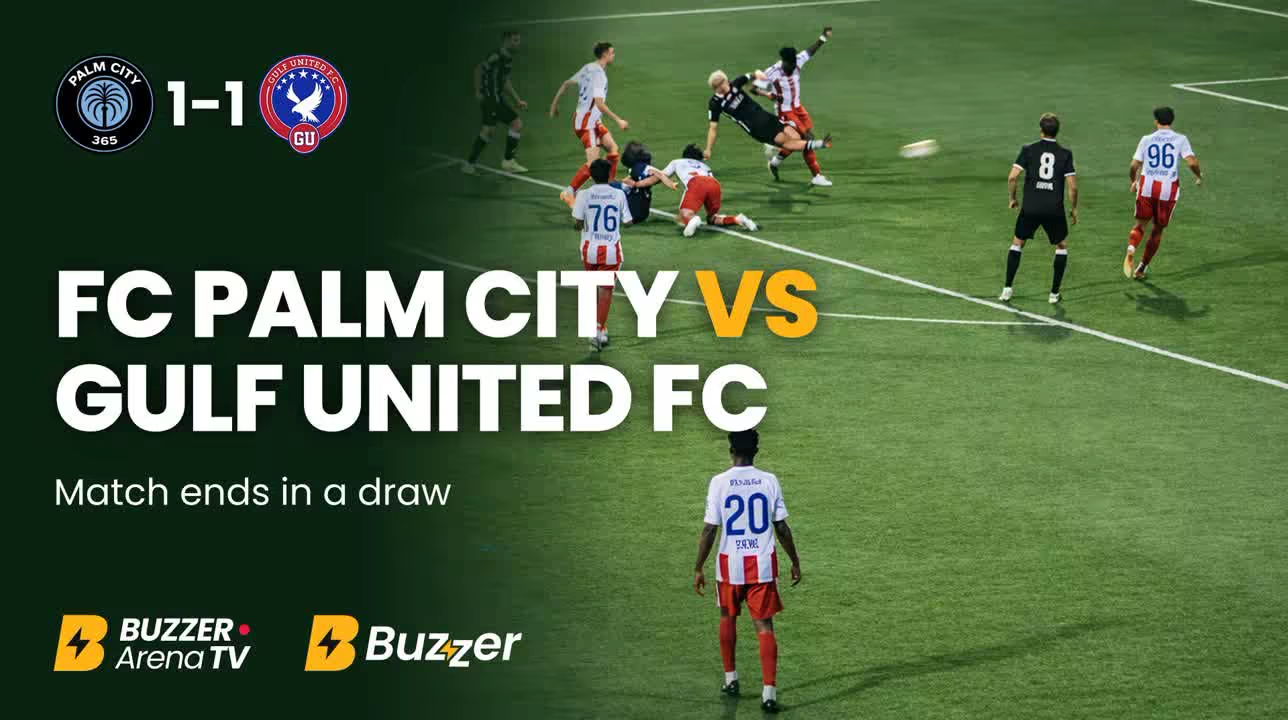
Palm City vs Gulf United Ends in 1–1 Draw in UAE Second Division League Clash

"We Don't Take the Guy With the Camera." He Built His Own Club Anyway. Now He's Coming to Find You.

Building the Infrastructure Sports Tech Forgot


 2
2 

