Buzzer Coin$0.00$BUZZER
Search
hassen133
hassen133
151
Uploads
17,4K
Followers
44,4K
Following
Newbie
Newbie0 minutes3,16 Karma
Arrow Right
hassen133

28 days ago

# ​🌊 The Story Behind Matheus Cunha’s Iconic "Surfer" Celebration (And How to Master It!)

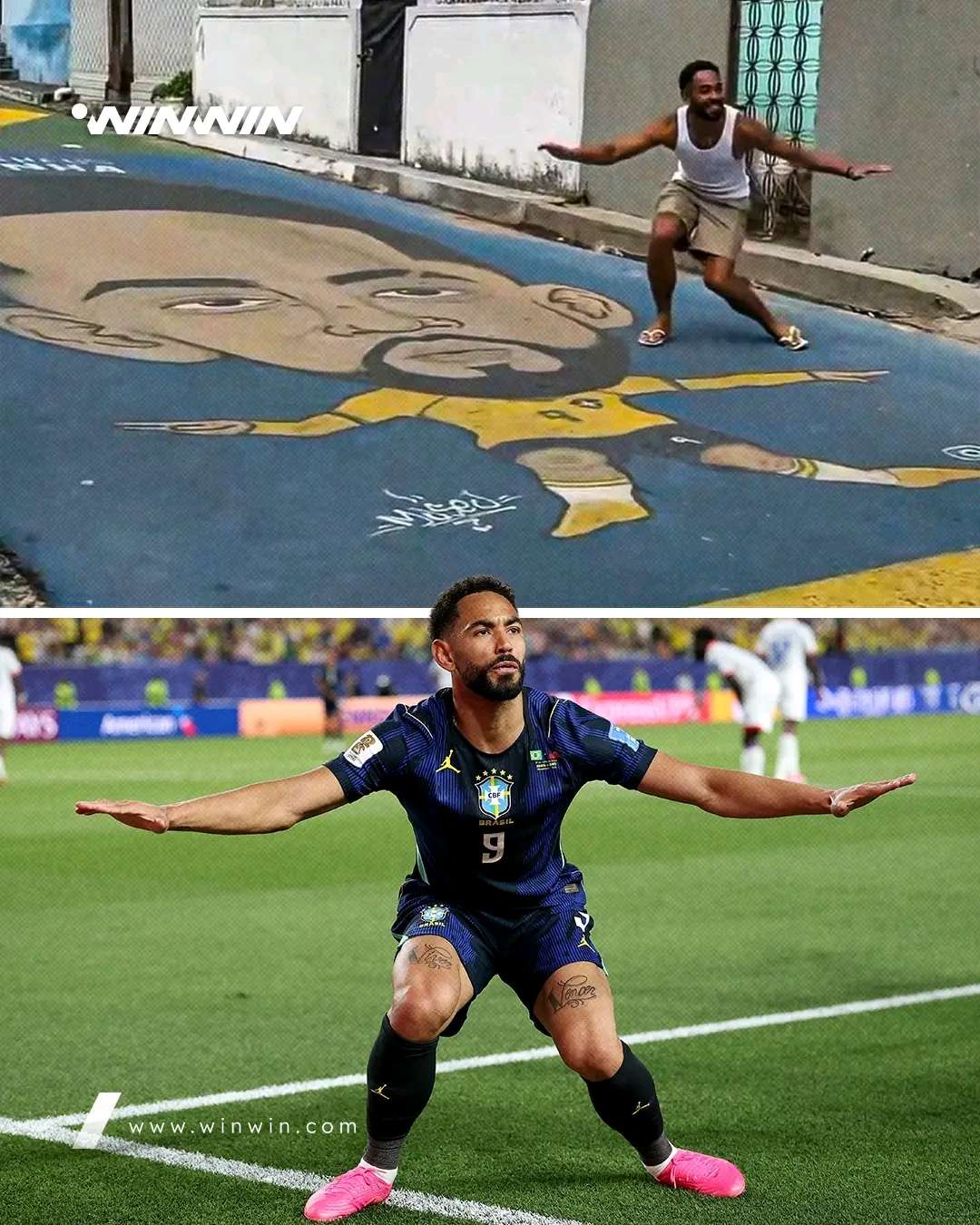
​When it comes to Brazilian footballers, flair and celebration go hand in hand. From Ronaldinho’s Samba steps to Neymar’s viral dances, celebration is part of the Brazilian footballing DNA. However, Wolves and Brazil forward **Matheus Cunha** has carved out his own unique mark with his iconic **"Surfer" celebration**.

​Recently, this celebration took social media and the streets of Brazil by storm when local artists painted a massive street-art mural of Cunha performing his signature pose. True to his humble and charismatic nature, Cunha visited the mural in casual clothes and recreated the pose right on top of his painted likeness!

​Here is a deep dive into the origin of Cunha’s celebration, its cultural impact, and a step-by-step guide on how you can pull it off like a true Samba star.

## ​🎨 From the Pitch to the Streets: The Viral Mural

​Football in Brazil isn't just played in grand stadiums; it lives in the streets, on the walls, and across the asphalt of local neighborhoods.

​During the Copa América and international break, Cunha's signature celebration was immortalized on a street pavement in Brazil, depicted in a fun, cartoonish style wearing the iconic *Seleção* shirt.

​What made the moment truly special was Cunha’s response:

  *​**Authenticity:** Instead of just sharing it on Instagram, he personally visited the street.
  *​**Humility:** Dressed casually in a tank top, shorts, and flip-flops, he struck the exact same surf pose right above the mural.
  *​**Fan Connection:** It created an instant viral sensation, bridging the gap between high-profile professional football and grassroots fan culture.

## ​🏄‍♂️ What Does the "Surfer" Celebration Mean?

​While many celebrations are complex or choreographed, Cunha's surfing pose stands out for its **balance, simplicity, and swagger**:

  1. ​**Riding the Wave of Momentum:** In football terminology, "riding the wave" means taking full advantage of a good run of form or a big goal. Cunha’s celebration visually embodies this feeling.
  1. ​**Brazilian Beach Culture:** Brazil is world-famous for its surf culture (home to world champions like Gabriel Medina and Ítalo Ferreira). Cunha’s pose bridges the gap between the football pitch and the ocean vibe.
  1. ​**Composure & Coolness:** Sticking a low-center-of-gravity pose after scoring shows ultimate composure—it tells the opposition, *"I'm completely in control."*

## ​🕺 How to Do the Matheus Cunha "Surfer" Celebration (Step-by-Step Guide)

​Want to recreate Cunha's viral celebration after scoring a goal in 5-a-side or FIFA/FC? Here is the exact breakdown:

### ​Step 1: The Build-Up & Goal ⚽

  *​**Action:** Score a goal (preferably a composure finish or a powerful strike).
  *​**Mindset:** Don't sprint wildly toward the corner flag; keep your cool.

### ​Step 2: The Approach & Drop 📉

  *​**Action:** Slow down your run to a smooth glide.
  *​**Execution:** Drop your center of gravity by bending both knees deeply into a wide squat position. Keep your chest slightly forward, mimicking a surfer balancing on a board.

### ​Step 3: Arm Extension & Balance 🧘‍♂️

  *​**Action:** Extend both arms out fully to your sides at shoulder level.
  *​**Execution:** Keep your hands open and flat, parallel to the ground. This creates the illusion that you are balancing on an ocean wave (or the green pitch).

### ​Step 4: The Ice-Cold Stare 🧊

  *​**Action:** Hold the position completely still for 2 to 3 seconds.
  *​**Execution:** Look directly at the crowd or camera with a calm, confident expression. No screaming required—let the pose do the talking!

## ​📝 Conclusion for Football Fans

​Matheus Cunha represents a new generation of Brazilian talent: hardworking on the pitch, but full of joy and personality off it. His "Surfer" celebration has quickly become one of the most recognizable goal celebrations in modern football—a perfect blend of street art, beach culture, and Premier League flair.

​**Will you be trying the Surfer celebration after your next goal? Let us know in the comments below!**
FOOTBALL (SOCCER)

Matheus Cunha

Like icon
71
Comments icon 2
Shares icon
hassen133

about a month ago

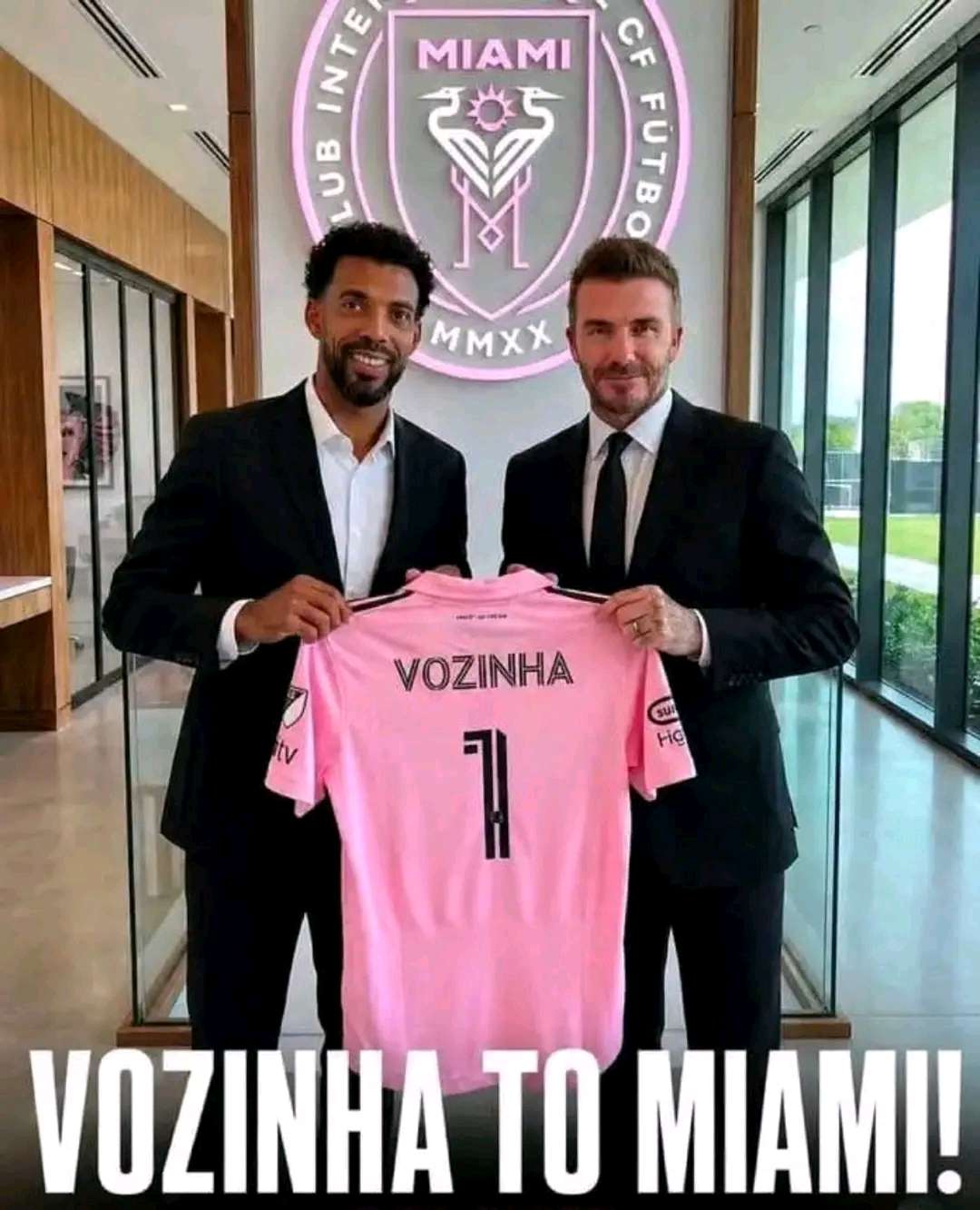
# **BREAKING ANALYSIS: Casemiro Completes Free Transfer to Inter Miami CF — A Tactical & Financial Deep Dive**

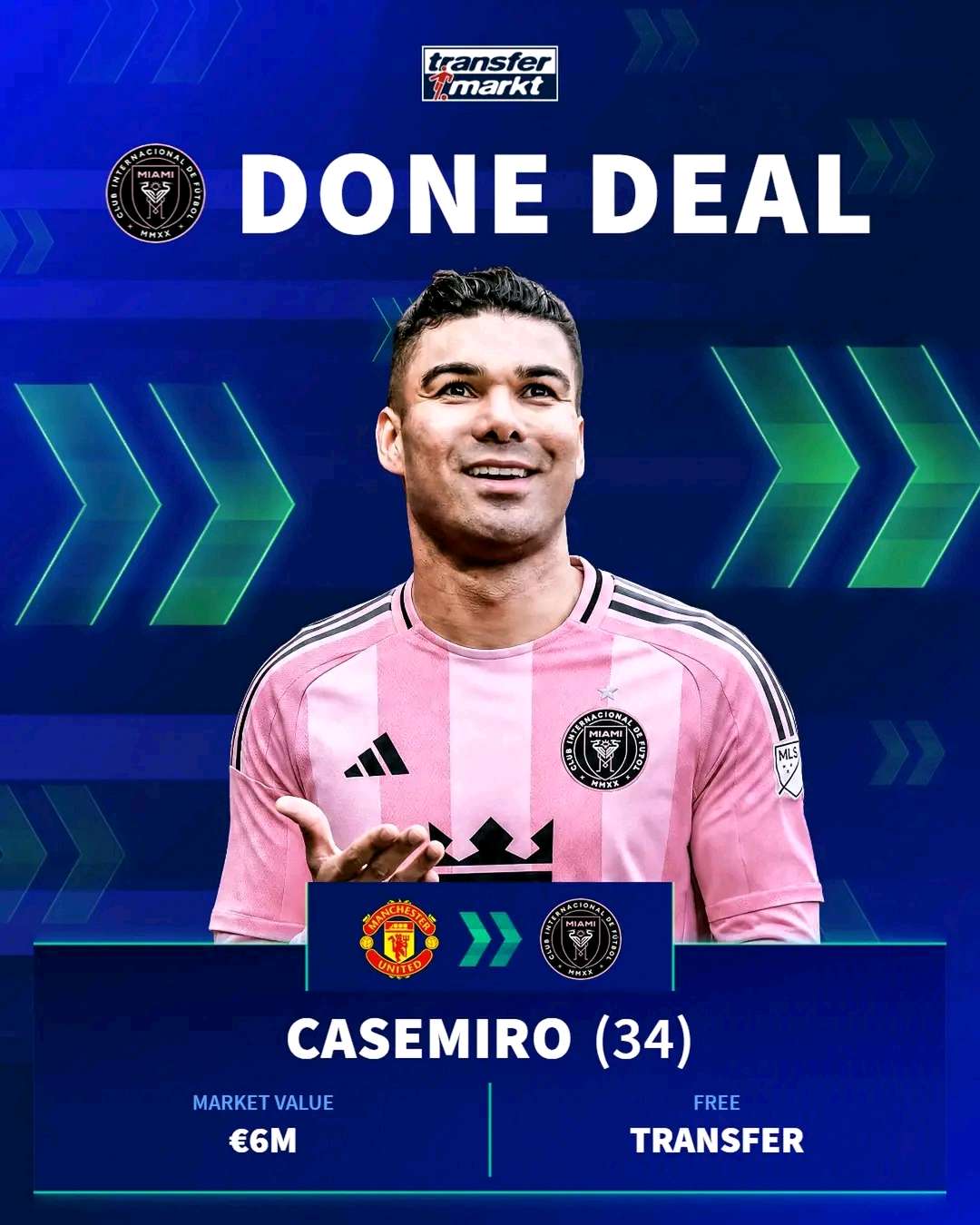
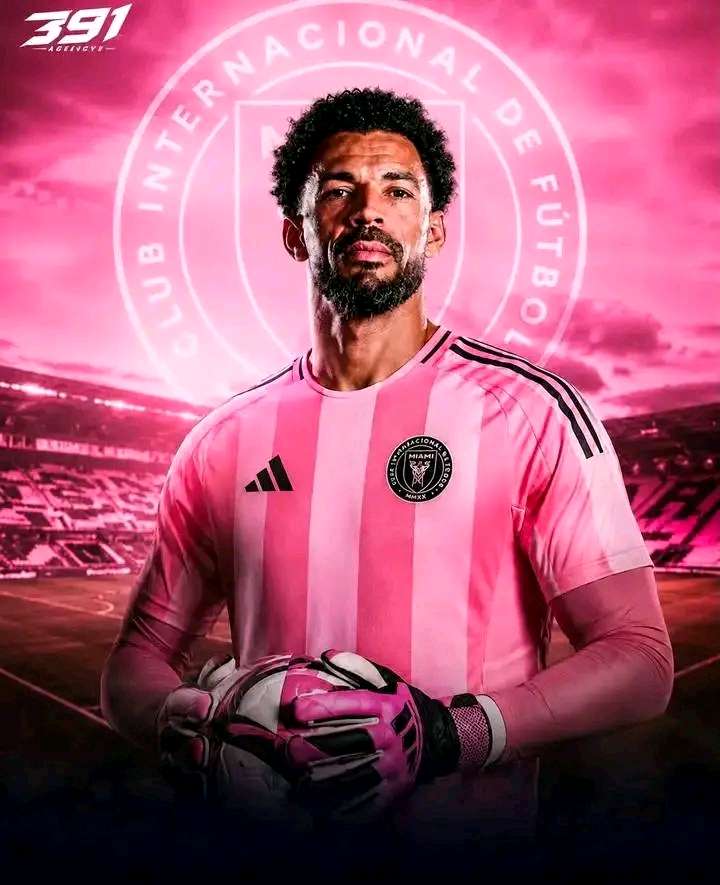
> **"The enforcer arrives in South Florida."** Inter Miami CF has officially closed a blockbuster deal to sign legendary Brazilian defensive midfielder **Carlos Henrique Casemiro** on a **free transfer** following his exit from Manchester United.

> 

In what is rapidly becoming standard practice for the Herons, Inter Miami has once again shaken the foundation of global football by bringing one of the most decorated central midfielders of the modern era to Major League Soccer. At **34 years old**, Casemiro enters the American football ecosystem not just as a marquee name, but as a crucial tactical anchor designed to elevate Inter Miami from a high-scoring entertainment product into a ruthless, trophy-winning machine.

## **1. Transfer Overview & Key Figures**

Before diving into the tactical and financial implications, here is a quick breakdown of the transaction metrics according to official transfer data:

| Metric | Details |

|---|---|

| **Player Name** | Carlos Henrique Casemiro |

| **Age** | 34 |

| **Nationality** | Brazilian 🇧🇷 |

| **Position** | Defensive Midfielder (CDM / CM) |

| **Previous Club** | Manchester United 🏴󠁧󠁢󠁥󠁮󠁧󠁿 |

| **New Club** | Inter Miami CF 🇺🇸 |

| **Transfer Type** | Free Transfer |

| **Current Market Value** | **€6.00M** *(via Transfermarkt)* |

| **Primary Honors** | 5x UEFA Champions League, 3x La Liga, 1x Carabao Cup, 1x Copa América |

## **2. The European Legacy: From Bernabéu Boss to Old Trafford Leader**

To understand the magnitude of this signing, one must look at the standard Casemiro has set over the past decade in elite European football.

### **The Real Madrid Era (2013–2022)**

At Real Madrid, Casemiro formed one-third of arguably the greatest midfield trio in football history alongside Luka Modrić and Toni Kroos—affectionately dubbed **"The Holy Trinity."** As the defensive bedrock of the team, Casemiro did the dirty work, allowing Kroos and Modrić the freedom to dictate play. His spell in Spain yielded:

 ***5 UEFA Champions League titles**

 ***3 La Liga titles**

 ***3 FIFA Club World Cups**

### **The Manchester United Chapter (2022–2026)**

Moving to the Premier League in 2022, Casemiro made an immediate splash at Manchester United, providing instant leadership, defensive bite, and key goals—including a crucial header in the 2023 League Cup final victory. While age and the relentless physical pace of the English top flight eventually sparked discussions about transition, his experience, timing in the tackle, and winning DNA remained undisputed.

## **3. Financial Breakdown: Why a Free Transfer is a Masterstroke**

In the modern football landscape, securing top-tier talent without paying an exorbitant transfer fee is the ultimate management win.

 1. **Zero Transfer Fee Exposure:** With a current market valuation sitting around **€6M**, securing a player of Casemiro’s global standing without paying a transfer fee leaves Inter Miami’s front office with significantly more flexibility regarding salary cap allocation and roster structuring.

 2. **Commercial ROI:** Casemiro's name recognition across Latin America, Europe, and North America provides an immediate boost in jersey sales, international broadcast interest, and corporate sponsorship leverage.

 3. **Low-Risk, High-Reward Capital:** Investing purely in player compensation rather than split transfer amortizations allows the club to optimize its Designated Player (DP) or Targeted Allocation Money (TAM) structures more fluidly.

## **4. Tactical Analysis: How Casemiro Transforms Inter Miami**

While the commercial hype is undeniable, the true value of this transfer lies on the pitch. Inter Miami has often displayed an explosive, attack-heavy dynamic, but has at times lacked structural compactness when defending counter-attacks.

```

       [ Proposed Tactical Fit: Defensive Shield ]


                   +-----------------+

                   |   ST/Wingers    |


              |     CASEMIRO (CDM)        |  <-- The Defensive Anchor

              **A. Fixing the Transition Defense**

 ***The Problem:** MLS is a league defined by rapid, chaotic physical transitions. Inter Miami’s high-pressing style often leaves vast open space behind their attacking unit.

 ***The Casemiro Solution:**Casemiro excels in the* *"destroyer"** role. His elite reading of the game allows him to cut off passing lanes, execute tactical fouls, and break up opposition counter-attacks before they ever reach the penalty box.

### **B. Aerial Dominance and Set-Piece Utility**

 * In both penalty boxes, Casemiro is a physical powerhouse.

 ***Defensively:** He drastically improves Inter Miami’s defensive set-piece conversion, neutralizing opposition threat from corners and long throw-ins.

 ***Offensively:** He remains a lethal target on attacking corners and indirect free kicks, possessing timing and header power that routinely yields 4 to 6 goals a season.

### **C. On-Ball Distribution Under Pressure**

 * While known primarily for his tackles, Casemiro’s long-range passing accuracy is severely underrated. His ability to hit diagonal switches out to overlapping wing-backs instantly turns defensive recoveries into rapid counter-offensive opportunities.

## **5. What This Means for Major League Soccer**

The arrival of Casemiro represents the continued evolution of Major League Soccer's reputation globally:

> "MLS is no longer just a destination for retiring forwards and creative playmakers; it is now attracting world-class defensive generals who command respect in every phase of the game."

> 

Inter Miami’s roster strategy continues to send shockwaves through CONCACAF. By pairing elite offensive talent with elite defensive pedigree, the Herons are signaling an intent to not merely compete domestically in MLS, but to aggressively target continental silverware like the **CONCACAF Champions Cup** and represent North America on the world stage.

## **6. Final Verdict: A Statement Sign-Off**

**Casemiro to Inter Miami CF** is a strategic slam dunk.

 ***Grade for Inter Miami:****A+** (Acquiring world-class leadership and defensive stability on a free transfer).

 ***Grade for Casemiro:****A** (A fantastic fresh challenge in a rapidly growing league with top-tier lifestyle and competitive ambitions).

As the ink dries on the contract and Casemiro dons the pink and black jersey, football fans around the world will be tuning in to see if the legendary enforcer can bring another trophy to his already overflowing cabinet.

### **Community Discussion**

 ***How many trophies do you think Inter Miami will win with Casemiro in the squad?**

 ***Does this move make Inter Miami the outright favorite for the MLS Cup?**

*Drop your thoughts, tactical predictions, and line-up ideas in the comments section below! Don't forget to share this article with fellow football fans.*
FOOTBALL (SOCCER)

Here is an extended, highly detailed, and comprehensive blog post designed to give your readers an in-depth tactical, financial, and cultural breakdown of Casemiro's high-profile move to Inter Miami CF.

Like icon
40
Comments icon
Shares icon
hassen133

about a month ago

​Match: France vs. England (Third-Place Play-off)

Context: Often dubbed the "consolation final," the third-place match between these two European giants carried immense tactical intrigue. It was a clash between Didier Deschamps’ pragmatic, transition-focused block and Gareth Southgate’s structured, possession-oriented system. With the pressure of the final lifted, both managers loosened the tactical handbrakes, resulting in a fascinating tactical chessboard.

​1. Starting Lineups & Structural Formations

​France (4-2-3-1 / 4-3-3)

​Deschamps rotated fresh blood into the lineup while maintaining his core structural spine to exploit England's defensive vulnerabilities.

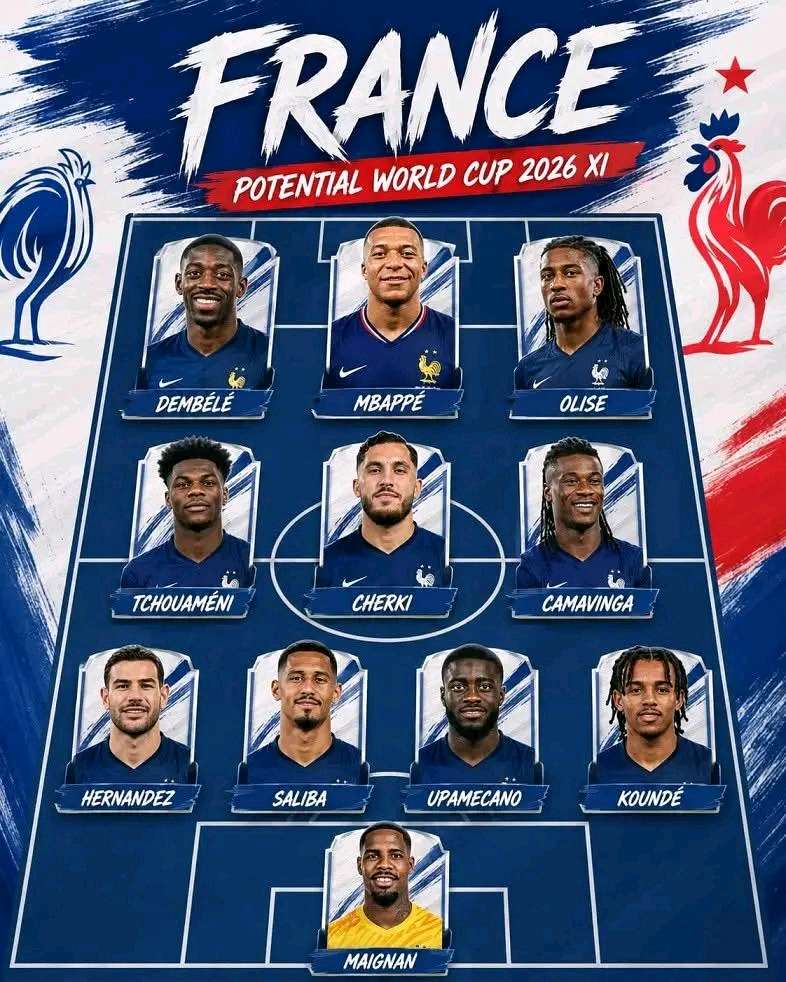
​Goalkeeper: Mike Maignan

​Defenders: Jules Koundé (RB), Dayot Upamecano (CB), William Saliba (CB), Théo Hernandez (LB)

​Midfield Engine: Aurélien Tchouaméni (DM), Adrien Rabiot (CM), Antoine Griezmann (AM / Advanced Playmaker)

​The Attack: Ousmane Dembélé (RW), Kylian Mbappé (LW), Marcus Thuram (CF)

​England (4-3-3 / 3-2-4-1 in Possession)

​Southgate stuck to his fluid system, looking to dominate the midfield zones and control the tempo through sustained possession.

​Goalkeeper: Jordan Pickford

​Defenders: Kyle Walker (RB), John Stones (CB), Marc Guéhi (CB), Kieran Trippier (LB)

​Midfield Trio: Declan Rice (DM), Kobbie Mainoo (CM), Jude Bellingham (AM)

​The Attack: Bukayo Saka (RW), Phil Foden (LW/Free Roam), Harry Kane (CF)

​2. Phase-by-Phase Tactical Breakdown

​Phase A: England’s Build-up and Box Midfield vs. France’s Mid-Block

​England’s primary objective was to control the rhythm of the game from deep. In possession, Kyle Walker often tucked inside next to John Stones, allowing Declan Rice and Kobbie Mainoo to form a temporary double-pivot. This effectively created a 3-2 build-up shape designed to bypass France’s front press.

​Further up the pitch, Jude Bellingham and Phil Foden drifted into the half-spaces, forming a "Box Midfield" with Rice and Mainoo. The tactical goal was to outnumber France's midfield duo of Tchouaméni and Rabiot.

​France, however, countered this by dropping into a disciplined 4-5-1 mid-block. Antoine Griezmann played a crucial tactical role here, dropping deeper to shadow Declan Rice, preventing him from easily turning and distributing the ball forward. France intentionally conceded possession in the wide areas, daring England's fullbacks to cross into a box heavily protected by the physically dominant Saliba and Upamecano.

​Phase B: France’s Direct Transitions and the Mbappé-Théo Overload

​When France won the ball in their own half, they did not waste time with short passes. Tchouaméni or Griezmann immediately looked for vertical, progressive passes to trigger explosive counter-attacks.

​The primary tactical weapon for France was the Left-Flank Overload:

​Kylian Mbappé stayed wide, pinning Kyle Walker in 1v1 situations.

​Théo Hernandez timed his overlapping and underlapping runs perfectly. When Mbappé cut inside to drag Walker with him, Théo exploited the vacated space on the flank.

​This forced John Stones to slide out of the central defensive line to cover the wide space, leaving Marcus Thuram in isolated 1v1 battles against Marc Guéhi in the penalty box.

​On the opposite side, Ousmane Dembélé provided pure isolation value. Whenever England shifted their entire defensive block to the left to contain Mbappé, France executed rapid diagonal switches to Dembélé, who used his elite dribbling to stretch Kieran Trippier.

​Phase C: The Battle of the Half-Spaces (Bellingham & Foden)

​England's most dangerous moments came when Harry Kane dropped deep as a "False 9." By dropping into the midfield, Kane dragged either Saliba or Upamecano out of position.

​This movement opened up central vertical gaps for Jude Bellingham to make late, aggressive third-man runs directly into the penalty area. At the same time, Phil Foden drifted inside from the left wing, operating as an inverted playmaker. Foden’s ability to turn in tight spaces between the lines created severe structural issues for France, forcing N'Golo Kanté (when subbed on) or Rabiot to abandon their positional zones to close him down.

​3. Second-Half Adjustments and Managerial Chess

​As the match went on, both managers made key structural changes to break the deadlock:

​Deschamps' Tactical Shift: Sensing that England’s left side (Trippier) was vulnerable, Deschamps introduced fresh pace on the right wing. He instructed France to press higher up the pitch for a 15-minute blitz, forcing Jordan Pickford into long, inaccurate clearances that Saliba easily recycled.

​Southgate’s Response: To counteract France's lethal transitions, Southgate brought on a more defensive-minded midfielder to anchor the center alongside Rice. This allowed England’s fullbacks to play more conservatively, effectively neutralizing the space Mbappé and Dembélé could exploit on the counter.

​4. Final Tactical Verdict

​This third-place playoff was a masterclass in contrasting football philosophies. England proved that their positional structure and ability to overload the midfield can suffocate teams for long stretches. However, their slow horizontal passing sometimes made them predictable against a compact low block.

​France, on the other hand, demonstrated why they remain the most dangerous transition team in international football. Even without dominating the ball, their defensive discipline, coupled with individual physical and technical superiority on the wings, allowed them to create higher-quality scoring opportunities in transitional moments.

​Ultimately, the match was decided by small margins: France’s clinical nature on the counter-attack versus England’s patience in breaking down a set defensive structure.
FOOTBALL (SOCCER)

​The Battle for Bronze: A Deep Tactical Analysis of France vs. England

Like icon
42
Comments icon
Shares icon 10
hassen133

about a month ago

## **I. Introduction: A Modern Footballing Super-Clash**

When **France** and **Spain** share a football pitch, the world stops to watch. This is not merely a football match; it is a grand theater where two of the most successful footballing cultures of the 21st century collide. On one side stands Spain, the spiritual home of *Juego de Posición* (positional play), technical supremacy, and mesmerizing possession. On the other stands France, the modern blueprint of physical power, tactical pragmatism, defensive solidity, and devastating transitional speed.

This fixture carries immense historical weight. From legendary European Championship encounters to dramatic Nations League finals, these two nations have consistently defined the tactical eras of European football. As they prepare to face off once again, this in-depth tactical analysis decomposes every layer of this monumental matchup—from squad depths and historical context to micro-tactical battles on the pitch.

## **II. Historical Context & Head-to-Head Legacy**

The rivalry between France and Spain is built on contrasting philosophies. Historically, Spain has sought to monopolize the ball, believing that controlling possession is the ultimate form of both defense and attack. France, particularly under the highly successful tenure of Didier Deschamps, has perfected the art of winning without needing the ball, relying on defensive resilience and individual genius to punish opponents on the counter-attack.

### **The Historical Balance**

Over the decades, these teams have traded blows on the biggest stages:

 ***The Euro 1984 Final:** France, led by Michel Platini, defeated Spain 2-0 to claim their first major silverware.

 ***The Euro 2012 Quarter-Final:** Vicente del Bosque's peak "Tiki-Taka" Spain side comfortably dispatched France 2-0 on their way to defending their European crown.

 ***The 2021 Nations League Final:** France came from behind to win 2-1 in a match defined by tactical flexibility and a controversial, clinical winner by Kylian Mbappé.

In this upcoming clash, we are witnessing the next chapter of this epic saga. Spain enters with a younger, highly dynamic generation of talent, while France boasts an experienced, battle-tested core designed specifically to win tournament-style knockout football.

## **III. Tactical Deep-Dive: Spain’s Blueprint**

```

           [Spain's Build-Up Shape: 2-3-2-3 / 3-2-5]


                     (Simón)

             (Laporte)     (Le Normand)

       (Cucurella)   (Rodri)      (Carvajal)

               (Ruiz)       (Pedri)

        (Williams)   (Morata)     (Yamal)


```

Spain’s tactical setup under their current coaching staff has evolved from the slow, sterile possession of the late 2010s into a much more vertical, aggressive, and dynamic attacking system.

### **1. Vertical Positional Play (El Juego de Posición)**

While Spain still prioritizes dominant possession, they no longer pass just for the sake of passing. The introduction of explosive, wide-lying wingers like **Nico Williams** and **Lamine Yamal** has transformed *La Roja*.

 ***Overloads to Isolate:** Spain tends to overload the central areas or one specific flank to draw the French defensive block to one side, only to quickly switch play to the opposite flank where a winger is isolated 1v1 against a French fullback.

 ***The Rodri Factor:** Rodri acts as the single pivot, the tactical anchor of the team. He is responsible for breaking the first line of France's press and orchestrating the direction of every attack.

### **2. Counter-Pressing (Gegenpressing)**

Because Spain plays with a very high defensive line, their best defense is their immediate offense. The moment Spain loses the ball in the final third, they execute a highly coordinated, aggressive counter-press.

 * The closest three players immediately swarm the ball carrier, attempting to win it back within 5 seconds.

 * This high press is designed to prevent France from executing their legendary, direct long balls over the top to their pacing forwards.

## **IV. Tactical Deep-Dive: France’s Blueprint**

```

           [France's Defensive Block Shape: 4-4-2 / 4-3-3]


                     (Maignan)

    (Hernandez)  (Saliba)  (Upamecano)  (Koundé)

         (Rabiot)   (Tchouaméni)   (Kanté)

          (Mbappé)    (Thuram)    (Dembélé)


```

France does not care about statistics. Under Didier Deschamps, the team operates on supreme efficiency. They are comfortable defending in deep areas for 70 minutes of a match, confident that they can score in the remaining 20.

### **1. The Impenetrable Low Block**

France’s defensive structure is arguably the most disciplined in international football.

 ***Narrow Back Four:** The central defensive partnership of William Saliba and Dayot Upamecano is shielded heavily by a robust midfield trio. The defensive line remains narrow, forcing Spain to play wide and try crossing—a metric where France’s physical center-backs hold a massive aerial advantage.

 ***Space Denial:** France will deliberately cede the half-spaces (the channels between the fullbacks and center-backs), squeezing the space between their defensive and midfield lines so that Spain's creative midfielders (like Pedri or Dani Olmo) cannot turn and face goal.

### **2. Devastating Transitional Offense**

France's transition from defense to attack is lightning-fast.

 * Once the ball is intercepted by the likes of N'Golo Kanté or Aurélien Tchouaméni, the first look is always forward.

 ***Kylian Mbappé**and* *Ousmane Dembélé** will immediately make diagonal runs into the massive vacant spaces left behind by Spain’s attacking fullbacks (Carvajal and Cucurella). This direct, vertical route bypasses Spain’s midfield entirely.

## **V. Key Positional Battles on the Pitch**

The outcome of this match will likely be decided by three critical, isolated player matchups:

### **Battle 1: Lamine Yamal vs. Theo Hernandez**

This is a mouth-watering clash of generations and styles.

 ***The Context:** The teenage sensation Yamal likes to cut inside on his left foot, creating playmaking opportunities or shooting from distance.

 ***The Dynamic:** Theo Hernandez is an incredibly physical, fast fullback who loves to bomb forward. However, against Yamal, Hernandez must suppress his attacking instincts. If Theo moves too high up the pitch, Yamal will exploit the space behind him; if Theo stays too deep, France loses a major attacking outlet on the left.

### **Battle 2: Rodri vs. N'Golo Kanté / Aurélien Tchouaméni**

The battle of the midfield engines.

 ***The Context:** Rodri is the absolute heartbeat of Spain's system. If he is allowed time and space to turn and pick passes, Spain will slowly suffocate France.

 ***The Dynamic:** Deschamps will likely task his energetic midfielders to apply intense, targeted pressure on Rodri the moment he receives the ball from his center-backs. Disrupting Rodri's rhythm disrupts Spain's entire offensive flow.

### **Battle 3: Kylian Mbappé vs. Dani Carvajal & Robin Le Normand**

 ***The Context:** Mbappé is a constant threat who can decide a game in a single breath.

 ***The Dynamic:** Carvajal’s veteran experience and physical aggression will be put to the ultimate test. Spain’s right-sided center-back, Le Normand, must constantly slide over to provide cover, knowing that leaving Carvajal isolated 1v1 against Mbappé in open space is a recipe for disaster.

## **VI. Predicted Lineups & Squad Depth Analysis**

Both managers have an embarrassment of riches on their benches, meaning the second-half tactical adjustments will be just as crucial as the starting lineups.

### **Spain's Expected Lineup & Bench Options**

| Position | Player | Role / Tactical Profile |

|---|---|---|

| **Goalkeeper** | Unai Simón | Excellent sweep-keeper, vital in building play from the back. |

| **Right-Back** | Dani Carvajal | Veteran leader, aggressive defender, provides width. |

| **Center-Back** | Robin Le Normand | Strong physical presence, excellent aerial dueler. |

| **Center-Back** | Aymeric Laporte | Ball-playing defender, crucial for progressive passing. |

| **Left-Back** | Marc Cucurella | High-energy, brilliant in recovery runs and pressing. |

| **Midfield** | Rodri | The tactical anchor, tempo controller. |

| **Midfield** | Pedri | Creative spark, operates brilliantly in tight half-spaces. |

| **Midfield** | Fabián Ruiz | Box-to-box engine, possesses a lethal long-range shot. |

| **Right-Wing** | Lamine Yamal | Creative genius, isolated 1v1 specialist. |

| **Striker** | Álvaro Morata | Hard-working presser, link-up play facilitator. |

| **Left-Wing** | Nico Williams | Electric pace, direct dribbler. |

 ***Key Bench Options:***Dani Olmo*(creative midfielder),* Mikel Merino*(aerial threat/midfield stability),* Ferran Torres* (inside forward).

### **France's Expected Lineup & Bench Options**

| Position | Player | Role / Tactical Profile |

|---|---|---|

| **Goalkeeper** | Mike Maignan | World-class shot-stopper, exceptional distribution. |

| **Right-Back** | Jules Koundé | Defensively rock-solid, acts as a third center-back in possession. |

| **Center-Back** | Dayot Upamecano | High physical recovery speed, aggressive step-up defender. |

| **Center-Back** | William Saliba | Calm, positionally flawless, elite recovery defender. |

| **Left-Back** | Theo Hernandez | Extremely fast, attacking threat, overlaps constantly. |

| **Midfield** | N'Golo Kanté | Defensive workhorse, interceptor, infinite stamina. |

| **Midfield** | Aurélien Tchouaméni | Deep-lying shield, excellent at aerial and ground duels. |

| **Midfield** | Adrien Rabiot | Tactical balancer, physical presence in the half-spaces. |

| **Right-Wing** | Ousmane Dembélé | Unpredictable dribbler, stretches the opponent's left flank. |

| **Striker** | Marcus Thuram | Physical target man, occupies center-backs. |

| **Left-Wing** | Kylian Mbappé | The talisman, unmatched speed, clinical finisher. |

 ***Key Bench Options:***Antoine Griezmann*(tactical chameleon, set-piece specialist),* Eduardo Camavinga*(dynamic midfield progressor),* Randal Kolo Muani* (pressing forward).

## **VII. The Managerial Chess Match**

```

   [Luis de la Fuente]                  [Didier Deschamps]

      "Proactive"                          "Reactive"

  - High-risk, high-reward.            - Low-risk, high-efficiency.

  - Wants to control the ball.         - Wants to control the space.

  - Relies on team fluidity.           - Relies on defensive structure.


```

### **Luis de la Fuente’s Dilemma**

De la Fuente knows that a high defensive line against France is highly dangerous. His dilemma lies in whether to instruct his fullbacks to play conservatively to prevent Mbappe and Dembélé from exploiting the wings, or to stay true to his attacking DNA and risk conceding dangerous transition opportunities.

### **Didier Deschamps’ Pragmatism**

Deschamps will not alter his formula. He will gladly allow Spain to pass the ball around the midfield, keeping his defense extremely compact. His tactical adjustment will center around when to activate the high-press to force turnovers from Spain's center-backs, who can occasionally be pressured into errors under duress.

## **VIII. Match Projection & Predicted Scenarios**

How will this legendary match unfold? We project three realistic tactical scenarios:

### **Scenario A: The Early French Strike (Most Likely)**

Spain dominates possession in the opening 15 minutes, pushing their lines high up the pitch. France intercepts a loose pass in midfield. Tchouaméni quickly releases Mbappé, who beats Carvajal for speed and slots it home. Spain is forced to chase the game, opening up even more space for France's transition game.

 **Potential Outcome:* France 2 - 0 Spain.

### **Scenario B: Spain's Tiki-Taka Suffocation**

Spain plays with extreme discipline, avoiding risky passes in the central areas. They patiently circulate the ball, slowly tiring out the French midfield. In the second half, a brilliant combination between Pedri and Yamal breaks the low block, allowing Morata to tap in from close range. France is forced to attack, but Spain keeps the ball to kill the clock.

 **Potential Outcome:* Spain 1 - 0 France.

### **Scenario C: An End-to-End War of Attrition**

Both teams cancel each other out in a tense, highly tactical first half. The managers make adjustments in the second half, introducing Griezmann and Dani Olmo. The game opens up, with both teams scoring. The match goes into extra time, where depth and physical conditioning become the deciding factor.

 **Potential Outcome:*France 2 - 1 Spain* (After Extra Time)*.

## **IX. Conclusion**

This matchup represents the pinnacle of modern football. It is the ultimate test of **style vs. steel**, of **possession vs. pragmatism**. Regardless of who walks away victorious, fans are guaranteed a masterclass in tactical discipline, individual brilliance, and high-intensity drama.

Make sure to bookmark our blog and leave your score predictions in the comments below! Who do you think will reign supreme: the smooth-passing Spaniards or the clinical, explosive French?
FOOTBALL (SOCCER)

# **The Ultimate Clash of Titans: A Comprehensive, In-Depth Tactical Preview of France vs. Spain**

Like icon
43
Comments icon
Shares icon
hassen133

about a month ago

Here is a comprehensive, in-depth match report tailored specifically for your blog. It is structured to maximize reader engagement with an analytical yet dramatic tone.

# Blood, Sweat, and Semi-Finals: Argentina Outlast 10-Man Switzerland in Extra-Time Thriller

The 2026 FIFA World Cup delivered its most grueling, high-stakes tactical chess match yet at a rocking Arrowhead Stadium. Defending champions Argentina punched their ticket to the semi-finals, defeating a fiercely resilient Switzerland 3-1 after a breathless 120 minutes of football.

For over an hour, it looked as though the Swiss would orchestrate the ultimate tournament upset. However, a costly second-half red card threw a wrench into Murat Yakin’s plans, paving the way for Argentina's substitute strikeforce to break Swiss hearts deep into extra time.

### The Tactical Setups

Lionel Scaloni deployed La Albiceleste in an aggressive 4-1-3-2 formation, aiming to flood the central channels and feed the frontline of Lionel Messi and Julián Álvarez. Switzerland countered with an incredibly compact and well-drilled 4-2-3-1 system, anchored by the evergreen Granit Xhaka and Remo Freuler. The tactical blueprint from the Swiss was clear: absorb pressure, frustrate Messi, and hit brutally on the counter-attack.

### First Half: Mac Allister Strikes, Dibu Saves

Argentina wasted no time stamping their authority on the game. In just the 10th minute, Lionel Messi curled an exquisite corner into the box. Rising above a sea of towering Swiss defenders, the 1.76-meter **Alexis Mac Allister** directed a thumping header past Gregor Kobel to give the South Americans an early 1-0 lead.

Despite the early setback, Switzerland refused to break. They began executing their transition game with precision. Breel Embolo proved to be a handful, escaping the clutches of Lisandro Martínez to burst clean through on goal. It took a trademark, lightning-fast rush off his line from Emiliano "Dibu" Martínez to smother the shot and protect Argentina's narrow cushion heading into the break.

### Second Half: The Swiss Fight Back and the Red Card Turning Point

Argentina squandered a massive opportunity to put the game to bed early in the second half when a defense-splitting pass from Messi found Nahuel Molina, who dragged his effort wide. That miss proved costly as Switzerland seized control.

The Swiss pressure finally paid off in the 67th minute. After having one shot heroically blocked and another saved by Dibu Martínez, winger **Dan Ndoye** kept his composure to slot home a thoroughly deserved equalizer.

Just as momentum swung completely in Switzerland's favor, disaster struck in the 72nd minute. Embolo, already on a yellow card, went down in the penalty box. The referee ruled it a blatant dive, brandishing a second yellow and sending the Swiss talisman to the dressing room early.

Switzerland immediately retreated into a low defensive block, successfully suffocating Argentina’s late regulation attacks—including a trademark Messi solo run that curled inches wide—to force extra time.

### Extra Time: Scaloni’s Bench Spark’s the Breakthrough

Playing against 10 men, Argentina completely dominated possession in the extra periods but initially struggled to pick the lock. Thiago Almada came agonizingly close, clipping the outside of the post.

The defining moment arrived in the 112th minute. Receiving the ball on the edge of the area, **Julián Álvarez** unleashed a breathtaking, curled strike that bypassed Kobel's outstretched arms and nestled into the top corner. Arrowhead Stadium erupted into pure pandemonium.

With Switzerland forced to throw everyone forward in the dying seconds, Argentina exploited the open space on the counter-attack. In the 120th minute, substitute **Lautaro Martínez** put the icing on the cake, calmly slotting home Argentina’s third goal to seal a dramatic 3-1 victory.

## Match Timeline & Key Stats

| Minute | Event | Player (Team) |

|---|---|---|

| **10'** | ⚽ **Goal (1-0)** | Alexis Mac Allister (ARG) |

| **44'** | 🟨 Yellow Card | Breel Embolo (SUI) |

| **67'** | ⚽ **Goal (1-1)** | Dan Ndoye (SUI) |

| **72'** | 🟥 **Red Card (2nd Yellow)** | Breel Embolo (SUI) |

| **112'** | ⚽ **Goal (2-1)** | Julián Álvarez (ARG) |

| **120'** | ⚽ **Goal (3-1)** | Lautaro Martínez (ARG) |

### Blog Post Key Takeaways for Your Readers:

 ***The Alvarez Impact:** Named Player of the Match, Álvarez proved once again why his work rate and clutch finishing are indispensable to Scaloni's tournament identity.

 ***Swiss Pride:** Despite playing with a man down for nearly 50 minutes, Switzerland's defensive structural integrity was world-class, nearly taking the world champions to a penalty shootout.

 ***Unstoppable Streak:** With these three goals, Argentina continues one of the longest consecutive scoring streaks in World Cup history.
FOOTBALL (SOCCER)

The thrilling 2026 FIFA World Cup Quarter-Final clash between Argentina and Switzerland at Arrowhead Stadium was an absolute classic that required extra time to separate the two sides.

Like icon
46
Comments icon
Shares icon 200
hassen133

about a month ago

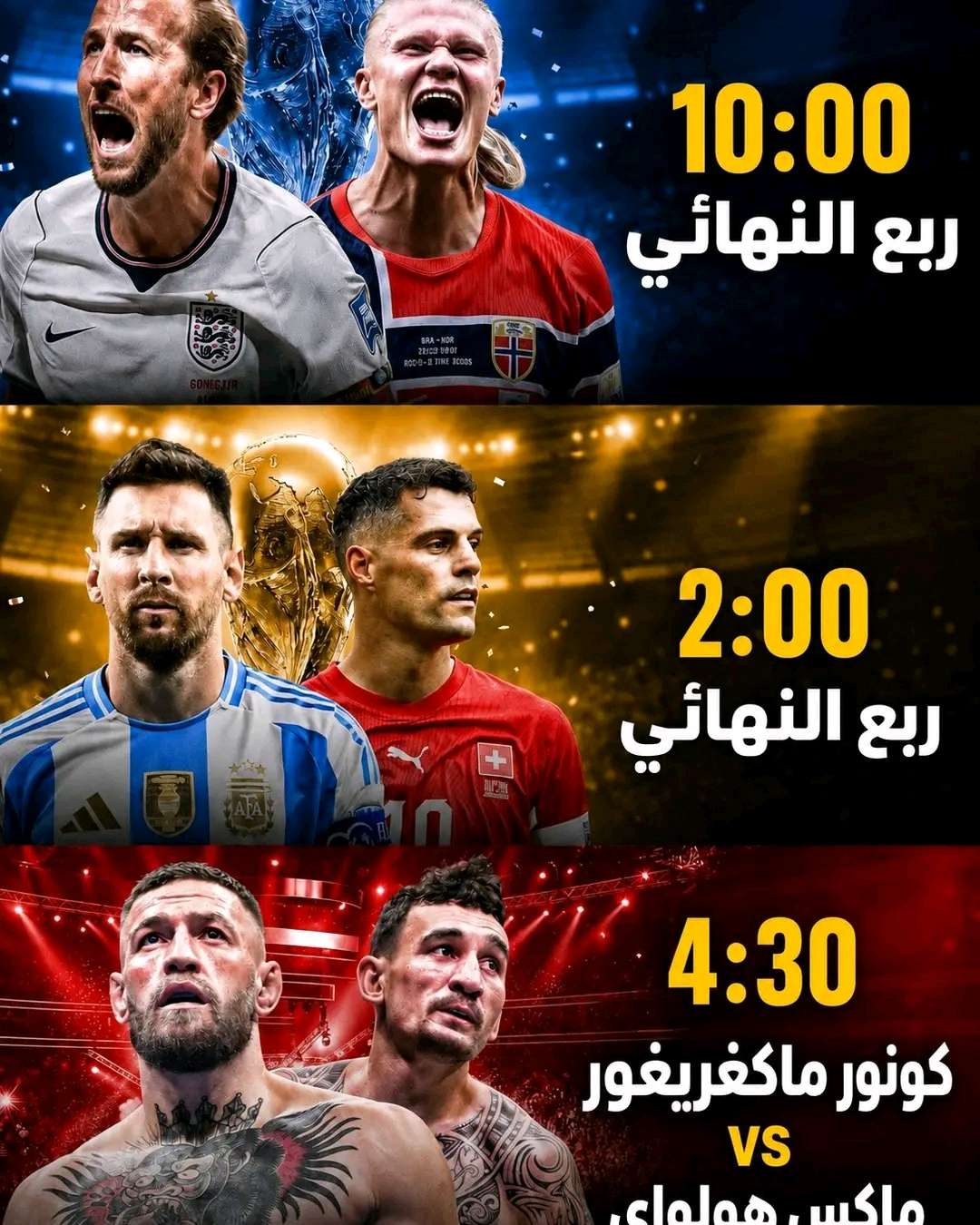
This is bound to be an unforgettable night for sports fans worldwide, featuring high-stakes international football and a legendary clash in the UFC octagon. Here is an in-depth preview of the scheduled events.

### ⚽ Game 1: The Heavyweight Clash (10:00) – Quarter-Finals

**Featured Stars:** Harry Kane (England) vs. Erling Haaland (Norway)

#### 📝 Tactical Outlook

This quarter-final matchup is a pure battle of elite goalscorers. On one side, **Harry Kane** leads the line with his deep-dropping, playmaking ability, looking to link up midfield transitions with lethal finishing. On the other side, **Erling Haaland** represents the ultimate modern striker—pure power, blistering pace, and unmatched positioning inside the box.

#### 🔑 Key Matchup

The game will likely be decided in the defensive third. Whichever team managed to isolate the opponent's star striker from their midfield supply line will hold the upper hand. Norway will look to exploit spaces via direct counter-attacks, while England will attempt to control possession and break down a stubborn defensive block.

### ⚽ Game 2: The Tactical Chess Match (2:00) – Quarter-Finals

**Featured Stars:** Lionel Messi (Argentina) vs. Granit Xhaka (Switzerland)

#### 📝 Tactical Outlook

A classic clash of footballing philosophies. **Lionel Messi** continues to defy time, acting as the ultimate maestro for Argentina. His ability to create something out of nothing, deliver pinpoint passes, and execute dead-ball situations makes Argentina incredibly dangerous. However, they face a highly disciplined and resilient Swiss side anchored by their midfield general, **Granit Xhaka**.

#### 🔑 Key Matchup

 ***The Midfield Battle:** Xhaka’s primary responsibility will be organizing the Swiss mid-block to suffocate the half-spaces where Messi thrives.

 ***Resilience vs. Genius:** Switzerland has built a reputation for upsetting giants through collective defensive discipline and sharp counter-pressing. Argentina will need swift ball circulation to stretch the Swiss lines.

### 🥊 Event 3: UFC Main Event (4:30) – The Grudge Match

**The Fighters:** Conor McGregor vs. Max Holloway

#### 📝 Technical Breakdown

A legendary rematch years in the making between two of the most iconic strikers in MMA history.

 ***Conor "The Notorious" McGregor:** Known for his devastating left hand, elite counter-striking, and explosive early-round power. Conor will look to control the center of the octagon early and land a fight-ending blow.

 ***Max "Blessed" Holloway:** The epitome of volume striking, relentless cardio, and an iron chin. Holloway thrives as the fight goes deeper, using overwhelming combinations and lateral movement to break his opponents mentally and physically.

#### 🔮 Fight Prediction & Dynamics

This is a classic **Power vs. Volume** dilemma. If McGregor cannot secure a finish or significant damage in the first two rounds, Holloway’s legendary conditioning and pacing could completely take over the later rounds. Expect a striking masterclass from both men.

### ⏰ Summary Timeline

| Time | Event | Key Figures | Significance |

|---|---|---|---|

| **10:00** | Football Quarter-Final | Kane vs. Haaland | Battle for a Semifinal spot |

| **2:00** | Football Quarter-Final | Messi vs. Xhaka | South American flair vs. European discipline |

| **4:30** | UFC Super-Fight | McGregor vs. Holloway | Legacy and striking supremacy |
FOOTBALL (SOCCER)

# 📅 The Ultimate Sports Night: Breakdown & Analysis

Like icon
37
Comments icon
Shares icon 20
hassen133

about a month ago

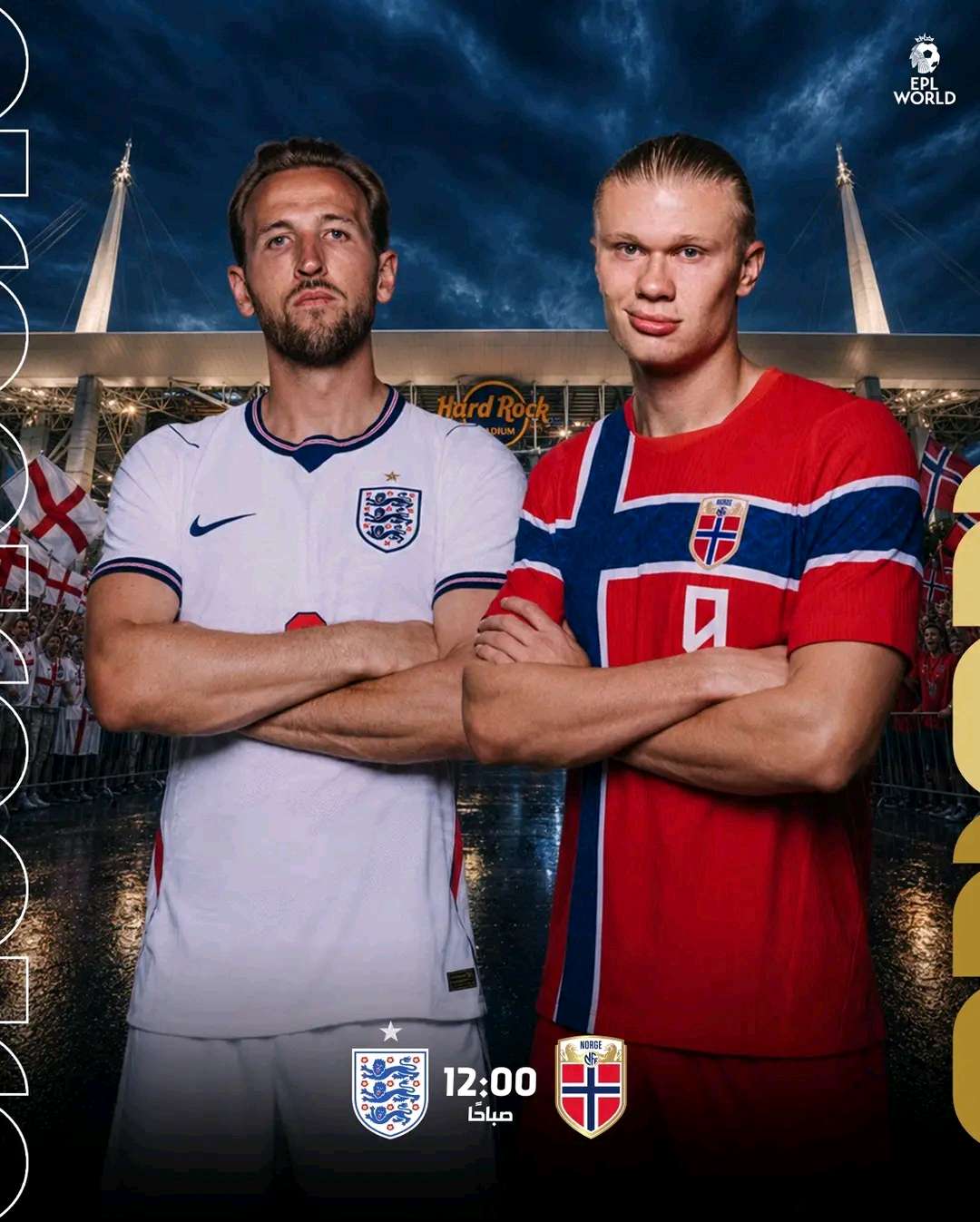
​The football world stood still as two powerhouse European nations, Norway and England, locked horns in a thrilling encounter that lived up to every ounce of its pre-match hype. Packed with tactical chess moves, individual brilliance, and breathless drama, the match provided fans and bloggers alike with enough talking points to last for weeks.

​Here is the comprehensive breakdown of how this epic confrontation unfolded.

​1. The Pre-Match Narrative & Tactical Setup

​Going into the match, the storylines wrote themselves. Norway, powered by their generational talents and a roaring home crowd, looked to assert their dominance and prove they can dismantle Europe’s elite. On the other side, England arrived with their trademark tactical discipline, depth, and the immense pressure of carrying traveling expectations.

​Norway's Approach: The Norwegian manager opted for an aggressive, high-pressing setup. The strategy was clear: suffocate England’s midfield, win the ball high up the pitch, and feed their lethal forward line as quickly as possible.

​England's Blueprint: England countered with a fluid, possession-based system. They focused on structural stability, utilizing overlapping full-backs to create overloads on the wings while keeping a watchful eye on Norway's counter-attacking triggers.

​2. First Half: Intensity and the Opening Breakthrough

​From the first whistle, the tempo was electric. Norway used the energy of the stadium to dominate the opening 15 minutes, forcing England’s goalkeeper into two crucial early saves. The physical battles in the midfield were intense, with neither side willing to give an inch.

​However, England’s composure gradually allowed them to quiet the crowd. By shifting the ball rapidly from flank to flank, they managed to stretch the Norwegian compact defensive block.

​The Breakthrough: Just before the stroke of halftime, a moment of pure magic unlocked the game. A crisp, one-touch passing sequence through the center of the pitch allowed England’s creative midfielder to slide a完美 pass into the box, leading to a clinical finish that left the Norwegian keeper helpless.

​Halftime Score: Norway 0 - 1 England

​3. Second Half: The Norwegian Resurgence

​Whatever was said in the Norwegian dressing room at halftime worked wonders. They emerged for the second period with renewed vigor and an adjusted tactical shape that pushed England deeper into their own half.

​Norway bypassed England's press by utilizing direct long balls and exploiting the half-spaces. The pressure mounted, resulting in a series of corner kicks and goal-mouth scrambles.

​The equalizer eventually came around the 65th minute. Following a brilliant individual run down the flank, a pinpoint cross found Norway's star striker, who shielded the ball masterfully before turning and blasting it into the roof of the net. The stadium erupted into absolute chaos.

​4. The Final Dramatic Act

​With the score leveled at 1-1, the final 20 minutes became a tactical war of attrition. Both managers turned to their benches, introducing fresh legs to find a late winner.

​England transitionally threatened on the counter-attack, hitting the woodwork once, while Norway’s defensive line held incredibly firm under pressure. At the other end, England’s center-backs had to put their bodies on the line to block a fierce, late volley from the edge of the area.

​Despite both teams pushing men forward in a frantic stoppage-time period, the referee's final whistle cemented a hard-fought draw.

​5. Key Takeaways & Blogger's Verdict

​A Fair Result: A draw was ultimately the fairest reflection of the game. England controlled the tempo in the first half, while Norway’s heart and tactical adjustments dominated the second.

​Man of the Match Contenders: The battle between Norway's attacking talisman and England's defensive anchor was worth the price of admission alone. Both stood out as the top performers of the night.

​What’s Next? For Norway, this performance proves they can go toe-to-toe with the very best. For England, it’s a lesson in game management when leading away from home.
FOOTBALL (SOCCER)

Thrills, Tactics, and Drama: Norway and England Battle to the Final Whistle

Like icon
35
Comments icon 2
Shares icon 30
hassen133

about a month ago

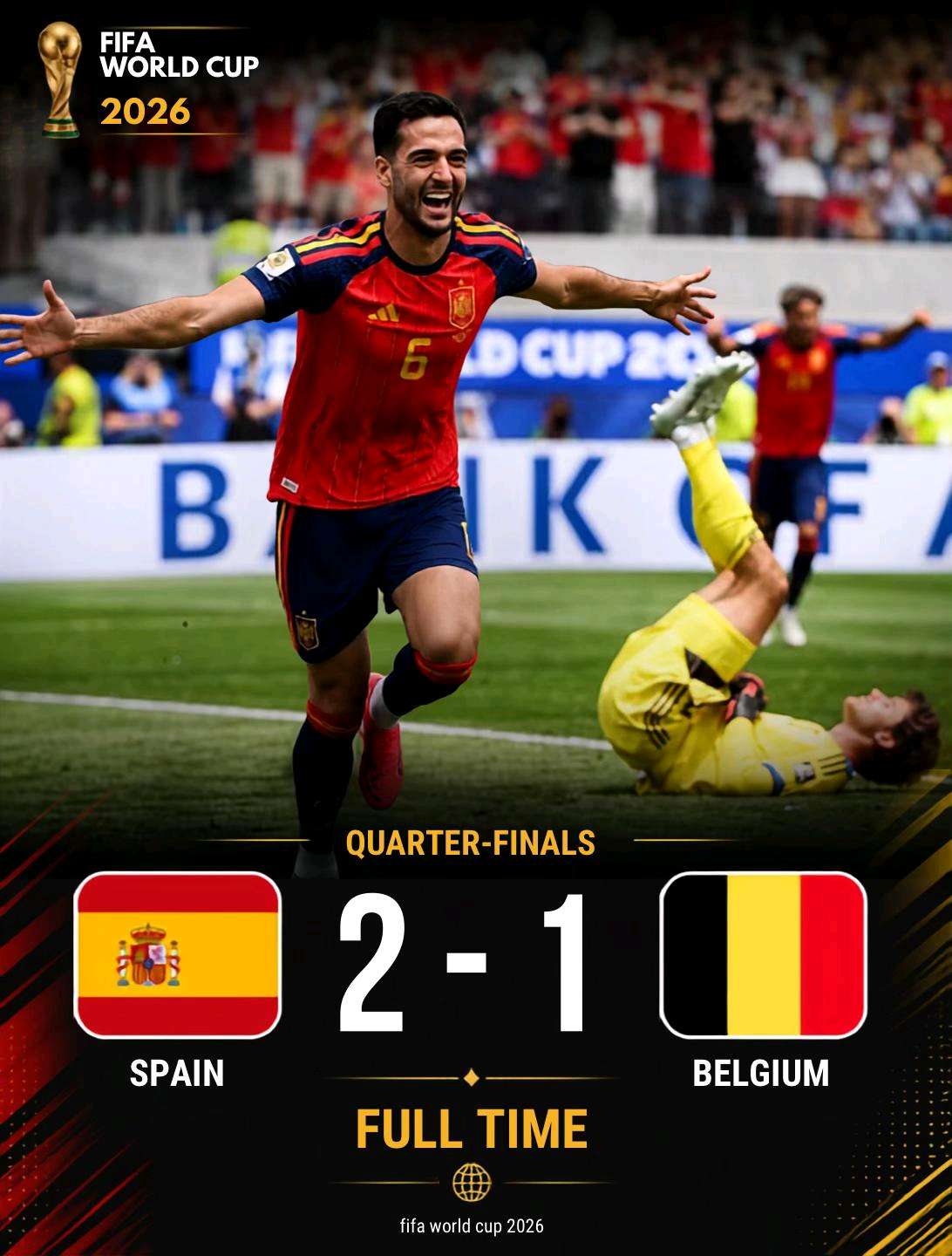
A dramatic **88th-minute winner** from super-sub **Mikel Merino** propelled European champions **Spain** into the 2026 FIFA World Cup semi-finals with a thrilling **2-1 victory** over **Belgium** at the SoFi Stadium in Los Angeles. This hard-fought triumph simultaneously extends La Roja's historic unbeaten run to a record-breaking **36 matches**.

## ⚽ Match Timeline & Key Moments

 ***30' | GOAL (Spain 1-0):** Fabian Ruiz opens the scoring. A dangerous cross from Pedro Porro is met by Dani Olmo, forcing a smart save out of Thibaut Courtois. Fabian Ruiz shows predatory instincts to pounce on the rebound and slot it home.

 ***41' | GOAL (Belgium 1-1):** Charles De Ketelaere equalizes, breaking Spain's phenomenal tournament-long 5-match clean sheet streak. Kevin De Bruyne threads a neat ball to unleash right-back Timothy Castagne, whose pinpoint cross finds De Ketelaere for a thumping header.

 ***71' | Injury Blow:** Tragedy strikes Belgium as their world-class goalkeeper Thibaut Courtois suffers a severe injury and leaves the pitch in tears, forcing young substitute keeper Senne Lammens into action.

 ***88' | GOAL (Spain 2-1):** Barcelona starlet Pau Cubarsí fires a venomous, long-range effort from deep. Lammens awkwardly spills the initial save, allowing sub Mikel Merino to react quickest and tuck the loose ball into the net.

 ***90+2' | Goal-Line Rescue:** Aymeric Laporte bails out Unai Simón with a heroic last-second clearance right on the goal-line to preserve Spain’s lead against a desperate, late Romelu Lukaku-led assault.

## 🧠 Tactical Analysis & Team Performances

### 🇪🇸 Spain: Pragmatic Depth Over Classic Tiki-Taka

Under Luis de la Fuente, this Spanish side relies far more on ruthless, tournament pragmatism and bench depth than the mesmerizing possession cycles of the past.

 ***Strengths & Features:** Wide wingers like Lamine Yamal—who showed incredible flashes of footwork despite carrying a lingering hamstring injury—constantly unlocked Belgium’s back four. Spain’s transition play was direct and lethal, testing Courtois frequently.

 ***The Masterstroke:** De la Fuente's late-game management won the tie. Recognizing Belgium's loss of leadership, introducing Merino to strengthen the engine room completely dictated the final ten minutes.

### 🇧🇪 Belgium: The Heartbreaking Curtain Call

Belgium’s 'Golden Generation' gave everything in a highly calculated, physical tactical setup.

 ***Strengths & Features:** With Kevin De Bruyne and Jérémy Doku returning to the lineup, their counter-attacking speed was devastating. De Bruyne's vision orchestrating the equalizer proved they could match Spain's elite caliber.

 ***Where It Faded:** Misfortune completely unraveled the Red Devils. Already losing Youri Tielemans to a warm-up injury, the exit of Courtois severely dented the defense's confidence. Without De Bruyne on the field late on, their composure crumbled under pressure.

## 📊 Player Ratings & Key Statistics

### 🌟 Man of the Match: Mikel Merino (Spain)

Introduced in the 85th minute, Merino needed just two minutes to display incredible positioning and anticipation to latch onto Lammens' spill and send the Spanish bench into pure ecstasy.

| Team | Player | Rating | Key Notes |

|---|---|---|---|

| **ESP** | **Fabian Ruiz** | **8/10** | Kept the midfield ticking and scored the vital opener. |

| **ESP** | **Lamine Yamal** | **7.5/10** | A constant threat on the flank; narrowly missed scoring twice. |

| **ESP** | **Aymeric Laporte** | **8/10** | Solid defensive shifts capped by an unbelievable stoppage-time goal-line clearance. |

| **BEL** | **Thibaut Courtois** | **7.5/10** | Made 4 world-class saves before his heartbreaking injury forced him off. |

| **BEL** | **Charles De Ketelaere** | **7.5/10** | Spearheaded the attack brilliantly; scored a perfect header. |

| **BEL** | **Senne Lammens** | **5/10** | Thrown into a high-stakes environment; his costly handling error decided the match. |

## 🏁 Referee Performance & Officiating Review

The officiating crew handled a highly intense, physically demanding quarter-final with absolute precision, utilizing VAR seamlessly to keep the match clean and flow-focused.

 ***Game Management:** The referee did an excellent job managing tempers during a chaotic, physical closing spell in stoppage time as Belgium pushed frantically for an equalizer.

 ***Discipline & Bookings:** Four yellow cards were issued in total, split equally between both sides. Pau Cubarsí (43') and Aymeric Laporte (90+2') picked up bookings for Spain, while Kevin De Bruyne (85') was justly carded for cynical tracking back to drag down Ferran Torres. Axel Witsel also received a yellow card deep in stoppage time (90+5') for dissent.

 ***VAR Decisions:** Every goal checked out instantly with zero controversy. VAR confirmed there were no offsides or structural fouls in the buildup to either Ruiz's or De Ketelaere's first-half strikes.

## 🔮 What's Next?

Spain now marches onward to Arlington, Texas, where a blockbuster, heavyweight **semi-final clash against France** awaits next Tuesday, July 14.
FOOTBALL (SOCCER)

📝 Match Report: Spain Edge Belgium 2-1 to Book World Cup Semifinal Showdown

Like icon
27
Comments icon
Shares icon 60
hassen133

about a month ago

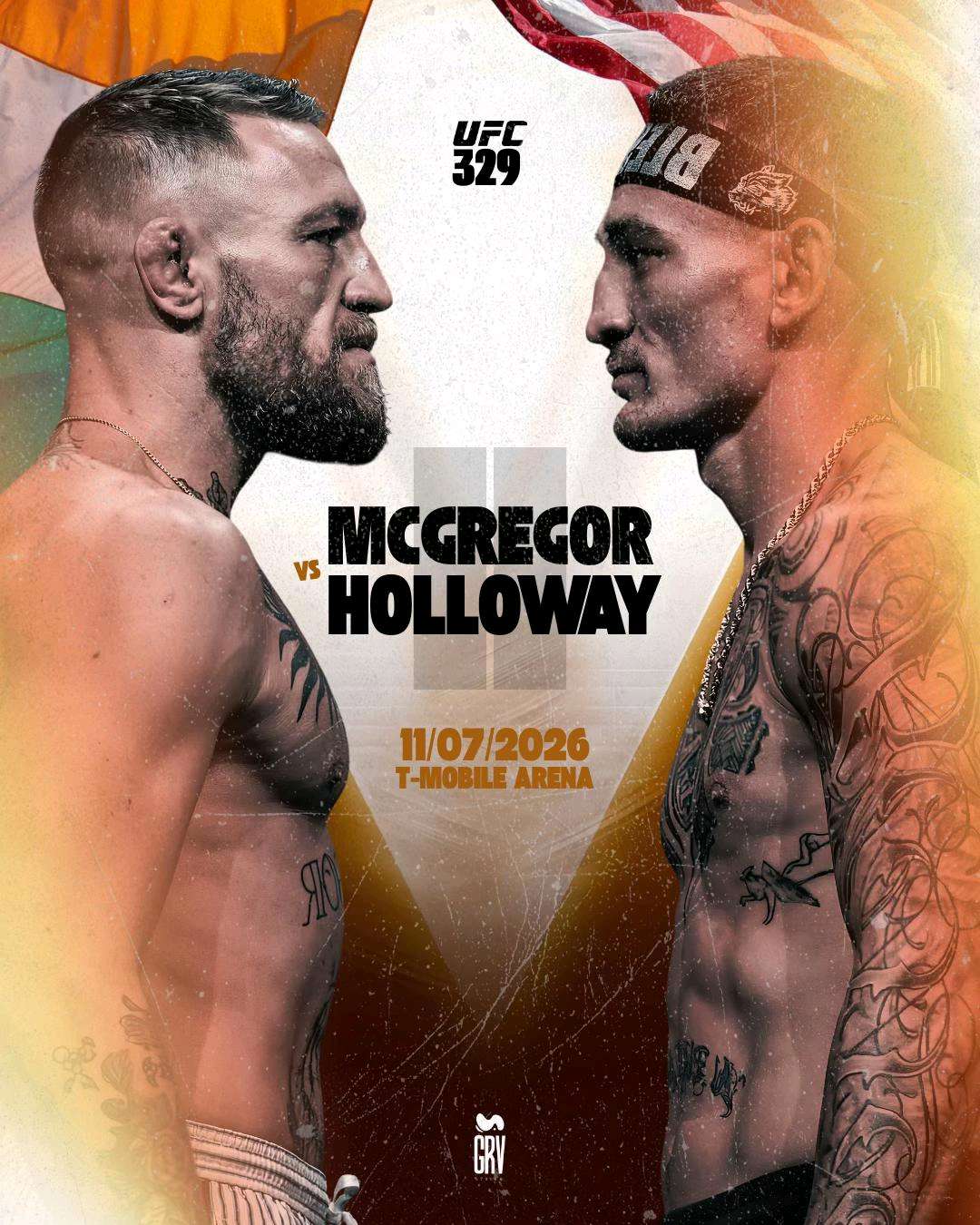
July 11, 2026 | T-Mobile Arena, Las Vegas


More than a decade after their first encounter, two of mixed martial arts' most recognizable names are finally set to meet again. Conor McGregor and Max Holloway will headline UFC 329 in one of the most anticipated rematches in UFC history, bringing together two fighters whose careers have taken dramatically different paths since their first clash in 2013. The event marks McGregor's long-awaited return to the Octagon after nearly five years away, while Holloway enters determined to prove he is now the superior fighter. The rematch headlines UFC International Fight Week in Las Vegas. 


Their original meeting took place when both men were still rising prospects. McGregor earned a unanimous decision victory despite suffering a knee injury during the fight. Since then, both athletes have become global superstars, collecting championships, unforgettable victories, and millions of fans worldwide. Now, thirteen years later, they return as completely different competitors.


For Conor McGregor, this fight is about redemption and legacy. The Irish superstar remains the biggest attraction the UFC has ever produced, but his career has been interrupted by injuries, inactivity, and setbacks. His last appearance inside the Octagon ended with a devastating leg injury, leaving fans wondering whether "The Notorious" could ever compete at the highest level again. UFC 329 represents not only his comeback but also perhaps the biggest opportunity to prove he still belongs among the elite. 


Across the cage stands Max Holloway, one of the greatest featherweights in UFC history. Known for his incredible pace, endless cardio, and relentless striking combinations, Holloway has evolved into one of the sport's most respected veterans. Every challenge throughout his career has made him more complete, more disciplined, and mentally stronger than ever before.


Stylistically, the matchup is fascinating. McGregor remains one of the sharpest counter-strikers in MMA history. His precision, timing, and devastating left hand have produced some of the most iconic knockouts ever witnessed inside the Octagon. When fighting with confidence, few athletes are capable of controlling distance and punishing mistakes like McGregor.


Holloway offers an entirely different challenge. Instead of relying on single explosive punches, he overwhelms opponents through volume, pressure, movement, and exceptional conditioning. Few fighters can maintain Holloway's pace over a full contest, making him dangerous from the opening seconds until the final horn.


One of the biggest questions surrounding the fight is McGregor's conditioning after such a lengthy absence. Returning after several years away from elite competition is never easy, particularly against an opponent famous for forcing exhausting, high-paced battles. Holloway will almost certainly attempt to extend exchanges, increase the tempo, and test whether McGregor can maintain championship-level endurance.


Mentally, both fighters appear highly motivated. McGregor wants to remind the world why he became one of combat sports' greatest attractions, while Holloway sees this as an opportunity to rewrite history and avenge the only meeting between them.


The atmosphere surrounding UFC 329 has reached extraordinary levels. Tickets sold rapidly, media attention has exploded across social platforms, and International Fight Week has once again become one of the biggest celebrations in mixed martial arts. UFC officials have also announced that the event set a new live gate record, highlighting the enormous commercial appeal of McGregor's return. 


Experience favors both men in different ways. McGregor has consistently delivered in massive main events, thriving under pressure in front of sold-out arenas. Holloway, meanwhile, has built a reputation as one of the toughest and most durable fighters in UFC history, capable of adapting to nearly any style presented to him.


The opening rounds may determine everything. If McGregor can establish his trademark accuracy early, he possesses the power to finish almost anyone. If Holloway survives the initial danger and begins increasing the pace, momentum could gradually swing in his favor as the fight progresses.


Beyond wins and losses, UFC 329 represents something much larger than a single contest. It symbolizes two generations of greatness colliding once again. McGregor returns seeking one final championship run and a chance to silence every critic who doubted his comeback. Holloway enters with the confidence of a proven legend aiming to secure another defining victory over one of the sport's biggest icons.


Regardless of the final result, McGregor vs. Holloway II already feels destined to become one of the defining moments of the 2026 UFC season. Whether it ends with another McGregor masterpiece or Holloway finally earning long-awaited revenge, fans around the world are preparing for a spectacular night that could reshape both fighters' legacies forever.
KICKBOXING

UFC 329: McGregor vs. Holloway II – A Rivalry Reborn, A Legacy on the Line

Like icon
33
Comments icon 4
Shares icon 100
hassen133

about a month ago

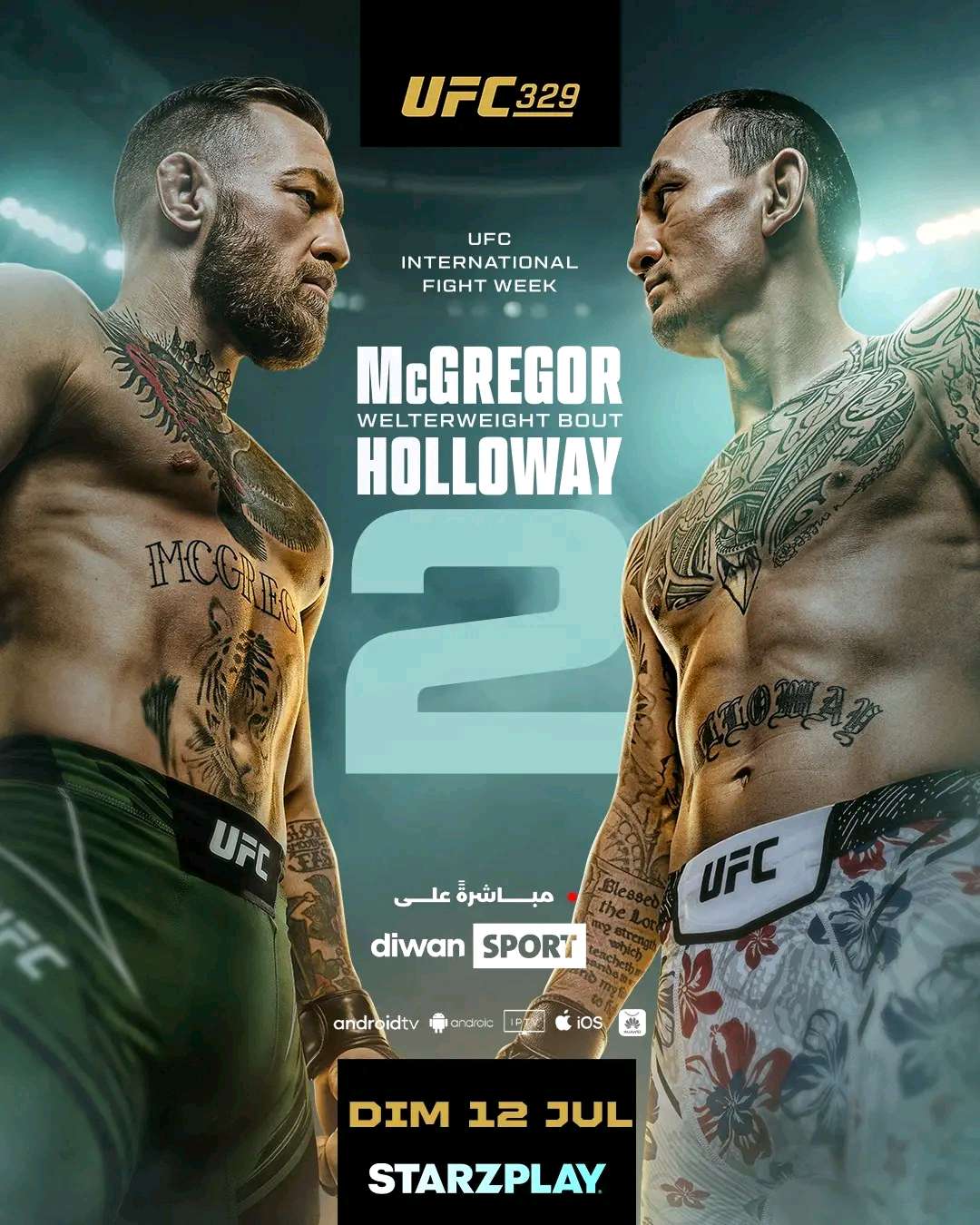
## 📅 Event Overview & Schedule

 ***Event:** UFC 329: McGregor vs. Holloway 2

 ***Date:**Sunday, July 12 (as indicated by "DIM 12 JUL" / Dimanche) during* *UFC International Fight Week**.

 ***Weight Class:** Welterweight Bout (170 lbs)

 ***Broadcasting Partners:** STARZPLAY & Diwan Sport (with app support on Android TV, iOS, and IPTV platforms).

### Estimated Global Timing (Main Card)

Because it is a major International Fight Week pay-per-view event, the standard broadcasting schedule applies:

 ***United States (EST):** Saturday night, July 11, Main Card starts at 10:00 PM EST.

 ***Tunisia / Central European Time (CET):**Sunday morning, July 12, Main Card starts around 3:00 AM CET. The main event walkouts usually occur around* *5:30 AM CET**.

## 🥊 The Historical Background: Why This Rematch Matters

This fight is a massive legacy matchup. It represents a sequel **13 years in the making**.

### 1. The First Encounter (UFC Fight Night 26 - August 17, 2013)

 ***The Context:** Both fighters were young prospects rising through the Featherweight division. Conor McGregor was making his second UFC appearance, while Max Holloway was a 21-year-old rising star.

 ***The Fight:**McGregor won the bout via* *Unanimous Decision (30-27, 30-27, 30-26)**.

 ***The Plot Twist:** Conor McGregor tore his ACL (Anterior Cruciate Ligament) midway through the second round. Forced to adapt, McGregor abandoned his signature spinning kicks and striking to completely rely on his wrestling and ground control to secure the decision victory. To this day, Holloway remains the only Featherweight fighter to take McGregor to a decision in the UFC.

### 2. The Parallel Legends

Following that 2013 bout, their careers skyrocketed into legendary status:

 ***Conor "The Notorious" McGregor:** Went on to become the first simultaneous two-division champion in UFC history (Featherweight and Lightweight), breaking every box office and PPV record in MMA history.

 ***Max "Blessed" Holloway:**Went on an incredible 13-fight win streak, captured the undisputed UFC Featherweight Championship, defended it successfully multiple times, and solidified himself as one of the greatest strikers to ever step into the Octagon, later capturing the symbolic BMF (Baddest Motherf*******er) title.

## 🔬 Tactical Fight Analysis & Breakdown

Moving up to **Welterweight (170 lbs)** changes the entire dynamic of how these two legends match up today compared to their featherweight days.

### Conor McGregor: Key Factors

 ***The Power Advantage:** Conor possesses devastating raw power, particularly in his straight left hand. At 170 lbs, his frame carries significant muscle mass designed to finish fights early.

 ***The Precision Option:** McGregor’s counter-striking is elite. If Holloway presses forward carelessly, McGregor’s timing can neutralize high-volume pressure.

 ***The Cardio Question:** Carrying more muscle mass at Welterweight has historically caused McGregor to slow down in later rounds (as seen in his fights against Nate Diaz).

### Max Holloway: Key Factors

 ***Volume and Endurance:** Holloway is widely regarded as having the best cardio and high-volume striking in UFC history. He breaks opponents down by landing hundreds of significant strikes over a 5-round duration.

 ***Elite Chin:** Holloway has one of the most legendary chins in combat sports, having never been officially knocked down through pure strikes in his prime featherweight and lightweight runs.

 ***The Weight Adjustment:** Holloway is naturally smaller in raw muscle density compared to McGregor at 170 lbs, but his lack of a harsh weight cut means his cardiovascular gas tank will be at an all-time high.

## 📈 Fight Narrative & Expectations

> **The Classic Archetype:** This fight boils down to **Early Explosive Power vs. Late-Round Relentless Volume**.

> 

If the fight ends in Rounds 1 or 2, the advantage heavily leans toward McGregor landing a fight-ending sequence. However, if Holloway survives the initial storm and extends the fight into Rounds 3, 4, and 5, his legendary endurance and pacing make him the heavy favorite to take over the deeper the fight goes.
BOXING

Here is an extensive, detailed comprehensive report in English about the highly anticipated rematch shown in the poster: **Conor McGregor vs. Max Holloway 2** at **UFC 329**.

Like icon
28
Comments icon
Shares icon 70
hassen133

about a month ago

Since you requested them to be **very long ("طويلة على الآخر")**, I have broken them down into distinct thematic reports. You can use these for your blog posts, and they are written with an engaging, passionate tone perfect for sports content.

## Report 1: The Historic Epoch – How Morocco Redefined World Football

### Introduction

The beautiful game has witnessed numerous fairy tales, but none have resonated quite like the monumental rise of the Moroccan National Team. The Atlas Lions did not just play football; they orchestrated a cultural and sporting revolution that shattered the traditional glass ceilings of international tournaments. For decades, the later stages of global football were deemed an exclusive club for European and South American giants. Morocco tore up that script, proving that tactical discipline, unyielding spirit, and technical brilliance can conquer the world.

### The Tactical Masterclass of Walid Regragui

At the heart of this historic ascent was a masterfully engineered tactical system. Stepping into the managerial role with immense pressure, Walid Regragui instilled a defensive masterclass that will be studied in coaching academies for generations.

 ***The Low-Block Sovereignty:** Morocco perfected the art of the compact mid-to-low block. They suffocated spaces between the lines, leaving elite opposition attackers completely isolated.

 ***The Pragmatic Press:** Rather than chasing shadows, the Atlas Lions pressed intelligently in designated triggers, turning defensive recoveries into lethal, vertical transitions.

 ***The Defensive Metrics:** Conceding almost no goals from open play across massive stretches of elite competitive football is a testament to an organized backline, anchored by the heroic positioning of Romain Saïss and the sweeping brilliance of Yassine Bounou.

### Shaking the Foundations of the Elite

Morocco’s journey wasn't a product of luck; it was a gauntlet where they systematically dismantled footballing royalty.

 1. **The Iberian Conquests:** Facing Spain and Portugal back-to-back is a nightmare scenario for most teams. Against Spain, Morocco put on a defensive clinic, frustating "Tiki-Taka" before Yassine Bounou’s legendary penalty shootout heroics. Against Portugal, Youssef En-Nesyri’s gravity-defying header became an iconic image of football history, sealing a historic semifinal spot.

 2. **The Midfield Engine Room:** Sofyan Amrabat’s performances in the heart of the pitch became the stuff of legend. His tireless work rate, ability to break up play, and immaculate transition passing allowed creative forces like Azzedine Ounahi to dictate the tempo against world-class midfielders.

### Conclusion: A Legacy Beyond the Pitch

What Morocco achieved transcends the 90 minutes on the pitch. They united the Arab world, inspired the entire African continent, and earned the universal respect of football purists worldwide. They proved that with absolute unity, flawless tactical execution, and a fierce love for the badge, the impossible is merely an opinion.

## Report 2: The Anatomy of Greatness – Key Pillars of the Atlas Lions

### Introduction

To fully appreciate the magnitude of Morocco’s world-class performances, one must look past the scorelines and analyze the structural pillars that made this team an unstoppable force. It was a perfect synergy of world-class individual talent, tactical flexibility, and an unbreakable psychological bond.

### Key Performance Pillars

| Pillar | Strategic Impact on the Pitch |

|---|---|

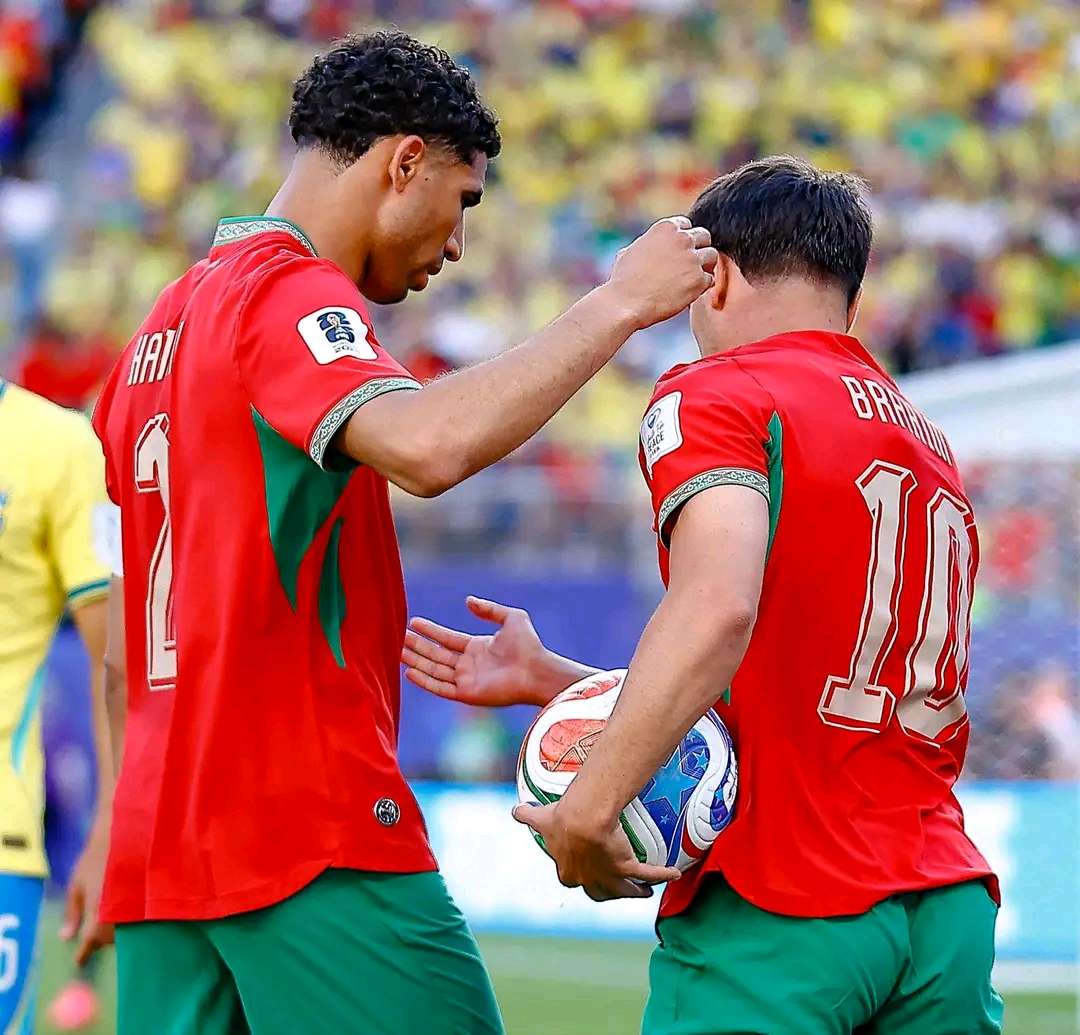
| **Elite Flank Dynamics** | Achraf Hakimi and Hakim Ziyech formed arguably the most potent right-sided duo in international football, balancing elite tracking back with devastating attacking output. |

| **The Midfield Anchor** | Sofyan Amrabat functioned as a one-man wrecking ball, covering unbelievable ground and neutralizing transitions before they reached the box. |

| **Goalkeeping Supremacy** | Yassine Bounou provided absolute security, showcasing elite shot-stopping, flawless aerial command, and psychological dominance during penalty shootouts. |

### The Searing Chemistry of the Right Flank

The synergy on Morocco’s right side was pure poetry. Achraf Hakimi, universally recognized as one of the best right-backs on the planet, combined his blistering pace with world-class defensive awareness. Ahead of him, Hakim Ziyech played with a rejuvenated spirit, tracking back to defend deep while retaining the creative magic to unlock defenses with his signature left foot. Their telepathic understanding allowed Morocco to absorb heavy pressure and transition into an attacking threat in a matter of seconds.

### The Unsung Heroes and Tactical Flexibility

While the stars grabbed the headlines, the depth and flexibility of the squad were vital. Nayef Aguerd’s flawless distribution from the back, Jawad El Yamiq’s passionate and fearless cameos, and Sofiane Boufal’s mesmerizing dribbling on the left wing provided a multi-dimensional threat. When injuries hit the squad during high-stakes matches, the tactical discipline never dropped. Every player who stepped onto the pitch knew their role perfectly, showcasing the incredible squad depth and coaching infrastructure behind the scenes.

### Final Words for the Blog

The Atlas Lions have set a new benchmark. They are no longer the underdogs looking for an upset; they are a footballing superpower that commands respect on every stage they step upon.

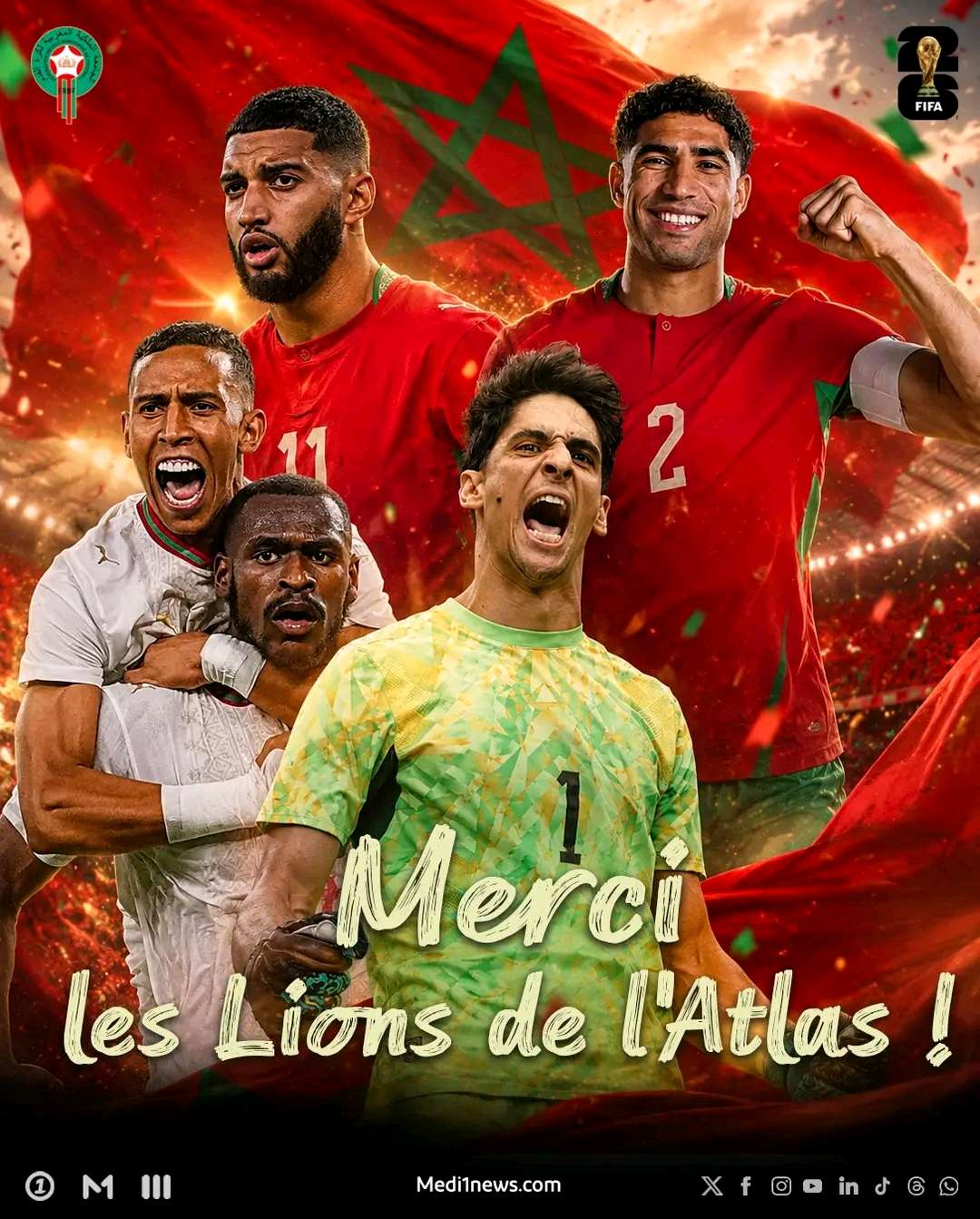
## Report 3: A Letter of Gratitude – Thank You, Morocco, For Inspiring the World

### Introduction

Every once in a while, a sports team comes along and reminds us why we fell in love with sports in the first place. They remind us that football is more than just a tactical board or a multimillion-dollar industry—it is about passion, identity, sacrifice, and belief. To the Moroccan National Team: this is a tribute, a celebration, and a heartfelt thank you for the beautiful memories you have etched into our hearts.

### Thank You for the Unwavering Passion

Thank you, Atlas Lions, for showing the world what it truly means to play for the badge. Every single match felt like a masterclass in dedication. Watching players fight through exhaustion, cramps, and injuries just to defend their lines for another minute was deeply moving. The sheer emotional investment from the players—and the beautiful scenes of celebrating with their families on the pitch—brought a beautiful, human element back to the global game.

### Thank You for Redefining the Narrative

For too long, African and Arab football teams were labeled as "entertaining but tactically undisciplined." You completely shattered that stereotype on the grandest stage of all. You showed the world a team that was:

 ***Tactically superior** to European giants.

 ***Physically resilient** against the most grueling attacking lines.

 ***Mentally unbreakable** when the entire world was watching.

You gave millions of young kids across Africa, the Middle East, and the diaspora the belief that they can stand toe-to-toe with the very best and win. You changed the mindset of a generation.

### An Everlasting Legacy

The tournament brackets will change, and new campaigns will begin, but what this specific group of Moroccan players achieved is permanent. You didn't just win football matches; you won the hearts of millions across the globe. You brought communities together, sparked celebrations from Rabat to Paris, and left an indelible mark on football history.

**Dima Maghrib! Thank you for the magic, the drama, and the unforgettable glory.**
FOOTBALL (SOCCER)

Here are a few extensive, detailed blog posts written in English to celebrate the historic and incredible performances of the Moroccan National Team (The Atlas Lions).

Like icon
34
Comments icon
Shares icon
hassen133

about a month ago

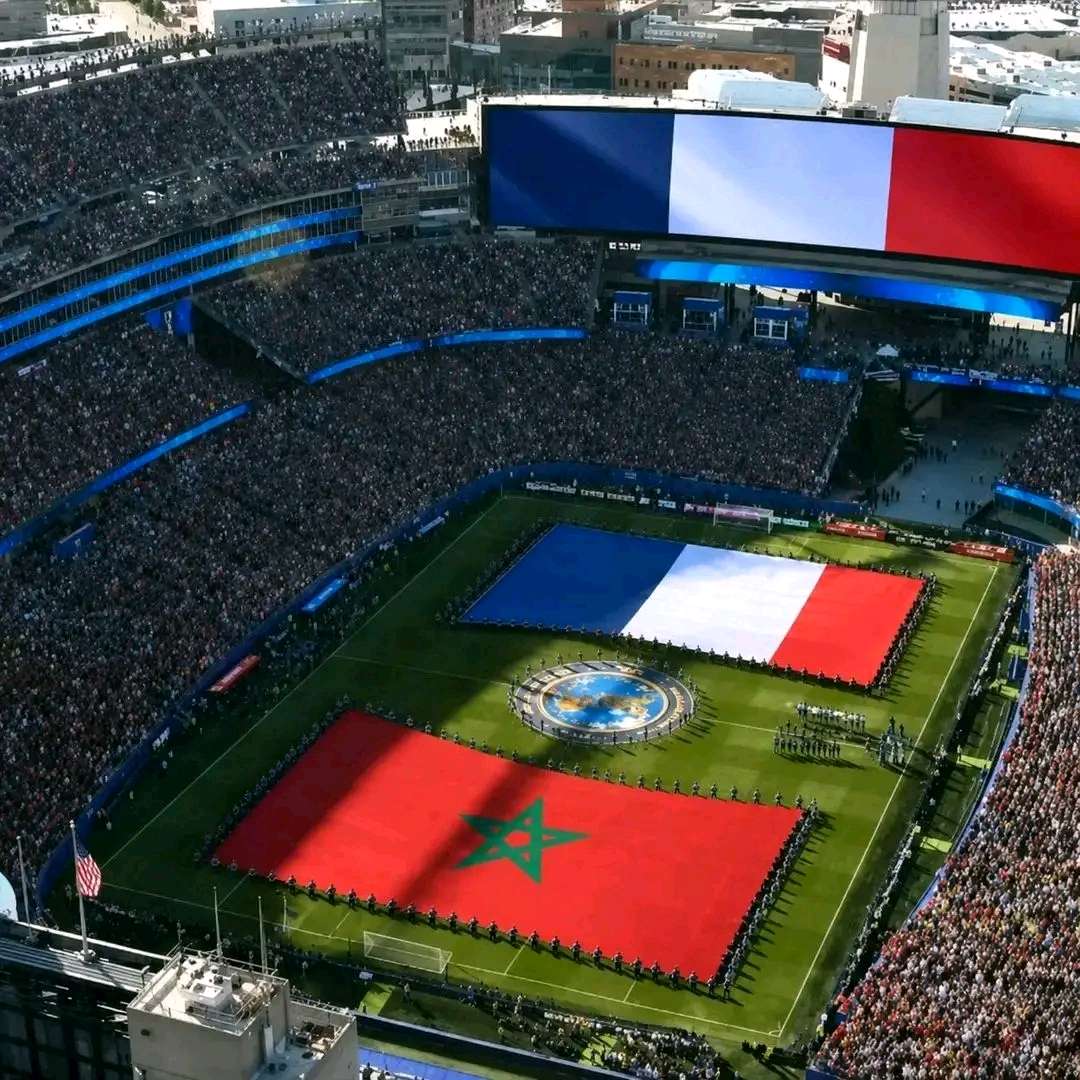
# Clinical France March into Semi-Finals, Ending Morocco’s World Cup Dream

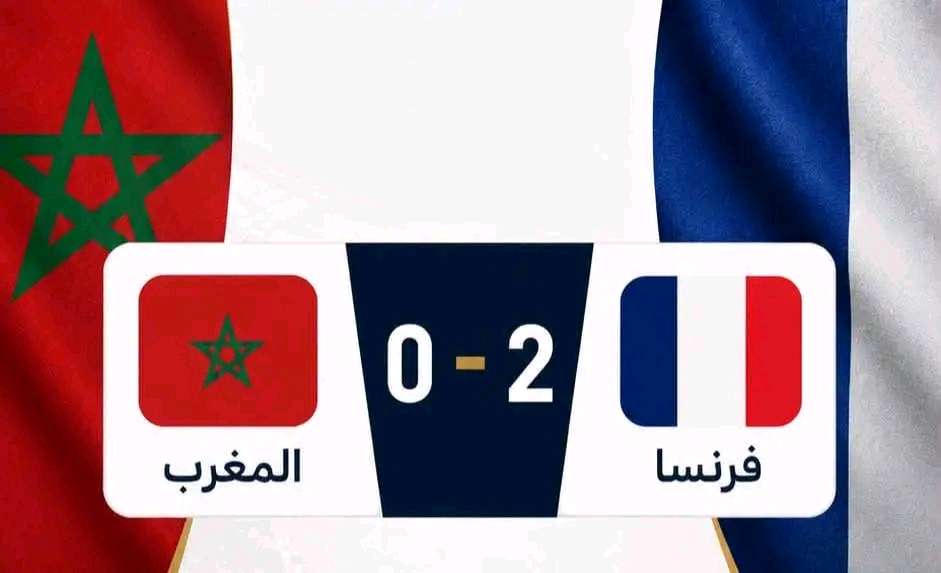
The highly anticipated FIFA World Cup 2026 quarter-final showdown between **France** and **Morocco** at Boston Stadium delivered high drama, tactical battles, and a clinical second-half display by the European giants. Ultimately, *Les Bleus* secured a **2-0 victory** to reach their third consecutive World Cup semi-final, repeating history by eliminating the Atlas Lions by the exact same scoreline as Qatar 2022.

Here is the comprehensive match review, breakdown of performances, and referee analysis.

## 📊 Match Overview & Final Score

 ***Final Score:** France 2 - 0 Morocco

 ***Goals:** Kylian Mbappé (60'), Ousmane Dembélé (66')

 ***Key Event:** Yassine Bounou saves a Kylian Mbappé penalty (28')

 ***Stadium:** Boston Stadium, Foxborough

## 🇫🇷 Team Performance: France (Rating: 8.5/10)

Didier Deschamps’ men showed the composure of true champions. They completely dominated possession and territory in the first half but were initially left frustrated by Morocco's compact defensive block and an uncharacteristic penalty miss by Kylian Mbappé.

However, France let their football do the talking in the second half, striking twice in a devastating six-minute window.

 ***The Attack:****Ousmane Dembélé**was named Man of the Match, terrorizing Morocco’s left flank with his blistering pace and scoring the crucial second goal. Meanwhile,***** *Kylian Mbappé**** shook off his first-half penalty failure to score a majestic curling opener, marking his 20th career World Cup goal.

 ***The Defense:** Extremely solid. Led by William Saliba and Dayot Upamecano, the French backline shielded Mike Maignan effortlessly, allowing Morocco only a single shot on target the entire game.

## 🇲🇦 Team Performance: Morocco (Rating: 6/10)

Morocco entered the clash with massive heart but ultimately lacked the attacking teeth to trouble the French powerhouse.

 ***The Positives:**Goalkeeper* *Yassine Bounou** was heroic yet again, making six crucial saves including a brilliant stop on Mbappé’s first-half penalty to temporarily keep the Atlas Lions alive. Achraf Hakimi showed great leadership and energy down the right flank.

 ***The Negatives:** Structurally, Morocco struggled against France’s rapid wingers. Noussair Mazraoui had a tough night out, mistiming his challenge to concede the first-half penalty. In the final third, the Atlas Lions looked starved of service and struggled heavily to create clear-cut opportunities from open play.

## ⚖️ Referee Performance: Facundo Tello (Rating: 7/10)

The appointment of Argentine referee **Facundo Tello** and an all-Argentinian officiating crew raised eyebrows before kick-off due to the ongoing football rivalry between France and Argentina. However, the officiating team handled the high-pressure environment professionally.

 ***Key Decisions:** Tello was sharp to award France a penalty in the 26th minute after a VAR review clearly showed Mazraoui bringing down Mbappé inside the box. The three-minute delay for the VAR check was slightly disruptive, but the final decision was objectively correct.

 ***Match Control:** Known for his strict style, Tello managed to keep the game from boiling over. He handed out necessary bookings (like Issa Diop's yellow card for a late challenge on Mbappé) and kept the match flowing reasonably well despite the heavy physical duels.

## 📌 Final Thoughts for the Blog

While Morocco leaves the tournament with their heads held high, France proved exactly why they are tournament favorites. Their ability to absorb pressure and punish mistakes in a matter of minutes makes them a terrifying opponent for whoever they face next in the semi-finals.
FOOTBALL (SOCCER)

Perfect, here is a complete, well-structured, and engaging match review written in English. It is optimized for a blog post, using eye-catching headings and bullet points for easy scannability.

Like icon
28
Comments icon
Shares icon
hassen133

about a month ago

Final Rating: 8.7/10

The French national team once again demonstrated why they remain one of the most powerful and respected forces in world football. In a demanding international encounter against strong opposition, France delivered a performance built on quality, tactical intelligence, physical strength, and remarkable competitive mentality. The result was not only a reflection of their technical ability but also of their experience, confidence, and ambition at the highest level.

From the first whistle, France showed clear determination and control. The team approached the match with confidence, maintaining a strong tactical structure while looking to impose their style of play. Their ability to combine defensive organization with attacking creativity allowed them to remain dangerous throughout the entire contest.

The defensive performance was one of the strongest aspects of France’s display. The back line showed excellent concentration, discipline, and composure when dealing with pressure. The defenders managed important challenges, covered spaces intelligently, and prevented the opposition from creating too many clear opportunities. Their positioning and communication reflected the experience of a team accustomed to competing on the biggest stages.

The midfield played a crucial role in controlling the rhythm of the game. French midfielders demonstrated great physical ability, technical quality, and tactical awareness. They recovered possession effectively, provided defensive support, and created connections between different areas of the pitch. Their movement helped France maintain balance while allowing the attacking players to express their creativity.

In attack, France showed the individual brilliance and collective movement that have become trademarks of the national team. The forwards constantly searched for spaces, challenged defenders, and created dangerous situations through speed, skill, and intelligent positioning. Their ability to transition quickly from defense to attack remained one of their biggest weapons.

One of the most impressive elements of France’s performance was their mentality. The players showed confidence and determination regardless of the pressure surrounding the match. They remained focused during difficult moments and continued fighting until the final whistle. This winning mentality has become one of the defining characteristics of French football in recent years.

The team’s pressing and defensive work without the ball also deserve significant praise. France showed great discipline when applying pressure, forcing opponents into mistakes and limiting their ability to build comfortable attacks. Every player contributed to the defensive effort, proving that success at the highest level requires collective commitment.

Physically, France maintained a very high intensity throughout the match. The players demonstrated excellent fitness levels, covering large distances and continuing to compete strongly even during the final stages. Their athletic ability allowed them to handle the demands of modern international football.

Another positive aspect was the depth and quality available within the squad. France continues to benefit from a generation filled with talented players who can change the course of a match through individual moments of brilliance. The combination of experienced leaders and emerging young stars gives the team confidence for future challenges.

However, despite the many positive aspects, there are still areas where France can improve. At certain moments, the team could be more efficient in the final third and make better use of their attacking opportunities. Maintaining concentration for the entire match will also remain important when facing the strongest teams in international football.

Overall, France delivered a performance that highlighted their status as one of the elite national teams in the world. Their combination of tactical discipline, technical quality, physical power, and competitive mentality makes them a constant threat in every major tournament.

This generation of French players continues to prove that they have the ability to compete for the biggest trophies. With their incredible talent, strong team spirit, and hunger for success, France remains one of the teams that every opponent respects and fears.

Final Verdict

Overall Performance: ★★★★★★★★☆☆ (8.7/10)

France combined defensive solidity, midfield control, attacking creativity, and exceptional mentality to produce another impressive international performance. While there is still room for improvement in certain areas, their overall display confirmed that they remain among the strongest and most complete national teams in world football.
FOOTBALL (SOCCER)

France National Team Performance Rating: A Display of Courage, Quality, and Competitive Spirit

Like icon
26
Comments icon
Shares icon
hassen133

about a month ago

Final Rating: 8.8/10


Morocco once again proved why they are regarded as one of the fastest-rising forces in international football. Against world-class opposition, the Atlas Lions produced a disciplined, determined, and highly competitive performance that reflected the remarkable progress the national team has made over the past several years. Regardless of the final outcome, Morocco demonstrated that they belong among football's elite through their tactical intelligence, relentless work ethic, and unwavering belief.


From the opening whistle, Morocco approached the match with confidence and a clear tactical identity. Rather than sitting back and allowing their opponents to dominate possession uncontested, they remained compact defensively while looking for every opportunity to launch quick and dangerous counterattacks. Their defensive structure was exceptionally organized, with every player contributing to maintaining shape and limiting space between the lines.


The defensive unit deserves enormous praise for its discipline throughout the match. Every defender remained focused under pressure, winning crucial duels and making timely interceptions whenever danger emerged. The communication across the back line was excellent, ensuring that gaps rarely appeared despite facing constant attacking threats. Even when the opposition increased the tempo, Morocco responded with composure instead of panic.


The midfield once again highlighted why it has become one of the team's greatest strengths. The players worked tirelessly both with and without possession, recovering loose balls, pressing aggressively, and linking defense with attack through intelligent passing. Their ability to control transitions prevented the opposition from building sustained momentum while also allowing Morocco to create several promising attacking situations.


Going forward, Morocco showed bravery and ambition. Rather than relying solely on defensive resilience, they looked to attack whenever opportunities presented themselves. Their movement off the ball created space in dangerous areas, while quick passing combinations frequently unsettled the opposing defense. Although finishing chances remained a challenge at key moments, the attacking intent was evident throughout the contest.


One of the most impressive elements of Morocco's performance was their mentality. The players never appeared intimidated by the occasion or by the quality of the opposition. Instead, they demonstrated confidence, resilience, and remarkable determination from the first minute until the final whistle. Every challenge was contested with intensity, every loose ball was fought for, and every setback was met with renewed belief.


The team's pressing strategy also deserves recognition. Morocco consistently forced mistakes through coordinated pressure high up the pitch, disrupting the opponent's rhythm and preventing comfortable build-up play. This collective effort reflected outstanding preparation from the coaching staff and complete commitment from every player on the field.


Physically, Morocco maintained an impressive intensity throughout the match. Even during difficult periods, the players continued to cover enormous distances, recover possession, and support one another across every area of the pitch. Their fitness levels allowed them to remain competitive until the closing stages despite the demanding pace of the encounter.


Perhaps most importantly, Morocco once again displayed the unity that has become synonymous with this generation of players. Every member of the squad worked selflessly for the collective objective, sacrificing individual glory for the benefit of the team. That togetherness has become one of Morocco's defining characteristics and continues to make them one of the toughest opponents in international football.


While there are naturally areas that can still improve—particularly converting promising attacks into goals—the overall performance offered far more positives than negatives. Against elite opposition, Morocco showed courage, tactical maturity, technical quality, and emotional resilience worthy of one of the world's strongest national teams.


As this talented generation continues to develop, Morocco appears well-positioned to remain a major contender in future international tournaments. Their blend of experienced leaders and emerging young talent provides optimism that even greater achievements may still lie ahead.


Overall, Morocco delivered another memorable performance that reflected passion, organization, resilience, and undeniable quality. Regardless of the scoreboard, the Atlas Lions once again earned the respect of football fans around the world.


Final Verdict


Overall Performance: ★★★★★★★★☆☆ (8.8/10)


Morocco combined tactical discipline, defensive solidity, relentless determination, and attacking ambition in another outstanding international performance. Although there is still room for improvement in front of goal, their overall display confirmed that they remain among the most competitive and respected national teams in world football.
FOOTBALL (SOCCER)

Morocco National Team Performance Rating: A Display of Courage, Quality, and Competitive Spirit

Like icon
30
Comments icon
Shares icon
hassen133

about a month ago

The 2026 FIFA World Cup has produced countless unforgettable stories, but perhaps none has captured the imagination of football fans around the world more than the extraordinary rise of Cape Verde goalkeeper Vozinha. The experienced shot-stopper, who entered the tournament as a relatively unknown figure outside African football, has suddenly become one of the most talked-about goalkeepers on the international stage after a series of sensational performances against some of the biggest footballing nations in the world.

His heroic displays have not only transformed his reputation but have also reportedly attracted strong interest from Major League Soccer giants Inter Miami, who are exploring the possibility of adding another experienced international player to their ambitious squad.

Although negotiations remain at an early stage, multiple reports suggest that the Florida-based club is seriously evaluating the opportunity to sign the veteran goalkeeper following his outstanding World Cup performances. �

The Times of India +1

Vozinha's performances throughout the tournament demonstrated exceptional reflexes, remarkable composure under pressure, excellent positioning, and inspiring leadership. His saves against several elite attacking teams helped Cape Verde become one of the biggest surprise packages of the tournament.

Perhaps his most memorable performance came against Argentina, where he repeatedly denied Lionel Messi and several world-class attackers with spectacular saves that quickly went viral across social media platforms. Despite Cape Verde eventually suffering elimination after extra time, Vozinha left the pitch having earned worldwide admiration from supporters, coaches, journalists, and football legends alike. �

AP News +1

At 40 years old, Vozinha has proven that experience remains one of football's greatest assets. Throughout the competition, he displayed remarkable calmness, organizing his defensive line while making crucial interventions during decisive moments. His performances dramatically increased his popularity, turning him into one of the breakout stars of the entire World Cup. �

The Economic Times +1

Inter Miami's reported interest is understandable. The MLS club continues building a squad capable of competing for every available trophy while surrounding its star players with experienced professionals who can provide leadership both on and off the pitch.

Adding Vozinha would not simply strengthen the goalkeeping department. His experience, professionalism, and inspirational story would also provide valuable mentorship for younger players within the club.

Transfer Fee

At the present moment, no official transfer fee has been reported.

Since Vozinha became a free agent after leaving Portuguese side GD Chaves, Inter Miami would not be required to pay a traditional transfer fee if they complete the signing. Instead, negotiations would focus primarily on personal terms, salary, signing bonus, and contract length. �

The Times of India +1

Contract Situation

There is currently no confirmed agreement regarding contract duration.

Reports indicate that discussions remain exploratory, and neither Inter Miami nor the player's representatives have announced any official contract details.

Because of this, information regarding:

Contract length

Annual salary

Weekly wages

Signing bonus

has not been officially disclosed. �

Diario AS +1

Why Inter Miami Want Vozinha

Several factors explain why Inter Miami are reportedly considering the Cape Verde international:

Outstanding World Cup performances.

Vast international experience.

Proven leadership qualities.

Availability as a free agent.

Minimal financial risk compared to expensive transfers.

Ability to provide competition and depth in goal.

Strong marketing appeal following his rapid rise to global recognition.

The combination of elite performances and free-agent status makes Vozinha an attractive market opportunity.

If negotiations progress successfully, the move would represent one of the most inspiring stories of the 2026 summer transfer window, taking a goalkeeper who entered the World Cup without a club to potentially sharing a dressing room with Lionel Messi in Major League Soccer.

For now, however, the transfer remains at the rumor stage, and football fans will be watching closely to see whether Inter Miami decide to turn their reported interest into a completed signing. Until an official announcement is made, details regarding the contract, salary, and final agreement remain undisclosed.
FOOTBALL (SOCCER)

Inter Miami Monitoring Cape Verde Goalkeeper Vozinha After Remarkable FIFA World Cup Campaign

Like icon
32
Comments icon
Shares icon
hassen133

about a month ago

The FIFA World Cup 2026 continues to deliver unforgettable football, and one of the most captivating quarter-final encounters will see France and Morocco meet once again on the sport's biggest stage. Nearly four years after their memorable clash in Qatar, the two nations now collide with another place in the semi-finals hanging in the balance. While France enters as one of the tournament favorites, Morocco arrives carrying the dreams of an entire continent, determined to prove that their historic achievements are far from over.


France has quietly built one of the strongest campaigns of the tournament. Their performances have combined defensive discipline, tactical intelligence, and moments of individual brilliance. Every match has demonstrated why Didier Deschamps' side remains among the elite of world football. The French squad possesses remarkable depth in every position, allowing them to adapt seamlessly to different opponents and match situations. Their ability to control possession, dictate tempo, and exploit spaces in transition makes them one of the most complete teams remaining in the competition.


Leading the French attack is a collection of world-class stars capable of changing the game within seconds. Their movement between the lines, relentless pressing, and clinical finishing have consistently overwhelmed opposing defenses. Equally impressive has been France's defensive organization, with experienced defenders providing stability while allowing creative midfielders to dictate play further forward. Their balance between attack and defense has been a defining characteristic throughout the tournament.


Yet Morocco enters this quarter-final with enormous confidence. The Atlas Lions have continued the momentum that first captured global attention in Qatar 2022. Rather than being satisfied with their previous achievements, this new generation has embraced even greater expectations. Morocco has shown that disciplined defending, intelligent pressing, and fearless attacking football can compete with the traditional giants of international football.


Throughout the tournament, Morocco has displayed extraordinary resilience. Their defensive shape has frustrated technically gifted opponents, while their quick transitions have punished even the smallest defensive mistakes. Every player understands his tactical responsibilities, creating one of the most cohesive units remaining in the World Cup. This collective spirit has become the team's greatest weapon.


The emotional significance of this fixture extends well beyond football. For Morocco, this match represents an opportunity to write another historic chapter while seeking redemption after their defeat to France in the 2022 World Cup semi-final. That unforgettable tournament transformed Moroccan football forever, inspiring millions across Africa and the Arab world. Now, with another opportunity against the same opponent, the motivation could hardly be greater.


France, however, understands the challenge better than anyone. The French coaching staff recognizes that Morocco is no longer viewed as an underdog capable of surprising elite teams. Instead, they are now respected as genuine contenders capable of defeating any opponent through organization, discipline, and tactical maturity. Underestimating Morocco would be a costly mistake.


The midfield battle promises to determine the rhythm of the contest. France will attempt to dominate possession through technical superiority and patient build-up play, while Morocco will look to disrupt passing lanes, force turnovers, and launch rapid counterattacks. Every duel in midfield could influence momentum, making physical intensity and tactical awareness absolutely essential.


Individual battles across the pitch will also attract enormous attention. Every defensive challenge, every attacking run, and every set-piece situation could become decisive. With so many elite players on display, moments of brilliance may ultimately separate two teams that are otherwise exceptionally well matched.


Another fascinating element will be the psychological dimension. Quarter-finals often become contests of patience rather than spectacle. One defensive lapse, one moment of hesitation, or one flash of individual quality can completely alter the direction of a World Cup campaign. Both nations possess enough experience to remain composed under immense pressure, ensuring that concentration from the opening whistle until the final minute will be absolutely critical.


For Morocco, victory would represent another historic breakthrough for African football and further establish the Atlas Lions among the world's elite national teams. It would reinforce the belief that their remarkable rise is not a temporary success but the result of years of strategic development, investment, and exceptional talent.


For France, reaching another World Cup semi-final would strengthen their status as one of the dominant international teams of the modern era. Consistency at the highest level has become their trademark, and another deep tournament run would further cement their legacy.


As kickoff approaches, anticipation continues to grow around the football world. Supporters from both nations believe their team possesses the quality required to advance, while neutral fans expect one of the tournament's most compelling tactical battles. Whether decided through moments of attacking brilliance, defensive resilience, or dramatic late heroics, this quarter-final has every ingredient necessary to become another unforgettable World Cup classic.


Only one nation will continue its journey toward lifting football's greatest prize, but regardless of the outcome, France and Morocco are prepared to deliver a match worthy of the occasion. With history, pride, and a coveted semi-final place at stake, the world will once again witness two outstanding football cultures competing under the brightest lights of the FIFA World Cup.
FOOTBALL (SOCCER)

France vs Morocco: A Renewed Rivalry with a World Cup Semi-Final at Stake

Like icon
32
Comments icon
Shares icon 20
hassen133

about a month ago

The FIFA World Cup is not only a stage for goals, skills, and unforgettable moments; it is also a battlefield where intensity, physical battles, and tactical sacrifices define the journey of every national team. Behind every successful defensive action, every counter-attack stopped, and every dangerous opportunity denied, there is often a player willing to make the difficult decision and commit a foul to protect his team.

According to the latest statistics, several players have emerged as the leaders in the number of fouls committed during the tournament. These figures do not simply represent mistakes; they reveal the mentality, responsibility, and fighting spirit of players who constantly put themselves on the line for their countries.

Dan Ndoye – Switzerland’s Tireless Fighter (16 Fouls)

At the top of the list stands Swiss forward Dan Ndoye, who recorded 16 fouls during the competition. While attackers are usually associated with goals and creativity, Ndoye’s numbers highlight another important aspect of his game: his incredible work rate and willingness to fight for every ball.

The Swiss international has built a reputation as a player who does not give defenders an easy moment. His aggressive pressing, constant movement, and physical approach often force him into challenging situations. Many of his fouls come from his attempts to immediately win back possession after losing the ball.

Ndoye represents the modern footballer who understands that attacking responsibility is not only about scoring but also about helping the team defensively. His energy allows Switzerland to maintain pressure high up the pitch, even if it sometimes leads to disciplinary consequences.

Hannibal Mejbri – Tunisia’s Passion and Determination (15 Fouls)

Second on the ranking is Tunisian midfielder Hannibal Mejbri, with 15 fouls. The young midfielder is known for his passion, aggressive style, and strong personality on the pitch.

Mejbri’s game is built around intensity. He presses opponents, challenges for every loose ball, and refuses to give midfielders time to control the rhythm of the match. This mentality makes him an important player in battles where physical strength and character are required.

However, his competitive nature can sometimes push him beyond the limit. His fouls often come from his desire to win possession and protect his team rather than from a lack of discipline. For Tunisia, Mejbri represents a generation of players who bring energy, confidence, and determination to the international stage.

Martin Baturina – Croatia’s Midfield Competitor (14 Fouls)

Croatian midfielder Martin Baturina appears among the players with the highest number of fouls, registering 14.

Baturina is known mainly for his technical qualities, creativity, and ability to control the game. But his statistics show another side of his personality: his willingness to compete physically in midfield.

Playing in one of the most demanding football environments, Baturina understands that controlling possession is not enough. Modern midfielders must also defend, press, and disrupt opponents’ attacks. His fouls reflect the difficult battles that take place in the center of the pitch.

For Croatia, a nation famous for producing intelligent midfielders, Baturina represents the next generation ready to continue that tradition.

Richie Laryea – Canada’s Defensive Warrior (14 Fouls)

Canadian defender Richie Laryea also recorded 14 fouls, demonstrating his defensive commitment and physical approach.

Full-backs often face some of the fastest and most dangerous players in world football. Their role requires them to make quick decisions, stop attacks, and sometimes take risks to prevent opponents from creating scoring opportunities.

Laryea’s numbers show the demanding nature of his position. His willingness to compete in one-on-one situations and challenge attacking players highlights his importance to Canada’s defensive structure.

Achraf Hakimi – Morocco’s Superstar Defender (14 Fouls)

One of the biggest names on the list is Moroccan star Achraf Hakimi, who recorded 14 fouls.

Hakimi is widely recognized as one of the best attacking full-backs in world football. His speed, technique, and ability to contribute in attack make him a constant threat. However, his role requires him to cover huge areas of the pitch.

Because Hakimi often faces dangerous attackers and participates in intense defensive situations, he sometimes has to stop opponents through tactical fouls. These moments demonstrate the responsibility carried by elite defenders who must balance attacking ambition with defensive security.

For Morocco, Hakimi is not only a talented player but also a symbol of determination and leadership.

What These Numbers Really Mean

The players with the most fouls are not necessarily the most reckless players. In many cases, these statistics reveal something deeper: commitment.

Football at the highest level is built on small battles. Every tackle, every duel, and every defensive action can change the outcome of a match. Players who appear on this list are often those who take responsibility when their team is under pressure.

A foul can sometimes prevent a dangerous counter-attack, protect a teammate, or give a team time to reorganize. The difference between a smart tactical foul and an unnecessary mistake is often decided in a fraction of a second.

Conclusion: The Price of Fighting for the Badge

The names on this list — Dan Ndoye, Hannibal Mejbri, Martin Baturina, Richie Laryea, and Achraf Hakimi — represent different football cultures and different styles of play. Yet they share one common quality: they are players who compete with maximum intensity.

Their foul statistics tell the story of football’s invisible battles. Behind every great performance are players who run, fight, press, and sacrifice themselves for their national teams.

In a World Cup where every detail matters, these players prove that sometimes defending a dream requires taking risks — and accepting the consequences that come with fighting until the final whistle.
FOOTBALL (SOCCER)

The Warriors of Discipline: The Players Who Collected the Most Fouls at the FIFA World Cup

Like icon
27
Comments icon
Shares icon
hassen133
hassen133 atEl Gorjani

about a month ago

The 2026 FIFA World Cup has produced many unforgettable stories, but few have captured the imagination of football fans around the world quite like the remarkable rise of Cape Verdean goalkeeper Vozinha. At an age when many professional footballers have already retired, the experienced shot-stopper has become one of the biggest revelations of the tournament, attracting worldwide admiration through a series of extraordinary performances against some of football's strongest nations.

Among the clubs reportedly following his situation most closely is Inter Miami, the ambitious Major League Soccer side led by Lionel Messi. While no official agreement has yet been announced, multiple reports suggest that the American club is seriously considering offering the veteran goalkeeper a contract after his sensational World Cup campaign.

Vozinha entered the tournament with relatively little international recognition outside African and Portuguese football circles. However, within only a few matches, his reputation completely transformed. His fearless performances, exceptional reflexes, outstanding positioning, and remarkable leadership quickly turned him into one of the tournament's breakout stars.

Cape Verde's historic World Cup run surprised millions of football supporters across the globe. Facing technically superior opponents, the small African nation displayed tremendous organization, determination, and resilience. Behind nearly every impressive defensive display stood Vozinha, whose saves repeatedly kept his team alive against relentless attacking pressure.

Perhaps the defining moment of his tournament came during the dramatic knockout encounter against Argentina. Despite facing one of the most talented attacking units in world football, Vozinha produced save after save, frustrating Lionel Messi and several Argentine stars. Although Cape Verde were eventually eliminated after an unforgettable battle, the goalkeeper left the field having earned enormous respect from fans, pundits, and even his opponents.

Those performances have reportedly convinced Inter Miami's recruitment department that Vozinha could add valuable experience and leadership to the squad. Even at forty years of age, the Cape Verde international continues to demonstrate remarkable athleticism, calmness under pressure, and outstanding decision-making—qualities that cannot always be measured by age alone.

For Inter Miami, the potential signing would represent more than simply adding another goalkeeper. It would bring a player whose confidence, professionalism, and international experience could strengthen the dressing room while providing healthy competition in the goalkeeping department.

The possibility of seeing Vozinha playing alongside Lionel Messi has naturally generated enormous excitement. Their memorable World Cup encounter showcased mutual respect between two experienced professionals, and football supporters now wonder whether they could soon become teammates instead of rivals.

Financially, signing a free-agent goalkeeper with vast international experience could also prove to be a smart piece of business. Rather than investing a significant transfer fee, Inter Miami could secure one of the World Cup's biggest success stories while benefiting from the global attention surrounding his remarkable rise.

Beyond his footballing qualities, Vozinha's inspirational journey has become one of the tournament's defining narratives. His perseverance, dedication, and refusal to let age limit his ambitions have inspired countless supporters across the football community. Every outstanding save strengthened the belief that determination and professionalism can still overcome expectations.

At the moment, however, caution remains necessary. Reports continue to describe the situation as strong interest rather than a completed transfer. Negotiations may still evolve, and until Inter Miami or the player officially confirms the move, the transfer remains a possibility rather than a certainty. �

ESPN +2

If the move eventually becomes official, it would undoubtedly rank among the most remarkable transfer stories of the summer. A goalkeeper who entered the World Cup without widespread global recognition could soon find himself sharing a dressing room with Lionel Messi at one of the fastest-growing clubs in North American football.

Whether or not the deal is completed, one fact is already beyond dispute: Vozinha has transformed himself from an experienced international goalkeeper into one of the defining stories of the 2026 FIFA World Cup. His performances have earned worldwide admiration, significantly raised his market value, and opened doors that few could have imagined only weeks earlier. The football world will now wait to discover whether the next chapter of this extraordinary journey will indeed be written in the colors of Inter Miami. �
FOOTBALL (SOCCER)

Vozinha to Inter Miami? Cape Verde's World Cup Hero Could Be the Next Surprise Signing

Like icon
27
Comments icon 2
Shares icon 20
hassen133
hassen133 atEl Gorjani

about a month ago

The FIFA World Cup has once again proven why it stands above every other sporting competition on the planet. It is not simply a football tournament; it is a global event where dreams, national pride, unforgettable stories, and extraordinary moments come together in one spectacular celebration of the beautiful game.


For weeks, the world stopped to watch the greatest football nations compete for the most prestigious trophy in international football. Every match carried enormous pressure, every goal had the power to change history, and every player stepped onto the pitch knowing that millions of people were watching their every move. This unique atmosphere is what makes the World Cup different from any other competition.


From the first whistle, the tournament delivered excitement and intensity. Teams arrived with different ambitions: some wanted to confirm their dominance, some wanted to create history, and others wanted to prove that they belonged among the elite. This diversity of objectives created a competition full of unpredictable moments and unforgettable battles.


One of the biggest successes of this World Cup was the incredible level of competition. Modern football has become more balanced than ever before. The traditional giants of the sport no longer have guaranteed victories, as teams from every continent have improved their tactical understanding, physical preparation, and technical ability. Every match became a challenge, and every opponent represented a serious threat.


The tournament also demonstrated the evolution of football tactics. Coaches showed creativity and intelligence, constantly adapting their systems according to the strengths and weaknesses of their opponents. Some teams focused on possession and attacking combinations, while others relied on defensive organization and rapid counterattacks. This tactical diversity made the matches more interesting and showed the strategic depth of modern football.


The importance of teamwork was another major theme. While individual stars often receive the most attention, the World Cup once again proved that collective effort is essential. Successful teams combined talented players with strong organization, discipline, and a powerful mentality. The ability to handle pressure and remain focused during difficult moments separated the best teams from the rest.


Individual performances also created unforgettable memories. Several players delivered outstanding displays, showing technical quality, leadership, and incredible determination. Some established themselves as legends of the game, while others announced their arrival on the international stage. The World Cup has always been a place where careers can change forever, and this edition continued that tradition.


Goalkeepers played a particularly important role throughout the tournament. Many matches were decided by crucial saves, moments of concentration, and the ability to perform under extreme pressure. In modern football, goalkeepers are no longer only defenders of the goal; they are also important contributors to building attacks and controlling the rhythm of matches.


The emotional side of the competition was equally powerful. Football is a sport that creates unforgettable human stories. Behind every victory there is years of sacrifice, preparation, and dedication. Behind every defeat there is a lesson and a reminder of how difficult success can be at the highest level. These emotions are what make the World Cup so special for fans around the world.


The supporters also played a fundamental role in creating the magic of the tournament. Stadiums were filled with passion, national colors, songs, and incredible energy. Fans transformed every match into a celebration, showing that football is not only about what happens on the field but also about the connection between teams and their communities.


Technology continued to influence the modern game as well. Video assistance and advanced analysis tools helped officials make important decisions, although debates about refereeing decisions remained part of the conversation. Like every major football event, some moments created controversy, but these discussions are a natural part of the passion surrounding the sport.


The organization of the tournament was another important aspect. Hosting a World Cup requires enormous preparation, investment, and coordination. From stadium facilities to transportation and fan experiences, every detail contributes to the overall success of the event. A successful World Cup is not only measured by what happens during the 90 minutes on the pitch but also by the experience created for millions of visitors and viewers.


Despite the celebrations, the tournament also reminded everyone that football remains unpredictable. Great teams can struggle, talented players can face difficult moments, and one decision or one opportunity can completely change the direction of a match. This uncertainty is exactly what keeps fans emotionally connected to the game.


Looking back at the entire competition, this World Cup will be remembered as a tournament of passion, courage, and unforgettable football moments. It showed that the sport continues to evolve while maintaining the emotions and traditions that have made it the world’s most popular game.


The legacy of the tournament will not only be measured by the winner of the trophy but also by the memories created along the way. The incredible goals, dramatic matches, surprising results, and emotional celebrations will remain in football history for generations.


Final Evaluation: 9.5/10


A truly remarkable World Cup that combined elite football quality, unforgettable drama, tactical innovation, and the powerful emotions that make football the greatest sport on Earth.
FOOTBALL (SOCCER)

FIFA World Cup Review: A Historic Tournament of Emotion, Excellence, and Football Glory

Like icon
23
Comments icon
Shares icon 20
hassen133
hassen133 atEl Gorjani

about a month ago

The Egypt vs Argentina clash was one of the most intense and dramatic encounters of the FIFA World Cup 2026 knockout stage, a match filled with pressure, emotions, tactical battles, and moments where every decision could change the direction of the game. Beyond the goals and the individual brilliance on the pitch, the performance of the referee became one of the major talking points after the final whistle.


From the opening minutes, the referee showed strong personality and confidence in managing a high-pressure football battle. The match featured strong physical challenges, quick transitions, and constant battles for possession, which required the official to maintain concentration and apply the rules consistently. His ability to stay calm under pressure helped prevent the game from becoming chaotic.


During the first half, the referee demonstrated good positioning and awareness. He was close to most important situations and made several decisions quickly, allowing the match to maintain its rhythm. Instead of stopping the game for every minor contact, he often applied the advantage rule when possible, which helped both teams continue their attacking movements and created a more entertaining spectacle for the fans.


However, some decisions created debate among supporters, especially regarding certain physical challenges and moments where players requested free kicks. Egyptian fans believed that some situations could have been judged differently, while Argentine supporters argued that the referee allowed a fair level of physical competition. This balance shows how difficult the referee’s task was in a match where every challenge carried huge importance.


One of the strongest aspects of the referee’s performance was his management of player emotions. With the pressure increasing throughout the game, especially during dangerous attacks and controversial moments, he remained composed and avoided losing control. His communication with the players was effective, and he used warnings and cards at the appropriate moments to maintain discipline.


In the second half, the intensity reached another level. Both teams understood that one mistake could decide the entire match, and the referee became even more important. Every foul, every challenge, and every decision inside dangerous areas attracted attention. Despite the enormous pressure from players and fans, the referee continued to make decisions with confidence and did not appear influenced by the reputation of either team.


The cooperation between the referee and his assistant officials was also an important factor. Their teamwork helped in managing difficult situations, especially when dealing with offside decisions and fast attacking movements. The use of modern refereeing support technology also contributed to maintaining fairness and reducing the possibility of major mistakes.


Although the referee delivered a strong performance, his match was not completely flawless. There were a few moments where his interpretation of contact between players could be questioned. Some challenges could have received different decisions depending on the referee’s perspective. Nevertheless, these were small details that did not directly affect the final result or create a major injustice for either side.


The biggest positive point was his authority on the field. He controlled the atmosphere, respected the importance of the occasion, and showed that he was capable of handling a match between two teams with enormous expectations. A referee in a World Cup knockout match must have courage, concentration, and consistency, and he displayed most of these qualities throughout the ninety minutes.


Overall, the referee’s performance can be considered very good. He managed a difficult match with professionalism, maintained fairness, and allowed the players to decide the outcome through football rather than unnecessary interruptions. While some minor decisions will continue to be discussed by analysts and fans, there were no major errors that changed the direction of the game.


Final Referee Rating: 8.5/10


A strong and confident performance in one of the most challenging matches of the tournament. The referee showed excellent control, good positioning, and strong character, proving that managing a World Cup knockout game requires not only knowledge of the rules but also great mental strength and leadership.
FOOTBALL (SOCCER)

Referee Performance Review: Egypt vs Argentina – A Complete Match Officiating Analysis

Like icon
24
Comments icon
Shares icon 20