




 0
0When Talent Meets Money: Is Sport Becoming Too Expensive for Young People?
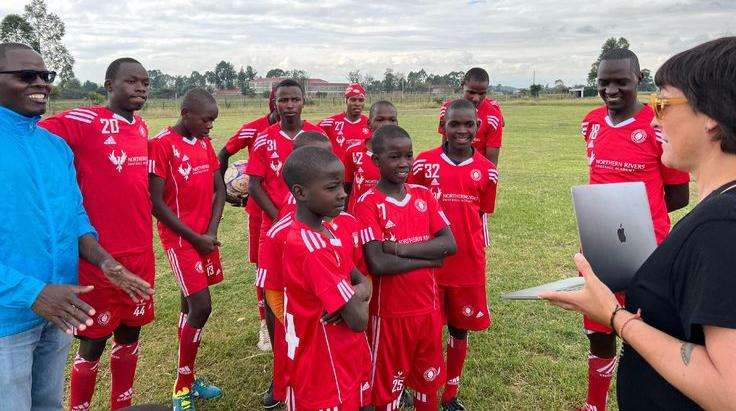
A young person can have the speed, determination and passion to become a great athlete.
But what happens when they cannot afford to play?
This is a question the sports world needs to take seriously.
For many children, sport begins simply. They play with friends after school, join a local team or discover an activity they enjoy. At that stage, nobody is thinking about professional contracts or international competitions. They are simply having fun.
But as young athletes become more serious, the cost can begin to rise.
There may be registration fees, training fees, uniforms, shoes, equipment, transportation and competition expenses. In some sports, families may also have to pay for travel to tournaments or specialized coaching.
For families with enough money, these expenses may be manageable.
For others, they can become a reason to stop playing.
A recent AP-Ipsos poll in the United States illustrates the problem. About 70% of parents in households earning at least $100,000 reported that their children participate in organized sports, compared with about 40% of parents in lower-income households. The poll also found that parents commonly view sports as valuable for teamwork, confidence and physical fitness.
The issue is therefore not necessarily that lower-income families do not value sports.
Sometimes, they simply cannot afford the cost of participation.
And that creates an uncomfortable question:
How much talent never gets discovered because someone could not afford the opportunity?
We often hear stories about athletes who came from difficult circumstances and eventually became successful. Those stories are inspiring, but they can also make us forget the thousands of young people who never get the chance to continue.
Talent needs an opportunity.
A talented runner needs somewhere safe to train. A swimmer needs access to a pool. A basketball player needs a court. A young tennis player needs a racket and somewhere to practice.
None of these things are guaranteed.
The problem becomes even more complicated when sports become highly competitive at a young age. Families may feel pressure to pay for better coaching, more competitions and additional training because they believe their child's future depends on it.
That can turn something that started as fun into a significant financial commitment.
Recent reporting on youth sports in the U.S. found that families are spending substantial amounts on organized activities, with costs increasing through registration fees, equipment and other expenses.
Of course, paying for sport is not automatically a bad thing.
Coaches need to be paid. Facilities require maintenance. Equipment costs money. Competitions need organizers. Serious athletes sometimes need specialized support.
The real issue is access.
There should be affordable ways for young people to participate before money becomes the deciding factor.
Schools, communities, sports organizations and local governments can all play a role. Community programs, scholarships, equipment-sharing schemes and free or low-cost training sessions can help remove some of the barriers.
Not every child who participates will become a professional athlete.
That should not be the goal.
Sports can teach discipline, teamwork, confidence and resilience even when someone never wins a major competition.
A child who plays basketball for five years may never become a professional basketball player. A teenager who runs every weekend may never compete internationally.
Their experience can still be valuable.
The sports industry should therefore ask a bigger question than “How do we find the next superstar?”
It should also ask:
“How do we make sure talented young people get the chance to find out how far they can go?”
Because the next great athlete might not be missing talent.
They might simply be missing an opportunity.
And sometimes, the difference between an unknown young person and a future champion is not ability.
It is whether someone was able to open the door.

Why Young Footballers Need More Than Talent to Succeed

Women’s Sports Are Changing: Why More Fans Are Finally Paying Attention
When the Final Whistle Blows, What Happens to the Player?

What Happens When a Young Athlete Suddenly Becomes a Superstar?

The Day a Footballer Becomes the Villain

The Last Race: What Happens When an Athlete Knows It’s Time to Stop?

The Strange World of Sports: 7 Rules You Probably Didn’t Know Existed

The Business of Sports: How a Game Became a Billion-Dollar Industry

What Makes a Great Sprinter? The Skills Behind Speed

The Game Is Changing: Will Technology Eventually Know What Happens Next?


