





 0
0When the Final Whistle Blows, What Happens to the Player?
For millions of football fans, the final whistle is the moment when everything is decided. A team has either won or lost, a player has either become a hero or a target, and supporters quickly move on to the next match.
But for the player walking off that pitch, the story does not always end when the whistle blows.
Behind every spectacular goal, trophy, celebration, and packed stadium is an athlete carrying pressure that most fans never see.
Football has become one of the biggest industries in the world. The best players are watched by millions of people, followed on social media, discussed by television analysts and judged after almost every performance. A player can score two goals on Saturday and be called a superstar. Three days later, one poor performance can completely change the conversation.
That constant judgment is one of the hardest parts of being a professional footballer.
The pressure starts early
For young players dreaming of becoming professionals, football often begins as something simple: a game played for enjoyment.
But once talent is discovered, everything can change.
Training becomes more demanding. Competition for places becomes intense. Coaches expect more. Families may begin to depend on the player's success. Scouts start watching closely, and every mistake can feel like an opportunity lost.
Some young players are told that they are the next big star before they have even played senior football.
That sounds exciting, but it can also create enormous pressure.
Imagine being 18 years old and hearing thousands of people compare you to an established football legend. One bad match suddenly feels like proof that you are not good enough.
Social media has made the pressure even greater
Modern footballers do not only face criticism from coaches and teammates.
They face millions of opinions online.
A player can open their phone after a match and find thousands of comments about their performance. Some supporters praise them. Others insult them. A missed penalty can remain online for years, replayed and discussed whenever the player returns to the same stadium.
The internet has made football more connected, but it has also made mistakes harder to escape.
Players are expected to perform under enormous pressure while knowing that one moment can become a viral video within minutes.
Injuries can change everything
There is another battle that supporters often forget: injuries.
A footballer's career depends heavily on their body. A serious injury can keep a player away from football for months and sometimes longer.
During rehabilitation, the stadiums become quiet. The crowds disappear. The player watches teammates compete while concentrating on basic exercises designed to help them walk, run and eventually play again.
The hardest part may not even be the physical pain.
It can be the fear of returning and discovering that the player is no longer the same.
Will the speed still be there?
Will the confidence return?
Will the coach trust them again?
Those questions can be more frightening than the injury itself.
Success does not remove the pressure
It is easy to assume that successful footballers have nothing to worry about.
They have money, fame, trophies and millions of supporters.
But success can create a different kind of pressure.
Once a player becomes a star, people expect them to perform like one every time they step onto the pitch. A normal performance may no longer be considered good enough.
This is why some of the biggest challenges in football happen after a player has already reached the top.
The higher the expectations become, the harder it can be to satisfy them.
Footballers are human too
Perhaps the most important thing supporters can remember is that footballers are not machines.
They make mistakes. They have bad days. They become tired. They experience fear, disappointment and frustration just like everyone else.
Fans have every right to criticize performances, but there is a difference between discussing football and attacking the person behind the shirt.
The next time a player misses an easy chance or makes a costly mistake, it is worth remembering that the player may already know exactly what went wrong.
They may spend the entire night thinking about it.
And while supporters are already discussing the next match, the player may still be trying to recover from the last one.
The final whistle is not always the end
When the referee blows the final whistle, fans may celebrate, complain or switch off their televisions.
For the players, however, the real battle may continue long after they leave the pitch.
They have to deal with the result, the criticism, the expectations and the pressure to perform again.
That is the hidden side of football.
We see the goals.
We see the trophies.
We see the celebrations.
But sometimes, we forget the human being underneath the jersey.
And perhaps the greatest measure of a footballer is not whether they never fail, but whether they can walk back onto that pitch after failure—and find the courage to try again.

Why Young Footballers Need More Than Talent to Succeed

Women’s Sports Are Changing: Why More Fans Are Finally Paying Attention

What Happens When a Young Athlete Suddenly Becomes a Superstar?
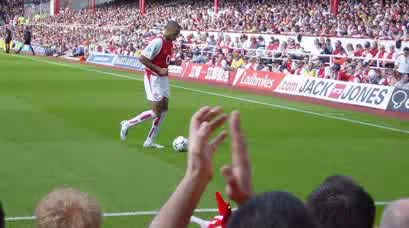
The Day a Footballer Becomes the Villain

The Last Race: What Happens When an Athlete Knows It’s Time to Stop?
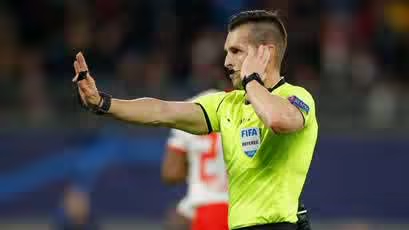
The Strange World of Sports: 7 Rules You Probably Didn’t Know Existed

When Talent Meets Money: Is Sport Becoming Too Expensive for Young People?

The Business of Sports: How a Game Became a Billion-Dollar Industry

What Makes a Great Sprinter? The Skills Behind Speed

The Game Is Changing: Will Technology Eventually Know What Happens Next?


