The World Aquatics Swimming Championships (25m) open in Beijing on 1 December and run to 6 December, according to World Aquatics. They are the world championships swum in a 25-metre pool, half the length of the Olympic one, and that changes how races are won.
The same sport in a smaller pool
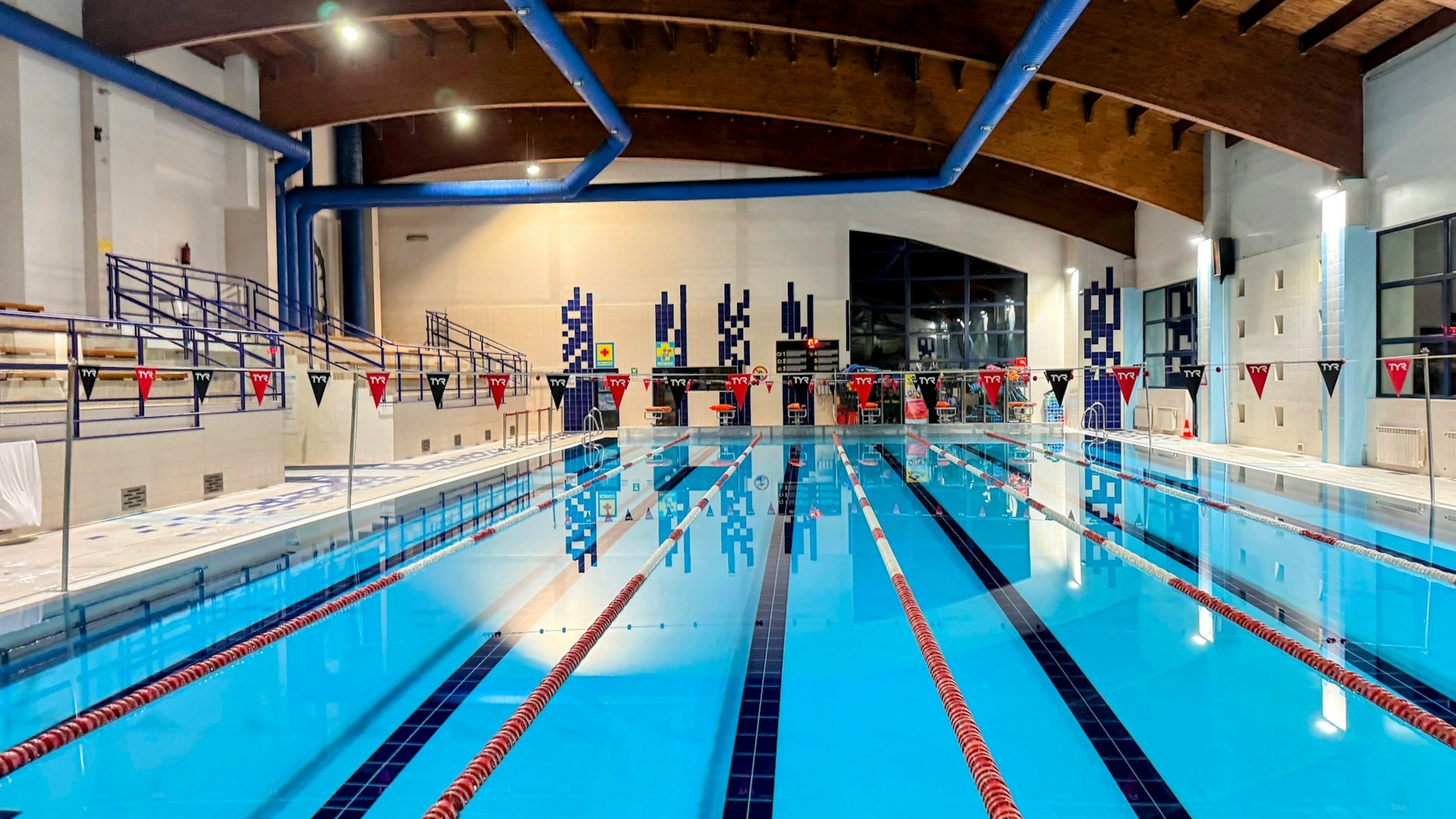
Most big swimming events use a 50-metre pool, called long course. Short course uses 25 metres. The distance is the same, so a 100m freestyle is still 100m, but it takes four lengths instead of two.
That means more walls. Swimming World's comparison of the two formats says short course has twice as many turns, and that swimmers can spend up to 60% of a race underwater, against about 30% in a long-course pool.
Buzzer's app has covered turns already, in a piece on how a turn can change a race.
Records are kept in both
Times from the two pools are not compared. Swimming World says records are kept separately for long course and short course. A short-course world record is its own list, and swimmers chase both.
Short course produces records in numbers. World Aquatics says the 2024 edition in Budapest saw 30 short-course world records, the most ever at a single 25m championships, and that Gretchen Walsh set nine individual and two relay records there. Buzzer's blog on Kornev and the short-course records looks at one of the swimmers who lives on that list.
What Beijing is
World Aquatics says Beijing hosts the 18th edition, over six competition days, with more than 1,000 athletes from over 200 countries and regions. It is the third time China has held the event, after Shanghai in 2006 and Hangzhou in 2018. World Aquatics says Beijing has hosted 38 previous World Aquatics events and will host the World Championships in 2029.
The venue is the Beijing National Aquatics Centre, known as the Water Cube, according to World Aquatics' schedule announcement. Heats start at 10:00 and the evening sessions at 19:00, with the final day's evening session starting earlier, at 18:00, for the sprint and relay events. Mixed freestyle and mixed medley relays are on the programme. The qualifying period ran from 27 July 2025 to 15 November 2026, according to SwimSwam.
Paid to swim fast
Swimming World reports a prize fund of more than $2 million. Awards go to the top eight in each individual event, with $10,000 for first, $8,000 for second and $7,000 for third. Fourth to eighth place is paid on a sliding scale from $6,000 down to $2,000, and the top eight in each relay are paid too.
A world record earns a $25,000 bonus on top of the placing prize. A swimmer who wins all three World Cup legs of an event and then wins that event at worlds picks up another $15,000.
Who is going
Australia's Dolphins have named a 24-strong team, according to Swimming World. Distance freestylers Sam Short and Lani Pallister are the headline names. Pallister, 24, won the 200, 400, 800 and 1500m freestyles at the Australian trials and will chase a third 800 title and a second 400 title in Beijing, and Short, 23, won the 400, 800 and 1500m and set a personal best of 14:15.10 in the 1500m.
There are six debutants on the team. Kyle Chalmers, Mollie O'Callaghan and Kaylee McKeown are among those not selected, the magazine says. It adds that Cam McEvoy is likely to join through a World Aquatics wildcard after winning the 50m freestyle at the Silk Road World Cup in Baku.
Canada has named a team led by Josh Liendo and Kylie Masse, according to Swimming World. And Team USA held its trials in Westmont, Illinois, from 28 to 31 October.
Where a swimmer gets seen
Most swimmers spend years in club pools before a world championship is anywhere near. For a swimmer who wants coaches and scouts to see more than a personal best, the Athlete Badge gives an athlete a verified profile with footage and stats, visible to more than 500 connected clubs and scouts. Buzzer has also looked at how World Aquatics travels the world with its events, and the app's swimming hub follows the rest.
Twice as many walls, and a $25,000 bonus for the swimmer who breaks a record on them.
Cover photo by Mariusz Smenzyk.





 0