




 0

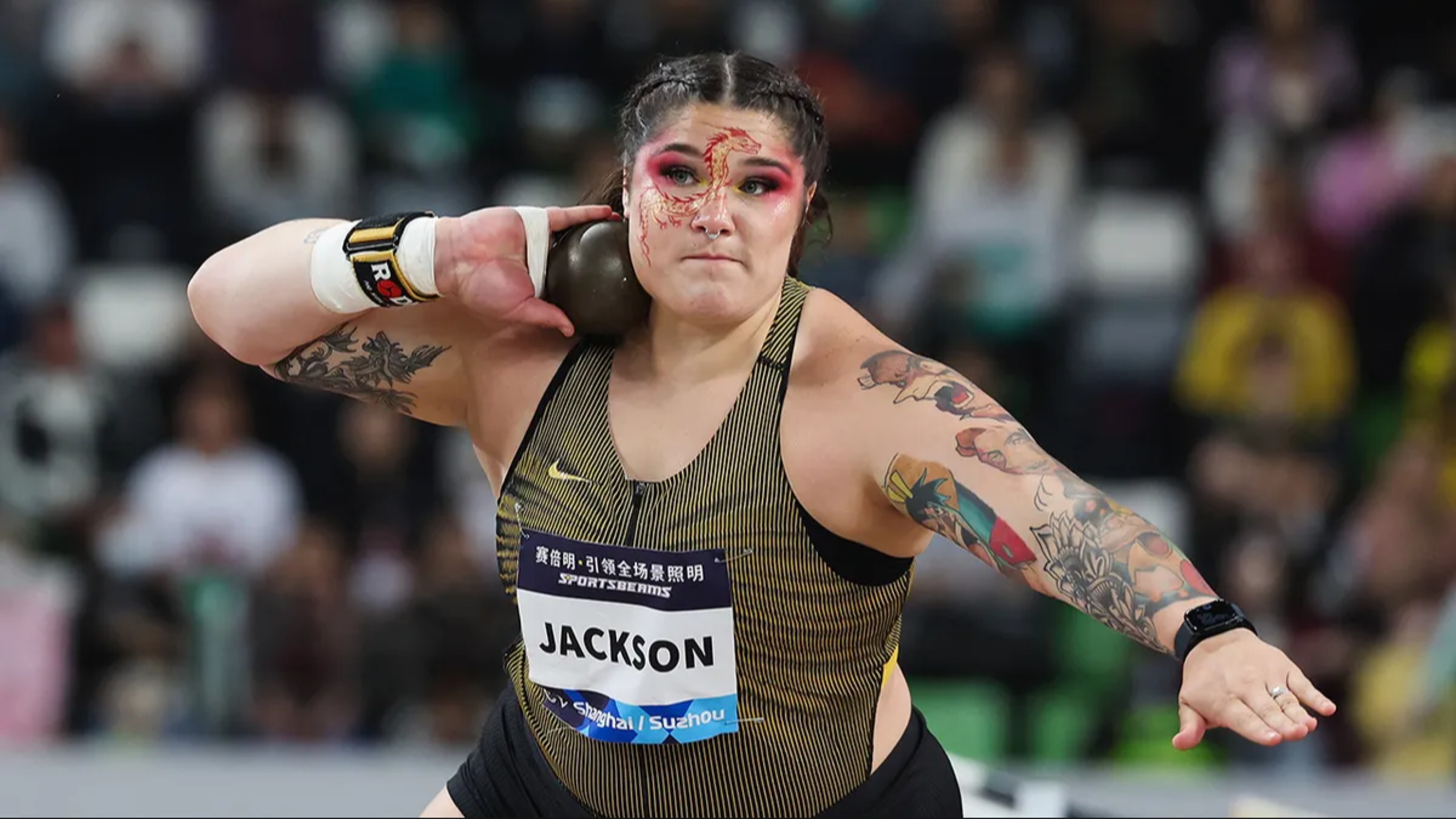
Chase Jackson Joined the 21-Metre Club. Why Is the Women's Shot Put Getting So Powerful?
Chase Jackson threw 21.02 meters on her very first attempt in Berlin. It broke her own American record by seven centimeters and made her just the second woman anywhere in the world to clear 21 meters in the last 14 years.
The first was Dutch thrower Jessica Schilder, who hit 21.09 meters back in May. It's the first time since 1990 that two women have both cleared that barrier in the same season.
The barrier that stood mostly untouched for over a decade
Valerie Adams was the last woman to throw past 21 meters before this year, back in 2011. For 14 years, the mark sat there as a genuine ceiling that only a handful of throwers in history had ever cleared. Jackson herself was chasing it specifically, telling reporters afterward, "I have been waiting for a throw like this for so long."
Her own progression shows how deliberate the climb has been: 20.76 meters in 2023, 20.95 in 2025, and now 21.02, each new record a carefully built step rather than one sudden breakthrough.
Why two women broke through in the same year
It's rarely a coincidence when a long-standing barrier falls twice in one season. Elite throwers train in a genuinely global, closely watched circuit, and a rival clearing a mark that once seemed untouchable tends to remove a psychological ceiling for everyone chasing the same number. Once Schilder hit 21.09 in May, the barrier stopped being theoretical for every other thrower on the circuit, Jackson included.
That's a well-documented pattern across track and field generally: a record that stands for years often falls to more than one athlete within a short stretch once someone proves it's actually achievable.
What's actually driving the sport to these numbers
Shot put technique has evolved significantly over the past two decades, with more throwers adopting rotational styles that generate additional power through the hips and core rather than relying purely on arm strength. Strength training methods have also become more specialized, with throwers now training explosive power output in ways that more closely mirror the actual biomechanics of a throw rather than generic weightlifting.
Jackson herself is a case study in that evolution. She's a two-time world outdoor champion and the reigning world indoor champion, someone who's spent years refining both technique and training specifically to chase a number the sport hadn't seen cleared by an American in its history.
Why there's still real room to grow
The outright world record, set by the Soviet Union's Natalya Lisovskaya in 1987 at 22.63 meters, has stood for nearly four decades and remains well clear of what Jackson or Schilder have managed. That gap suggests the current wave of progress, while genuinely historic, is still climbing back toward a ceiling set during a very different era of the sport rather than pushing into entirely uncharted territory.
Jackson is the first woman from the Western Hemisphere to ever clear 21 meters. Two women reaching that mark in one year looks like the start of a real shift in the event rather than a coincidence. How much further can the current generation actually push before they start closing in on a nearly 40-year-old world record?

Peres Jepchirchir Won Sydney Easily. What Makes Some Marathoners Better at Managing the Final 10K?
England vs Argentina: Why This Rivalry Never Gets Old

Kipchoge's Asterisk Is Getting Old

Why Football's Transfer Window Always Turns Into a Last-Minute Auction
How Thailand Finally Reached the Olympics, and What Its Volleyball System Can Teach Other Nations

Why September Could Be One of Sport's Most Important Months of 2026

Arsenal Have Started the Title Defence Perfectly. Is Their Biggest Advantage Now Squad Depth?

The Clippers Lost Five First-Round Picks. What Happens When an NBA Team Breaks the Salary-Cap Rules?

Why Cricket's Impact Player Rule Has Become a Bigger Debate Than the Matches It Changes

Papua New Guinea Is Building a Rugby League Team From Scratch. Could It Change the Sport's Map?


