




 0
0Peres Jepchirchir Won Sydney Easily. What Makes Some Marathoners Better at Managing the Final 10K?
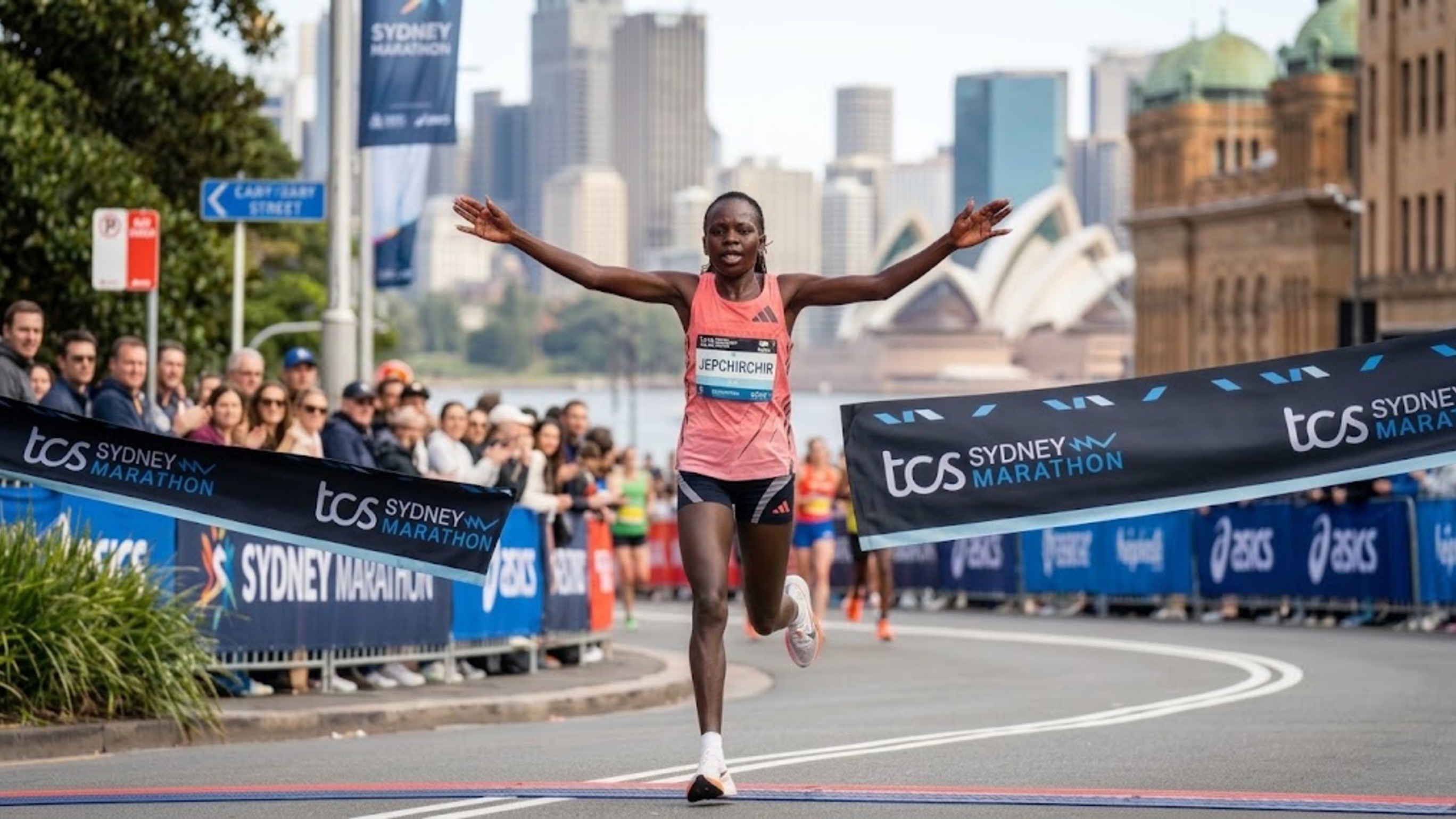
Peres Jepchirchir didn't lead the Sydney Marathon for most of the race. Then, at 35 kilometers, she pulled away from the field and never looked back, finishing in 2:18:31, just nine seconds off the course record.
It's the same pattern that's defined her entire career: stay controlled through the bulk of the race, then win it in the final quarter.
A career built on the same closing move
Jepchirchir's biggest wins all share a common shape. At the 2022 Boston Marathon, she traded the lead with Ethiopia's Ababel Yeshaneh six times in the final mile before pulling clear on Boylston Street. At the 2025 World Championships in Tokyo, she came off the final turn neck-and-neck with Tigst Assefa and out-sprinted her by two seconds after 41 kilometers of racing. She's also the only athlete to win Olympic gold and the New York City Marathon in the same year.
None of those were dominant, wire-to-wire performances. All of them were races she was patient enough, or strong enough late, to win in the closing stretch.
Why the final 10K is where marathons are actually decided
Most casual fans assume a marathon is won through the middle miles, where the pace settles and the field thins out. Elite coaches see it differently. The physiological reality of the distance means glycogen stores, the fuel a runner's muscles burn through the race, become critically low somewhere in the final third, regardless of pace. Runners who've paced conservatively early still have something in reserve at that point. Runners who haven't, don't.
That's why negative splitting, deliberately running the second half faster than the first, is one of the most consistently effective marathon strategies at the elite level, even though it requires the discipline to hold back exactly when a race feels easiest.
What separates Jepchirchir from runners with faster raw speed
Plenty of marathoners have better times on paper than Jepchirchir's career best. What separates her isn't necessarily top-end speed. It's a willingness to run conservatively enough early that she still has a genuine sprint finish available when it matters most, plus the tactical discipline to actually execute that plan under race-day pressure rather than getting pulled into someone else's faster early tempo.
That's a mental skill as much as a physical one. Plenty of talented runners know the theory of a negative split and still get dragged out too fast by adrenaline and a fast field around them.
Why this matters beyond one race in Sydney
Jepchirchir's finishing kick isn't a fluke that happened to work in Boston, Tokyo and now Sydney. It's a repeatable pattern built on genuine pacing discipline, and it's a big part of why she keeps winning major titles against fields that often include runners with faster personal bests than hers.
Jepchirchir has now won at three of the world's biggest races using the exact same closing move. Is that a specific tactical skill other elite marathoners could realistically copy, or is the discipline to hold back when a race feels easy simply something you either have or you don't?

England vs Argentina: Why This Rivalry Never Gets Old

Why Football's Transfer Window Always Turns Into a Last-Minute Auction
How Thailand Finally Reached the Olympics, and What Its Volleyball System Can Teach Other Nations

Why September Could Be One of Sport's Most Important Months of 2026

Arsenal Have Started the Title Defence Perfectly. Is Their Biggest Advantage Now Squad Depth?

The Clippers Lost Five First-Round Picks. What Happens When an NBA Team Breaks the Salary-Cap Rules?

Why Cricket's Impact Player Rule Has Become a Bigger Debate Than the Matches It Changes

Papua New Guinea Is Building a Rugby League Team From Scratch. Could It Change the Sport's Map?

Addisu Gobena Just Broke Sydney's Marathon Record. Why Are Marathon Times Falling So Quickly?

Rain Is Reshaping the US Open. How Much Does Weather Really Change Elite Tennis?


