




 0
0Addisu Gobena Just Broke Sydney's Marathon Record. Why Are Marathon Times Falling So Quickly?
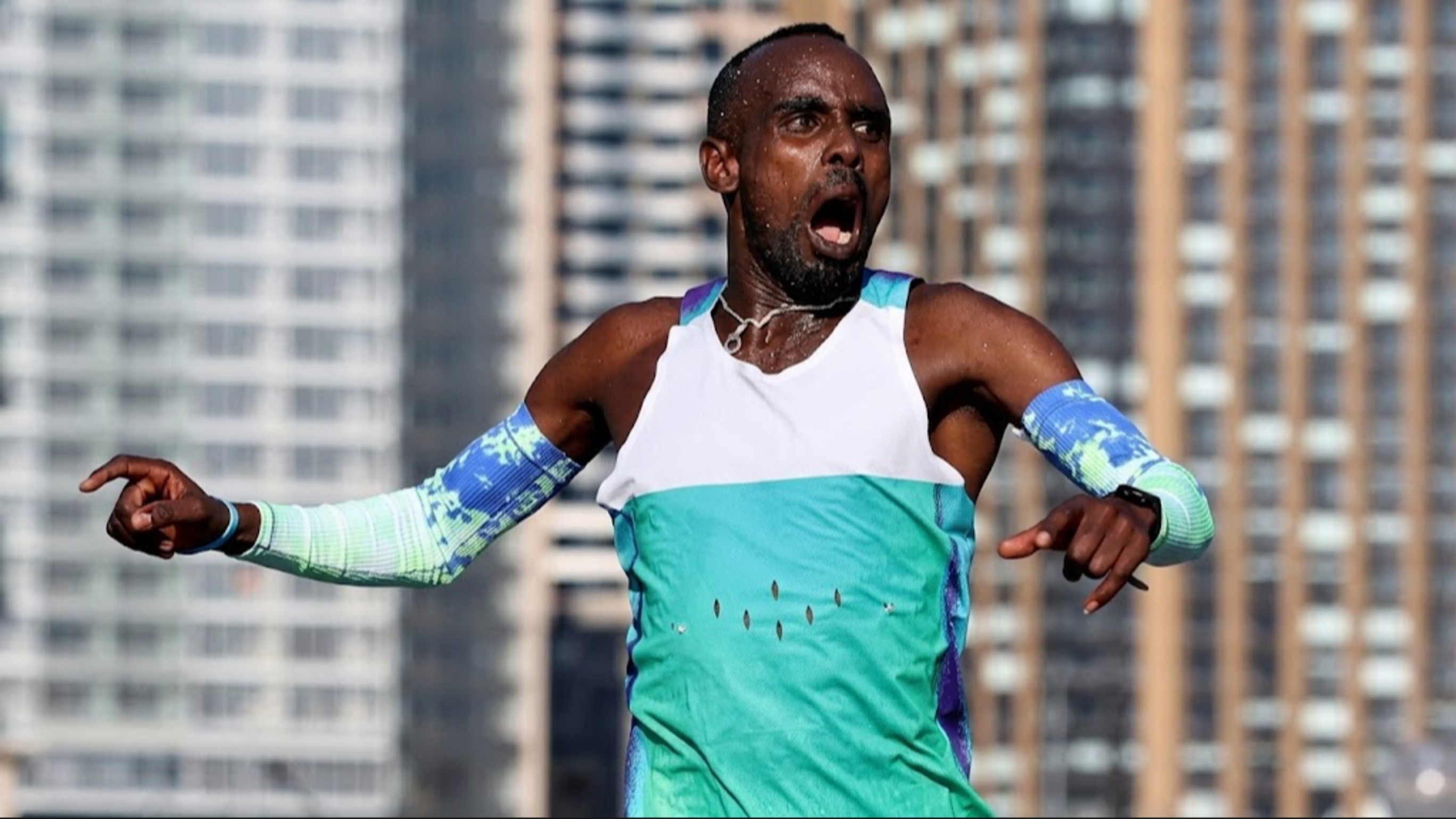
Addisu Gobena was a javelin thrower until 2023. On Sunday, the 21-year-old Ethiopian ran the fastest marathon in Australian history, finishing in 2:04:42 and taking 84 seconds off a course record that was only set a year earlier.
He wasn't running alone. The top three finishers in Sydney all beat last year's course record. Fifteen seconds separated the entire podium.
Why this record fell so dramatically
A course record usually falls by seconds when conditions align for one exceptional athlete on a given day. Sydney's record fell by more than a minute, and it fell because of depth rather than a single outlier performance.
Nineteen men in this year's field had already run faster than the existing course record before the race even started. Seven of them were still together at the 40-kilometer mark, sharing pacing duties deep into a race that's notoriously hilly and unforgiving for fast times, with roughly 313 meters of elevation gain across the course.
Why depth matters more than any single fast runner
A large lead group changes the entire mechanism behind a record. When enough capable runners are packed together, they can share the pacing workload in a way one dominant athlete running alone never can, pushing each other to a faster collective pace than any of them would likely produce solo.
That's a structural shift in how marathon majors are being run, not a one-off fluke. Gobena himself credited the depth of the field for pulling him through the first 30 kilometers faster than he'd planned, saying the pace felt manageable precisely because he wasn't carrying the pack alone.
Why Sydney specifically has become this competitive
The race only became a full World Marathon Major in 2025. Since then, participation has grown from around 5,300 runners in 2022 to 35,000 this year, and the elite fields have grown correspondingly deeper as Major status pulls in athletes who previously had no reason to travel to Australia.
That's the broader story behind marathon times falling across the sport generally: the handful of races carrying Major status attract deeper and deeper elite fields every year, and depth is one of the most reliable ways to produce fast times regardless of course difficulty.
The other factor nobody can ignore
Gobena's own path matters here too. He was a javelin thrower less than three years ago. The marathon has increasingly become a landing spot for athletes with serious raw athletic ability who didn't necessarily come up through traditional distance-running pathways, arriving with less accumulated mileage and fresher legs than runners who've been grinding out marathons since their teens.
Combine that talent pipeline with genuinely elite depth in every Major field, and course records that once felt safe for years start falling annually instead.
Sydney's course has hills that were supposed to protect its record for a while. A deep enough field found a way through it anyway. If depth alone can now break records on a course this difficult, how much longer before marathon times start looking less like human limits and more like whatever a big enough group of elite runners decides to do to each other on a given morning?
Peres Jepchirchir Won Sydney Easily. What Makes Some Marathoners Better at Managing the Final 10K?
England vs Argentina: Why This Rivalry Never Gets Old

Why Football's Transfer Window Always Turns Into a Last-Minute Auction
How Thailand Finally Reached the Olympics, and What Its Volleyball System Can Teach Other Nations

Why September Could Be One of Sport's Most Important Months of 2026

Arsenal Have Started the Title Defence Perfectly. Is Their Biggest Advantage Now Squad Depth?

The Clippers Lost Five First-Round Picks. What Happens When an NBA Team Breaks the Salary-Cap Rules?
Why Cricket's Impact Player Rule Has Become a Bigger Debate Than the Matches It Changes

Papua New Guinea Is Building a Rugby League Team From Scratch. Could It Change the Sport's Map?
Rain Is Reshaping the US Open. How Much Does Weather Really Change Elite Tennis?


