




 0
0What Do Football Scouts Look For in Young Players?
Football has become increasingly competitive, with young players facing more pressure than ever to stand out. Technical ability remains essential, but talent with the ball is no longer enough on its own.
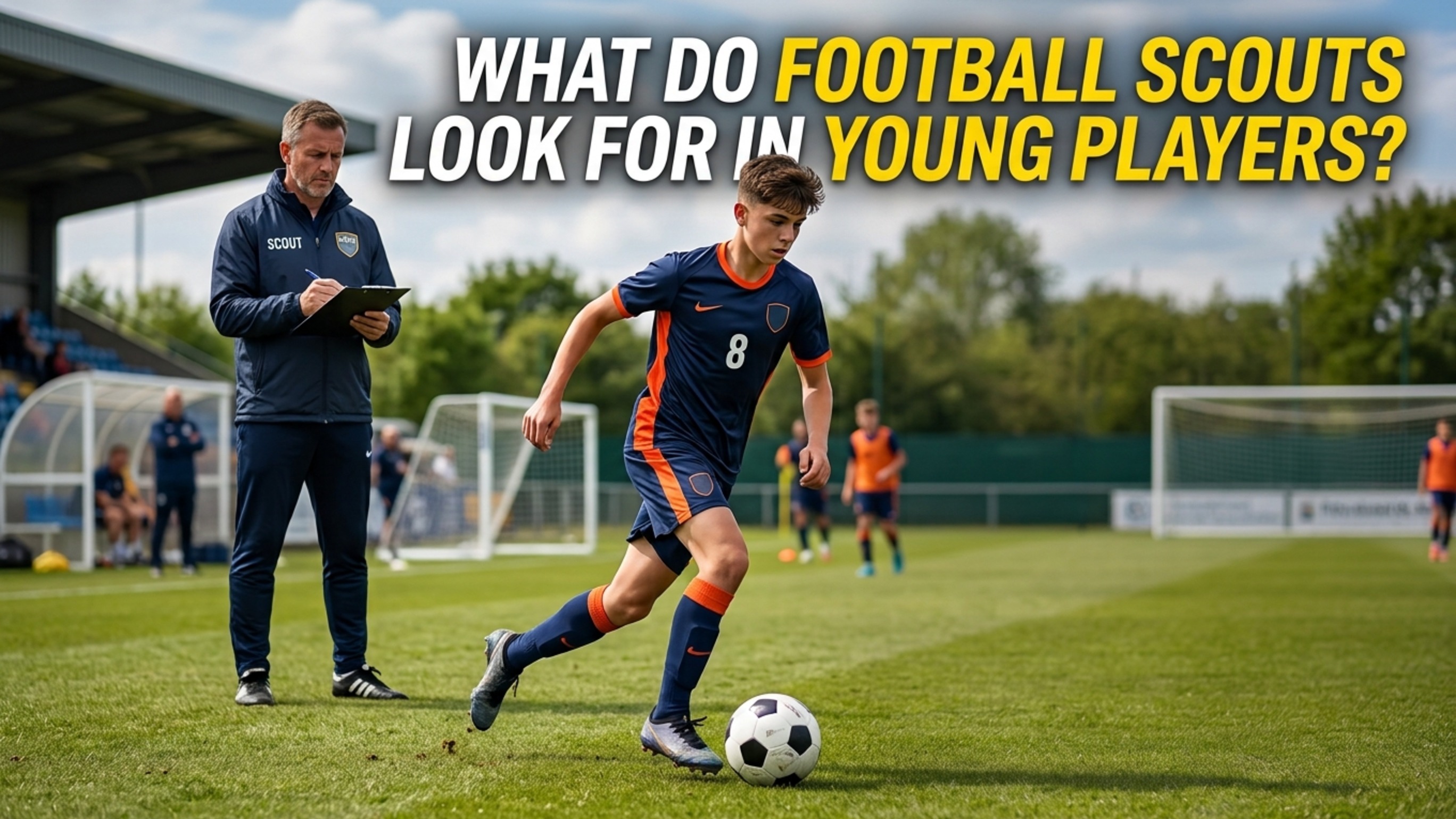
What do football scouts look for in young players? Scouts assess much more than technical skills. They look at athletic potential, coachability, tactical intelligence, psychological resilience and teamwork to determine whether a young footballer has the potential to develop at a higher level.
1. Athletic Potential
Physical ability can make a major difference on the football pitch, which is why scouts assess athletic potential in young players. They're not simply looking for the biggest or strongest player. Speed, acceleration, agility, balance, coordination and stamina can all indicate whether a player has the physical qualities to develop further.
Age and physical development also matter. A physically advanced 15-year-old may dominate at youth level, but scouts will consider how that player might develop as other players mature.
FIFA's talent-development guidance also stresses that young players should not be overlooked because of their age or stage of physical maturation, highlighting the importance of looking at long-term potential rather than physical development alone.
2. Coachability
Talent can get a scout's attention, but coachability can determine how far a young player develops. Football scouts want to see whether players listen to instructions, accept constructive criticism and adapt when asked to change something.
Imagine a coach asks a winger to stay wider and attack the space behind the full-back. A player who immediately adjusts their positioning and makes better runs demonstrates that they can listen, learn and apply feedback.
For young footballers, coachability means showing that advice leads to improvement.
3. Tactical Intelligence
Technical ability means little if a player doesn't understand what to do with it. Scouts therefore pay close attention to football intelligence, sometimes referred to as football IQ.
Do players scan before receiving the ball? Can they find useful spaces, anticipate opponents' movements and make the right decision under pressure? A midfielder might have the ability to play a spectacular pass, but sometimes the best choice is a simple pass that keeps possession.
Young players can develop their tactical intelligence by watching matches closely and studying positioning, movement and decision-making—not just goals and assists.
4. Psychological Resilience
Football puts enormous pressure on young players, especi during trials and important matches. For scouts, however, the mistake itself may be less important than what happens next.
A striker might miss an easy chance but continue making intelligent runs and asking for the ball. A defender might make an error but immediately get back into position.
Mental resilience doesn't mean never feeling nervous or disappointed. It means being able to reset and focus on the next action. Don't let one mistake become three.
5. Teamwork
Even the most talented individual player needs to work effectively with teammates. Scouts watch how players communicate, create space, support teammates and react when the team loses possession.
Choosing a pass over a difficult individual attempt can demonstrate maturity, while tracking back to help a teammate shows commitment to the team's success.
The goal isn't always to be the player who stands out. Sometimes, the best way to stand out is to make everyone around you better.
The Complete Player
Getting noticed by a football scout takes more than spectacular goals or impressive skills. Scouts are looking for players with the talent, mentality and potential to keep developing.
Ultimately, there is no single quality that guarantees success in football scouting. The goal isn't simply to stand out. It's to show that you have what it takes to keep improving.

Women in Polo: How Female Players Are Changing the Sport

Beyond the Horse: What Makes a Great Polo Player?

What Is a Polo Handicap? How Player Ratings Work

Polo Rules Explained: How the Game Works, From Chukkas to Fouls

The Ethics of Polo Horse Cloning: How Cloned Horses Could Change the Game

Top 3 Most Overrated Premier League Players in 2026

Why Lower-League Football Deserves More Attention Than It Gets

Why Are So Many Spanish Football Clubs Called "Real"?

Manchester United's Weaknesses Have Just Been Exposed By Hull

How Do Football Trials Work? What Young Players Should Expect


