



 0
0Carlos Alcaraz Is Back. What Does Five Months Away Do to an Elite Tennis Player?
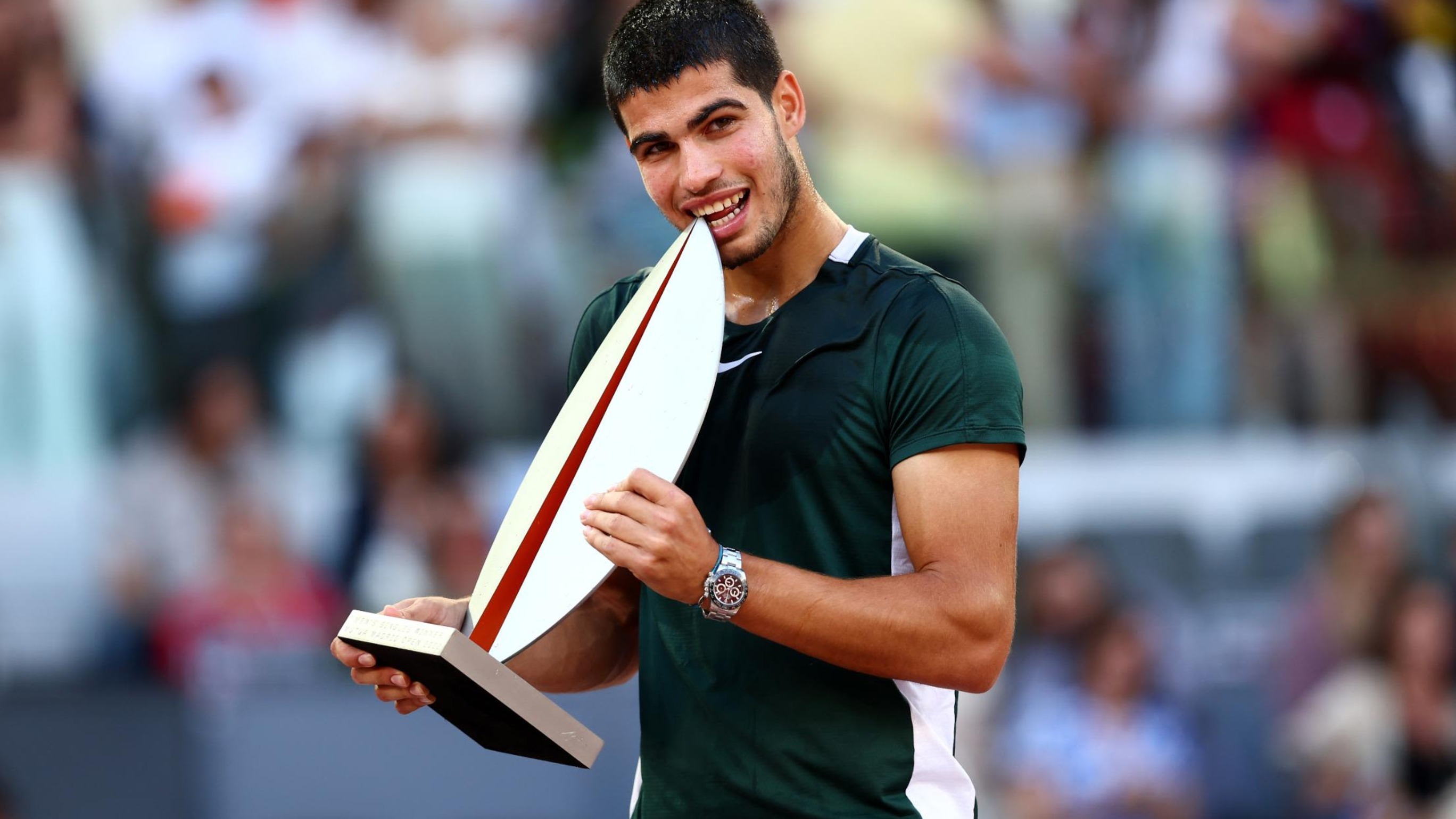
Carlos Alcaraz hadn't played a competitive match since April. No French Open. No Wimbledon. No warm-up tournament before returning to the one Grand Slam where he's the defending champion.
He beat Roman Safiullin 6-4, 6-4, 6-4 anyway, barely looking like a man who'd spent 139 days away from the tour.
"I don't know how it looked from outside," Alcaraz said afterward. "From inside, my feeling was that I was hitting normal."
Why this layoff was different from a normal injury break
A wrist injury for a tennis player isn't like most other sports injuries. Nearly every shot in the game runs through that joint: the serve, the forehand, the two-handed backhand. Alcaraz couldn't just rest and wait. He had to trust that months of rehab would translate directly back into shots he'd been hitting on instinct since childhood.
That's a different kind of pressure than simply getting fit again. A hamstring or a knee heals on a fairly predictable timeline. A wrist that has to withstand thousands of repeated, high-torque impacts over a two-week Grand Slam is a much less certain proposition, and Alcaraz wouldn't know for sure how it would hold up until he was actually out there under real match conditions.
The part that actually mattered on Monday
The scoreline was good. What mattered more was something less visible: whether Alcaraz could walk out under real match tension, feel his wrist under load for three full sets, and trust it without hesitating on big points.
He compared it to riding a bike. Muscle memory carried him through the shot-making. What he couldn't fake was the conditioning, and by his own admission, that part will take longer to find.
What five months away actually costs an elite athlete
It's rarely the technique that suffers most in a long layoff. It's the match sharpness: reading an opponent's patterns in real time, managing nerves in a tiebreak, recovering physically between long points on consecutive days. Those are skills built through repetition, and repetition is exactly what a five-month absence takes away.
There's also a mental component that doesn't show up in a scoreline. Players who return from long injury layoffs often describe a lingering hesitation on certain shots, an unconscious flinch built from months of protecting the injured area. Alcaraz showed none of that visibly against Safiullin, which is itself a meaningful sign, but that instinct tends to surface more under sustained pressure than it does in one comfortable straight-sets win.
Alcaraz looked comfortable on Monday. The real test comes as matches get longer and the accumulated toll on that wrist starts to stack up over a potential seven-round tournament.
The bigger opportunity in front of him
This isn't just a comeback story. With Jannik Sinner out through injury and Novak Djokovic already eliminated, the draw has opened up dramatically. Alcaraz is bidding to become the first man to win consecutive US Open titles since Roger Federer's run from 2004 to 2008, and he's doing it as a wildcard entrant into "healthy enough to seriously contend" territory rather than a known quantity.
Alcaraz walked back into a Grand Slam draw missing its two biggest recent obstacles and looked like the version of himself from before the injury. If his wrist holds up through best-of-five tennis for two straight weeks, how much of this open field is actually his to lose?
Peres Jepchirchir Won Sydney Easily. What Makes Some Marathoners Better at Managing the Final 10K?
England vs Argentina: Why This Rivalry Never Gets Old

Why Football's Transfer Window Always Turns Into a Last-Minute Auction
How Thailand Finally Reached the Olympics, and What Its Volleyball System Can Teach Other Nations

Why September Could Be One of Sport's Most Important Months of 2026
Arsenal Have Started the Title Defence Perfectly. Is Their Biggest Advantage Now Squad Depth?

The Clippers Lost Five First-Round Picks. What Happens When an NBA Team Breaks the Salary-Cap Rules?
Why Cricket's Impact Player Rule Has Become a Bigger Debate Than the Matches It Changes

Papua New Guinea Is Building a Rugby League Team From Scratch. Could It Change the Sport's Map?
Addisu Gobena Just Broke Sydney's Marathon Record. Why Are Marathon Times Falling So Quickly?


