Buzzer Coin$0.00$BUZZER
Search
9
Uploads
203
Followers
4
Following
Newbie
Newbie0 minutes3,27 Karma
Arrow Right
eddie7

2 days ago

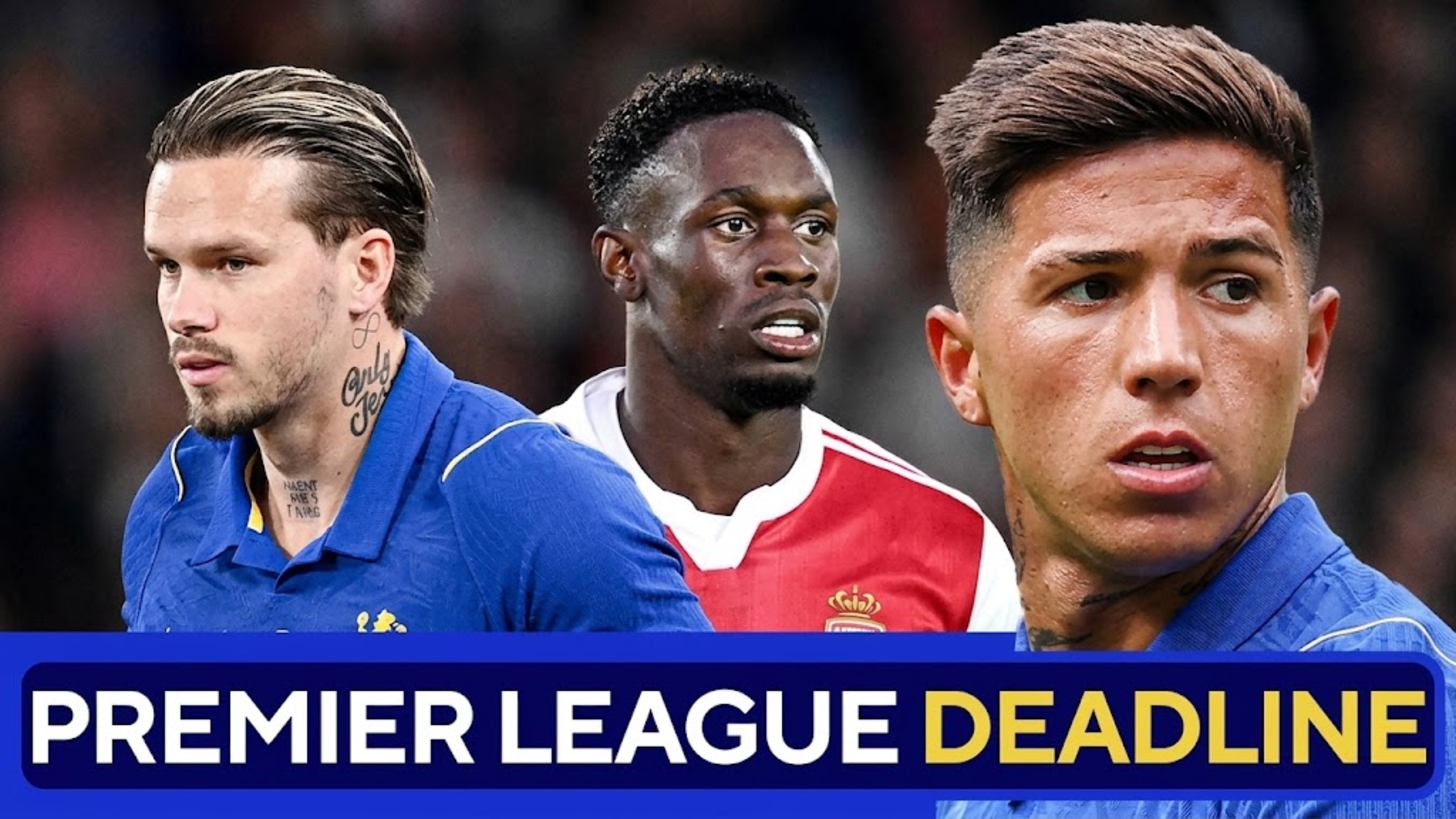
There was a period, not that long ago, when Raheem Sterling looked like one of the defining English footballers of his generation.

An MBE for anti-racism advocacy. A key figure for club and country through multiple major tournaments. A player genuinely being discussed in conversations about England's all-time greats at his position.

This week, Hampshire Police confirmed he's been charged with dangerous driving, possession of nitrous oxide for wrongful inhalation, and failing to provide a specimen, following a single-vehicle collision on the M3 back in May involving a Lamborghini.

He's due in court on September 15.

He is also, notably, currently a 31-year-old footballer without a club.

It's worth being careful and specific here. These are charges, not convictions, and Sterling is entitled to defend himself through the legal process like anyone else.

What's genuinely striking isn't any individual legal detail, it's the broader trajectory this represents for a player who once seemed to be building toward a legacy well beyond football itself.

## The long shadow

Sterling's career has actually had this exact tension running through it for over a decade.

Back when he was twenty, tabloids splashed photographs of him allegedly using nitrous oxide, prompting his manager at the time to publicly address it as a young player's mistake to learn from.

He weathered plenty of scrutiny in those early years and still went on to become one of the most consistently excellent wingers in the Premier League for the better part of a decade, someone who fronted genuinely significant anti-racism campaigns and earned institutional recognition for it.

The trajectory from promising, occasionally reckless young talent to genuinely respected senior professional felt, for years, like a settled story.

## Changed stakes

What's changed is the stakes and the timing.

A young player's off-field mistakes get filed away as growing pains if his football keeps improving.

A 31-year-old currently without a club facing charges connected to a driving incident involving a substance with a well-documented history of causing fatal collisions is a very different narrative, one where the football achievements start to feel like they're receding into the past tense rather than building toward something.

This is genuinely instructive about how quickly the story around an elite athlete can shift once form and opportunity dry up simultaneously.

When Sterling was still a guaranteed starter for a major club, incidents like this tend to get absorbed into a wider narrative about talent and resilience.

Without a club and without the on-field performances providing a counterbalance, the same set of facts reads very differently to the public and, frankly, to any club considering signing him next.

None of this means Sterling's career is definitively over, and plenty of players have rebuilt reputations from far worse positions.

But it does capture something real about modern football fame: how fragile the version of a player built on both performance and public image can be once one half of that equation stops holding up its end.

How much of an athlete's off-field trouble is genuinely about the individual incident, and how much of our reaction to it is really about whether they're still good enough to make us look past it?
FOOTBALL (SOCCER)

Raheem Sterling's Fall Is a Much Bigger Football Story Than One Legal Case

Like icon
5
Comments icon
Shares icon
eddie7

26 days ago

Every Tour de France winner crosses the finish line surrounded by teammates who had almost no realistic chance of winning the race themselves. That's not an accident or a lack of talent. It's the entire job description.

### What a Domestique Actually Does

Domestiques, French for "servants," are professional cyclists whose primary role is sacrificing their own result to support a team leader with genuine title ambitions. 

That sacrifice takes concrete forms during a race: riding at the front to shield the leader from wind resistance, dropping back to the team car and returning with water bottles and food for the entire group, setting a brutal pace on climbs specifically to wear down rival teams' leaders, and in emergencies, literally handing over their own wheel or bike if the leader suffers a mechanical failure at a critical moment.

### Genuinely Elite Riders, Invisible Results

The part that surprises casual fans most is the talent level involved. Domestiques aren't lesser riders filling out a roster. Many were themselves capable of winning smaller races or even threatening a top ten Tour finish if they raced purely for their own result but signed contracts built around supporting somebody else's ambitions instead. 

Some of the sport's most respected riders spent entire careers in that role, earning fierce respect within the peloton while remaining largely invisible to casual fans who only track who's wearing the yellow jersey each July.

### Coordinated Through an Earpiece

None of this sacrifice happens by improvisation alone. Every rider on a modern World Tour team races with a radio earpiece connecting them directly to team directors following the race from a car in the caravan behind the peloton, watching live television feeds and relaying real-time tactical instructions. 

A director might tell a domestique exactly when to accelerate to shatter a dangerous breakaway, or hold position to conserve the leader's energy for a climb still twenty kilometers away. 

That constant communication is part of why modern Tour racing looks so tightly controlled compared to older eras, when riders had to read the race with their own eyes and instincts alone, without a voice in their ear coordinating the entire team's strategy in real time.

### The Trade That Makes It Worth It

The arrangement isn't purely selfless. Top domestiques get paid well by team sponsors specifically for this role, and a rider who proves reliably excellent at protecting a leader through multiple grand tours can build a genuinely lucrative career without ever winning a headline race themselves. 

There's also a pathway upward. Riders sometimes graduate from domestique duty into team leader roles themselves once they prove capable, or get released to a smaller team specifically so they can chase individual wins their old team never would have allowed.
 
It's one of the strangest employment arrangements in professional sport, an entire specialized career built around making someone else look good. The next time a rider crosses the line arms raised in celebration, there are five or six teammates just behind them who spent three weeks making that specific moment possible, and will get a fraction of the recognition for it.
BEHIND THE SCENES

The Cyclists Who Race to Lose on Purpose

Like icon
1
Comments icon
Shares icon
eddie7

28 days ago

Every time VAR overturns a goal, half the stadium boos and nobody in the stands can actually see who made the call or why. That's not an accident. The entire system was built to happen somewhere fans never look.

### Inside the Video Room

The Video Assistant Referee system runs out of a separate room, usually miles from the stadium itself, staffed by a video assistant referee and a small support team watching a bank of camera angles the on-pitch official simply doesn't have access to in real time. 

FIFA introduced VAR into major tournament football at the 2018 World Cup in Russia, and it's since spread through most of the world's top leagues, though implementation and camera coverage still vary significantly between competitions.

### What VAR Can Actually Review

VAR only intervenes in four categories: goals, penalty decisions, direct red card incidents, and cases of mistaken identity. That narrow scope was deliberate. 

The people who designed the protocol wanted to avoid a system that reviewed every throw in and corner, which would have turned football into American football's replay culture almost overnight.

### How a Review Actually Works

The actual process has two stages. First, the video team checks whether there's a clear and obvious error worth flagging, purely off the monitors in the video room. If they think there is, they alert the referee on the pitch, who then has the option to either accept the recommendation directly or walk over to a pitchside monitor and review the footage personally before making the final call themselves. 

That pitchside review, the referee jogging over and putting on the headset, is really the only part of the whole process fans ever actually witness.

### The Offside Line Problem

Offside decisions get their own separate technology entirely, using calibrated lines generated from broadcast camera positions and, at the top level of the game, semi-automated systems that track limb position using multiple cameras and ball sensor data. 

That's why an offside call can look razor thin on screen and still take over a minute to confirm.
 
The most common complaint isn't really about the technology. It's about the gap between "clear and obvious error" as a legal standard and what fans watching a replay from six different angles are willing to accept as debatable. 

VAR was designed to catch the referee's obvious mistakes, not to relitigate every marginal call the way a broadcast panel might.

### Why Fans in the Stadium Feel Left Out

Compare that to rugby's television match official system, or the NFL's replay booth, where stadium screens usually show fans the same replay the officials are reviewing along with some explanation of what's being checked. 

Football has been slower and less consistent about that kind of in-stadium communication, which is a large part of why supporters in the ground often have no idea why the referee is standing at a monitor at all until the decision comes back. 

Some leagues have since started broadcasting referee explanations over the stadium speakers after a review, borrowing directly from how other sports handle the exact same transparency problem, but coverage of that practice still varies wildly by competition and country.
 
The Premier League itself didn't adopt VAR until the 2019-20 season, arriving later than several major European leagues and international tournaments that had already been using it for a year or two. That delay gave other competitions a head start working out exactly the kind of pitchside monitor etiquette and review pacing that still causes arguments today.
 
Whether that scope stays narrow forever is the actual long-term question hanging over the technology, not whether it works.
BEHIND THE SCENES

Who Actually Decides When VAR Steps In

Like icon
3
Comments icon
Shares icon
eddie7
eddie7 · Edited

about a month ago

Spain won the World Cup on Sunday night. Give it a day or two and half the football world will still be talking about Leandro Paredes instead of the trophy.

That's the part that should bother Argentina fans more than the scoreline itself. Ferran Torres scored in extra time, Spain held on, and a genuinely brilliant Argentina run ended 1-0 in the 2026 World Cup final.

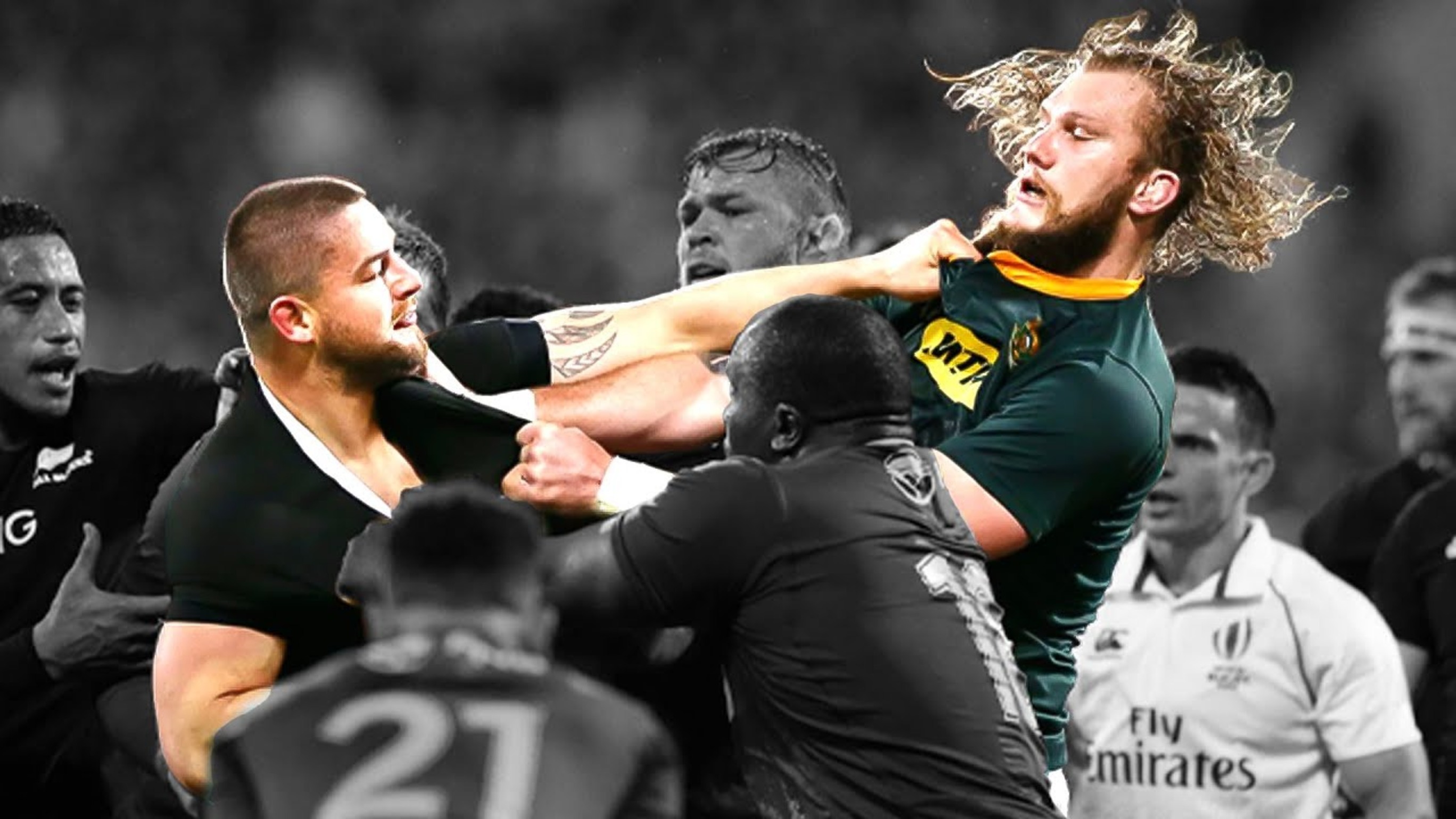
That's a real story. Instead, the image everyone's sharing is Paredes grabbing Eric García by the throat after the final whistle, then wrestling Gavi to the ground while players and staff from both benches scrambled to pull bodies apart. He picked up a straight red card for it, which honestly undersells what actually happened on the pitch at MetLife Stadium.

## How the chaos actually started

It didn't come out of nowhere either. Enzo Fernández had already been sent off in stoppage time of normal time for a second yellow card, a reckless challenge that sent Pau Cubarsí cartwheeling through the air.

Reports also have Nahuel Molina throwing a punch of his own once the wider scrum kicked off. Argentina spent the entire final trying to rough Spain up and turn a football match into a street fight. For long stretches it actually worked. It just didn't get them the trophy, and it turned the closing minutes into the kind of scene that overshadows everything that came before it.

Alan Shearer summed it up about as bluntly as you can on the BBC afterward. His exact phrase was that there is a way to lose. Five words, and it's hard to find much to argue with in that.

## This isn't new for Argentina

Here's the part people keep dancing around whenever these moments come up. This isn't some isolated event for Paredes or for Argentina as a team.

Go back to 2006 and the World Cup quarter-final against Germany, when Leandro Cufre kicked out at Per Mertesacker and got sent off despite not having played a single minute of the match, sparking a full brawl on the pitch.

Paredes himself has a track record here too. At the 2022 World Cup he booted the ball straight into the Dutch bench during the quarter-final against the Netherlands, which set off a shoving match with Virgil van Dijk and nearly got out of hand before Argentina eventually won on penalties.

Every generation of this team seems to produce its own version of the same argument. Is this just a squad that plays with more fire than everyone else, or is there something specific about Argentina that turns competitive into chaotic the second a result stops going their way?

## Fire that cuts both ways

I don't think it's complicated, honestly. Argentina plays with an edge that makes them genuinely great to watch, right up until the edge takes over completely. That physicality and refusal to back down is a real part of why they're always in the conversation at the business end of major tournaments.

But there's a clear line between playing chippy for ninety minutes and going for someone's throat after the result is already decided and the whistle has blown. One of those is a mentality. The other is just losing badly, in front of a global audience, with cameras rolling from every angle.

The frustrating bit is that none of this needed to happen. Argentina was good enough to make this a real final, not a footnote to a fight.

Messi turned in another vintage tournament at 39 years old. His team pushed Spain into extra time while playing a man down for a chunk of it. That's a squad with plenty to be proud of.

Instead, the clip that gets pulled up every time someone puts together a World Cup final highlight reel from 2026 won't be a tackle or a save. It'll be Paredes with his hand on somebody's neck.

## What this means going forward

Every future Argentina squad is going to get measured against this one, fair or not. Win ugly and people call it grit. Lose ugly and it becomes the entire conversation, the thing that gets brought up before anyone mentions the football itself.

Paredes didn't just cost himself a red card on Sunday. He just handed every pundit and every rival fanbase a free pass to talk about anything except how good this Argentina team actually was for most of the tournament.

So which is it. Is that edge the reason Argentina keeps showing up in finals, or is it the exact thing that's going to keep costing them the credit that comes with winning, and losing, the right way?
FOOTBALL STORIES

The Villain Origin Story of Leandro Paredes

Like icon
5
Comments icon 3
Shares icon
eddie7

about a month ago

The World Cup creates fresh grudges every four years. England and Argentina don't need the help. They've been at each other for over sixty years, and the fire hasn't dimmed one bit.

## The 2026 Semi-Final

Their latest meeting came in the 2026 World Cup semi-final in Atlanta, and it added yet another painful chapter to England's book.

Anthony Gordon put England ahead just after the hour mark, and for a while it looked like England had one foot in the final. Then Argentina did what Argentina always seems to do to England. Enzo Fernández equalised late, and Lautaro Martínez finished it off in stoppage time. Final score 2-1. Argentina through to the final again. England, once more, left wondering how it slipped away.

This fixture is never just ninety minutes of football, and everyone involved knows it.

Ask an England fan about this rivalry and Maradona's name comes up almost immediately. Ask an Argentine fan the same question, and they'll mention him too, for completely opposite reasons. One side remembers the cheating. The other remembers the genius.

## A Rivalry Born in 1966

The bad blood actually predates Mexico '86 by two decades. It goes back to the 1966 World Cup quarterfinal at Wembley, when Argentina's captain, Antonio Rattín, was sent off during a brutally physical match.

The referee that day was West German, and the language barrier made everything messier. Rattín refused to leave the pitch for several minutes. The whole thing left a sour taste on both sides, long before Maradona ever kicked a ball at a World Cup.

## Maradona and the Hand of God

Then came 1986. Over four minutes in that quarterfinal, Maradona produced two moments that couldn't have been further apart in spirit.

The first was the Hand of God, a blatant punch the referee somehow missed. England were furious, and football gained one of its most argued-over incidents ever.

The second was pure brilliance. Maradona picked the ball up in his own half, ran past English defenders like they weren't there, and finished off what's still called the greatest goal in World Cup history by many.

It's almost unfair that both moments happened in the same match. One is remembered for breaking the rules. The other for showing exactly what one player can do with a ball at his feet.

## The Beckham Red Card

The rivalry flared again in 1998, in the round of 16 in France. David Beckham, young and carrying a nation's hopes, was sent off for kicking out at Diego Simeone after Simeone had fouled him.

England lost on penalties, and Beckham became the most hated man in the country almost overnight. He's spoken since about how brutal that period was, describing abuse everywhere he went and saying the whole country turned on him. It took him years, and a Manchester United treble, to win people back.

## The Rivalry Continues

After 1998, meetings between the two got rarer. Club football took over the headlines. The fixture went quiet for a while, mostly because the draw stopped putting them together.

But whenever it does come back around, the old stories resurface immediately. Nobody starts by talking about formations or set pieces. They start with history.

That 2026 semi-final proved it again. New players, different managers, a different continent entirely. But the heat between these two nations never cools down. Some matches just decide who goes through. England versus Argentina always feels like it's carrying something heavier than that.

Where does this rivalry sit for you? Is there another international fixture that carries this much weight every single time the teams walk out?
FOOTBALL HISTORY

England vs Argentina: Why This Rivalry Never Gets Old

Like icon
5
Comments icon
Shares icon
eddie7

about a month ago

Some football results need context to understand. This one doesn't. Brazil 1, Germany 7. Say that scoreline to any football fan on earth and they know exactly what you're talking about.

It happened in the 2014 World Cup semi-final in Belo Horizonte, and it's still the most brutal half hour of football the tournament has ever produced.

## The Setup

Brazil were hosting the World Cup that summer. Pressure doesn't get any heavier than that. They'd already lost their best player, Neymar, to a back injury in the quarterfinal, and their captain, Thiago Silva, was suspended for the semi-final after picking up a yellow card. Still, nobody predicted this.

Germany, by contrast, arrived calm and clinical, the way German teams so often do in tournaments.

## Five Goals in Eighteen Minutes

Thomas Müller opened the scoring in the 11th minute. Brazil could have recovered from that. Teams concede early goals all the time.

Then everything fell apart. Miroslav Klose scored in the 23rd minute, a goal that also made him the all time leading scorer in World Cup history, passing Brazil's own Ronaldo. Toni Kroos scored two minutes later. Then Kroos scored again just 69 seconds after that, the fastest two goals by one player in World Cup history. Sami Khedira added a fifth in the 29th minute.

Five goals. Eighteen minutes. Brazilian fans in the stadium were shown on camera in tears, and plenty of them left before half time. In a World Cup semi-final, in their own country.

## Why This One Still Feels Different

Football has plenty of thrashings. Big scorelines happen in group games against weaker opposition, or in one-sided finals. This wasn't that. This was a host nation, a team with five World Cup titles, being taken apart in a match with everything riding on it, in front of their own supporters.

Germany added two more goals through substitute André Schürrle in the second half, making it 7-0 before Oscar scored a stoppage time consolation that changed nothing about how the night would be remembered.

Germany went on to beat Argentina in the final days later and lift the trophy. That result barely gets mentioned next to this one.

## The Bigger Picture

What makes this match endlessly rewatchable isn't just the scoreline. It's how quickly it happened. Eighteen minutes turned a nation's World Cup dream into one of the most talked about collapses in sports history. No slow build up. No warning signs in the first ten minutes. Just five goals, back to back to back, against a team that had never lost a competitive match at home in almost forty years.

Football fans argue all the time about the greatest teams, the greatest goals, the greatest World Cup moments. This match rarely gets left out of any of those conversations, and it's the only one on the list where the result still doesn't quite make sense even after you've watched the highlights ten times.

So here's the question worth asking. Is there a worse feeling in sport than watching your own team collapse in real time, in your own country, with the entire world watching? And if you were in that stadium that night, would you have stayed for the second half?
ICONIC MOMENTS

The 30 Minutes That Broke a Nation's World Cup Dream

Like icon
11
Comments icon
Shares icon